October 4th

Who’d be a prophet??

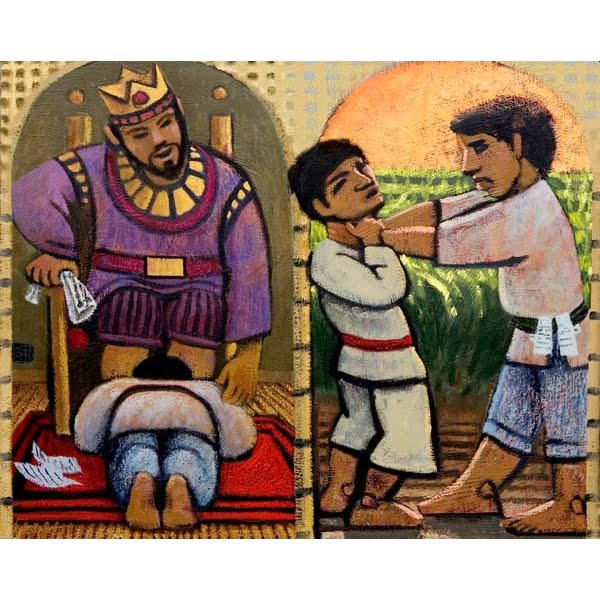
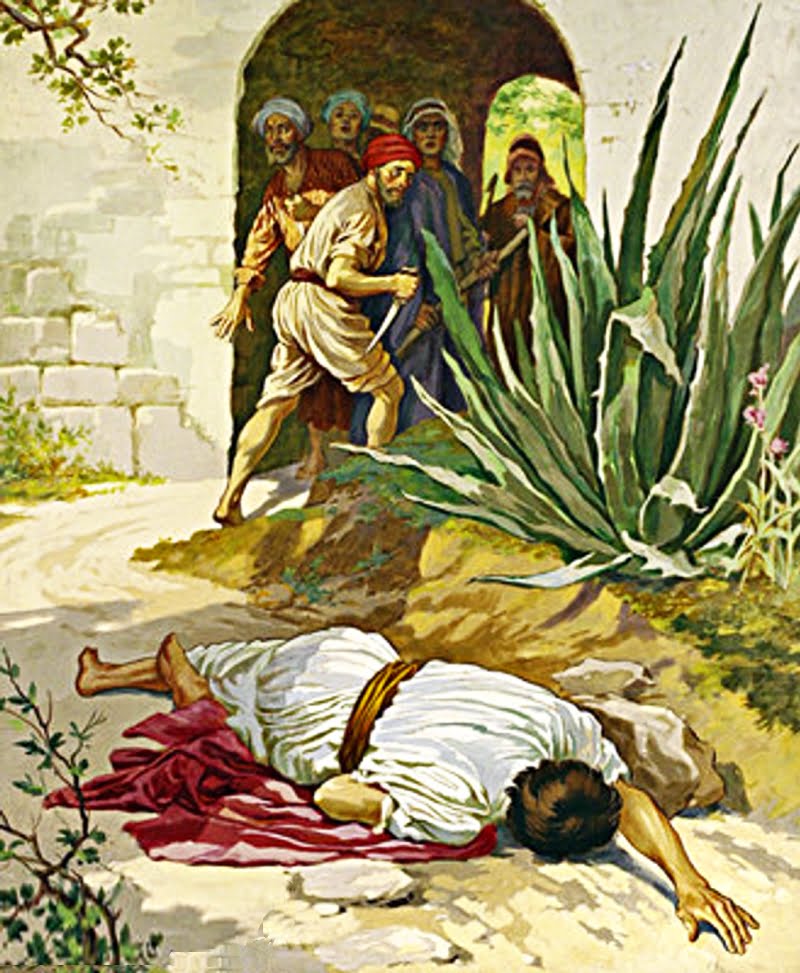
This is a macabre parable. The poor old owner invests heavily in the wine industry and leases his shiny new vineyard out to some villainous tenants. They trash the place and keep all the profits for themselves. The owner sends several real estate agents to inspect his vineyard and  sort it out. Each of them get punched to within an inch of their life. In exasperation the owner sends his son and he is killed.  But the lousy tenants get their comeuppance from the owner and the vineyard passes to new tenants.

So there are several characters for the preacher to choose from. There is the owner, the prophets, the naughty tenants and there are those who unsuspectingly and quite by surprise, have the vineyard given to them. It's the poor old prophets that I would like to think about this morning.

No-one actually applies cheerfully and willingly to be a prophet and there is a good reason why. Let me remind you of the abhorrent time that some of the Old Testament prophets had. Jeremiah is a good one to start with. Listen to the job advertisement.“Before I formed you in the womb I knew you. I consecrated you. I have appointed you. I will make you into a fortified city. I am with you.”Jerry says “Well look that sounds very lovely, but I am too young for this job” and God replies

“Don’t say I am only a youth, for all to whom I send you, you shall go and whatever I command you, you shall speak. I have set you over nations to pluck up and to build and to plant.”

Sounds great doesn’t it. God will take care of everything. How hard can it be? But by chapter 20 Jerry is back and he is not at all happy.

“God you have seduced me and I have let myself be seduced”. Everything has gone wrong. He tells the people to do one thing and they do the opposite. The nation lurches from disaster to catastrophe to calamity. Jerry complains “I have become a laughing stock all the day long”.  And he is literally dropped into the mire by his enemies.

Exhibit B Jonah.

Jonah didn’t want the parish of Nineveh and despite his best efforts to run away on a boat and go in the opposite direction, God makes sure that Jonah gets to Nineveh after-all. Jonah tells God that the people will repent and that you God are far too soft. You’ll probably just forgive them anyway. Imagine Jonah’s fury when that is exactly what happens. Why did I bother God?

Or what about Moses. The guy with the stutter, the guy who is painfully introverted and shy. The guy who just wants to quietly mind his father in laws sheep. A very peaceful quiet lifestyle until the burning bush incident. Suddenly Moses finds himself confronting bully buy Pharaoh and asking in the nicest possible way to let the slaves go free. And even when Moses manages to free the slaves from Pharaoh after all the frightful plagues, the people whinge and complain against Moses for forty long years as they trudge around in Nullarbor.

Hosea is called and has to marry a prostitute. Amos is quite content pruning his sycamore tree  and ends up being accused of high treason. Daniel gets tossed into the lions den and his 3 best mates get thrown into the furnace. And Job… who we are told is blameless and upright gets a list of woes that goes on for 41 chapters.

A couple of things. First, none of these guys and none of us are in this business because we chose to be. God first chose us. God took the initiative. We only thought we had caught God. The reality is that He caught us a long time  ago.

Secondly there is a purpose to all this muck and suffering.  This is the way God works. He is most magnificent and most potent and most loving when his ministry is shown forth in His suffering. This is the way God operates. This is his vehicle to get us to heaven. Through the suffering of his own dear Son. This is why we pray. This is why we care, it is why we hurt, it is why we love. By doing these things we shall carry, push, shove, cajole and harangue our brothers and sisters along the rocky road to Calvary and through the pearly gates of heaven itself.

So the next time you get thrown into the pits, or fed to some lions, or you find yourself at the bedside of someone you love, or in tears before a crucifix, or even very much alone. Please remember that we are part of Christ's body. The body that was pierced and slapped, which died and rose to redeem the whole of creation. You and I simply do our part - gladly, trustingly, like the prophets before us and in the footsteps of Him who became what we are, so that we might become who He is.


A whinge about whinging.

One of the reasons I really like the Old Testament lesson is that it rings true. It sounds authentic. In just one of the stories the Israelites are trudging through the wilderness and they are having a bit of a whinge. This is not the first time or the last time they grumble. They whinge about the lack of bread, they complain about the lack of meat, Moses goes up the mountain to pray and he is gone far too long.
Today the complaint is water. More specifically  there is none. Now when you have a whinge you complain to your fearless leader, to God, or both. In today's reading  it’s Moses who must go to the front desk of the complaints department. Poor old Moses must have wondered why he ever signed on for the job. His first line of defence is to ask them to take a good hard look at themselves. ‘Why do you quarrel with me? Why do you test the Lord?’  But the people will not be assuaged.“Why did you bring us out of Egypt, to kill us and our children and livestock with thirst?” Somehow they have conveniently forgotten that they were slaves in Egypt and they had a pretty hard time of it. Pharaoh was not a generous and compassionate boss.
So then Moses does the only lovely and logical thing and kicks it up stairs to God.‘What shall I do with this people? They are almost ready to stone me.’ That’s when God answers Moses and the whole striking the rock and the water gushing out thing happens. Moses calls the place Massah ("Testing") and Meribah (“Contention")!
This whole sorry incident was so significant that is echoed later in psalm 95. Today, if only you would hear his voice,“Do not harden your hearts as you did at Meribah,  as you did that day at Massah in the wilderness,where your ancestors tested me;   they tried me, though they had seen what I did. The story is a powerful lesson about what NOT to do. And that is whinge.
A few things about whinging.
First there is a big difference between going to someone in confidence and just venting, which in turn enables you to move on. This is not what the Israelites were doing to Moses. They were grumbling persistently, frequently and loudly.
Secondly, I have to fess to up and say that clergy are just as good as whingers as anyone else and sometimes they are better than most. The preacher always preaches primarily for themselves and then for everyone else.
Thirdly and here we are getting to the nub of why whinging is not good for you, whinging  makes you forget the good things of the past. In this case the Israelites had forgotten that God had rescued them from the heinous clutches of the nasty Pharaoh. They had forgot about the mysterious and wonderful crossing of the Red sea. They forgot all the other wonderful things God had done for them.
So whinging robs you of being Thankful. If you’re persistently whinging about God’s track record, you are certainly not giving Thanks which is a really important part of prayer.
Similarly whinging also robs you of the future. It denies you the possibilities of what might lie ahead. We’re too focussed on the here and now. The right here and the right now. Nothing else.Or as one person from internet world eloquently put it“Grumbling myopically zeros in on the present. It embodies an inward-turning, selfish approach centred on the now.” And just as forgetting God's activity in the past robs you of thankfulness, so to being blinkered to God’s potential in the future, robs you of hope.  And the wilderness where there is no hope or thankfulness, is a very dark place to be. We can get to that place very quickly by persisting in whinging.
Something else about whinging. Whinging creates doubt. Notice the last line in the reading. “The Israelites quarrelled and tested the Lord, saying, ‘Is the Lord among us or not?” Doubt is one of those fiendish implements the devil uses subtly and swiftly. He niggles and wriggles, agitates and stirs. He keeps the doubts bubbling, simmering away, often without us realising it. When we whinge we are left doubting. We doubt God, “Why did God bring us out to perish in the wilderness.” We doubt others “This is all your fault Moses you incompetent old fusspot” and tragically we doubt ourselves. “If we had been good boys and girls then we wouldn’t be in this mess”.
The final thing about whinging is that it is terrifyingly infectious. By persistently passing on our whinges to one and all, we not only cement ourselves into the present, but also others. I lived in it at theological college for a little while and as a very naive  22 year old, I didn’t realise how venomous a whinge can be.
So there you go; A whinge about whinging. Do not forget the good things the Lord has done. Reach out and embrace your potential in the future. Realise that God is already in your here and now.

Fr David Muses

It had been a day. You know the sort of thing. Time and circumstance had played their tricks and what had seemed straightforward and uncomplicated had been mangled by the unforeseen.
Then what should have been a delicious conversation went horridly awry because … well because, I was not listening to what was being said. Sure I heard the words alright, but I didn’t hear what was really being communicated. I missed the cues and innuendo. It wasn’t the first time and I am sure that it won’t be the last. Now this has probably never happened to you dear reader, but I offer you my little tale of woe to make sure that the chances are limited and the damage minimised.
As I apologised, and reflected over the carnage I stumbled upon this question. How is it that in an age where communication is easier, that the gentle art of sharing information seems so utterly fraught with danger? Perhaps this is especially so when an image or images are shared. We gawp at the TV when they warn us that the following images may be confronting. Why is that? Do we really thrill to the image of the grizzly and macabre. And who is that decides that this image will be shown and not that one. This story will make it over the line to be included and while that one will never see the light of day? In our hurly burly rush about world, where quantity is often put before quality, it's easy to miss the fine detail that is crucial. So we look, but we don’t always See and we seldom just Gaze and Adore. We speak, but we aren’t always clear about what we want to share. We listen, but we don’t always Hear.--

Chocolate Frog

The parable of the chocolate frog

The other day I went to buy bread at the supermarket. But on the way through the checkout a chocolate frog winked at me, seduced me and before you could say ‘Do you have a loyalty card’ the delectable beast was mine. I tore off the wrapper with a wicked cackle of glee. Bah ha ha! I went to put the helpless little thing in my mouth and.. oh dear. It was only then that I realised that I had my mask on. How naive and forgetful I was. While I hope that my faux pas went unnoticed, it felt like the whole world saw my blunder. There are many lessons here. There is the obvious one about gluttony and did I really need the chocolate frog to make a nutritious balanced diet? There is a lesson about patience. Would it have done me any harm to wait until I got home? There is a lesson that my blooper is really a first world problem. Much like a stolen car or a phone is a first world problem. But dig a little deeper friends, there is a lesson here about developing helpful habits.  This is particularly difficult when we swiftly have to adapt, change and develop new patterns of behaviour in order to look after the most vulnerable in our community. It’s about discipline. It’s doing the new habit even when the novelty has worn off and nothing much seems to be happening. It’s about doing the new habit especially when we don’t want to do it. But then it's not about the chocolate frog or me; it is always about the other person and it must always be about Him.


Parable with a Twist

Let me tell you this morning's parable  with a slightly different twist.

Vic the owner of the vineyard has done this little ritual of employing people each day to go to his vineyard for 32 years now. The ones that are up and about and eagerly looking for work at 7:30am he cheerfully employs and they have never let him down.  But not everyone is quite like that . The next wave when he goes out looking for employees will do the work, but they stop and yak half way down the row of vines, he knows that they eat some of the grapes and flirt with each other.

But the ones that are there at 10:00am are quite rightly those that no one wants to employ. When Vic asks Sheree “Why are you standing idle and not doing work?” He knows full well what the answer will be.

“Because no one has given us any work”. And… thinks Vic quietly to himself.. there is a good reason for that.

You see Sheree and Vic have a bit of a history. Vic knows what Sheree is going to do with her denarius even before they have formally signed the contract.. He knows that she has a nasty little addiction to the juice of the grapes that she is about to go and harvest. He knows that she was there late yesterday morning at the marketplace, hungover and looking for work. He knows that she enjoys a very single way of life. And he knows that she was there at 10am at the marketplace the day before and the day before that.

But today he has a point to make and his point is not directed to Sheree or her down and out mates. It’s directed to some of those who were in the first group of people he employed at the crack of the dawn. It’s towards Jungle John who is a self righteous git.

Notice in the parable that Vic always knows what he is going to do at the end of the day. He directs the Pete paymaster to pay the Sheree and her mates first in front of the diligent and the shiny, in front of Jungle John.. and he directs Pete to give them a denarius. A full days pay.

Why? Because Vic knows that Jungle John will sneer at Sheree and give her a hard time. So Vic the vigneron skilfully sets up the scenario where Jungle John sees that Sheree gets a full days pay and Jungle John wrongfully assumes that he is going to extra. Not so. Jungle John gets what is in his contract and he is pretty jolly cranky about it.

And it is Jungle John who says.

“How come Vic? We have worked hard all day and get a denarius and Sheree who is a gadabout and a soak gets the same pay as us. What gives Vic?" and at that point Vic gently points jungle John to the wording of his contract and gives him a passive aggressive flea in his ear.

I rather like Vic. For lots of reasons. The way he levels the playing field for one thing. The way that he gets Jungle John to have a good long hard look at himself. But perhaps most of all, the way that he is prepared to take yet another chance on Sheree. Just for that one single day Vic is prepared to give her an opportunity and just for that one single day she has some comfort, some reassurance that tonight she will not go hungry. Just for a few hours she has security.

It’s always fun to try and think of what happened after the parable.

‘What if’ as I am fond of saying.  What if….

The next morning when Vic has to go to the market place again and hire some workers, because the fruit really does need to come off the vine and quickly. The cause is urgent and will not wait.

You would like to think that Sheree would be there early and mended her ways and got her stuff together. You would like to think that Vic’s patient generosity has worked its magic. But no, sadly the Sheree rocks up late… again, hungover, looking disheveled and desperate… again.

My friends, the good news is Vic shows us how God loves us. Even though we can develop disappointing habits, even though we are flawed and fractured, even though we are recalcitrant.. it is to these little ones, the scoundrels, the tax collectors, the wine bibbers, the prostitutes and the ones who are slack and stuck in their ways. It is to these late in the morning folk, people like us, people who really don’t deserve yet another chance. It is precisely to people like this that  The Master of the vineyard still comes to us, looks straight through and knows us better than we know ourselves. And He still says to us “Come on. I want you to work in my vineyard. And your reward will be as promised. Nothing more nothing less. Come on there is work to do. The harvest is urgent and it is you I want.” Even so we come.

13th September – Forgiveness

Of the tough gig we call forgiveness.

a reflection for Sunday 13th of September.

I hope that it might be helpful if I retold today's parable in a slightly different way.

A chap is in debt to the king to the tune of ten thousand talents.  I’ll call him Andy. Andy is your typical blue collar, working class man and lived in pre COVID times. For helping to put up the scaffolding so that the roof on the synagogue can be fixed, he gets 1 denarius a day. 6000 denarius equals 1 talent. Andy owes the King 10,000 talents. So  it would take Andy 200,000 years to pay back his debt.  That’s a very serious overdraft!

So the point that Jesus is making is that at one level, our debt to God  is insurmountable and it is incomprehensible.

But read on… there is good news. Andy throws himself on the mercy of the King and says that he is really, really sorry.  His wife is ill and one of his kids has a nasty addiction. The king wipes Andy’s debt and Andy goes off to the inn that night and shouts his mates a round or 7 to celebrate.

And you would have thought that was the end of the story and that they all lived happily ever after. Not so.Andy is owed a hundred denarii which is only 4 months wages, from Bruce who is the barman at the inn. A trifling amount compared to the debt Andy has just been forgiven. Andy’s had a few too many red cordials and at the end of the night demands Bruce pay up. Bruce of course does not just happen to have 4 months wages lying around and asks for an extension. Despite Bruce’s pleas to be given  more time to pay it back, this hard hearted  Andy, threateningly sneers… “Nup… no extensions” and Bruce is thrown into prison.

Enter Rob, Chad, Carly and Alice.  They have been there in the bar and all taken advantage of the pot and parma deal.

Again, it’s pre COVID days so they don’t have to do the take away option. But they have also noticed the goings on with Bruce and Andy. Bruce skiting ever more loudly about how he has been forgiven his enormous debt and his duplicitous, mean attitude to Andy.Now Rob, Chad, Carly and Alice have a choice.  They can let it all just slide and go home thinking “Well that was kind of unfortunate” or they can do something about it. They can choose to do nothing, or they can choose to do something. They do something.They make an appointment with the Kings P.A. Melissa for first thing on Monday morning. When they get in they tell the King the whole story. The pot, the parma, Bruce and Andy. The King is really pinged off and summons Bruce in for a tongue lashing and a prison sentence.

So there is a lesson about calling out injustice when we see it.

Another lesson is that while our God sized debt can be wiped, (because it is God we are dealing with after all), we ought to willingly practice the same forgiveness with those around us.

Now this is a very difficult thing to do. Particularly when Jesus issues the punch line right at the end. “So my heavenly Father will also do to every one of you, if you do not forgive your brother or sister from… your… heart.”You see, any one can speak the words “I forgive you” but to mean it and to expunge the debt, is something quite different. The master sets the bar eye-wateringly high because He knows nothing less will work.

You can either choose to forgive from your heart or not.

And not to forgive from the heart will mean that your heart can turn very quickly to stone. It will be become heavy and lifeless and unable to feel. It’s why they call it hardness of heart.  So for our own sake, for the future of all our relationships, we should forgive from the heart. It’s a tough gig.Can it be done? Yes. There are two examples that come quickly to mind. One was the Master as he was dying at the brutal hands of others. “Father Forgive.. for they do not know what they are doing.”And in modern times I have seen it in a courtroom in New Zealand. The person doing the forgiving happened to grow up in a culture and faith with a different name to ours, but her words were the sort of Christian that I hope one day to be. Janna Ezat, whose son Hussein Al-Umari was murdered at Al Noor Mosque, told the gunman she forgives him."I decided to forgive you Mr Tarrant because I don't have hate. I don't have revenge," she said directly to the terrorist. "In our Muslim faith we say . . . we are able to forgive, forgive. "I forgive you. Damage was done and Hussein will never be here so I have only one choice to forgive you.”Now if that was me.. if that was you… Janna not only knew the truth, but she spoke the truth as did the Master. There is only one choice.

Fr David’s Musings

Of fogged up glasses

Have you noticed that when you  are wearing a mask your glasses fog up? This makes selecting the right papadums at the supermarket an extremely ambitious project. I squint, wriggle my glasses, adjust the mask and try not to breathe too heavily. It’s going to take me a little while to get used to this.But this business of seeing things and yet not seeing them has always been so. We see people, but we don’t See them. We see a situation, but we have no idea of the complexities and chemistry that make it what it is. A happy school yard of raucous children appears as one thing, but we never know what is going on inside each student, their family background or the frazzled teacher in the corner  who's trying to keep it all together. This murky vision also applies to the really big picture. Every so often we glimpse something that we cannot explain. Two people kiss and fall in love. The pursuant sense of vocation that will not go away, the sure and certain knowledge that we are mysteriously loved, warts and all.It's a bit like our developing perception of the people and world as we mature. Trust evaporates, budgets and tax become bull-nosed realities. People aren’t always as forgiving as Mum and Dad, or as well behaved.In time I shall not have to wear a mask, my glasses won’t fog up and I shall see clearly again.  My mate Paul put it all like this. “When I was a child, I spoke like a child, I thought like a child, I reasoned like a child. For now we see in a mirror dimly, but then face to face. Now I know in part; then I shall understand fully, even as I have been fully understood.”

Fete Questions

SOME THOUGHTS ABOUT OUR FETE

Due to COVID our Fete might well be a bit different this year. We could abandon it completely and just go for next year.
We could encourage folk if they were able to give a similar amount to what they gave /contributed last year.
and / or
have an internet auction
and / or things that are not listed above and which Fr. David has not thought of. He would encourage your wisdom and feedback about this. We do need to be sensitive to those businesses that have had a ghastly year.

PC and Other Matters

These are the folk you nominated to be on Parish Council. There are exactly the right number so they are duly elected. Great choices people!

Stewart Otton (Rector's warden), Claire Hilsdon (People's warden), Peter Walsgott (People's warden)

Graeme Mustow, Jenny Rankin, Tony Roe, Jannie Ryan,

Gavin Wallis,

Elisabeth Cumming, Earlene Gellert,

Caroline Mills, Maree West

Observers Jason Tonisson, Liz Nichol, Nicole Kerr, Craig Everingham

Parish Nominators.. Hoorah. The following people have kindly said that they would be thrilled to become parish nominators in case Fr. David doesn't make it out from underneath the no. 9 bus.

Stewart Otton, Gavin Wallis and Betty Lacy. Supplementaries are David Hilsdon and Sue Mustow

SOME THOUGHTS ABOUT OUR FETE

Due to COVID our Fete might well be a bit different this year. We could abandon it completely and just go for next year.We could encourage folk if they were able to give a similar amount to what they gave  /contributed last year.and / or have an internet auction and / or things that are not listed above and which Fr. David has not thought of. He would encourage your wisdom and feedback about this. We do need to be sensitive to those businesses that have had a ghastly year.

And in more voting....

The results of the poll for the time of the Saturday night vigil.

5:00pm all year round  4
6:00pm all year round  2
5:00pm non daylight saving time / 6:00pm daylight saving time  8

Thank you very much to all who participated! Our first 6:00pm in daylight saving time will be Saturday 10th of October.

Fr David’s Musings

Fr. David's musings.

The message of the masks

Pretty ones, masculine ones, darlick ones, feminine ones, nondescript ones, hospital ones, funny ones, dotty ones, bandana ones. They are prolific and colourful. They are good for us and very good for others.

Yes, it is true that they hide a bit of us and we don’t see everything; but can I put it to you that this has been true well before Monday 3rd of August 2020.

There are parts of us that always lie hidden from others. Things that we consciously choose not to expose to the world. An unfortunate past, a pregnancy, the secret that a friend has shared with us. These are the things that should lie hidden and not be unmasked.

But there are other things that perhaps should come to light and be revealed for the greater good of all. The gift of compassion, a quirky sense of humour, a talent that we seldom use. Tears also come under this very wide heading. Why is it that we feel so embarrassed and apologetic about something that is so very natural, normal, healthy and healing?

Perhaps the message of the masks is to tighten our resolve to keep hidden that which needs to stay hidden and has been entrusted to us as a great privilege. But also to show forth those God given gifts that we are supposed to share, enjoy and reveal to a world that aches to see them. And maybe if, behind the masks we glimpse something of beauty in another, then we ought to be the agent of encouragement. To foster opportunities where that gift might be utilised for the healing and enhancement of all. To draw forth these hidden gifts which are not always obvious. The willing ear, the compassionate heart, the prayer that is offered in secret, the loyalty of friendship. The mask that says ‘I care about your health and I care about you.’

PNG Martyrs

A reflection on the martyrs of Papua New Guinea

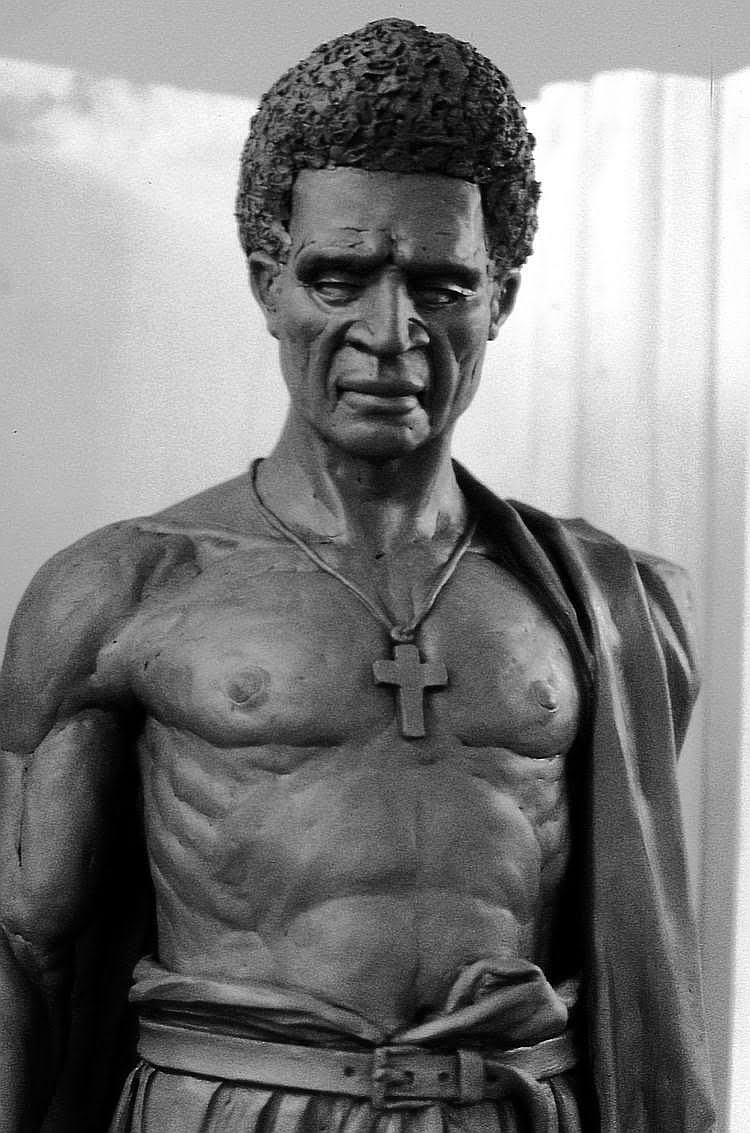
Today's story begins at Westminster abbey in London.  Over the west door of the abbey there are statues of 20th century martyrs.  Martin Luther King Junior, Oscar Romero and Dietrich Bonhoffer are some of the more well known martyrs. One that you may not have heard of is a gentleman Lucian Tapiedi. Lucian was born in 1921 or 1922, on the north coast of Papua New Guinea. He was taught at mission schools and in 1939, he entered St Aidan’s teacher training college. Here Lucian became known as a diligent and cheerful presence, fond of physical recreation but also a musician. In 1941 he became part of the staff as a teacher and evangelist.
You have probably realised that this was war time in Papua New Guinea and worked out that this story does not end well for Lucian.  War was marching on towards PNG and in January 1942 the Anglican bishop, Philip Strong, who at that stage had responsibility for the Anglican souls in PNG, broadcast an appeal to them to stay at their work, come what may. Many of the missionaries themselves wished this, and had already resisted calls to turn to safety.At the time Lucian was one of two Papuans who cared for a small group of missionaries, two of them from our diocese of Ballarat, Mavis Parkinson and May Hayman. They were  hiding in the bush near Isivita from July 22nd 1942, making daily trips from the village with food. As the hostilities escalated their position became more tenuous and they decided to abandon the hide-out and make for the coast. Lucian made the decision to travel with them as a guide. He didn’t have to, but did not want to abandon the missionaries with whom he worked.They had only travelled a short distance when it was found that the carriers had left a package behind, some think on purpose. Lucian offered to return for it and was never seen again by the rest of the party. It is possible that this was the intention all along, to separate him from the rest, in order to kill him. Lucian was 20. Now at Sangara mission station in Papua New Guinea there is a row of graves: Mavis Parkinson, May Hayman and the third is the grave of Lucian.
A total of 333 Christians lost their lives in New Guinea during the war. The greatest number of those who died - 198 - were Roman Catholics. But there were also Methodists, Salvationists, Lutherans, Anglicans, members of the Evangelical Church of Manus, and Seventh Day Adventists.And you might have thought that was the end of that. But there is a twist to the story. It transpires that the man named Hivijapa, had killed Lucian near a stream by Kurumbo village. Hivijapa later converted to Christianity. He took as his new baptismal name… Lucian.. and built a church dedicated to the memory of his victim at Embi.
So there is a very real sense in which their story is our story, which is Our Lord's story, which never ends and is still unfolding, here in Hamilton all these years later.
A few random thoughts to finish with.
First, we usually think of martyrs being people who died a very long time ago within the first 5 centuries after Christ. The events I’ve outlined happened less than 100 years ago, and there were many more martyrs in the 20th century. But no matter when they died, or where, they are our brothers and sisters in Christ. They inspire us and they pray for us still.
Secondly, vocation finds you. Not vice versa. Lucian, Mavis and May did not set out to be martyrs. They did not write a little note in their diary the week before they died, saying that they had an appointment with sister death. Nor was it something they aspired to do. When asked what they wanted to do when they grew up, they would not have said “I want to be a martyr” Like marriage, parenting and ordination the vocation finds you. Another one of  my countless pet theories is that farming is also a vocation.
Thirdly, even when things go awry, God can still use the worst of human mistakes to His glory. A bit like a picture when a child colours outside the lines. It can still be a beautiful picture and useful in the big scheme of things. In the case of the martyrdom of Lucian, nothing could have been further from God's plan than his untimely death, but God still used it for His glory and Lucian’s single minded selflessness is an example for us to follow all these years later. Lucian’s martyrdom is still bearing the luscious fruits of encouragement, inspiration and prayer.
Finally, God’s love is unstoppable. It is unstoppable even when and perhaps especially when, we are oblivious to it or when tragedy wallops us between the eyes. For His love is most powerful when against all odds, sin gets in the way to confuse and bewilder us. So if God can work wonders in war time in remote PNG, He is most certainly working them now in 2020, in the postcode of 3300.

A reflection for Sunday 23rd of August

August 23rd.

This morning we have the story of the child Moses being found by Pharaoh's daughter. There are several characters in this little story.

First, there is Moses Mum. She is not named here but later  we will learn that she is Jochebed. Jochebed lives in a time of political tyranny. The nasty king orders the midwives to kill all the Hebrew baby boys. So when Jochebed gives birth to a boy she is keen to hide it for fear of the child’s life. It must have been a bitter sweet time. After 3 months there is only one course of action left. To send him away. I cannot imagine what that must have felt like and what that decision cost Jochebed. She has no way of knowing what will happen to her son, whether he will survive, grow up and flourish, or whether he will perish. All she is really sure of, is that if the child is  discovered in her care, death will follow swiftly.As I will point out next Jochebed is actually reunited with her son while she breastfeeds him and then for a second time she must hand him over to Pharaoh's daughter. So I find myself having the deepest admiration and sympathy for Jochebed.

Secondly there is the older sister of Moses. She has a pivotal role in all of this, for she follows the little raft and just coincidentally happens to be there when Pharaoh's daughter discovers the precious cargo. And she just happens to know a suitable wet nurse who will look after the child. Even though she is quite young, her quick thinking saves Moses' life. Even more powerfully, she reunites Moses and Jochebed for a little while.  Thirdly there is Moses himself, who as a three month old has no idea of his sailing trip which means he is to grow up in Pharaoh's household, faith and culture, instead of with his mum and Dad as a faithful Jew.

And then there is pharaoh's daughter herself. She sees the basket and gets one of her lackey’s to retrieve it. When she looks inside, she sees a baby. What's more it is a boy and she rightly identifies his faith.“This is one of the Hebrew children”.Later on Pharaoh's daughter will call him Moses which means ‘pulled out’ for I pulled him out of the water. Now while this is a very old story indeed, it resounds fresh, clear and loudly today. All sorts of people from different cultures and different ways of life come to us on the water. It would have been very easy for Pharaoh's daughter to say “Nup! This is a baby boy from the Hebrew faith and he will be nothing but trouble. Send him back to where he came from”. But pharaoh's daughter acts with compassion and Moses goes on to be one of the great heroes of the Jewish faith and therefore our faith.Our response to those who, out of fear, are sent to us for a fresh chance, a fresh opportunity and a new beginning ought to be the same.

Not just because it's a cute, adorable 3 month old child, but for those of us from a Christian faith, all we have to do is remember that Jesus too was once a squawking 3 month baby boy. Life is sacred and holy; no matter the age, the culture or the gender. Like Moses' older sister and Pharaoh's daughter, we can make a very real difference in people's lives and especially those people who are as different from us, as pharaoh's daughter was to a Hebrew baby boy. Something else to think about.You may have already noticed several parallels between Moses infancy and Our Lord's infancy. Both were born in political instability. Both flee, both are actively sought after to be killed. Another similarity. If you were to read on from this morning's first lesson you would see that we jump from Moses being an infant, to Moses being an adult in one fleeting sentence.“ In the course of time Moses grew up.” And that’s it. He’s now a fully grown guy. We are told nothing about his toddling around or teenage years.

So too with Our Lord. There are about 30 years that are hidden. We are told next to nothing about them. And while it might be frustrating and of course we would like to know more, I see it as a golden opportunity to ponder and imagine. There are no wrong answers here. What if …???It’s also an echo of our hidden ministry. Yours and mine. I conclude with some words from Nouwen who put it this way.

“We should never forget that before all his mighty works and words,
Jesus lived most of his hidden life in a small town far away from all the great people,
great cities and great events.
If we want to follow Jesus by words and deeds in service of his kingdom,
we must first of all strive to follow Jesus in his simple,
unspectacular and very ordinary hidden life.”