PC and Other Matters

These are the folk you nominated to be on Parish Council. There are exactly the right number so they are duly elected. Great choices people!

Stewart Otton (Rector's warden), Claire Hilsdon (People's warden), Peter Walsgott (People's warden)

Graeme Mustow, Jenny Rankin, Tony Roe, Jannie Ryan,

Gavin Wallis,

Elisabeth Cumming, Earlene Gellert,

Caroline Mills, Maree West

Observers Jason Tonisson, Liz Nichol, Nicole Kerr, Craig Everingham

Parish Nominators.. Hoorah. The following people have kindly said that they would be thrilled to become parish nominators in case Fr. David doesn't make it out from underneath the no. 9 bus.

Stewart Otton, Gavin Wallis and Betty Lacy. Supplementaries are David Hilsdon and Sue Mustow

SOME THOUGHTS ABOUT OUR FETE

Due to COVID our Fete might well be a bit different this year. We could abandon it completely and just go for next year.We could encourage folk if they were able to give a similar amount to what they gave  /contributed last year.and / or have an internet auction and / or things that are not listed above and which Fr. David has not thought of. He would encourage your wisdom and feedback about this. We do need to be sensitive to those businesses that have had a ghastly year.

And in more voting....

The results of the poll for the time of the Saturday night vigil.

5:00pm all year round  4
6:00pm all year round  2
5:00pm non daylight saving time / 6:00pm daylight saving time  8

Thank you very much to all who participated! Our first 6:00pm in daylight saving time will be Saturday 10th of October.

Fr David’s Musings

Fr. David's musings.

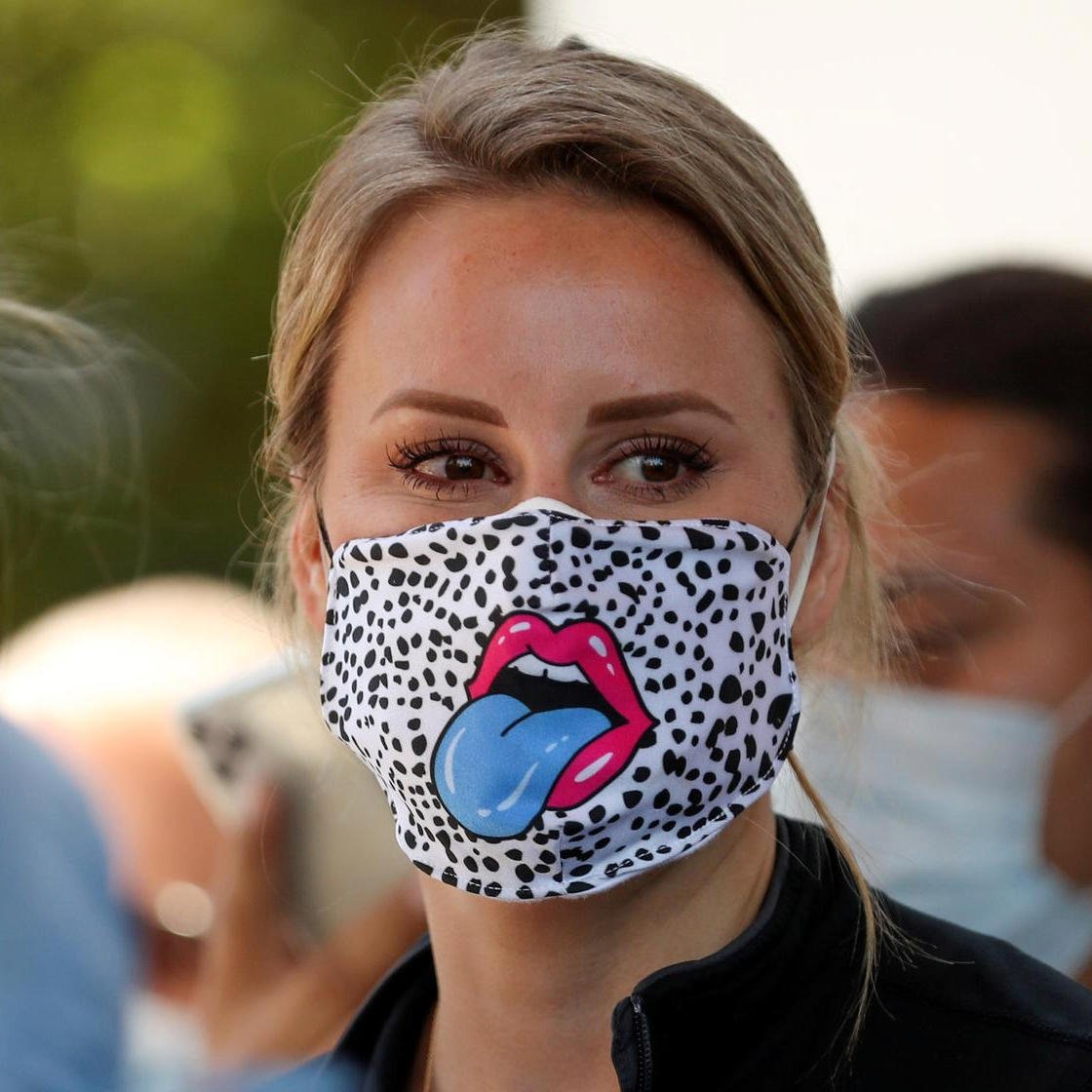
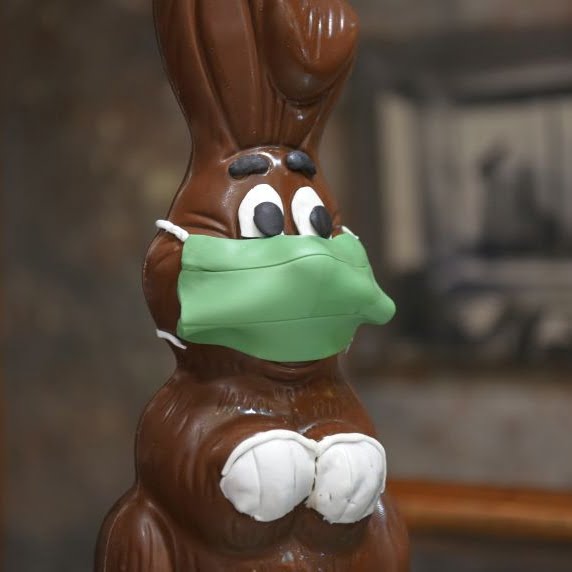
The message of the masks

Pretty ones, masculine ones, darlick ones, feminine ones, nondescript ones, hospital ones, funny ones, dotty ones, bandana ones. They are prolific and colourful. They are good for us and very good for others.

Yes, it is true that they hide a bit of us and we don’t see everything; but can I put it to you that this has been true well before Monday 3rd of August 2020.

There are parts of us that always lie hidden from others. Things that we consciously choose not to expose to the world. An unfortunate past, a pregnancy, the secret that a friend has shared with us. These are the things that should lie hidden and not be unmasked.

But there are other things that perhaps should come to light and be revealed for the greater good of all. The gift of compassion, a quirky sense of humour, a talent that we seldom use. Tears also come under this very wide heading. Why is it that we feel so embarrassed and apologetic about something that is so very natural, normal, healthy and healing?

Perhaps the message of the masks is to tighten our resolve to keep hidden that which needs to stay hidden and has been entrusted to us as a great privilege. But also to show forth those God given gifts that we are supposed to share, enjoy and reveal to a world that aches to see them. And maybe if, behind the masks we glimpse something of beauty in another, then we ought to be the agent of encouragement. To foster opportunities where that gift might be utilised for the healing and enhancement of all. To draw forth these hidden gifts which are not always obvious. The willing ear, the compassionate heart, the prayer that is offered in secret, the loyalty of friendship. The mask that says ‘I care about your health and I care about you.’

PNG Martyrs

A reflection on the martyrs of Papua New Guinea

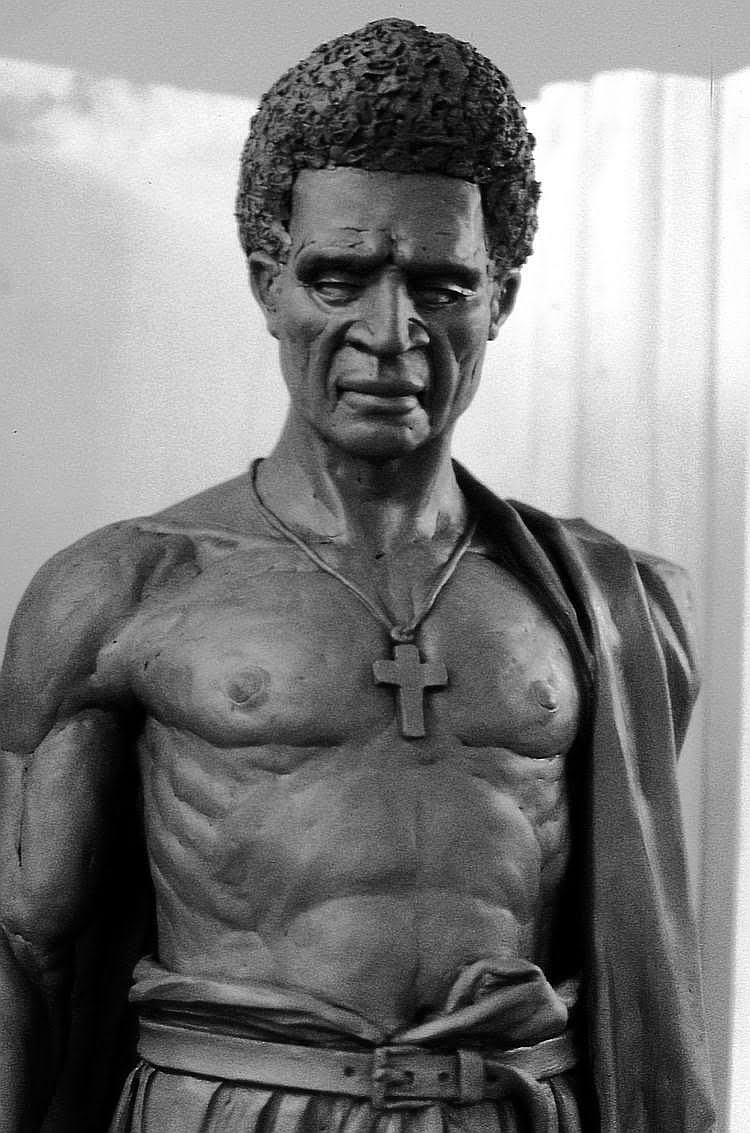
Today's story begins at Westminster abbey in London.  Over the west door of the abbey there are statues of 20th century martyrs.  Martin Luther King Junior, Oscar Romero and Dietrich Bonhoffer are some of the more well known martyrs. One that you may not have heard of is a gentleman Lucian Tapiedi. Lucian was born in 1921 or 1922, on the north coast of Papua New Guinea. He was taught at mission schools and in 1939, he entered St Aidan’s teacher training college. Here Lucian became known as a diligent and cheerful presence, fond of physical recreation but also a musician. In 1941 he became part of the staff as a teacher and evangelist.
You have probably realised that this was war time in Papua New Guinea and worked out that this story does not end well for Lucian.  War was marching on towards PNG and in January 1942 the Anglican bishop, Philip Strong, who at that stage had responsibility for the Anglican souls in PNG, broadcast an appeal to them to stay at their work, come what may. Many of the missionaries themselves wished this, and had already resisted calls to turn to safety.At the time Lucian was one of two Papuans who cared for a small group of missionaries, two of them from our diocese of Ballarat, Mavis Parkinson and May Hayman. They were  hiding in the bush near Isivita from July 22nd 1942, making daily trips from the village with food. As the hostilities escalated their position became more tenuous and they decided to abandon the hide-out and make for the coast. Lucian made the decision to travel with them as a guide. He didn’t have to, but did not want to abandon the missionaries with whom he worked.They had only travelled a short distance when it was found that the carriers had left a package behind, some think on purpose. Lucian offered to return for it and was never seen again by the rest of the party. It is possible that this was the intention all along, to separate him from the rest, in order to kill him. Lucian was 20. Now at Sangara mission station in Papua New Guinea there is a row of graves: Mavis Parkinson, May Hayman and the third is the grave of Lucian.
A total of 333 Christians lost their lives in New Guinea during the war. The greatest number of those who died - 198 - were Roman Catholics. But there were also Methodists, Salvationists, Lutherans, Anglicans, members of the Evangelical Church of Manus, and Seventh Day Adventists.And you might have thought that was the end of that. But there is a twist to the story. It transpires that the man named Hivijapa, had killed Lucian near a stream by Kurumbo village. Hivijapa later converted to Christianity. He took as his new baptismal name… Lucian.. and built a church dedicated to the memory of his victim at Embi.
So there is a very real sense in which their story is our story, which is Our Lord's story, which never ends and is still unfolding, here in Hamilton all these years later.
A few random thoughts to finish with.
First, we usually think of martyrs being people who died a very long time ago within the first 5 centuries after Christ. The events I’ve outlined happened less than 100 years ago, and there were many more martyrs in the 20th century. But no matter when they died, or where, they are our brothers and sisters in Christ. They inspire us and they pray for us still.
Secondly, vocation finds you. Not vice versa. Lucian, Mavis and May did not set out to be martyrs. They did not write a little note in their diary the week before they died, saying that they had an appointment with sister death. Nor was it something they aspired to do. When asked what they wanted to do when they grew up, they would not have said “I want to be a martyr” Like marriage, parenting and ordination the vocation finds you. Another one of  my countless pet theories is that farming is also a vocation.
Thirdly, even when things go awry, God can still use the worst of human mistakes to His glory. A bit like a picture when a child colours outside the lines. It can still be a beautiful picture and useful in the big scheme of things. In the case of the martyrdom of Lucian, nothing could have been further from God's plan than his untimely death, but God still used it for His glory and Lucian’s single minded selflessness is an example for us to follow all these years later. Lucian’s martyrdom is still bearing the luscious fruits of encouragement, inspiration and prayer.
Finally, God’s love is unstoppable. It is unstoppable even when and perhaps especially when, we are oblivious to it or when tragedy wallops us between the eyes. For His love is most powerful when against all odds, sin gets in the way to confuse and bewilder us. So if God can work wonders in war time in remote PNG, He is most certainly working them now in 2020, in the postcode of 3300.
A reflection for Sunday 23rd of August

August 23rd.

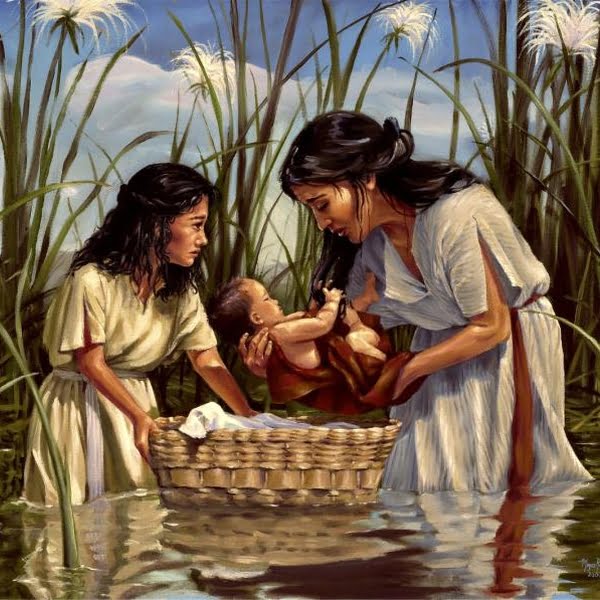
This morning we have the story of the child Moses being found by Pharaoh's daughter. There are several characters in this little story.

First, there is Moses Mum. She is not named here but later  we will learn that she is Jochebed. Jochebed lives in a time of political tyranny. The nasty king orders the midwives to kill all the Hebrew baby boys. So when Jochebed gives birth to a boy she is keen to hide it for fear of the child’s life. It must have been a bitter sweet time. After 3 months there is only one course of action left. To send him away. I cannot imagine what that must have felt like and what that decision cost Jochebed. She has no way of knowing what will happen to her son, whether he will survive, grow up and flourish, or whether he will perish. All she is really sure of, is that if the child is  discovered in her care, death will follow swiftly.As I will point out next Jochebed is actually reunited with her son while she breastfeeds him and then for a second time she must hand him over to Pharaoh's daughter. So I find myself having the deepest admiration and sympathy for Jochebed.

Secondly there is the older sister of Moses. She has a pivotal role in all of this, for she follows the little raft and just coincidentally happens to be there when Pharaoh's daughter discovers the precious cargo. And she just happens to know a suitable wet nurse who will look after the child. Even though she is quite young, her quick thinking saves Moses' life. Even more powerfully, she reunites Moses and Jochebed for a little while.  Thirdly there is Moses himself, who as a three month old has no idea of his sailing trip which means he is to grow up in Pharaoh's household, faith and culture, instead of with his mum and Dad as a faithful Jew.

And then there is pharaoh's daughter herself. She sees the basket and gets one of her lackey’s to retrieve it. When she looks inside, she sees a baby. What's more it is a boy and she rightly identifies his faith.“This is one of the Hebrew children”.Later on Pharaoh's daughter will call him Moses which means ‘pulled out’ for I pulled him out of the water. Now while this is a very old story indeed, it resounds fresh, clear and loudly today. All sorts of people from different cultures and different ways of life come to us on the water. It would have been very easy for Pharaoh's daughter to say “Nup! This is a baby boy from the Hebrew faith and he will be nothing but trouble. Send him back to where he came from”. But pharaoh's daughter acts with compassion and Moses goes on to be one of the great heroes of the Jewish faith and therefore our faith.Our response to those who, out of fear, are sent to us for a fresh chance, a fresh opportunity and a new beginning ought to be the same.

Not just because it's a cute, adorable 3 month old child, but for those of us from a Christian faith, all we have to do is remember that Jesus too was once a squawking 3 month baby boy. Life is sacred and holy; no matter the age, the culture or the gender. Like Moses' older sister and Pharaoh's daughter, we can make a very real difference in people's lives and especially those people who are as different from us, as pharaoh's daughter was to a Hebrew baby boy. Something else to think about.You may have already noticed several parallels between Moses infancy and Our Lord's infancy. Both were born in political instability. Both flee, both are actively sought after to be killed. Another similarity. If you were to read on from this morning's first lesson you would see that we jump from Moses being an infant, to Moses being an adult in one fleeting sentence.“ In the course of time Moses grew up.” And that’s it. He’s now a fully grown guy. We are told nothing about his toddling around or teenage years.

So too with Our Lord. There are about 30 years that are hidden. We are told next to nothing about them. And while it might be frustrating and of course we would like to know more, I see it as a golden opportunity to ponder and imagine. There are no wrong answers here. What if …???It’s also an echo of our hidden ministry. Yours and mine. I conclude with some words from Nouwen who put it this way.

“We should never forget that before all his mighty works and words,
Jesus lived most of his hidden life in a small town far away from all the great people,
great cities and great events.
If we want to follow Jesus by words and deeds in service of his kingdom,
we must first of all strive to follow Jesus in his simple,
unspectacular and very ordinary hidden life.”

The not so gentle art of finger pointing.

To my horror a memory bubbled to the surface the other day. I recalled with shame that I was denigrating one of my fellow clergy. Quite a tirade it was and my ever so patient listener took it all in good natured silence. When I had exhausted my verve and vocabulary, they quietly gave me the rest of the picture.

Was I aware for example, that Fr. Blogg’s wife suffered from a rare medical condition that sapped time, energy and dollars? Did I know about their child's addiction and there were some other unmentionable factors as well.

I apologised and went away chastened and disappointed with myself. Not only was I more sympathetic to Fr. Bloggs next time I met him (in fact I was almost effusive) but it also taught me a lot about the ‘not so gentle art of finger pointing’.

We have no idea what another is going through. No concept at all. We are oblivious to the daily trickiness and complexities that others stumble into, wade through, and the monsters they wrestle with.   Yet we are swift to engage in the not so gentle finger pointing sport particularly behind their back and especially with our fearless leaders no matter their platform or area of expertise.

Would it be such a terrible idea if instead of pointing our finger with retribution and scorn, we instead pointed at another with praise and support? We might disagree in principle with another on all sorts of issues and ideologies, but deep down they are just like us. They laugh, they cry, they get grumpy, they love and are loved. We’re not so different. In this little fleeting life, our opportunities to point a finger with understanding and encouragement evaporate all too swiftly.

A reflection for Sunday Of Sacred Spaces

August 16th

When it's not COVID season, I enjoy the undeserved privilege of going to people's homes.  Sometimes you get a sense of the vibe that is in the walls. There are some homes where the atmosphere is downright fractious. Nothing is said, nothing much happens and yet you know that all is not right and all is not as it should be.There are other homes where it is sweetness, light and comfort. This is a good place to be. People have loved and laughed here. You feel welcome and encompassed by the love that has been relished. This then is a sacred space and I want to reflect on some sacred spaces today. There are areas or spaces that are consciously set aside for the contemplation of and enjoyment of, the divine.
The space where God is sought and found.At an obvious level, our churches are a sacred space. They are consecrated, and set apart. Prayer is offered here and over the years, the walls soak up the prayers, like a sponge. In turn, when others come into our church, they are able to experience something of the divine. The rest of the noisy world is shut off and for a little while, sometimes all too briefly, it's just God and the individual.We might have a sacred space at home. An area that is designated just for contemplation and meditation. It might be a comfy chair, a little study nook or a seat at the table. There might be a crucifix, a bible or a favourite devotional book. This is the sacred space where the wrestle of prayer occurs, this where we sort God out and this where He sorts us out. This is the sacred space where we understand that it is OK to go very softly.
The world doesn’t have to be converted in a simple 3 point plan next week, and it really is alright if I am not perfect by September 12th.This area, this space… is just as important as the kitchen for both are sources of sustenance and nurture.  And in these befuddling times we need to take very good care of ourselves and to make sure that we are fed both physically and spiritually.Then there is that sacred space deep within us. It is not a tangible space, but often we would point to our chest or heart if we had to describe where it was physically. This is the sacred space, where God seems to speak quietly, yet powerfully to us and often we have a heart full of things we want to offload onto Him.Mother Mary is another living, sacred space where God dwells. For 9 months she carried the saviour of the world in an intimate and beautiful way that no other human being experienced. She gave birth to the Saviour and thus she gave Him to the world. And in giving Him to the world, allowed Him to be vulnerable and to experience the worst that human beings can inflict on each other.When you think about it, God the Father could have chosen any woman, at any place, in any time in history.  In his wisdom and love He chooses this teenage peasant lass from a backwater town, probably about the size of Coleraine, to be the mother of God.
Fr. David’s pet theory is that God chooses the lowly to thumb his nose at the haughty and to reassure the downtrodden. A bit like always barracking for the underdog at the footy. Like Mother Mary, we too are called to have a living intimacy with God’s Son. We are called to nurture Him in that sacred place deep within us. We are called to give Him and share Him with the world, so bursting is our joy, so great is this treasure, that we simply must share it with others. And when we think about it some more, if the body of Jesus  is at the altar on Sunday, then so too Mother Mary must also be with us.Mother Mary made room for God in her life. Like all mothers she gave up not only physical space, but emotional, and psychological space. In that lovely irony, when you give up something for someone else, it finds you, comes back to you and floods your soul in ways that you could never imagine in your wildest longings and dreams.Mother Mary looked after the outward, physical space, but she also knew how to look after the inward, sacred space and that is what I would encourage you to do. It is what I know I need to do.
Recognise that the sacred space is around you and within. Nurture it, sustain it, allow it to grow and flourish. Weed out and prune the junk. Prosper the good stuff. Make room for God and take His  written word which is His living word, into that sacred space within you. Then give it to those around you, so that all may delight in Him.

Fr. David’s musings

It was very early in the morning and still dark when I toddled across to morning prayer. It had not been a pretty time. I had dreamt badly, I was concerned for someone in hospital and there was that tricky letter to write. Multiples of paper had screamed at me for urgent attention.

When it came time to find some words there were none. The well had run dry and there was only sand at the bottom. I sat for what seemed to be the longest time and …nothing. But much later some words did come. They came from a lady leader of another country who spoke into the face of unspeakable horror. She recalled the time when she could not find any words.

What words adequately express the pain and suffering of 50 men, women and children lost, and so many injured? What words capture the anguish of our Muslim community being the target of hatred and violence? What words express the grief of a city that has already known so much pain?

I thought there were none. And then I came here and was met with this simple greeting. As-salaam Alaikum. Peace be upon you.

They were simple words, repeated by community leaders who witnessed the loss of their friends and loved ones. Simple words, whispered by the injured from their hospital beds. Simple words, spoken by the bereaved and everyone I met who has been affected by this attack.

As-salaam Alaikum. Peace be upon you.

They were words spoken by a community who, in the face of hate and violence, had every right to express anger but instead opened their doors for all of us to grieve with them. And so we say to those who have lost the most, we may not have always had the words.

We may have left flowers, performed the haka, sung songs or simply embraced. But even when we had no words, we still heard yours, and they have left us humbled and they have left us united.”

It was very early in the morning and still dark, when He came and said to me ‘Peace be with you’.

Of Our AGM

You would be painfully aware that we can only have 20 people inside for Church gatherings. This means that at the moment our Parish AGM will be limited to 20 people. We really hope that this will change in time and everyone can come.(Hoorah)

In order to allow ample time for the possibility of election and for the forms to go back and forth, the AGM has been set for September 27th.

If you would like to nominate a People's Warden please use the yellow form.

If you would like to nominate a parish councillor please use a blue form.

If you are over 18 and have received communion more than 3 times in the last year you need to fill out a white form affectionately known as schedule A.

Nomination forms and any items for general business need to be in by the end of August.

An item for general business might look like this. This Annual meeting congratulates the work of the organists in our parish and assures them of support and prayers into the future". moved .... 2nded ...

Got a question. Please see that local friendly priesty guy Fr. David.

Fr. Davids mini reflection

Most of my best words are pinched or inspired by someone else. The phrase “Self discipline for the good of everyone else” is an excellent example. I have shamelessly filched it from another source.

Its tempting to think that self discipline is a new thing that was just popped in yesterday, but actually self discipline has been around ever since Adam and Eve were tempted to eat that yummy, succulent fruit.

But we are particularly aware of the need for self discipline at this time and in this place. The stakes are so much higher now. In fact, quality of life and life itself, are the highest possible currency.

Self discipline requires something of us. There is a cost to be paid and we make this payment for someone else, not for ourselves. It is an outward looking gesture and the focus is on someone other than little ol me.

It’s good news, not just for the feel good factor. Not just because we might feel smug. It is great news because we realise that it isn’t always about me; my wants, my needs, my rights. It shouldn’t always have to be about me. 

And its not just about the self discipline, sanitiser, face masks, testing and 1.5 metres. The other 50% of the question is what is going to be best for the most vulnerable and the voiceless. And what is going to be most helpful for those who relentlessly, sacrificially tend them.

I come back to the Master pinned to cross, who in the ultimate act of self discipline, exclaims silently but unequivocally, it’s about the other. The I crossed out. So in this time of tumult we set the bar just a smidge higher, take a deep breath, … run like hec and jump. “Self discipline for the good others”. What a great turn of phrase. I wish I had thought of it.

Most of my best words are pinched or inspired by someone else. The phrase “Self discipline for the good of everyone else” is an excellent example. I have shamelessly filched it from another source.

Its tempting to think that self discipline is a new thing that was just popped in yesterday, but actually self discipline has been around ever since Adam and Eve were tempted to eat that yummy, succulent fruit.

But we are particularly aware of the need for self discipline at this time and in this place. The stakes are so much higher now. In fact, quality of life and life itself, are the highest possible currency.

Self discipline requires something of us. There is a cost to be paid and we make this payment for someone else, not for ourselves. It is an outward looking gesture and the focus is on someone other than little ol me.

It’s good news, not just for the feel good factor. Not just because we might feel smug. It is great news because we realise that it isn’t always about me; my wants, my needs, my rights. It shouldn’t always have to be about me. 

And its not just about the self discipline, sanitiser, face masks, testing and 1.5 metres. The other 50% of the question is what is going to be best for the most vulnerable and the voiceless. And what is going to be most helpful for those who relentlessly, sacrificially tend them.

I come back to the Master pinned to cross, who in the ultimate act of self discipline, exclaims silently but unequivocally, it’s about the other. The I crossed out. So in this time of tumult we set the bar just a smidge higher, take a deep breath, … run like hec and jump. “Self discipline for the good others”. What a great turn of phrase. I wish I had thought of it.

A reflection for August 9th

Last week Jesus made a valiant, but unsuccessful attempt to carve out some time to grieve cousin John's death. However His cunning plan was thwarted by the crowds. Remember this bit?

“Now when Jesus heard of John's death, he withdrew from there in a boat to a deserted place by himself. But when the crowds heard it, they followed him on foot from the towns. When he went ashore, he saw a great crowd.”

So today Jesus has another go at being alone. This time He is quite adamant about it.

Immediately he made the disciples get into the boat and go on ahead to the other side, while he dismissed the crowds. 23 And after he had dismissed the crowds, he went up the mountain by himself to pray”. 

We then get the whole stormy waves story, Peter has a go at walking on water and bless Him, he nearly nails it. Jesus' words of reassurance and a willing hand to help Peter to rise above the waves.

There is a place and time when we need to say things to God and we need to create a space for him to say things to us. Let’s do the speaking to Him bit first.

If you think of the word ACTS | A - C - T - S.

A is for Adoration.
Now isn’t God wonderful. God you are awesome and amazing. 

C is for Confession.
Well God I seem to have stepped into this muck again. I knew that it wasn’t right and I knew that there would be consequences, but that didn’t seem to stop me. Help me to extricate myself from this goop, help those who I have made a mess of and give me resolve to avoid all ickyness in the future.

T is for Thanksgiving.
Thank you God that you give us Harley Davidson motorcycles, glorious refreshing beverages made from the juice of the grape that maketh glad the hearts of all people and for those little saints who have taught me the faith and encourage me still.

S is for Supplication.
Watch over Fred, my neighbour and his wife Wilma. I heard them arguing the other night  and their kids were crying. Also great aunt Flo is having an uncomfortable medical test next week and I ask you to be especially close to her. 

And all that is right and proper, but we must also set aside a  time to listen. 

This setting apart business, is what Jesus was doing when he sent the disciples and the crowds away.

The question must not just be “What do I want to say to God, but it must  also be 

“What does God want to say to me?” Yes, I’ve always got heaps I want to tell him and how in three quick, easy to do at home, steps, He could sort out the Church of God and end world poverty. That’s the easy bit. The hard bit is to actually be quiet and ask 

“Lord, What is it that you want to say to me today?”

So often like the gospel, the wind is against us. There are all sorts of waves slushing around inside. There are fears and doubts and misgivings and complications and trickiness. There are distractions, some of them alluring, some of them downright terrifying. There are ‘what if’s’ and ‘should haves’. Like Peter, we do not see who it is that is right before us. We assume that it is something else altogether and we are fearful of what the waves might do to us. No wonder we can so easily sink  and falter.

Jesus' words to Peter are simple and there is a very real sense in which he might be speaking into whatever storm might be raging inside of you today. So listen and make space friends. 

What if the Master wants to smile upon you and chidingly but lovingly say

‘Why did you doubt?’

What if he is already saying to us 

“Take heart, it is I?” 

Maybe he wants to say to you today

“Do not be afraid.”

What if he wants to say to you.

“Well done good and faithful servant?”

I conclude with a prayer that I learnt a long time ago. I’ve printed it separately in the pew sheet and hope you find it helpful. It is one that I use before saying morning and evening prayer and it is about making space for God to speak to us. Sending the crowds away and stilling the turbulence, so that we might hear him and we in turn can say “Truly you are the son of God”.  

Open thou our lips O Lord to bless your holy name,
Cleanse also our hearts from all  vain, froward and wandering thoughts;
enlighten our understanding, enkindle our affection,
that we may offer our prayers worthily,
attentively devoutly and maybe counted worthy to be heard
before the presence of your divine majesty through Christ our Lord. Amen.

A reflection for Sunday 2nd of August

The gospel today starts with Jesus hearing of cousin John's death. This is a great blow. The two had quite a bit to do with each other even before they were born. Remember the story of Our Lady and Elizabeth, and John jumping around in the womb for joy so near was his Saviour.  John baptised Jesus, they were cousins.So upon hearing of John's death, Jesus does the infinitely sensible thing.

He gets into a boat and withdraws to a lonely place.He needs a quiet place to weep, to reflect and just to be by himself. Maybe there were some things He needed to say to His heavenly Father and maybe there were some things that the Father needed to say to Him. Yes he gets into the boat to do some good, honest grief homework. And that ought to teach us something about the Master. We believe and love a compassionate Christ, who knows what it is to weep, grieve and miss someone. Jesus' withdrawal also ought to teach us about our need to take very good care of ourselves when we are mourning.

Alas, Jesus' cunning plan is thwarted. The people beat him  there so as Jesus steps ashore, he is greeted by a great crowd who all have the lurgy, or a hammy leg, or an unfortunate rash on their shoulder. Being the sympathetic and understanding Messiah, he sets to and heals them. Night descends, so the disciples tell Jesus that he ought to send the crowds away to get something to eat before the supermarket closes. However Jesus challenges the disciples to give them something to eat. Does he know their meagre rations and does he know what is about to happen? Maybe…And then the really good bit occurs.Out of the meagre rations of five loaves and two fish, Jesus feeds the 5000. And that’s marvellous and miraculous, good and dandy. But look a little deeper at the four steps that make this possible. Jesus takes the bread Jesus blesses the bread Jesus breaks the bread Jesus distributes the bread.Sound familiar? It is the fourfold action of every Eucharist. Bread is taken, bread is blessed, bread is broken and  bread is distributed.

See if you can spot this later when your local priesty guy gets to the altar. Listen for the words that are said … and … watch out for the outward physical actions.The words to look out for are “Before he was given up to death a death he freely accepted. “He took bread… and gave you thanks (or blessed it). He broke the bread… and gave it to his disciples…This is  also a summary of Our Lord's own life. He was taken, blessed, broken and given for us. Now at one level the story is about the feeding of the 5000 tells us how generous and loving God is. He feeds us abundantly with more than we can ever need. Remember there were 12 baskets of leftovers for breakfast the next day. But remember where our story begins. It begins with Jesus bereft in a lonely place. It is with an embarrassingly meagre amount of food that so many are fed. So The Master nurtures us not only when things are good and luscious, but also takes our brokenness and out of our ache and muck, something quite magnificent occurs.

In ways that we know not, by means that are sublime and invisible, The Master continues to  satisfy not only our immediate needs, but also our deepest longings into the future.I have watched this process often. Not only at the Eucharist but in my dealings with sad families. Somehow, from deep within, even in and particularly in, the most gruelling of circumstances, people rise and are outstanding in the way they look out for each other and love each other. I see it also in these COVID times. When all seems quite puzzling, scary and stupefying. The way you have grasped the opportunities and each other has left us all sustained and encouraged in ways that we never thought possible. In our brokenness, we actually feed the world.I conclude with Nouwen who put it this way.“When Jesus took bread, blessed it, broke it and gave it to the crowds, he summarised in these gestures his own life . Jesus is chosen from all eternity, blessed at his baptism, broken on the cross and given as bread to the world.“When we take bread, bless it, break it and give it with the words “This is the body of Christ” we express our commitment to make our lives conform to the life of Christ. We too want to live a people chosen, blessed, and broken and thus become food for the world.”

Fr. David’s Musings

I was at the high altar when I  took a tumble the other morning. Fortunately, I was by myself, so my embarrassment was minimal as there was no one to guffaw at my ineptitude. It all happened very quickly and it was certainly not something that I had written in my diary.  It was something that I was not proud of, nor was I ready to tell the world about it.

So who to tell? Someone who would understand, someone who would know what it is like to suddenly find one's self where one did not intend to be. Someone who also had fallen. They would know how to listen, what to say and how to say it.

It also occurred to me that compassionate, empathetic people are the ones I instinctively turn to when I have had other ‘falls’. I’m cheerily minding my own business at the altar, thinking I am ‘Georgie Porgy, What a good boy am I’ and instantly I’m at the bottom of the heap feeling foolish and sore. Who to turn to…?

Someone who has also floundered. Someone who has been bumped and knows the herculean oomph that it takes to get up again. Don’t give me a squeaky clean, precious, glib, pious, gloating, holier than thou, do gooder oozing with platitudes.

Give me please, someone who is a little grubby round the edges. Someone who is besmirched, a bit chipped and flawed. Someone who will reach out a pierced and mucky hand to help me up. Someone who will say “Come on friend .. we’ve got work to do”.

Someone who knows that there is only one direction from the moral high ground and that is headlong downwards. None can afford to stand there, for all have tumbled, stumbled and been crumpled. I rejoice that the Master delighted in tax collectors and prostitutes and had great dinner parties with them.