Of Wilder-beasts and angels

A Reflection for Lent 1.

I usually get Lent wrong.  I usually think of it as a time when I’m supposed to be holier, when I’m supposed to fast, pray, give alms, do good; all as a way to prepare myself for the celebration of Easter.  All of that usually lasts for about a week or so, but that’s not the only way in which I get Lent wrong.

Our reading tells us  how Jesus spent his own personal “Lenten” time.  The first two verses go like this.

“The Spirit drove Jesus out into the desert,
and he remained in the desert for forty days,
tempted by Satan.
He was among wild beasts,
and the angels ministered to him.”

Jesus’ forty days of preparation were filled with two things that I rarely allow into my observation of Lent: wild beasts and angels.  Jesus went into the desert for forty days and faced wild beasts.  When I observe Lent, I foolishly try to escape from the wild beasts and they are pretty fearsome creatures. Perhaps you have  faced them too and if so you might be able to help me conquer them.

So what are my wild beasts?

Doubt - A subtle little critter who likes to sneak up on you and whisper sweet nothings in your ear. What if this is all there is? What if there is nothing on the other side? What if God really does keep count and does not forget the squalor of the past?

Fear - Allowing the forthcoming tricky encounter to eat away at you before its even begun. The percolating fear of dying or death or amputation The potential loss of a loved one.

Guilt - I could have done A, B or C. Instead I chose to do none of those things. I wilfully did x, y and z… again… only with a little more flourish this time and then went back for a second and then a third go. And what about that unfortunate incident 16 years ago? And the sense of guilt when I know I do really try to better and fail spectacularly.

And I get Lent wrong when I try to run away from these things. I try to pretend they are not there.  I try to eradicate them by ignoring them. That’s no way to slay the wild beasts

Jesus’ way was different: He faced up to them and He went among them.  Lent is not about working towards being a better person, but about facing the negative aspects of our lives, acknowledging their existence, and resisting the temptation to be ruled by them.

In facing temptations, Jesus allowed angels to minister to Him.  In other words, what do is not what is important in Lent.  What’s important is being open to allow God to enter my life.  It’s not about anything that I do, but about allowing God to do things in my life.

Who are the angels then?

The angels are those on the other side of the grave who love me and cheer me on. One of the good things about maturing and getting on in years is that the number of supporters and encouragers you have on the other side of the grave only grows. One of the thoughts that sustains me at a funeral is the sure and certain knowledge that here is another intercessor who is already in the nearer presence of the Living Risen Christ. They are  already supporting me with their prayers.

The angels are also those on this side of the grave who I know support and encourage me. In the canniest and loveliest of ways they offer wisdom and direction. Their sage perception comes bubbling to the surface much later, at just the right time, in just the right circumstance.

The angels are the strangers who appear unexpectedly, whose name I don’t know and who I am never likely to meet again; but by a random and unforeseeable set of coincidences come to me when I didn’t even realise I needed help. Seemingly accidentally they arrive in my wilderness.

You see part of the message of our tiny gospel reading is to reassure us that we are not alone. Ever. The company might be wilder beasts or angels and the landscape uninspiring, but the Master is already there with us and has been all along.

In the reading today Jesus begins the next  stage of his ministry. When he returns from the desert  He has undergone a resurrection of sorts. Now He sees and knows that God’s Reign is already active in the world. He has a new perception about ordinary life:  And we are called to share this vision. We are supposed to see what he sees. To know what He knows. Our humdrum lives are already filled with God’s active justice and love. The only thing left to do is to share this news with others in the hope that they will begin to relish the exhilarating reality of God's Reign on earth. Now with wild beasts and angels let’s do Lent right this year.

Fr David’s Musings

A time to speak and a time to keep silent.

I’m very new to this Facebook thing. Less than 12 months old.

One of the terrifying things is the speed with which information is spread around the world. Quite literally, it is an international forum.

So you have to be really, really careful before putting anything up there or out there, especially when it is the Parish Facebook page. Once it’s out there… sure you can take it down again, but it has already been seen by… how many people? And is it ever really gone, like forever?

But this same caution also needs to be exercised in my daily words. Once something is spoken out-loud and in the company of one other person it is out there and cannot be retrieved. You can’t get it back, alter it, change it, polish it. Sometimes all there is, is regret and shame.

So I am trying to adopt a new strategy. Before engaging with others  I ask myself these sorts of questions.

“Do I really need to say this today?” “Could it wait until tomorrow?” “Do I really need to send this email now?” “Is it not possible that there is a better choice of words?” “How will the recipient read this?”

There is a flip side to this. “Can I ever put off showing love?” Tonight is too late to write the card, make the phone call, reach out in whatever way is going to be appropriate.

I have been to enough funerals now to know that we are given a finite amount of time and opportunities to make the world a better place. Now is the time to keep silent and now is the time to reach out. It’s just a matter of knowing which is appropriate, but the time is always now.

Fr David’s Musings

Rights vs. Responsibilities

For a little while I was a school chaplain. It was a stimulating time and I learnt far more than the students.

One of the few lessons that ‘worked’ was the lesson about when and where it is safe to smoke. This was obviously a long time ago.

Is it OK to smoke alone in a cardboard box on a beach where this no one around for 5 kilometres? Alright, well how about we ditch the cardboard box… still OK…? Now what if there was someone else on the beach who was 50 metres away… still OK?

Always there was someone who came up with the real aim of the lesson and would quip … “Yes, but if I choose to smoke, if I choose to put gunk into my lungs, if I choose to pay eye-wateringly high amounts of tax for these addictive drugs, then that’s my right. It is my right to do A, B, C and 3.5 as often as I like and where I like”. Or the flip side “It’s my right not to do Q.2 and by-law z if I don’t feel like it”. And that's when the real discussion began. Responsibilities versus my rights. ‘Responsibilities’ always look outwards to others, while ‘rights’ look inward to oneself.

The awkwardness of this COVID age is that it is so heinously easy to be consumed with my rights and what I want, that my responsibilities to others evaporates.

A classic example is when I take communion to our shut-ins. It isn’t my right to do this, it is my responsibility. And when my focus is right, this little task along with all my other responsibilities are continuously suffused with joy. Let’s have the patience and foresight to think about what are our responsibilities to others. This is always our primary mission.

A reflection for Sunday 14th of February

Of Prayer moments. A reflection for Sunday 14th of February

Today we have this classic tale that we call “The Transfiguration”. Our Lord takes his inner cabinet of Peter, James and John up the mountain and there for a moment the veil is lifted and they see The Master as he truly is in all his dazzling glory. Moses and Elijah even pop in for a nice cappuccino and all is right with the world.

Much is made of all the loveliness of this perfect moment and thats right. It’s a terrific experience and once in a life time it might just happen to us.

But what we don’t know in this story is what was being said on the way up the mountain. What were Peter, James and John chattering about? What was Jesus teaching them? Perhaps they were reflecting on how Simons mother in law was keeping, or how Zebedee was doing in the fishing trade or their suspicions about Thomas, or what a great guy Judas was and where the couple at the wedding at Cana were living now.

My pet theory.. is that it wasn’t as interesting as that. I reckon they were just having a bit of a whinge as they trudged ever upwards. Why did Jesus ask them to come up this hill? Why us? And Peter, how come you forgot the water bottle and James you're no better for forgetting the bread and olives for morning tea. And boyo isn’t it hot and aren’t the flies despicable.  And.. the age old question “Are we there yet?” Sound familiar?

Tedious, everyday banter complaining about the human condition and the drudgery that so often overtakes our thoughts, our hearts and our lives.

And then the veil slips away and this other world is revealed to them. Suddenly, somehow, they slip into that other dimension and it is indescribably heavenly. Any attempt to stuff this experience into the English language can only mangle it and so it is better not to and just let the experience speak for itself, if in fact that is what experiences do. Maybe they just are and that is all they need to be.

Now these two worlds, the world of tedium and the divine are often thought to be two quite different worlds and they never collide or overlap. But what if that is not true?

What if our whinges and our complaints and our mutterings are just as authentic in prayer as those little moments when all is serene and joyous? In God’s eyes, and that is how we must always try and see it, is one somehow better or less regarded than the other?

The  heartfelt mutterings of a 6 year old for great gran to get better, compared to the weeping ‘Have mercy’ by the alcoholic, to the wise old nun whose been singing  the psalms for 52 years and 4 months. Aren’t all valid prayer moments?

So while we might smirk and belittle James, Peter and John,  perhaps they weren’t so far off the mark after all. Doesn't that mean that there is hope for us in our flimsy prayers no matter what form they might take.

But there is a deeper chemistry going on here and perhaps a story to finish with might help.

Shane was an aspiring lad who badly wanted to study medicine at Melbourne Uni. His folks were proud of him and everyone said that he would be great. He had superb people skills and would always be there to help someone no matter what the need was. He studied diligently for the year 12 score that would enable him to get in. And guess what? He failed to get the right number of marks. He was gutted! Absolutely devastated. So he goes to the University of Queensland to study physiotherapy. He must leave his home, family, part time job and pursue something which was and would always be only his second choice.

However it is on the campus of the University of Queensland where Shane meets the gorgeous Melissa who is just as besotted with him.

The future has rewritten the past. Shane’s grief is transfigured into unexpected joy. The past didn’t change. It’s not as though his disappointment never happened. Of course it did, but the icky is transfigured into something he could never have dreamt of.

 We have no idea what joys await us and what hard slog it is to get up the mountain. We might even be grumbling about the trek and how there is little food or water and its too hot and rocky and hard. But as long as we are always climbing upwards, staying within view of the Master who is continuously beckoning us on, encouraging us on, helping us up when we stumble, then one day we too will see HIm as he truly is.  Our mutterings with others are our first little steps to sorting out our relationship with our heavenly Father and when we have untangled our knotted relationships with ourselves and each other, then we will have that same union that Jesus and his Father have. We will see what Peter, James and John saw. The world as it should be, the world as it can be, maybe even the world as it is.

The gifts we never knew

Fr. Davids musings

The gifts we never knew

I saw them at 7:00am on Sunday. 3 smartly dressed police officers on Griffin street. They had captured three recalcitrant horses that had been spooked by the storms. Thanks to their calming vibe the horses were now grazing happily on the nature strip.

I thought of our police force as I went inside. Like me they probably had no idea what they signed for. Each day had its surprises, challenges, rewards, excitement and it’s tedium. We did not realise that expectations, joys, tears, giggles, reprimands and COVID were all coming.

We never knew what hoary dragons we would slay, or chocolate flavoured liqueur  we would savour. We did not know the emails we would write and the ones we wish we hadn’t. We did not know the friendships we would make, the lives that would be entrusted to us. How fortunate, how lucky, blessed we were; how blessed we are still. We did not know the gifts that would be given to us and the gifts that we would bring. The gifts we never knew.

All the time we were maturing, growing, being pruned, loving and being loved. We made mistakes and sometimes we got it right. We were rewarded not with large bouquets of flowers or limitless cash bonuses, but with that sweet, elusive sense of a job well done and the realisation that no matter the outcome, we could have done nothing more.

And while this cauldron gurgled, our gifts and talents gradually came bubbling to the surface. Shiny, glossy and unexpected. “Oh, I never knew I had it in me”. The gifts we never knew.

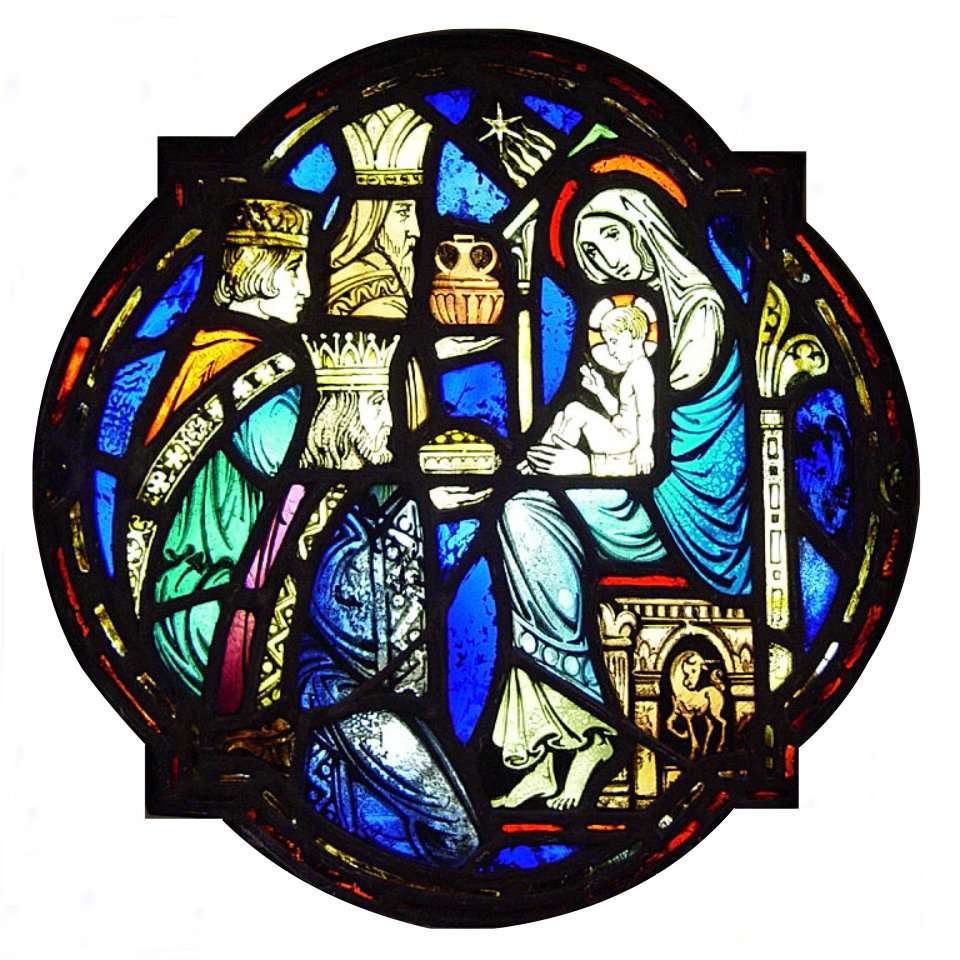
In a delicious irony that occurs only once a millennium, the reading that Sunday morning was the story of the three wise men bringing their gifts to the squawking Christ child.

I thought of those three police officers, and the three horses. Again, we had all discovered the gifts we never knew.

On Healing

A reflection on healing

A couple of words that might set with these stories of healing. in context. The gospel begins in the synagogue on a sabbath. From there Jesus and his companions go immediately to the house of Simon and Andrew. And immediately (there it is again, one of Mark's favorite words) they tell Jesus about Simon's mother in law who is crook in bed with a fever. Later that evening when the sun had set we get multiple healings including the driving out of some demons. The phrase ‘when the sun had set’ is significant because it shows that the people were keeping the sabbath. To help or carry an ailing buddy to get healed would have been considered work. So let's have a look at the healing of Simon's mother in law first. Notice please that unlike the exorcisms later on, Jesus doesn’t say anything in this healing;. He heals not with a word, but with a physical action. He simply “came and took her by the hand and lifted her up.
”Sometimes healing is like that. It is not only in the physical action that the most effective healing often occurs. Often silence does its own healing. When there is a child we often touch and hold and hug them, but then somehow as the years flick by we often lose that intimacy. Why? One  of the most painful but understandable reactions to the whole sorry Church child abuse sadness, is that clergy have to be so very careful of showing any physical demonstration of care. I am old enough to remember a time when it was not so. The mistakes of our past have cost us more than just dollars.
The silence of Jesus is also I think symbolic. I strongly suspect that some of our most effective healing is done in silence where it is just a matter of sitting with and being with another. Words sometimes just muck it up. And sometimes it is just OK to say “I am sorry. I don’t know what to say so if you would like I will just sit with you awhile and not say anything”. Simon's mother in law shows her gratitude for her healing by waiting on them. Usually when someone recovers from a fever the process is long, arduous and tedious. What Mark is showing us is that she went from wretched to fit and healthy in a matter of moments. This is no ordinary healing folks. And the word gets out. Is it any wonder then, that as soon as it is spiritually proper, a grab bag of people come crowding around the door, bringing their sick, maimed, halt, blind and possessed to be healed.
There is a curious line where Jesus does not allow the naughty spirits to speak because they know who He is. The identity of Jesus must not be publicly proclaimed … yet. Presumably Jesus speaks to the evil spirits and gives them this directive. So sometimes an authoritative word brings about healing. Sometimes we heal by words that we did not even know we had within us. But dig deeper we understand that only when we know who Christ is, can our demons be expelled. Not just what Jesus does, not just what He can do, but who He is as the Messiah, the Saviour, our companion and Our God.
We should draw great comfort from these miracles for we all need a bit of healing. Hopefully not too much physical healing, but the healing that goes on deep inside. In that place where there are chips and blemishes and things that are not quite right. The bits and pieces of refuse of life that we draw to ourselves. We are not quite perfect, we are not quite as we should be. Clergy are just as good if not better than most, in trying to convince themselves that they are otherwise. The most effective and pastoral healer is the one who knows their flaws and reaches out with a mucky hand to my grubby hands. The grazed knuckles and the bits of skin that have been knocked off are what we have in common. And here's another lovely thing that I know to be true yet have no idea how it all works. We are most healed ourselves when we reach out and offer healing to others.
This process takes us out of ourselves. We may not feel as though we did very much, or we might think that we were a spectacular failure, but in simply being there, being accessible, being amiable, being approachable, we become more like the wounded healer Himself. If we stretched out our pierced hand to others who are wounded, would we not be imitating the Wounded healer himself? The most effective healing is when we bring healing to others. In this story we are the ones who bring others into the Living healing presence of the Master. We help our ailing buddies limp and falter and stumble along, all the time knowing that they are in fact helping us to come into His nearer presence where all are perfected and one in Him.

Reconciliation

This business of reconciliation

Fr. Davids musings

2020 was not the most attractive year. What made it so unattractive was not just the ventilators, the tired and frazzled health workers and the refrigerated morgue trucks. No, far more uglier and painful than any of those things was the relationships that became fraught and frayed. Some I imagine were able to stitched back together again. Always with a line or scar to show that ‘something’ had happened. Some perhaps were left as irreconcilable, irreparable, gaping wounds.

Here we are with one month completed of 2021 and while there is a psychological edge to starting a new year, COVID has not mysteriously vanished into thin air never to return again. There are still restrictions at least in some parts of the world and understandable precautions are still being exercised. The business of reconciliation is still just as urgent and vital as ever.

Now this business of reconciliation is a tough gig because it must start with the individual. In other words it has to begin with you and it has to start with me. We need to get our own stuff together before we pick up the newspaper or turn on the TV. Before we phone old so and so, or type that email and text. We need to be reconciled with ourselves and with our God, whatever your version may or not be. If you are not as placid as Lake Hamilton on a gorgeous Autumn morning, then your encounters will be choppy and rambunctious. For the rest of this year  our news people we will continuously remind us just how enormous and urgent this business of reconciliation is.

Every decision and every word should be guided by this question. Will my actions and words lead to reconciliation or will they lead to disaster? The choice is ours.

January 31

The question God asks us when we muck up is…

A reflection from Fr. David.

For Christmas I was given a splendid book called “Humans”  by Brandon Stanton. Brandon travels the world to interview people and they offer a brief snap shot of their life. Sometimes its just a one liner  like “I’ve seen a lot of death” from a person in a displaced persons site in South Sudan. Sometimes it's a youngster “There’s nothing hard about being four” from a child in New York. This child in Paris was particularly endearing “We’re eating cookies before lunch because Grandpa doesn’t have any rules.”

The book has a photo of each person that is interviewed.

But the one that smacked me in the right ear hole was from a gentleman from Colombia.

“I’ve been sitting here for four hours thinking about what I should do.  I don’t want to go home.  I *** up again.  I’ve been a drug addict my whole life.  But I was clean for three months.  I got a job at a call centre.  I was doing well.  Then as soon as I got my pay-check, I went out drinking with some co-workers.  Just a normal thing.  But then I tried a little coke, went on a binge, and lost my job.  Same story as always.  And now I don’t want to go home.  I live with my mother.  She’s never lost faith in me.  My brother was killed in the army so I’m her only son.  She doesn’t deserve this.  She was so happy that I had a job.  She’d convinced herself that things were finally going to be OK.  And I’ve got to go home and tell her what happened.  And I don’t want to do it.  She’s not even going to be mad.  She’ll just be so hurt.  Then she’ll ask me if I’ve eaten.”  (Bogotá, Colombia)

It was such a candid piece and I related to it so strongly.  I believe that it has much to teach us about our fallible, faulty ourselves and more importantly the forgiving nature of God.

Let's unpack what this guy says and see what we might learn.

“I’ve been sitting here for four hours thinking about what I should do.  I don’t want to go home”

Our friend is clearly procrastinating. He knows what he needs to do and where he needs to go. He needs to go home and own up, but for very understandable reasons he doesn’t want to.

Then the very first important and hardest thing happens. “I *** up again.” The recognition that not only has he failed, but he has failed again. And for me, looking in on that admission there is a sense of grumpiness but also I want to say ‘Bravo’ for being brave enough to fess up and own up. To face not only what he has done but also the consequences of his actions.

Then the whole sorry story comes out. How he has always been a drug addict. Just like us, we have always been sinners. How he was doing so well and how his mum was so proud of him. Read God and the heavenly host enthusiastically cheering us on.

‘My mother has never lost faith in me’. Just as God has never lost faith in us.  ‘My mother doesn’t deserve this’, just as God does not deserve this.

“And I’ve got to go home and tell her what happened.  And I don’t want to do it.”

I know this feeling well. I have to go to my heavenly Father and tell him what has happened and I don’t want to because I am ashamed.

‘She’s not even going to be mad.  She’ll just be so hurt’.

Whenever I have gone home to my heavenly Father He has never been mad. It’s why fessing up is such a painful experience. In some ways it might be easier if God got grumpy but he never does. He is saddened, yes; disappointed, frequently; tender, always. He always wants to be reconciled to me far more than I to Him. He is already at home waiting for me. In fact, He was probably on the front porch before I have even turned around and started walking home towards Him.

“Then she’ll ask me if I’ve eaten.”

And there it is. A ruling off, a new beginning, the offer of nurture and nourishment. That is how God loves us. Our fear of retribution and wrath was severely misplaced. Instead of a blazing blowtorch of indignation, we are fed and given what we need to go out and make a fresh start.

We believe in a God whose only concern is not retaliation and punishment. He does not say “What a naughty brat!” He does not ask  “Why did you do this… again? What were you thinking?” The question God asks us when we muck up is…

“Have you eaten?”

Come After Me

"Come after me"

Each year we read one of the three gospels Matthew, Mark and Luke. We get large slabs of John in Lent and Easter.

This year we will be reading through Marks gospel. It is the shortest of the gospels and was designed to be read out loud to a congregation.

In Mark’s gospel the figure of Jesus is an irrepressible and energetic person who bounds swiftly from one incident to another. No wonder Mark is represented as a lion and if you look closely at the pulpit in Christchurch Hamilton you will spot the lion. To accentuate this, the phrase “and immediately” is used no less 41 times in the short gospel of Mark. Look out for it this year.

Further this industrious and spritely Jesus goes blithely and swiftly from one incident to the next episode, seemingly with little regard for the confusion and bewilderment that he leaves behind.

In today's gospel it reads as though the 4 fishermen were parked close together on the same beach and were all called on the same day. The reality was probably quite different. But what of poor old Zebedee who apparently within the space of a 10 second conversation, finds himself without 2 of his leading hands. In fact we don’t hear anything more about Zebedee for the rest of Mark's gospel. For Mark’s purposes, the call of his sons James and John is the important bit.

The usual translation of Jesus' invitation is “come follow me” but I happened to stumble across a slightly different translation. “Come after me.” Now that puts a totally different perspective on things.

It could mean ‘Come after me’ in time and that is certainly true of us. We come much later. A couple of 1000 years later in fact. But at a deeper level the words ‘Come after me’ evoke a sense of tease or of dare. “Come after me”. An invitation to dance, to chase, to try and catch up. If we think of it in this sense, we come to understand that Jesus often seems elusive, almost mischievous, almost as if He knows that the more we chase, the more we want Him and the more we will enjoy Him in those rare moments when sometimes He seems so very, very close.  In those rare moments the Master is like an ethereal bubble. There, but not really there. The  bubble pops just as quickly as it arrived. Then He is gone again and we are left wanting Him more than ever. Bewildered and be-puzzled we are left scratching our head and realising that He was not where we expected Him to be. Then we are fired in the chase, and we start the search again. Come after me.

Perhaps there is a sense in which we are always playing catch up with Jesus. We get close and we think we understand; that we finally have our brain around one small piece of the puzzle. That He is near. And then just when He is at our fingertips, He streaks ahead, laughing and playfully invites us to come after Him once more. And far from despairing, we giggle and come after him in our limping stumbling, tottering way just as a toddler comes after their parent. With arms outstretched with hope and joy, knowing that an embrace is always there for the taking and the asking. Come after me.

It is when others sense the urgency, vitality and purposefulness  of our pursuit, that they just might begin to wonder what all the fuss is about. It is your vocation and mine to invite them along in this game called “Come after me”.

And there are moments when the pace seems frantic and our brains and hearts go into overdrive and there are times when we lie down in green pastures beside still waters and He spreads a table for us. Then we just sit quietly and feast in his presence. Come after me. We are called to make a conscious, intentional response to come after Him.

This is a choice. To work at a living relationship with the Living Christ. It is not inherited, it is not accidental, it is not a written contract on a bit of paper with a sunset clause and a use by date. In another place Jesus will offer an implement to help you on your way with this journey. If anyone wants to come after me he must….Come after me.

Sometimes in this game, it is us who need to do the asking. Just like Matthew the tax collector did. "I’m having a dinner party tonight Jesus with some of my dearest and dodgy friends. I’m hoping that you might come along." Come after me.

But with affection, the thing I come back to, is an image of The Master walking along a golden beach on a bright sunshiny day. Me, self absorbed in something that is about to become redundant. I just don’t know it yet.  He stops close by. I turn and look up. With a twinkle in his eye and a winning smirk, He says “Come after me”. And immediately, in a heartbeat, I am there. I am walking away from everything that is familiar and I am already home.

This Week’s Words

Play School

I grew up with Play-school on a black and white TV screen. I can still remember the song.
“There’s a bear in there and chair as well; there are people with games and stories to tell…”
I heard these words afresh the other day and it occurred to me that they are indicative of every family and every home. Doesn’t every home have it’s characters like Big Ted, little ted, Humpty and Jemima? Some are fragile, some are noisy, some are cuddly and others are larger than life. Some are helpful, some are less so. Some of the people play games and these games can be amusing, but they can also be manipulative and detrimental. Time and time again, I have learnt the hard way that I have no idea what goes on behind closed doors in other peoples ‘Play school’. It all may seem sugar and spice, but the reality is often quite different.
Things are never exactly as they seem. Sometimes things slush around a bit. People can grow twisted and brittle while others in the most arduous of circumstances seem to become bold, and mature like a fine bottle of wine. And it’s so terrifyingly easy to think that we know exactly how ‘their gig’ works, when the reality is that often we haven’t got our own gig worked out. So next time the door is ‘open wide’ and you are invited to ‘come inside’, tread gently friends. Tread very gently. Sit on the ‘chair in there’ and remember that you too come from a home that is complex and full of characters. Remember that like the windows in Play-school, you are only being shown one fleeting insight of something that is continuously evolving.
Play-school continues to be educational at every stage of our life.

Fr. David’s musings

Start where you are | Begin with what you’ve got

I was reading a rollicking yarn the other day. It turns out that this guy was speaking at a mammoth conference. All these people had scheduled 3 days into their E-calendars. They had come from far and wide and listened attentively. They liked what they heard. Some had applauded, two people whistled and a dog even yapped.

But someone had forgotten to hire caterers. This was unfortunate and unpleasant. No-one had even thought to order a few canapés and a roast dinner. The keynote speaker was gutted. He was adamant that these good people should not be sent away for fear that they would collapse on the way and the whole ‘duty of care’ thing would rear it’s hoary head. Hmmm what to do?

A quick whip round revealed a few fillet of fish. The keynote speaker gave thanks for this trifling offering and handed around the fish which went a long way. In fact much further than anyone could explain. Actually, no one went away hungry.

A few things about this story.

First, even the most efficient and professional make mistakes. We do not live in a perfect world and before we point our finger we ought to recall our blunders.

Secondly,  this banquet began with the speaker seeing the need and having the compassion to actually do something about the situation. The answer is deep within us and it must be kindled into action.

Finally, I once went to a wise old priest when I was dispirited. He listened to my tale which seems self centred now and his counsel was simple.

“You start where you are and you begin with what you’ve got.” That’s what the keynote speaker did. The location was remote and what he had was trifling. But it was enough, especially when he said Thankyou for the little he had.

Reflection for January 17 ‘On seeing’

Noticed that there is a lot ‘seeing’ in today's gospel? 

Let me run through the list.

When Jesus saw Nathanael coming

Jesus answered, ‘I saw you under the fig tree

Jesus said You will see greater things than these.

You will see heaven opened.

And it got me asking myself… how is it that I don’t see? What are the chunks of driftwood in my own eyes that stop me from seeing what should be obvious to me? To my great embarrassment I managed to draw up quite a list. Perhaps you have these same symptoms and if so, my message is one of encouragement. Perhaps we can learn from each other and see a little more clearly going forward.

Our own past can blind us. We see the present and future through the filter of our past. Take for example someone who has suffered as a POW in the war. Understandably the people of the same race as the enemy are looked upon folk to be feared and not trusted. Or the person who has suffered assault at the hands of another. Is it any wonder that they are often  limited in their capacity to enjoy a flourishing relationship into the future?

Few of us would fit into these categories but we all have a past of some sort and it has shaped us to who we are and how we see things. The trick I suspect is to learn from our past and to understand that our warts and blemishes can actually enhance our vision of the future.

For your reflection you might like to hearken back to the bit where James and John get their mum to ask for the front row concert tickets in the next life. The important places. Clearly their past has given them a certain perspective on what is important. It’s a skewed perception but somehow they have gotten the idea that the best seats in the house mean lots of lovely dinner parties and hot and cold running servants. Our Lord, in the bluntest way just asks them a rather disturbing question.  “Are you able to drink the cup that I am to drink?”. Being the servant is more important than having a servant.

What else blurs our vision?

Prejudice. And by this I don’t necessarily mean thinking less of someone because they happen to have grown up in a different culture. A little story might help here. Once upon time in a parish in another galaxy and in a  different time zone I naively believed that Mr. Bloggs gave his wife a hard time. I saw it clearly in the way the couple interacted. So I quickly formed to my shame a certain set of prejudices and I interacted with Mr. Bloggs in a particular sort of way. What I didn’t find out until after the funeral of Mrs. Bloggs was that she wasn’t exactly squeaky clean. And all of a sudden the scales fell from my eyes and I saw things as if for the first time and it all came sharply into focus. Or at least a little bit more so. We have no idea what goes on behind closed doors, where someone has come from, or what might have scarred them or scared them and scares them still.

Familiarity is another thing that can blind us. For example when I  read the scripture most of the time I just read it and think.. yeah… I know how this goes. I know what happens. But sometimes, just sometimes, something belts me between the ears and I see something that I have never seen before. And there is a little part of me that is disappointed with Fr. David for not seeing it earlier and there is a much bigger part of me that is excited by this new found insight. I wonder what else I might discover as the days go on. Some folk find it helpful to take their pew sheet home and with one of those highlighter pens just pick out one phrase or one word. Until I started writing this homily, I had no idea that the word ‘see’ occurred so often.

Weariness too can cloud our vision. We cannot hope to see things clearly if we are tired out of our skull. Is it any wonder that God had a day off after creating the heavens and the earth and is it any wonder that The Master consistently sought out a quiet place to be by Himself?  Do we pause long enough to know and asses how much battery life we have within us? I am usually unpleasantly surprised as to  just how depleted my resources are.

These are just some of the reasons why I don’t see as clearly as I should and perhaps you might relate to them.

Perhaps it explains why we don’t see others as we should. And perhaps if we recharged our batteries more often we would be open to the complexities of others and read our bible more slowly and as a joy, instead of an onerous duty. Maybe then we might even see angels ascending and descending.