Ghandi

Where will you meet God today?

I am ponderously reading a biography of Gandhi. It's a comprehensive document with lashings of background and context. It transpires that Gandhi was in and out of prison on a regular basis. He made friends with those who kept him locked up and it didn’t seem to bother him. Why?

There is a telling little line where Gandhi says that the prison could be his temple. His point was basically this. That an encounter, a conversation with God can happen anywhere if you work hard enough at fostering that ethereal relationship. It can even happen in a prison cell. Fortunately God is not confined to any particular place and so the possibility of finding him in the most meagre and grungy of circumstances is never hopeless.

It’s splendid for us. We have sacred spaces that have been prayed in, loved and where the community comes together. It’s easy with the stained glass windows, candles and icons to catapult us into ‘that’ dimension. We ought to make the most of these privileges and opportunities. Gandhi was not exactly a Sunday by Sunday Anglican, but his point is still valid. God has taken the initiative and it is now up to us to encounter Him, find Him and most of all enjoy Him. To develop and enhance this relationship no matter where we find ourselves. It’s not always easy and it would have been an extraneous exercise in a prison cell in India. It is however, always achievable. It is something precious, to be sought and chased after all our lives.

Conversely we can find ourselves in a ‘prison cell’. A fraught marriage, the toxic workplace, in fact anywhere or any situation where we can’t see a way out or beyond ourselves.  For a gold star you might ponder your ‘temple’ and / or your ‘prison cell’.

Reflection for August 1

Humble and Gentle

Today I want to plunge into the second lesson given to us by St. Paul as he writes to his parish at Ephesus.

It is a marvellous letter and has been rightly called a  "Hymn to unity”.  This letter calls the Ephesians and us back to the"dignity of our vocation” which to be unified.

The first verse tells us that Paul is in prison. I imagine him as an elderly chap in dim light with grizzled beard, grey hair, twinkling eyes with fading eye sight. I see him stooped over his writing equipment, scrawling in a gloomy prison to the people he cares about.

Paul’s heart is resolute and he finds himself in a bit of a bind. He knows what needs to be said. He’s just got to find the right words to say it.

Some critical issues need to be aired. Paul needs to say them firmly, confidently, yet graciously, so that his very important message will take root in the lives of the people of Ephesus.

He has to tick them off a bit because they are not at one with each other. It seems that troubles and disunity have been growing and these weeds must be plucked out from peoples hearts and replaced with the fruits of the spirit.

He begins.

“Be completely humble and gentle; be patient.”

So there is a call for

Humility, gentleness and patience. Get these right my dear Ephesians and you are well on the way to unity.

Next …

‘Bearing with one another in love’.

When we read the word ‘love’ we usually think of the chocolates, roses and champagne love, but that is not what Paul has in mind at all.

The word love that Paul uses is agape love, a self-sacrificial love that works for the benefit of the loved one. So  the word that Paul uses ‘agape’ is never for the benefit of ourselves. Agape love, Christian love, must always be about the other person and what is going to be best for them.

Paul points out that when we speak the truth to each other with this agape love, then everyone is built up and we become mature, solid people for Church and for the world.

Speaking truth in love is not always easy. Often it comes out all wrong, but not to speak the truth in love, is far worse and can eat away at the body of church and most of all ourselves.

Paul continues to scribble away. He writes about the unity of the Trinity but you have to look fairly closely. It happens in verses 4 - 6

“There is one body, one Spirit, just as you were called to one hope; one Lord, one faith, one baptism; one God and Father.”

Further, Paul uses the word “one” no fewer than seven times. His  Ephesian listeners and readers know that seven was the perfect number.

Paul sallies on. He reminds his beloved Ephesians that everyone has a God given job to do and no one job is more important than the other.

 “So Christ himself, gave the apostles, the prophets, the evangelists, the pastors and teachers,”

I find it remarkable that in an age and a culture where communication has never been easier, somehow disunity still triumphs.

As one person put it.

“Today we are "used to breathing the air of conflict". Every day, in the media, we hear about conflicts and wars "one after the other", "without peace, without unity”. Agreements made to stop conflicts are ignored, thus the arms race and preparation for war and destruction go ahead.

Even world institutions created with the best of intentions for peace and unity, fail to come to an agreement because of a veto here and an interest there ... While they are struggling to arrive at peace agreements, children have no food, no school, no education and hospitals because the war has destroyed everything.

The author continues with a way forward.

“Christians open your hearts and make peace in the world taking the path of the “three little things” - "humilitygentleness and patience". Paul's advice is “bear with one another in love".

The advice of Jesus is to settle the matter and make peace at the beginning, which calls for humility, gentleness and patience. One can build peace throughout the world with these little things, which are the attitudes of Jesus who is humble, meek and forgives everything.” End of quote.

When we are not at peace with ourselves and with each other we are like Paul. We are in prison with our sight dimmed, our relationships compromised. The world is quite right to call out our disunity and hypocrisy.

We cannot hope to achieve unity and be released from our solitary confinement, unless we know gentleness, patience, forbearance and practice these in our own lives. Only then we can successfully engage with others. Humility, gentleness, patience, forbearance. When these begin to flourish then peace and unity will be the fruit we offer to each other, to our community and to the world.

Pregnant

Pregnant with Possibilities

I happened to notice a  woman who was pregnant the other day. In the olden days we would have said that she was ‘with child’. I’m really not quite sure why we stopped using that phrase because it told it as it was with all its trepidation, excitement and awe.

I thought some more and a phrase came gurgling to the surface. “Pregnant with possibilities”. The chance sighting brought back all sorts of fond memories from a very long time ago. All three of us … Mother, father and child were pregnant with possibilities. Some of them we knew about. Going to school, sleepless nights, scraped knees and soiled nappies.

Some we didn’t know about. Broken hearts, tricky decisions, fumbling words, spontaneous laughter in the most unexpected of circumstances.

It occurs to me now that most of the possibilities were hidden from our view, wrapped up in the years that lay ahead, invisible to us and maybe that was a good thing. We would never have believed a time traveller if they gave us some spoilers.

It also occurs to me that we are all pregnant with possibilities. Even in our dotage, there are still a multiplicity of possibilities that we can choose to ignore or run like mad with. The difference I suspect is that we are much more aware of the consequences of these possibilities and so we should, in theory at least, make wiser decisions.

It is perhaps a matter of being aware of what possibilities greet you each morning. Which will you choose to embrace with a passion and which will you shun and what are the unexpected ones that find you?

Like the page in my diary that pleads with me to scribble potentialities on it. All of us are pregnant with possibilities. What are yours?

Reflection for July 25th

There is a way back.

In the first lesson King David, spying from his roof, spots a woman (Bathsheba) whom he would like for himself. David sends servants to “take” her, a word that, in some contexts in the Old Testament, can be used to designate rape. Bathsheba is given no voice in this story, but the details are clear: David has intercourse with her and impregnates her.

When David gets word that Bathsheba has conceived, he tried to fix the problem without acknowledging it. He called Bathsheba’s husband, Uriah, back from war, hoping he would go home and be with his wife. You see DNA paternity tests were not available; everyone would have assumed that the child was Uriah’s.  Good plan right?! Uriah, however, refused to enjoy home comforts while his compatriots were still off at war. Because Uriah would not go home, David devised a plan B: he sent Uriah to the front lines of battle and ordered those around him to draw back so that Uriah would die. David’s solution was to murder the husband.

Next week we are given the rest of the story and it goes like this.

God sends the prophet Nathan to David. Nathan told David a parable about a rich man and a poor man. When faced with the need to feed a guest, the rich man did not take a lamb from his own livestock, but instead stole the only lamb owned by the poor man and served it to the guest. David was incensed by the injustice in this parable. Nathan responded by saying, “You are the man!””

David responds with a very simple phrase: “I have sinned against the Lord.”

Some points to think about as you sit by the fire with a refreshing beverage.

First, the story hinges upon David’s contrition. David and his family experience many consequences of his sin. In all of this, however, God does not remove the divine steadfast love from David, as God had previously removed it from his dad King Saul. The reason for this seems to be David’s contrition. When confronted with his sin, David fesses up.

Second, David’s contrition would have been impossible without the role of a prophetic voice. In ancient Israel, one of the major functions of a prophet was his or her ability to speak truth to power. Nathan receives a word from God and can deliver it to the king in such a way that it sways the king’s actions. David was determined to sweep his sins under the rug, but the prophetic office prevents this. That which was hidden is brought to light; the wrongdoing of those at the top is acknowledged, confessed and ultimately forgiven. There is a way back for the person who has fallen in such spectacular fashion. There must always be a way back, otherwise we are limiting Gods forgiveness and power.

Third Bathsheba has no voice in this story. At no point are any of her words or feelings recorded. There have always been and always will be, those who have no voice in our society and whose hurt remains invisible to us.

Fourth it is left to Nathan to be the prophetic voice where Bathsheba is silenced and this is where you and I come in. It is our vocation to speak out and confront not only our own sin but what might be called the collective sin of our broader community.

So I make it clear that the Church has not always done the right thing and there have been occasions when like King David, she has sought to cover up her wrongs. When all the truth has come out the hurt is multiplied because of the way we have dealt with our failings. On these occasions there are no winners and everyone is less than they ought to be.

Fifth. For most of my ordained life of 35 years the mantra has been that we need more young people in church. It is little wonder that young folk are not trusting of the Church in general and her leaders in particular.

A recent national survey of 6000 people found 41 per cent of Australians don’t trust religious leaders “at all”, a 6 per cent rise since the survey was last conducted in 2019.

Almost half (47 per cent) of 18–24 year-olds don’t trust religious leaders “at all”. That’s a jump of 15 percentage points in just two years.

There is a way back and it will be a long path and the trust that I hope will be restored, but which I don’t think I will see in my lifetime, will be hard won. I make it very clear that the abuse of another is sin. And sin is sin is sin.

There is a way back and the first step is candid admission. The next step is genuine contrition, the next step appropriate reparation and then some safety measures to minimise the risk into the future.

There is a way back and it must begin with all of us.

Mutter Mutter

An offering of light

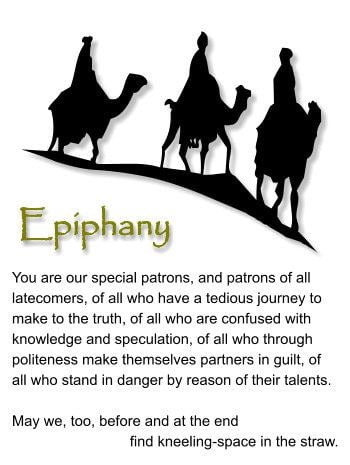
There is a stain glass window which now means much to me. I look at it every morning and evening when I say my prayers. The window tells the story of the visit of some chaps who have been to Cash-converters and snapped up gold, frankincense and myrrh. To be sure their gifts are a little unusual to bring to the baby shower that no-one wants to miss.

At the beginning of the day I wonder what I might try and offer to the people. Do I offer things divine, (frankincense), outstanding triumphant things (Gold) or do I sometimes walk into the midst of sadness (myrrh).

At the end of the day I try to reflect on what the day has offered to me. Sometimes gold, sometimes frankincense, sometimes myrrh.

The plan is to integrate all three into a wholesome little priesty. All three are necessary and pretty much daily fare. At this time of year, early in the morning, the window is just a solemn black sheet of glass. I know what’s there, it’s just that it has no light to illuminate the colours and the picture. I was turning this over  in my mind and I realised that there are some days that are like this black pane of glass. I know what’s there. I know the colours and the patterns and the gifts, but the beauty is hidden from me and the going is a little more sluggish. Does this mean that the beauty is no longer there, that the gifts have somehow mysteriously vanished? Not so. Everything is still there, still authentic and just as potent as it has ever been. It’s just that things are obscured for this little while. Perhaps in these ‘concealed times’ it is our turn to make some light.

Reflection: Sunday July 18

Holy Unction

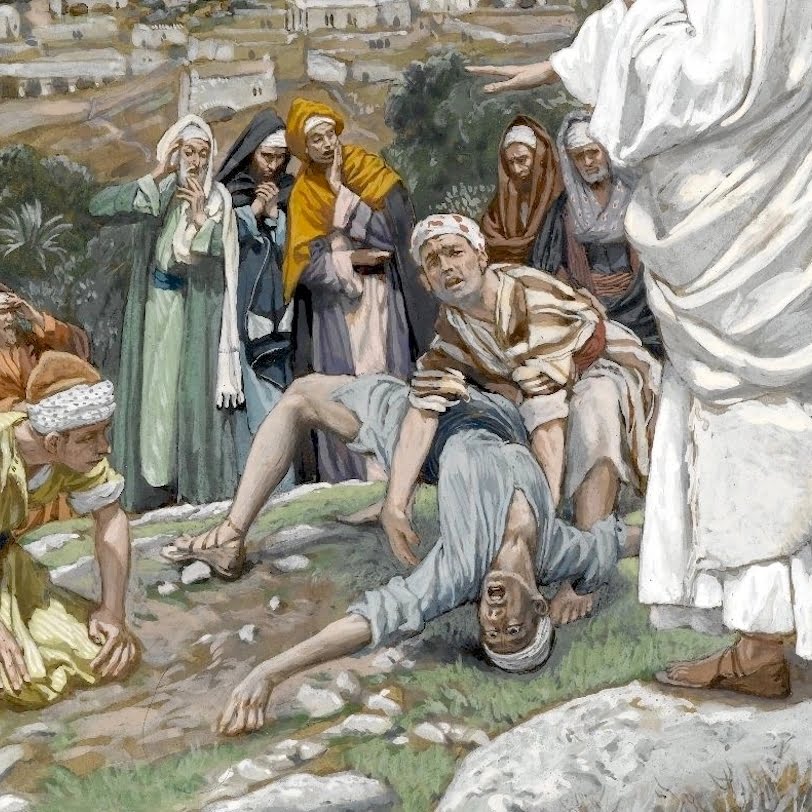
Today's text…“They drove out many demons and anointed many sick people with oil and healed them”. Here we glimpse the beginning of the sacrament of healing or Holy unction which we still use in the Church today. It is a lovely sacrament because it is given to us by God and it is life affirming. Life on this side of the grave, and on the other. Twice I have had the privilege of using this sacrament for my own personal well being and it was a sublime experience filling me with confidence and joy. So you don’t have to be in palliative care to enjoy this sacrament. Folk have used it for everything from a broken leg, to an ultrasound, to cataract surgery, to depression. It is not something to be feared and we probably don’t talk about it enough. I hope this little homily will help.

We know that Jesus  loved the sick and often during his life healed them. Sickness is not a punishment for personal sins. It is a normal part of our everyday life. And I am really sorry to have to say that our bodies are hard wired to disappoint us. Christ Himself was sinless and yet he bore all the sufferings of his passion and understood human sorrow. Anointing of the sick is a Sacrament of Faith - faith in the Master physician and faith for the one who receives it. It might help if I read you the important prayer of the sacrament.

'Through this holy anointing may the Lord in his love and mercy help you with the Grace of the Holy Spirit. Amen.'

'May the Lord, who frees you from sin, save you and raise you up. Amen.'

So we express the care of Christ and the Church for sick people. Our Lord continues his compassionate work through the Sacrament with his sympathy and healing, just as he did when he was on earth. Christ came to eliminate suffering. He came to give fullness of life, both natural and supernatural. It is true that his main purpose was to give supernatural life, but he intends us to enjoy the fullness of life on this side of the grave as well. When he was on earth he cured the sick and sent his Apostles out to do the same. When we come to enjoy life on the other side of the grave, there will be no more sickness or death. 'Death shall be no more, neither shall there be mourning nor crying nor pain any more, for the former things have passed away' (Rev. 21, 4).

The sacrament helps those who are seriously ill to bear their sickness and gives a new injection of his life so that they may lift up mind and heart to God in spite of pain and weakness. The fifth chapter of St James' letter also describes the sacrament: 'Is any among you sick? Let him call for the elders of the Church, and let them pray over him, anointing him with oil in the name of the Lord; and the prayer of faith will save the sick man, and the Lord will raise him up; and if he has committed sins, he will be forgiven' (James 5, 14-15).It is administered by a priest who, in the name of Christ, prays over the sick person and anoints with oil the forehead.

As in the other sacraments, the sign used indicates the effects. Oil gives strength. The athlete anoints the limbs with it to strengthen them for the contest. In this sacrament, the soul is anointed by the Spirit to enable it to face up bravely to illness.. Oil also has a healing effect. The sacrament is intended primarily to soothe and heal the spirit, but frequently there are physical effects as well. Its primary purpose is not to restore physical health but to give a new share of supernatural life. On the Monday before Easter at a special mass in our diocesan cathedral, called the Mass of the Holy Oils, bishop Gary consecrates the oil to be used in the anointing of the sick, and the prayer he uses on that occasion indicates the purpose of the sacrament: 'O God, please send down from heaven the Holy Spirit into this rich oil, which you so kindly produce from the greenwood for the restoring of mind and body. Through thy blessing, may all who are anointed with this heavenly medicine be protected in mind and body. May all pain of mind and body, all weakness and sickness, be removed.' Do not put off using this sacrament. It is best done when the patient is conscious, able to cooperate with the priest as he prays and administers the sacrament, and with Christ who gives strength through it.

Jesus said, 'I came that they may have life and have it abundantly' (John 10, 10). He longs to give it to all and extends to all his tender invitation:

I commend this sacrament for your use and for your help.

Mutter Mutter

Closer than you think

I’ll call her ‘Bron’. Bron had gone in for a standard piece of fix me up surgery. Not the least bit timorous Bron had always been a resilient lass. The surgery went according to the textbook and the people in the white coats were delighted with their success.The day after the surgery Bron had the ‘post surgical blues’. There was a bit of pain and she had awoken early on the third floor of the hospital. Bron was completely by herself, what with COVID and all, there were no family and friends to encourage and soothe. With everyone absent, where was the ‘Teacher’ in all of this? Was it too much to ask for a simple word, an ethereal sense of presence… please… maybe? The sun peeked up over the horizon and while it was a surreal view it just didn’t quite lift the mood.

Until… outside the hospital window a figure arose and there He was! A beaming reassuring face resplendent in a high viz vest and hard hat ascending in a cherry picker. The instruments of salvation were his window washing equipment. A smile, a wave, a thumbs up was all it took for Bron’s spirits to lift. A rush of joy so that she could embrace the day with verve, even if she did wince as reached for her morning cuppa. Odd, isn’t it, that we come with pre-determined rigid expectations of what and how the divine might intervene and show Himself in our pedestrian life. These rigid fixtures can blind us to who it is that really walks amongst us or washes our windows, or sees us across the school crossing, or in broken bread, or even in a high vis vest and hard hat. Watch out for Him. He’s closer than you think.

A reflection for St. Benedict

July 11

July 11th is St. Benedict day and you should probably know a little bit about him.

Born around 480 AD, the son of a Roman noble of Norcia and the twin to his sister, Scholastica.

Benedict fled Rome, gave up his inheritance and lived in a small village with his nurse. When God called him beyond this quiet life to an even deeper solitude, he went to the mountains of Subiaco. Although becoming a hermit was not his purpose in leaving, there he lived as a hermit under the direction of another hermit, Romanus.

In Monte Cassino he founded the monastery that became the roots of the Church's monastic system. Instead of founding small separate communities he gathered his disciples into one whole community. His own sister, Saint Scholastica, settled nearby to live a religious life.

Benedict was an innovator. No one had ever set up communities like this before or directed them with a rule. What is part of history to us now, was in fact a bold, risky step into the future.

For prayer, Benedict turned to the psalms, the very songs and poems from the Jewish liturgy that Jesus himself had prayed. To join our voices with Jesus in praise of God during the day was so important that Benedict called it the "Work of God.”

So he understood that our every day work, like vacuuming and doing the dishes, and making the bed is all sacred. The flip side is that when we say our prayers we are in fact working. Both are important. Both are necessary. They are all expressions of finding God in our everyday life.

There are more very good reasons why St. Benedict continues  to be important to us.

He is our brother in Christ. He is one of us and although he is separated by the flimsy veil of the grave, he joins us at the altar every time we say ‘Therefore with angels and archangels’.

He has some very useful things to teach us.

1. Prayer is central to our search for God.

St. Benedict’s idea is that prayer should be central to those who seek God. You can’t find God without spending time with Him, listening to Him and praising Him. The Church lays out various methods to do this: in her liturgies like the Eucharist, morning and Evening prayer, meditation on the bible and just simply opening your heart and mind to God, giving Him praise and asking for His help and intercession.

2. Obedience to God’s will.

You can’t find God if you follow your own will. Through holy obedience, we overcome self-will and are able to follow the will of the Father who loves us. In the monastic life, they live out their obedience by following the Rule of St. Benedict. In our daily lives, we live out obedience by following the Church, the will of God, our families, and our responsibilities. Living a life of obedience leads to a true authentic freedom that can be found nowhere else.

3. Humility.

You can’t find God if you are too full of yourself. We have to learn, by steps, that WE are not in charge of the world, or even ourselves, but God is.

4. Living a life of community can help us discover God.

We don’t find God alone, but with and through others. And, amazingly, it doesn’t have to be only those who are like us or who we are fond of. A monk finds God in each and all of his brother monks, especially the ones who are not so easy to live with. For us, we find God in the people we interact with daily, our families and friends, those we work with, the stranger on the street. God calls us to love them, and through that love, we find God.

There are many ways to seek God, but they all go through Christ.

More good news.

We are fortunate to have a Benedictine Monastery just down the road at Camperdown. About an hour and half away.

All are welcome there and you can go and stay in their lovely guest house. You can also join in the worship in a marvelous chapel. It is one of those special places where there is a very calming atmosphere. A relaxing place where the veil between earth and heaven is particularly flimsy and thin. I encourage you to make the most of this place and go for a visit or a stay.

It is also a powerhouse, a throbbing battery of prayer and there have been times when I have asked the monks and nuns for a little something special. A bit of extra help. I have never been disappointed and always sensed their support and nurture. May St. Benedict continue his work of prayer for us.

Of Veils

When you stopped seeing it

Two ladies are having a stimulating conversation… but the conversation is not the important bit. One of them wears a veil because they look quite different to what you and I might expect. The veil is the important bit. The chatter goes on about this and that and then all of sudden the lady without the veil turns and looks as if for the first time; she realises that the veil is gone!

“When did you stop wearing your veil?’ She asks in a surprised but almost joyful tone.

“When you stop seeing it?” The response is swift, astute, insightful and… challenging. It is challenging because I realise that often I don’t perceive people for who they truly are. Others put on veils and sometimes masks and while that might be understandable, it is regrettable for we do not see folk as they truly are, even if they are scarred and not quite what we expected or hoped for.

The other point to be made is that sometimes we put a veil on the other person. We perceive them first as maybe separated, divorced, an amputee, impoverished or holding a different point of view to us. Sometimes sadly, we can’t see past those things and admire who it really is that is before us. We miss out on seeing someone quite beautiful and talented. We miss out on seeing an exquisite and adorable child… a child of God. And when we fail to see them as this child, it is like missing out on a spectacular sunset, a piece of art and possibly a life changing / enriching experience. Would that I had the courage to not only take off my own veils and masks but also to see others as they truly are.

“When did I stop wearing my veil?”

“When you stopped seeing it.”

Connor and his Cows

I thought of Connor and his cows this morning.

Connor is a dairy farmer and for a couple of decades now has got up in the middle of the night in the blistering cold to milk the cows that kick him. He is rained upon and pooped upon. He has been manipulated by the upper echelons of people in warm cosy comfortable board rooms. Folk he has never met and never will.

And yet time after relentless time I knew where to find Connor and what he would be doing. Somehow he would grin from under his tattered beanie and quip in good humour “These insatiable cows want more milking”.

This morning it was ink dark, the cold was stinging and the rain was horizontal. I also found myself wearing a daggy beanie, more for comfort than insulation. My mantra was

“This insatiable God wants more psalms”. The heady days of theological college and ordination seemed to belong to someone else. A different, much younger man. Back then we used to speak of ‘arriving’ of ‘making it’. As I pushed open the church door I wondered … “Have I in fact ‘arrived’ ”? But then some measured words came to me and I offer them to you.

You have not arrived when you want to go to the altar because you are exuberant with puppy dog enthusiasm and bubbling with uncontainable excitement. You have started the journey when you want to go to the altar when all gloss has worn away and the sparkle has disappeared and disappointed. You know that you are nearly there when you know how much you need to go to the altar and how very much you need Him. You know that you are much closer again, when you understand that He has always wanted you to be there, even more than you wanted to.

U R the Light of the World 

A reflection for July 4th

Today we are keeping “Coming of the Light” Sunday. This is an important celebration when Torres Strait Islander Anglicans observe the 150th Anniversary of the arrival of the first Christian Missionaries in the Torres Strait.

Here's the history lesson which is not the most important part of what I want to offer to you today.

On Saturday 1st July 1871, (so today it's the 150th anniversary) the Reverend Samuel MacFarlane of the London Missionary Society anchored at Darnley Island. The Society had been active in the Southwest Pacific since the 1840’s converting people to Christianity. Dabad, a Warrior Clan Elder “defied his Tribal Law” and openly welcomed the London Missionary Society clergymen and South Sea Islander evangelists and teachers. Torres Strait Islanders' acknowledgment of the missionaries was the acceptance of a change that would profoundly affect every aspect of life in the Torres Strait from that time onwards. The Islanders' acceptance of the missionaries and Christianity meant the end of inter-island conflict. Christian principles were partly compatible with traditional religion and the missionaries gave some protection and assistance to Islanders in their contact with foreigners in the maritime industry. Today, Torres Strait Islanders of all denominations wherever they live, in the islands or on the mainland, come together to honour this anniversary. The Torres Strait Islander festival of the Coming of the Light is a day like no other in Australia. Church services and a re-enactment of the landing are central to the day’s activities. Hymn singing, feasting and hoopla strengthen community and family ties.

The gospel chosen for this celebration  talks about light  Then Jesus told them, “You are going to have the light just a little while longer. Walk while you have the light, before darkness overtakes you. Whoever walks in the dark does not know where they are going. Believe in the light while you have the light, so that you may become children of light.

So here’s a bit about light and its symbolism which is also not the most important part of what I want to offer to you today.

Light is beautiful and mysterious—like God. It is one but can be separated into many colours. No one knows if light is made up of particles or waves. In addition, light has many functions that make it a good symbol for Jesus. Light helps us see things. Jesus gives us the truth about God and about life, our origin, and our destiny. Light guides us as we travel. Jesus guides us safely through life to our heavenly home. Light promotes growth and life. Jesus brings us everlasting life. Light warms and comforts. Jesus welcomes us and calms us. Light deters crime. Jesus is goodness itself. Light dispels darkness, which stands for evil. Jesus pierces the darkness of sin and death and conquers them. All the darkness in the world cannot put out one candle flame. Jesus cannot be overcome by evil.

But the most significant and important thing that I really want to say to you today is this. If you forget the history lesson, or you forget the mucking about with the symbolism of light, please remember this simple phrase.

“You are the light of the world”.

Yes, you who have made it to the altar today. You who may have looked a little disheveled in the mirror this morning. You who stumble and fumble and rejoice and giggle and weep and have loving, joyful and sometimes aching hearts. You are the light of the world.You may not even notice it and sometimes it probably doesn’t feel like it and sometimes yes, we can go to some very dark places where it is inky black and there seems no way out. It is then, when the gloom seems to have engulfed us, when we are at wits end and the walls are high and hard and in the words of the gospel…“Jesus left and hid himself from them”.

It is then that we can become quite magnificent just by keeping on with our prayers and being faithful at the altar. You are the light of the world. And day by day in this parish in countless little ways, I see the light that you are and I see it and I am warmed and encouraged and inspired and delighted.You are the light of the world and one of the lovely things about the gospel coming to the Torres Strait Islands is that God was on both sides of the beach 150 years ago and in some conscious or subconscious way everyone was open to that possibility. So the world was a brighter and warmer place for it.

It will be so now in 2021, if we claim for ourselves the reality

“I am the light of the word”.

Reflection for June 27

The message behind the miracles

Today, Mark serves up another one of his sandwiches. Did you spot it? The first layer of wholemeal bread is where we are introduced to the harrowing, heartfelt story of Jarius’s dying daughter. This brief introduction is just 3 verses.Then we have the corned beef and pickle main body of the sandwich. 9 verses of the healing of the woman who has the haemorrhage. Then back to another slice of the same wholemeal bread where we pick up again on the story of Jarius’s daughter and follow it through to its triumphant end. Watch out for more  of Marks sandwiches over the coming months.. Now while it is true that there are two miracles here, the common sandwich flavour is healing.

These two stories have lots in common.

1. Beginning with the twelve tribes of Israel in Genesis, through to the calling of the 12 apostles, the number 12 has always been important. Mark subtly inserts it here for his Jewish readers. The woman has been suffering for 12 years with her haemorrhage and Jarius’s daughter just happens to be… Ta dah!… 12 years old.

2. In both stories, the people are at absolute rock bottom. Jarius’s daughter is dying. Plain, simple and brutal. That is what is going on and for a while at least she is clinically dead. The woman with the haemorrhage “endured much under many physicians. She has spent all that she had; and she was no better, but rather grew worse.” So not only is her physical health deteriorating, but her bank balance has declined to zilch. There are no more options for either of these people.

3. Both stories have a jostling, unbelieving crowd pitted against our Lord. With Jarius’s daughter it is the mourners who weep, wail and laugh at Jesus when he says that the girl is only sleeping. In the story of the woman it is the thrumming crowd that presses on every side. They point out that it is impossible to know who touched Jesus.

A couple of other interesting quirks I discovered. There is the curious line “The woman told him the whole truth” Now the whole truth might just have been a few words. “Yep, it was me.” But what if the whole truth was actually much more than that. What if she told Jesus the whole miserable story. How her husband had kicked her out and left her penniless. How she had slept rough on the rocky streets of Bethlehem, how she was abandoned by friends and growing weaker, more emotionally fragile every day. How she would have been ritually unclean according to the local religious  leaders and so unable to participate in the worshipping life of the synagogue. Cut off spiritually, as well as every other facet of community and family life. There is a certain kind of healing which happens when you can safely tell all and be listened to. It is affirming and life giving.

There is also a note of caution here for all those who are ministers and that is everyone here. We all minister to each other. My note of caution is that just as Jesus felt the power go out of him when the woman touched the hem of his garment,  so too, every time that we bring healing and help to others, we give away something of ourselves. The battery is invisibly depleted in some very real way and it is our solemn responsibility to make sure that it is continuously recharged in order that we might continue to minister to others. This is particularly so for clergy and it is another one of those many things that clergy can be terrible at.

There are at least two levels to these miracles. One is the outward story of the healing. The physical restoration to life of Jarius’s daughter and the healing of the woman. Jesus down plays this. “Jesus strictly ordered them that no one should know this.”

Level two is the really important, dazzling beauty of these stories. Jesus did not dwell on his amazing miraculous powers, he healed people out of love. Jesus did not want people to talk about the miracles. He really wanted them to believe deeply in his Father, not because he could perform miracles; rather he wanted them to have a deep understanding of the love of Christ. A reaction to a miracle is superficial and probably short term, but to be deeply convicted of the love of Christ in response to a miracle, is life changing. It was this transformation of spirit that Jesus wanted and he knew that this required deep spiritual contemplation, conviction and growth. This would not happen in a superficial frenzy of supernatural entertainment in a response to a miracle. The message of the miracles is not the dramatic  “Abracadabra.. Hey Presto,” of physical healing. The real miracle is the absurd and preposterous faith of Jarius and the woman. This is who we are called to be. To grow into their faith is our exciting and lovely vocation.