Vulnerability

Fr David Mutters

The most beautiful thing in the world is … vulnerability

Much of this article is pinched from a book by John Green. He talks about a dog who ‘in the early evenings would contract a case of the zoomies. He ran around us, yipping and jumping at nothing in particular and then after a while he’d run over to me and lie down. And then he would do something absolutely extraordinary. He would roll over onto his back, and present his soft belly. I always marvelled at the courage of that, his ability to be so absolutely vulnerable to us. He offered us the place his ribs do not protect trusting that we weren’t going to bite or stab him. It’s hard to trust the world like that. To show it your belly.”

We tend to wear pieces of ‘armour’. Cynicism, anger, and irony are just some of the uniforms that we use to cover our tum tum against the barbs of the world and others.

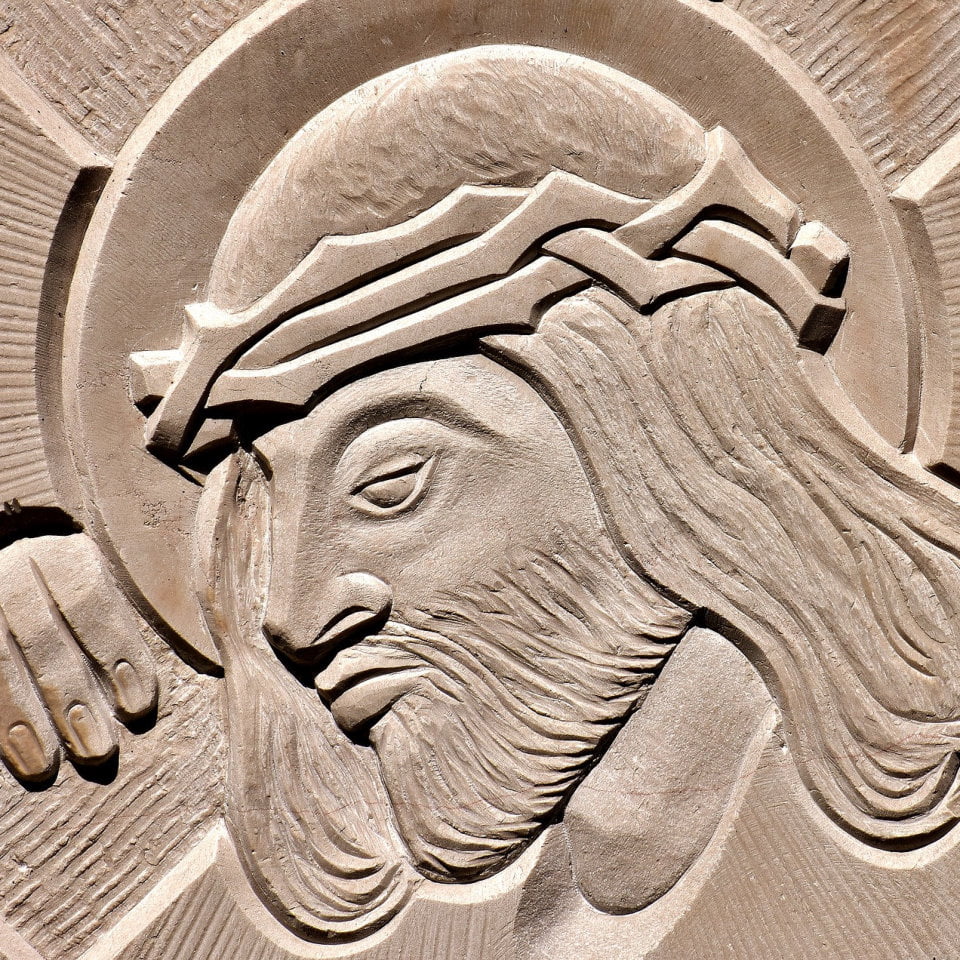
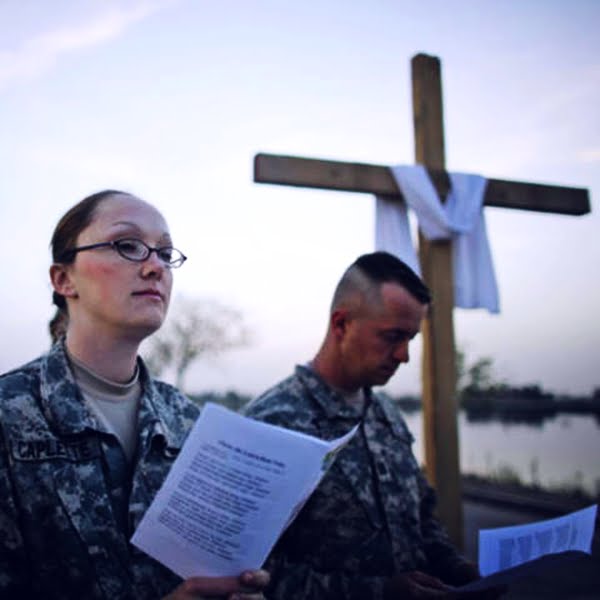
The image of the dog lying on its back also reminded me of The Master on the cross. There with his belly exposed and pierced by a soldier. For some it might seem gory, but for me it is an exquisite thing that he was so vulnerable and beautiful because of His love for the world.

“The most beautiful thing in the world is vulnerability”. John Green would argue that you cannot see the beauty of the world unless you are first vulnerable yourself. The armour plates of prejudice and grumpiness quash any potential blossoming of vulnerability and love.  The dark glasses of suspicion and preconception blind us to what we need to see most. A belly defenceless and exposed. There for the piercing, there for the caress, or both. But always accessible, beautiful and vulnerable.

24 October 2021

Of Bart and the shooshers.

A reflection for the 24th of October.

There are three groups of people in this gospel story. There is Jesus, there are the people who tell Bart to keep quiet, the ‘shooshers’ and then there is Bart himself. And the usual course for the preacher is to zero in on Bartimaeus. To offer a smashingly good homily and marvel at how good it is that Bart had great faith. How Bart keeps calling out in the face of such overwhelming odds. Isn't it wonderful that his sight was restored? And isn’t Jesus just marvellous for making it all happen?  And wasn’t it great that Bartimaeus became a follower of Jesus? But Bart's progress is not just a physical restoration of his sight and a movement towards Jerusalem. There are many other signs of movement here.

Bartimaeus goes from sitting on the road to following Jesus to Jerusalem.

He moves from having the security of his cloak, to having nothing to wrap around him except the confidence he has in Jesus. He no longer needs the cloak.

He goes from being a beggar, fiscally challenged, to having everything he could possibly need and more.

He moves from  being an outsider, to being one of the ‘Jesus crowd’.

Bartimaeus begins by asking for mercy and is able to move to a point where he can ask specifically for sight to be restored. Something has shifted, moved in the ether. Bart is making progress. He has already begun his journey to Jerusalem, thus to the cross and therefore to resurrection. He just doesn’t know it yet. But he will.

More movement. Notice that at the start Bartimaeus calls out to the ‘Son of David’ but by the end of the story he refers to Jesus personally, tenderly. Jesus has become ‘My teacher’

And it all begins with that yearning deep within him for his sight. He knows that there is more than what he can see or rather what he can’t see. He goes from being silent to asking questions.And there is a not so subtle lesson for us here and the lesson is this. That  asking questions and learning is the same as seeing. When we are prepared to ask and more importantly prepared to listen, that is when we, like Blind Bart, have the opportunity to have our vision restored and then we too can begin to go up to Jerusalem. It takes a lot of guts to call out in our darkness, to go against the flow of the people around us. To draw close to a teacher who lays down his life for you is an exquisite privilege and a terrifying challenge. Jesus' response is interesting. Of course he knows what Bartimaeus wants, he knows what Bart needs, but he wants Bart to articulate his need out loud. To say it for himself. Not, ‘I know what is going to be best for you Bart’ but rather “What is your agenda here Bart? How can I best support you?” Then Jesus said to him, ‘What do you want me to do for you?

’Perhaps it is only when we know and can articulate our own blindness and blinkered view that we have a hope of seeing more clearly and then we can go forward to Jerusalem. This is not gentle Jesus meek and mild who heals just because he can. The one who waves a magic healing wand to make all things nice with sugar and spice. Here we are confronted  with a  Jesus who asks quite a lot of us. To examine ourselves and to speak out loud of our failures and inadequacies. Our frogs and snails and puppy dog tails. Our healing comes at a cost. You can’t claim it all on medicare. You’ve go to know you need a Band-Aid, then you have to ask for one and only then can you receive one. This is the teacher who also looks us in the eye and he will ask us from time to time not what do you want, but more pointedly what do you NEED?

And then there are the third group of people. The ones I call the “shooshers”. They, like blind Bartimaeus, make some progress in this story. At the beginning of the story they sternly order Bartimaeus to keep quiet, but very quickly change their tune and say it's ‘OK Bart; off you go, he’s calling you’. They, perhaps more than Bart, make the biggest leap here. Bart knows his need and calls out in faith. The 'shooshers' are fickle and  they think they know how the plot should go. I often wonder whether they joined Bartimaeus on the road with Jesus and went up to Jerusalem? I’d like to think that at least some of them did, if only out of curiosity.  In the end the shooshers say Three things to Bart

‘Take heart;
Get up,
He is calling you.’

Their progress, is Bart’s progress, is our progress. Perhaps today we should consider the possibility that the shooshers are saying those three things to us as well.

Take heart;
Get up,
He is calling you.

Then we ditch our security blankets, take heart, jump up and get on the way.

Wibbly Wobbly Time

Mutterrings from Fr. David

Did you know that time is a wibbly wobbly thing? For example, the hour spent in the waiting room of the dentist to do a root canal is much longer than the hour you spend over a delicious meal in a wonderful restaurant with spectacular views looking into the eyes of that gorgeous someone.

I was reminded of how bendy time is when reading a book by John Green. He made the point that we usually measure time in days, weeks, months and years. These are the markers that we use to determine how much time has passed.

But what if  we chose to measure time in Hailey comet units or just a ‘Hailey’ for short. In 1986 I was spending my first year as priest in Portland. ‘One Hailey earlier, the first movie adaptation of Frankenstein was released. The Hailey before that, Charles Darwin was aboard the HMS Beagle. The Hailey before that, the United States wasn’t a country. The Hailey before that, Louis XIV ruled over France. In 2021 we are only five ‘Haileys’ away from the building the Taj Mahal. And two ‘Haileys’ away from the abolition of slavery in the United States.’

I found this a great comfort when we bewail the length of time that COVID and lockdowns seem to drag on. COVID will last less than one ‘Hailey.’

Some more numbers to crunch. Say the whole COVID thing lasts for three years. 2020, 2021 & 2022. I’ve been ordained a deacon for 36 years. This means that COVID has only been around for one thirteenth of my ordained life. If I was 60 years old, it would have been around for just one twentieth of my life. Now then… and this is the real kicker… if COVID lasts for three years, what fraction of your life will that be?

Reflection for Oct 17, 2021

The parable of the carpenters shop.

I want to read you an excerpt from a novel. In the story the hero Jack is invited to come and work in a carpenter's shop. The Master carpenter Charlie is an experienced gent of few words but the words he speaks are insightful and I found them helpful. You’ll probably pick up that English is not his first language and I have dulled and omitted some of his more colourful language.  Here’s how the story goes.

‘Down at my end of the workshop Charlie had laid out the wood for the boardroom table he was making. Three perfect walnut boards, fifteen feet long, eighteen inches wide and one and half inches thick. The first time Charlie had given me a job using timber of this quality I’d asked “What’s this?”

“Piece wood,” Charlie said ‘Sweet mahogany. One hundred years old.’

“I don’t think I’m ready for this” I said.

Charlie had taken the cheroot out of his mouth and given my statement some thought.

“Jack” he said, ‘Till you make something nice out of it, it’s just a piece of wood’.

I studied the rough walnut boards with reverence. This was one of the classic furniture timbers. Very few makers ever had the chance to work with wood of this quality and size. I turned one of the boards over. Chalked on the other side was the date Charlie had laid the the boards down. 10/3/46. This wood's moisture content was so low that even the ducted central heating in some Collins street tower wasn’t going to cause it to move. Did an emerging mining company deserve a table made from unobtainable timber, air-dried for at least fifty years? Wouldn’t some lesser, wetter timber do? The miner wouldn’t notice. I’d once asked Charlie the same question about a bureau he was making for a hotel owner with drug connections. “This (here insert naughty word) I’m not making it for” he said. “He’s just the first owner. I’m making it for all the owners”.

A few things to draw out of this little excerpt.

Jacks opening line “I don’t think I’m ready for this”.

There is a sense in which we are never quite ready for this adventure that we call discipleship. We approach it joy, yes but also I hope with a sense of respect, awe and tremulous anticipation. And I think that at every chapter in our lives, no matter where we are up to in our life - novel there will always be a sense in which we say

“I don’t think I’m not ready for this” and I think that is a healthy way of going forward. How can we ever be really ready? But you friends.. You are more ready than you know.

Notice please that the wood needed to be aged. With the years the moisture had dried it out until it was absolutely ready to be the best possible wood it could be. We ought not to be miffed if there are a few grey hairs in our congregation. Rather this should be a cause of celebration for we have truckloads of life experience to draw on. Often the more mature we are, the better we are.

“Till you make something nice out of it, it’s just a piece of wood”. We need to be fashioned. We begin simply enough as a piece of wood.  Gnarly, bumpy walnut boards, rough hewn but ready to be made into something quite lovely. The Master Carpenter sees the potential in us and if we allow him, will fashion us into something quite magnificent.

“This mmmggh  I’m not making it for” he said. “He’s just the first owner. I’m making it for all the owners.”

Our work, our prayers, our ministry, is not just for ourselves and it’s certainly not about us. It’s always about … Him. Nor is it just for our children. Our work, our prayers, our ministry is for future generations and even the generations that have not been born yet. Frequently, not every time, but frequently when I stand at the altar, I am aware that there have been countless priests  before me who have stood where I stand and have offered the same sacrifice. And long after I am gone there will be a string of priests who will stand at exactly the same place and do exactly the same thing.

The question that we frequently need to ask is

“What will future generations think of the decisions we made in 2021?” Will they thank us or will they be cranky with us?

A prayer to finish

O Christ, the Master Carpenter,
who at the last through wood and nails purchased our whole salvation;
wield well your tools in the workshop of your world,
so that we who come rough-hewn to your work bench
may be fashioned to a truer beauty by your hand.
We ask this in His name Amen.

Mutterings of Heaven

“Please Father Oulton. What will heaven be like?” This question was frequently asked when I was a school chaplain for a few years.

Initially I would try to come up with the right answer, which invariably was the wrong answer, because I didn’t know the answer.

You can say things like, “It will be far better than we ever expected and of course, Gran and Gramps will be there;” After that it gets tricky.

I learned too late to retort with “Now Johnny, that’s an interesting question; Why do you ask?” And then the real story would come tumbling out.

Some folk of more mature years have not been shy in positing the same question and I think a healthy interest in the after life is a good thing - after all, everyone is going to find out one day.

Sometimes I have replied with things like “You know that marvellous cup of coffee you had in that funny little café that made everything else seem bland…”

Or

“You know how the Master made that 120 gallons of really good red wine at the wedding reception… and how you found that special bottle to share with that very special someone…”

Or

“You know how you looked into their eyes and all of sudden everything was perfect and nothing else mattered. Everything was just as it should be and you didn’t want the moment to end… ever… and then you kissed, and somehow everything just got even better?”

You can see how my answers have slipped and shimmied all over the years as I have tried to find a parable that speaks the unspeakable.

My latest answer is this.

“Heaven is when you arrive at that special incredible place and you know that you are home even though you have never been there before”.

Wiggles

Once upon a time I took our daughter to a Wiggles concert. You know… those skivvy clad people that dance and sing with a very young audience. I remember it as a very rowdy outing but great fun for all of that.

A few months ago The Wiggles announced a fresh line up of people to include not just gentlemen, but also some ladies as well. Included in the new line up are some people who happen to have come from a different ethnic background.

Here’s a couple of quotes that made the news.

Fruit Salad TV seeks to inspire a diverse audience with its gender balanced and diverse cast,” the group said.

Fruit Salad TV will endeavour to reflect today’s pluralistic society, and put a smile on the faces of children all over the world who see themselves reflected on the screen,” he said.

Now my question is not ‘Why the change, why the different skivvies or why the new line up?’ My question is… Why is this news? Is it really such a big deal? Are people from different backgrounds still not integrated fully, properly, healthily, completely into our everyday life and TV screens? And if not,… why not? Clearly we have a ways to go.

I look forward to the day when such an announcement does not have to be made and the transition just simply happens. There will be no need for press releases, glitzy photography or media launches.

Next question. Do you think the toddlers who will watch The ‘new’ Wiggles will really mind or even notice? That’s the beauty and innocence of youth. They are so much more accepting and welcoming than us old crocks. When did we learn to see people as different from ourselves and how do we permanently remove our fractured lenses?

Two Stories

Story one  - Fist shaking in the Lady chapel

Well, it has been a time and our media have had a lovely year bringing us every possible conceivable angle on the whole COVID thing. Pictures, graphs and editorials. Much ink, much screen space, much grumpiness and some not so polite difference of opinion. It’s all out there for us to see, hear and engage with.

What is not so clear is what our response should be when we come back to that quiet, still place deep within us when we encounter the Living presence of the Risen Christ?

What should we say to Him and more importantly, what is it that He might want to say to us?

It’s probably not a surprise to you that often when I have gone across to say morning and evening prayer that there have been times that I have sallied forth with a torrent of understandable angst and even shaken my fist for good measure. It’s probably not me at my finest and I’m pretty sure that it doesn’t allow the Master to say what He has to say. It certainly doesn’t ease any restrictions, but it is good, honest, raw, logical prayer. You could almost argue it from the other end and say that there might be something wrong with me if there wasn’t an element of crankiness and despondency in my prayer this year.

Part of my message then is one of encouragement. That if you find yourself in the fist shaking prayer mode then that is perfectly acceptable and God will not strike you down and smite you. Rather, He will calmly wait for you to finish and when it’s all done, then I am sure that there are some things that our loving Father will want to say to you.

Things like  mmm…

Try this itchy jumper on and see if it might fit.

What if … He wants to say to us  that it isn’t about you and me. It isn’t about what we can and can’t do this week or next week. Pastoral care 101 was this. That it must always be about the person who is in the hospital bed. It’s not about you, the visiting priest or person, your wants, your needs, your feelings. There will be time enough for that later on. When you are there in the moment, it is always about the other. The person in the bed and the person sitting beside the bed.

So I think… I think .. that when I finally settle down and my fist shaking energy is finally exhausted, I think he says to me “Have you considered your brothers and sisters in ICU today? Have you thought about how their families are feeling? And here you are cranky, because you can’t go and have a parma and pot at the local. Have you thought about those who have to bury their nearest and dearest today? And you’re crabby because you had to have 3 goes to get the QR code to work? Really, David? . . . It’s not about us .. what we can and can’t do. It must always be about the person in the bed and those who sit beside them. Get that focus right and everything else falls into its proper perspective.

  • End story one

Story two -Stepfather

Most of you know that my parents divorced and each remarried. Within the space of a few years I found myself with an extended family of step brothers, step sisters, a step Mother and a step Father. It was a bewildering time and I am pretty sure that I did not make it easy for my stepfather who came to live with us. It took many years and a much wider perspective to begin to understand.

I read something the other day that helped. Paul Connolly wrote it.

“When their mum began dating Malcolm, Caitlin wouldn’t look him in the eye and Penny scoffed “Nice try!” whenever he asked about her day.

When he started sleeping over, Theo dipped his toothbrush in the toilet. Malcolm endured such slights with stoicism, grace and mouthwash.

He loved Clem and believed her insistence that they were good kids. The trio soon realised Malcolm was not going away. Indeed, he was always there.

On the sidelines at their sport, waiting in the car as their friends’ parties ended, beside them inside frightening emergency departments.

They began loving him long before they realised it.”

This makes sense of my petty tirades in the Lady chapel and God’s response to my ‘How come…’ and ‘When… pray tell..??

The line “The trio soon realised Malcolm was not going away. Indeed, he was always there”, I found particularly helpful.

One day I realised that God was not going away no matter how dissatisfied I was with his performance appraisal. He was always there. He was always going to be.

And then the line

“They began loving him long before they realised it.” This was just what I needed to read.

I began loving God more and more, long before I realised it. Perhaps you also have been loving him more and more, long before you realised it.

Some mutterings 

from Fr. David

Have you noticed that there are a lot of numbers lately? Number of people who have been infected, number of people in ICU, number of people who have died, number of people who are on a ventilator, number of jabs, number of people  who were in the community while infectious, number of mystery cases. We are pretty well saturated, drenched and drowning in numbers.

Now all these numbers are good, dandy and helpful. They give us an idea of how things are going, or not going and I am sure that our fearless leaders use them every day to make those tricky, complex decisions which no one really likes.

In the Church we keep numbers thinking that the more bottoms we have on the pews the better we are. But Big is not always better.

We ambush ourselves when we obsess with numbers. We forget that there are real people on the other side of those digits. Those numbers are real people, shedding physical wet tears and who’s blood pressure is truly rising as they go without work / dollars. They are real people, just like you and me who are simply fraught because they cannot sit at the bedside of their loved one. They are palpable, touchable people who selflessly work vigorously and many hours to look after us, protect us and are patient with us as we are patients to them.

Each one of those numbers is a brother, a sister, a mother, a father, a child, an uncle, a lover, a friend, a colleague. They are important and cherished by a multiplicity of people. They are of immeasurable value to the one who went to the cross and suffered in His own way for each and everyone of them. Everyone of those numbers is a child of God and unforgettable to Him.

A way forward

Some words from Bishop Oscar Romero

A church that doesn't provoke any crises, a gospel that doesn't unsettle, a word of God that doesn't get under anyone's skin, a word of God that doesn't touch the real sin of the society in which it is being proclaimed. And what gospel is that?”

There is no dichotomy between man and God's image. Whoever tortures a human being, whoever abuses a human being, whoever outrages a human being, abuses God's image.

There are many things that can only be seen through eyes that have cried.

Beautiful is the moment in which we understand that we are no more than an instrument of God; we live only as long as God wants us to live; we can only do as much as God makes us able to do; we are only as intelligent as God would have us be.”

Let us not tire of preaching love; it is the force that will overcome the world.”

You can tell the people that if they succeed in killing me, that I forgive and bless those who do it. Hopefully, they will realize they are wasting their time. A bishop will die, but the church of God, which is the people, will never perish.”

Peace be upon you

On Thursday August 26th, 2 suicide bombers in Afghanistan took their own lives and another 170 with them. There were no winners in this incomprehensible act. Those who perpetrated this atrocity must surely have believed that they were doing exactly the right thing. Their cause was  something worth dying for and in some extreme places of any religious spectrum, people have convinced themselves that this is the will of their God.

The deaths at Kabul airport got me thinking really hard as I am unable to comprehend why someone would go to such lengths.

In my pondering I also remembered some of the martyrs of the 20th century who also laid down their life for their belief.

Is there a difference?  Both died for what they believed in. Both believed their cause was right. Both thought that they were doing God a favour and probably themselves as well.

There are two important differences and I offer them up for your reflection. As always, I hope that they will be helpful and perhaps together we can understand this tortured way of thinking.

One of the differences between a Christian martyr and a suicide bomber is that for the Christian martyr death finds them, not vice versa. The Christian martyr did not get out of bed one morning, brush their teeth, scratch their head and make a conscious effort to die. Many knew that death was a possibility, but they did not consciously and  actively choose to take their own life.

Take for example Bishop Oscar Romero, nominated for Nobel peace prize in 1979, He was the Bishop of El Salvador. For some time he had publicly spoke in defence of the poor and the victims of the local government’s wide spread violence.

There were threats to his life and on March 24th 1980, not that long ago really, most of us were alive when this happened, he did what he always did and publicly went to the altar to offer eucharist for his people. That was when and where he was martyred.

He knew that it was always a possibility, but he did not actively and consciously choose to kill himself.

The other important distinction which you have probably realised by now, is that the Christian martyr does not take other peoples lives with their own.

The suicide bombers in Afghanistan killed another 170 people. The difference is very easy to spot.

We are very fortunate to live where we live, in this place and in this time, here in Western Victoria. I don’t think any one is going to shoot me at the altar today and I don’t think there has been any suicide bombers in our shire..

Now the other question that made my head hurt when the Afghanistan incident occurred was this. As people of a loving God, what should our response be to such atrocities? What is the way forward?

One religious leader astutely said this.

“The contemporary world, with its open wounds which affect so many of our brothers and sisters, demands that we confront every form of polarisation which would divide it into two camps. We know that in the attempt to be freed of the enemy without, we can be tempted to feed the enemy within; so to give way to the anger of others is the best way to take their place”.

There is the retaliatory line which I am not convinced is the right way, or the path Our Lord would have taken.

One of the world leaders argued this way.

“To those who carried out this attack, know this,” “We will not forgive. We will not forget. We will hunt you down and make you pay.”

And another leader offered these insights on behalf of the nation they lead when a similar event occurred.

“There were words spoken by a community who, in the face of hate and violence, had every right to express anger but instead opened their doors for all of us to grieve with them. And so we say to those who have lost the most, we may not have always had the words.

We may have left flowers,, sung songs or simply embraced. But even when we had no words, we still heard yours, and they have left us humbled and they have left us united.

What words adequately express the pain and suffering of men, women and children lost, and so many injured? What words capture the anguish of our community being the target of hatred and violence? What words express the grief of a city that has already known so much pain?

I thought there were none. And then I came here and was met with this simple greeting. As-salaam Alaikum. Peace be upon you.

They were simple words, repeated by community leaders who witnessed the loss of their friends and loved ones. Simple words, whispered by the injured from their hospital beds. Simple words, spoken by the bereaved and everyone I met who has been affected by this attack.” End of quote

Yes.. this I think is the way forward. Into the face of anger and hate we gently say “Peace be upon you”.

Meet my mate Doogal. 

A reflection for Sunday 26th of September.

Every so often in the gospel  we are given a tantalising glimpse into what I call a ‘shadow person’. Someone who is necessary to the story of the gospel but we actually aren’t told a lot about them.

In today's gospel it is someone who I will call Doogal.

38 John said to Jesus ‘Teacher, we saw someone casting out demons in your name, and we tried to stop him, because he was not following us.’
39 But Jesus said, ‘Do not stop him; for no one who does a deed of power in my name will be able soon afterwards to speak evil of me.

So who is this someone who is casting out demons?

This is what we know about Doogal

Doogal knows of Jesus.

Doogal knows that the power of Jesus' name can cast out demons.

Doogal is not one of the 12. He is not part of that intimate group that is talked about here in the gospel. He was not part of the ‘inner circle’ that they were in.

Therefore Doogal is a bit of an outsider, at least as far as John is concerned.

Doogal is confronted by the disciples and told to stop.

What we are not quite sure about.

It reads like, but we are not sure, that Doogal has been an exorcist for some time. It doesn’t sound like the exorcism that John and the others saw was Dougal’s first go.

We're not told how it was that Doogal came to be doing what John and the others saw him doing. Could it be that Doogal had watched from afar as Jesus cast demons out of someone else; or perhaps he only heard about it from someone else’s report.

Or could it be that Our Lord had actually known him from quite a different encounter that was never recorded. Somebody that Jesus bumped into at one of the dinner parties he went to, or did Jesus haggled with and buy his fish from Doogal at the market?
There must have been lots of these people. Lots of ‘Doogals’. Keep your eye open for them and I assure you that it is not a sin to play with the possibilities of these people. What were they like? What was the backstory? What led them to this particular encounter with Jesus? What happened to them afterwards?

In any case, out of a genuine belief that Jesus had authority over demons—and perhaps being moved with deep compassion for the needy people around him—Doogal had actually been going around casting demons out of people in Jesus’ name.

Now this story is just as much about how John got it wrong as it is about how Doogal got it right.

So consider how John felt about what Doogal was doing. He believed strongly that the man should be forbidden from performing the miracle of casting out demons in the name of Jesus. The man was actually in the process of casting demons out of people in Jesus’ name; and John and some of the others came and told him to stop. And the reason John gives for stopping the man was—as he himself said—"because he does not follow us".

And please note very carefully, dear brothers and sisters, what John didn’t say. He didn’t say, "We forbade him because he does not follow You, Lord." Rather, he said, "We forbade him because he does not follow us. He may be casting demons out in Your name, Lord; but he’s not a part of our group. He’s not in our inner circle. He does not follow us.

So John’s focus is on the inner cabinet. The clique. John’s focus is not about the Master which is its own form of blindness. And sadly, John’s focus is also not on the poor tormented soul who needs to get rid of their demon.

“He was not following us” … but he may well have been following Jesus. With Our Lord there is no room for exclusivity. It is not about us and who belongs to us, it is about who belongs to Jesus and who follows HIM.

Further, our war is not against other people, it is against evil. With our lives we must write a narrative of the common good of all people.

The absolute imperative is always about Him and we will find Him in those who are vulnerable and tormented and weepy and cranky and frightened. Those who find themselves in an odd place, a different dimension, uncharted and wonky territory.

Who is in and who is out is not our call, has never been our call, and it never will be.

Something fun to think about.

After this was all over, did John have the good grace to go sheepishly back to Doogal and say.

“Umm… well  Doogal, I’m sorry you were right. We have checked it out with Jesus and he said it was OK. You are doing a great job. Have the rest of the week off on full pay”  Do you think John went back and apologised? Would we?

Mutterings from Fr. David

The world can be a better place

It turns out that some people had done the wrong thing and been exposed.

It’s easier to get caught out these days with our ability to record and transmit information with immediate viewing or listening or both. This can be a really good thing and can be used in lots of positive ways, but it is a jolly nuisance if you are a recalcitrant and want to be wicked.

There was the naughtiness on our screens for all to see and hear. Much wrath ensued. A lot of folk got self promoted to  super - sergeant, detective, judge and administrator of justice. This didn’t help the situation. The deed was done and the consequences faced.

There was much to learn from this little tale and there was one rather interesting quirk that did not escape my often dullish perception.

The folk that were culpable happened to belong to a particular faith group. There was a fair bit made of this and I wondered why. They could have been from any number of faith groups, or they could have been folk who subscribed to no particular faith at all.

But I also wondered about the flip side. What if a group of people from a particular creed or colour or lifestyle did something quite amazing and helpful for our community? There are lots that do all day everyday. Would the fact that they happened to belong to a group be reported, or would the good deed itself be the  focus of attention? Ultimately I hope we always do it for the ‘other’. Not because we happen to belong to this or that way of life/colour/creed/community. Not for self aggrandisement, but because this is my brother or sister and just for a minuscule moment, we can make the world a better place.

Little Things Matter

It’s the little things that matter  - a reflection for September 19th.

Once upon a time there was a film called the 10 commandments. It starred Charlton Heston and watching this film at the drive-in is one of my earliest childhood memories.

The exhilarating bit was the part where the good guys got to walk through the walls of the Red Sea and the bad guys in their chariots all drowned. The spooky bit was the plague of the first born. This was the plague that finally convinced Pharaoh, at least temporarily, that he should let the Jewish blue collar workers go out into the wilderness and worship to their God.

Now bear in mind Pharaoh had changed his mind each and every time Moses had called down a plague upon the land so there was no real guarantee that Pharaoh wouldn’t change his mind this time.

Moses well understood the fickle heart of Pharaoh. He had also checked the Macdonald's app on his phone to discover that there are no drive through MacDonald stores in the wilderness on the way to the promised land.

So he asks his people to bake some bread but they have to do it in a hurry. There won’t be time to do all the proving and knocking back and waiting for the bread to rise. So they skip those bits of the recipe and make something akin to our pitta bread today. Unleavened bread. Bread without the yeast.

Meanwhile the angel of death is passing over the land and striking down the first born. This same angel is also skipping those houses that have the blood of the lamb daubed on the doors of the house.

For our Jewish brothers and sisters this is one of the most solemn feasts on their religious calendar. Understandably its called The feast of the Passover.

Growing up as a faithful practising Jew this celebration would have been a wonderful occasion for Our Lord. This was what he was up to with his little band of blokes the night before he died.

In the upper room there would have been lamb, olives and of course the things that we are familiar with, bread and wine. More little things.

I tell you all this because it helps to explain why we still use flat bread, unleavened bread, bread without yeast at our eucharist today and not the big fully stuff that we buy from the supermarket.

There are a couple of little things in the Eucharist that came back to me the other day that I hope might be helpful for you.

First, after the bread is blessed, I usually keep my forefinger and thumb together just in case there are any tiny parts of the blessed bread that are still on my finger tips. The chances are remote, but it helps to remind me of what it is and WHO it is that is here at the altar with us.

Secondly Our unleavened bread at the eucharist starts off completely covered. It is hidden under the veil or under the corporal. The bread of the life, the Master is often hidden from us and reveals himself ever so fleetingly and tantalisingly. This is perhaps the most powerful part of the story of the disciples going to Emmaus. It’s not until they sit down at table and the stranger breaks the bread that they realise who it is that has been walking alongside them. The Risen Christ sharing their story, their grief, their life, their journey.

Another little thing. At the Eucharist in Hamilton we deliberately bless more hosts than we need and the excess is reverently placed in the tabernacle behind the high altar; not just for safekeeping but also for two other reasons.

One, because under normal circumstances, the Church would be open and people can come in and say their prayers in the nearer presence of the blessed sacrament which is… well it is Him. This is why we approach communion with joy and respect, reverence and hope, confidence and humility.

Secondly there are times when Mrs Tiggywinkle might not be feeling too well and would like someone to bring her communion at home. Then the blessed sacrament can easily be accessed and taken to Mrs. Tiggywinkle or a nursing home or a hospital or wherever the need is.

In the very early days of Christianity, when it was a crime punishable by death, Christians used to meet in furtive secrecy on a Sunday and bless enough bread for each person to make their communion at home once a day. Then they would scurry home, make their communion each day and return the next week. They returned faithfully, fearfully knowing that it was the little things that mattered.

In today's gospel the disciples have had a bit of argy bargy about who is the greatest and The Master knowing their angst uses the parable of a little child to teach them what is really important. It is the little things, like a child, like the busted bread. Like Him.