Work in Progress

We are a work in progress. 

Jeanine and I were doing a little walk called ‘Venus baths’ at Halls Gap the other day. It is a small walk of about 1 kilometre. It is gentle and great exercise. You get to see how the weather and water has shaped the rocks into what they are today. There’s one of those nifty plaques where you can read all about this process and what has happened over the last couple of thousand years. It is quite remarkable.

It occurred to me that we too are continuously being fashioned into something quite special and lovely. We are tempted to think of the ageing process and how we are not perceived as being quite as outwardly gorgeous as we were in our younger years. But there is something else going on. The rough edges are smoothed away. The colours are heightened and we understand that there is more than what meets the eye.

The process is invisible and yet it is quite powerful. I know I am quite a different person at 61 than I was at 21. The Master Carpenter is continuously working on us to fashion us into something quite exquisite. This was eloquently captured by Kaouther Adimi in his book “A Bookshop in Algiers’. He writes

“He brought us into the world, shaped us, coaxed us told us off sometimes, always encouraged us, praised us beyond our merits, brought us together, smoothed us polished us set us righted us often raised us, inspired us. Never once did he say a word to suggest that we were anything else than a child of God. We were marching toward a magnificent future and we would bring heavenly glory to earth. We are his dream, his joy, his delight, his prize, his love”.

Motherhood

The mystery of Motherhood… the truth we dimly know.

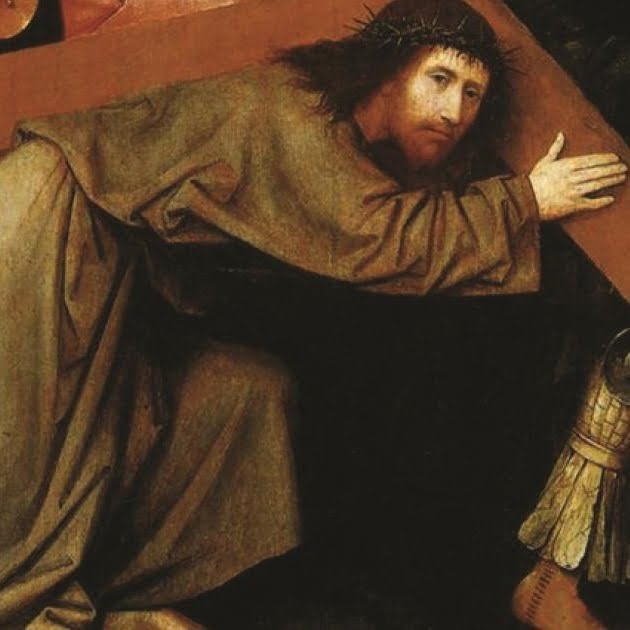
As the saving events of Holy Week and Easter draw closer, the Church gives us this marvellous little reprieve as we stop and enjoy Mothering Sunday. We often think of three mothers. Mother church, Mother Mary and our own Mothers. Today I want to reflect on Mother Mary and our own mothers. First Mother Mary. In Holy Week there is one encounter with her that we can be sure of. John in his gospel tells us in no uncertain terms where Mary was when her son died. She was there at the foot of the cross. This much we know for sure. There are two other little encounters that have grown up as traditions, but are not recorded for us in Holy Scripture. They do however ring true as entirely plausible if not probable. One is that Mother Mary met her son on the hot, dusty road to Calvary. There is no Biblical account for this. None whatsoever; but there is a certain something in us that says

“Yes, well I can see how that is a strong possibility”. While Jesus might have been embarrassed and wanted to spare his mum the hurt, a Mothers love is so potent that Mary of course would want to be there. Where else could she be? Where else would she be? We could say that perhaps it might have happened like this. That she pushed through the jostling belligerent crowd, wanting to see, wanting to touch, wanting to hold, to protect, wanting to … well just wanting to make it all stop. “I called to him through the shouting voices. He stopped; our eyes met. Mine  full of tears and confusion, his full of pain and anguish”. Then his eyes said to me “Courage, there is a purpose for this”. As he stumbled on I knew he was right. So I followed on and prayed silently.

The other encounter of which there is no account, but which makes perfect sense is a meeting between Mother Mary and her Risen son. Jesus appears to all sorts of people after his resurrection, but there is no mention of him meeting his mother. We could say that it happened like this. Perhaps Mary had gone out early in the morning to get water from the well. Or just as she was about to close her eyes in another attempt to try and snatch some elusive sleep. And all of a sudden there He is. Beautiful, radiant, triumphant, his eyes full of tender love. His gaze one of gentle reassurance. A minimum of words, but then no words are necessary.

And this is also true of our own mothers no matter where they are, or what their foibles, or what their gifts. There are some things that we know for sure about our mothers. That they gave birth to us, they fed us and they pray for us; consciously or subconsciously they will always want what is best for us. But there are also things which kind of make sense and which we can only guess at. How frustrated they were at our recalcitrant behaviour as we tried to figure out where the boundaries were. The stab of pain when we fell out of the tree or scraped our knee, or had our tonsils out and our romantic hearts broken. All these things we kind of  know, but we were never told.

And perhaps that's OK. Perhaps that is the way that it is supposed to be. Perhaps there are some things that we can discover and comprehend, only as we take our place in the next generation up. Perhaps there are some things about the mystery of motherhood that are so personal, so intimate that they do not belong on public record but are quietly treasured in those deep places of a Mothers heart that Our Lady knows oh so well.

So on this mothering Sunday we remember Mother Mary. We give thanks for her courage at the foot of the cross and we rejoice in the things that we do know. We ponder the things that must have been, and yet we are not told. And we look forward to that day when we rejoice with her and her son. When the mystery of Motherhood is not necessarily bandied about for all to see and broadcast, but rather is quietly revealed and understood, but most of all, enjoyed. Then we will know that we have been loved, that we are loved and that we will always be loved. Then we will comprehend in its full mind blowing joy, the mystery of motherhood… the truth we dimly know.

A Transaction with God

A reflection for Lent 3

A Transaction with God? 

Once every 6 weeks or so on a Saturday night, the Tattslotto division one prize pool is an eye wateringly  significant amount of money. Jeanine and I usually have a ticket at about this time and we have never won this insane amount of cash… ever. We do not make an investment hoping for a return. We buy a dream. Sadly sometimes, just sometimes, I catch myself being a bit transactional about this ticket. “Dear Jesus, if I be a good boy for the rest of  Lent would you please make the numbers come up? I promise that I will give some to the roof restoration fund, the Glenthompson mural restoration and the bishop's discretionary holiday to Vanuatu account.”

Maybe it’s not quite as blatant and crass as that, but there is a little misguided way of thinking that the surest way to get the corporate box seats in heaven is by something we do. The reality is that our name place at the wedding party is on the table because the host wants us to come. It has nothing to do with how often we are on the reading roster or the washing up.

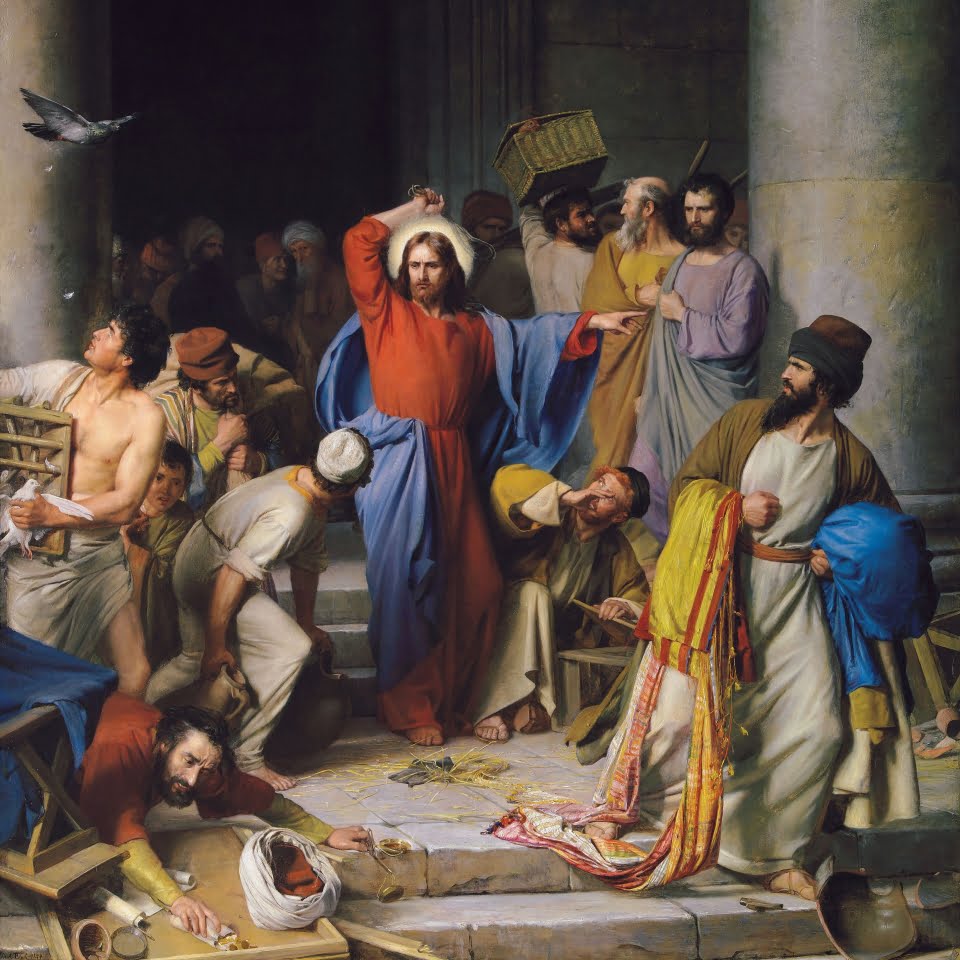
And this is why we have the story of the cleansing of the temple and why Jesus is so cranky about the money changers who peddled the transactional way of theology.

This story of the cleansing of the temple is a little bit special because it occurs in all 4 gospels.  But there are some differences. Matthew, Mark and Luke all put this story towards the end of Jesus ministry. Today we have John's account and he places it at the beginning of Jesus ministry. In chapter..2 In cleansing the temple The Master is out with the old and in with the new. The transactional is gone and a new sacrifice, the perfect sacrifice of the cross. Jesus himself is the price that is paid. Interestingly, it is only John who will  explain this teaching with the line about the destruction of the temple and its raising again.

The Parish Council of the temple don’t understand what Jesus is getting at; after all, the synagogue is Heritage listed, took all this time to build and not even the John Murnane could Warren Steele could put up a new temple in 3 days time.

There is another problem with this transactional way of thinking. It is heavily  weighted towards the more wealthy that come through the door. I mean what happens if you are a faithful, practicing Jew who really wants to offer a sacrifice to the Lord but it's been a miserable year in the cornfield and you can’t find enough denarii for the prescribed sacrifice. Does God love you any less?

From the other end of the argument, are those who did win Tattslotto loved more by God just because they had the right numbers on Saturday night? The next logical step of this disappointing argument is that the wealthy are obviously very good boys and girls because God has blessed them with an abundance of everything they need. Also those who are less fortunate with material possessions must have done something really naughty and God has quite rightly stripped them of everything, or at very the least withheld His favour. It’s a heinous, flawed and misguided way of thinking. It conveniently forgets that most of Our Lord's ministry was with the down and out, the halt, the maimed, the leper, the blind, the prostitute and the widow. The woman loitering with intent at Jacobs well who has 5 husbands and the 10 lepers are classic examples.

Thank goodness The Master cleanses the temple and turfs out the money changers… the gatekeepers if you like. Those who decide who gets in and who stays out. Sometimes I think we have come a long way and sometimes not. Many of you will know that my parents divorced and each sought remarriage in the Church. This was in the late 1970s early 1980’s. Each was turned away and told that remarriage was impossible. Fortunately we seem to think differently now. However, today's gospel is a salutary lesson for us gatekeepers, especially for clergy. What do we ask of those who come seeking God's blessing on their life? Surely it is not what they can do for us, but what we can do for them. It is not just about what we can do for God in the present and the future, but what God has already done for us in Jesus Christ and what the Master continues to do for us every single moment of our life.

Struggles

Fr David's Musing

The idea for these words came from someone else a gent called Brandon Stanton in his book ‘Humans’. He writes.

‘Everyone has a story because every person has a struggle. The obstacle that has been faced and hopefully overcome.  Struggles are crucial because they’re transformative’.

As I read those words they resounded clearly and loudly with me. They resonated and I knew them to be True. I have never met anyone who hasn’t had some kind of struggle and who hasn’t been changed by their struggle. Sometimes the struggle finds us. The unexpected accident, illness or death. Sometimes we inflict the struggle upon ourselves. We make woeful decisions. Our words and actions are poorly chosen or we leave things until it’s too late.

But our struggles are not to be shied away from. Nor must we pretend to ourselves and to others, that it is not happening and that somehow it doesn’t matter. It matters… a lot. Properly and bravely faced our struggles can be conquered. We may not think that we have ‘won’. We may feel depleted and deflated. Things may not have turned out the way we had hoped, but so long as we stand firm in the whirlwind of struggle, we can be transformed into someone even more beautiful, engaging and compassionate.

Perhaps the loveliest thing about struggle is that it connects us one with another. We relate to and understand each other. Relationships are welded in the heat of struggle. The more candid we can be, the more vividly that our pain is expressed and shared, the more compassion it elicits and the more powerful the bond that is forged. And if all that be true, how come when we seem to have multiples of struggles on so many levels… how come we seem more disengaged, disjointed and disconnected?

Hard Word to Say

Fr Daivd Muses

One of the pitfalls of priesthood is that we pray so frequently that we easily gloss over the words without paying any particular  mind to what they really mean. The Lord's prayer is a classic example. A minimum of twice a day everyday, almost guarantees that the words will become glib and prattle. It's good to get a wake up call every now and then.

It occurred to me the other day that the word ‘Our’ occurs twice in this famous prayer. Often when I have said ‘Give us our day our daily bread’ I have actually been praying ‘Please Lord, give me what I need to get through the day’. Now that is a particularly valid prayer to offer and offer it I do, on a frequent basis. But I have glossed over and reinterpreted the word ‘our’. It’s not about me and my needs. The word ‘our’ means more than just me, it’s a collective … it involves others.

The same holds true of the very first word in the Lord's prayer which also happens to be… ‘Our’.  So The Father is not my exclusive property. He never has been and never will be.  It's not ‘my Father …’ it’s ‘our Father’. To be reminded of this simple but very crucial thing will take me out of my self centred arena and lift my vision to a bigger whiteboard. It’s our community, our state, our nation and our planet. It’s called sharing.


And perhaps if I realised that it isn’t just about me and my bread, me and my Father, then the world might actually be a little less hungry, a little bit more nourished and a bit more ‘Fathered’. I must try and remember this next time to say the Lord’s prayer. It’s ‘Our’.

Truth makes love possible.

A reflection for Lent 2

I’ll call him Jimmy. Jimmy wasn’t exactly a Sunday by Sunday Anglican. Sometimes you’d look up and he’d be there at the back of the Church, but he would always be gone again by the end of the last hymn. He would phone or drop round just to say ‘Hello’. He flitted elusively but consistently around the edges of parish life. He was always present if there was food at a parish function. One day he popped around for a glass of red cordial and he wasn’t quite his usual self. I just got the sense that something was up. It transpired that after the 2nd glass of red cordial, 2 Tim tams and a home made scone with jam and cream, that he was waiting on some test results. Jimmy astutely described the sense of hiatus whilst waiting. He could not move on with his life in one direction or the other. He said “I don’t mind if the results are nasty and disappointing. I’ve had 9 and 70 years  of good life. I’ve raised 2 splendid children and had the privilege of watching them grow to adulthood. I’ve had a wife who has been far too patient with me and I have always had a roof over my head and food on the table. I’ve got a  will with the solicitor that I am very happy with and Beryl knows what hymns I want for my funeral. But I simply don’t know what the results are and this sense of being frozen in my tracks (and that is how he described it) a frozen no man's  land is just awful.” The waiting was debilitating for him. I offered to go with him when the news was delivered. He accepted the offer and it was a rare and undeserved privilege. I’ll never forget it.

The doctor welcomed Jimmy in. Calmly, with great compassion and with easy to understand words, the doctor told Jimmy that the news was not good. Jimmys response was  one of huge relief and he remarked in rather colourful words that must not be repeated here, that at least now he had a path to follow and there was still much to do. He could now get on with things. The truth set Jimmy free and the truth made love possible. I tell you that story because it resonates so very clearly with Jesus' prediction of his own death. The news Jesus delivers to his disciples is not pretty, it is not pleasant, it is not glamorous and sexy.

“Then Jesus began to teach them that the Son of Man must undergo great suffering, and be rejected by the elders, the chief priests, and the scribes, and be killed”. But it is the truth and the truth makes love possible. Further Jesus said all this quite openly. He doesn’t try to cover this prickly truth with chocolate. I imagine him saying these hard things not in anger, but with compassion, in a gentle way, looking his disciples in the eye. The truth was spoken in that same non-assuming tone that the doctor used when he told Jimmy his news. When Peter hears the truth he understandably throws a tanty. So unwittingly Peter becomes a hindrance to the truth and a barrier to love. And that’s why Jesus' words while seemingly harsh, are well spoken and right. ‘Get behind me, Satan! For you are setting your mind not on divine things but on human things.’ Truth makes love possible

Jesus then calls the crowds to himself and there is more truth telling that will make love possible.

“If any want to become my followers, there is a three point plan.

  1. They must deny themselves
  2. take up their cross
  3. follow me.

This friends is the cost of discipleship. It is high, but the truth makes sacrifice possible and just as surely as hurt always flows out of lies and hiddenness, so too love always flows out of truth, even when and sometimes especially when, the truth is painful to our ears and our hearts. This is what the love of God is like: it is free and therefore it is both all-powerful and completely vulnerable. All-powerful because it is always free to overcome, but vulnerable because it has no way of guaranteeing worldly success. So what Jesus says to Peter about his mind not on divine things but on human things is that the love of God belongs to a different order. It is not the order of power, manipulation and getting on top, which is the kind of power that can so easily pre-occupy us. But God's way is the way of truth which sets everyone free and floods the world with heavenly love.

For your prayers please remember those doctors  who this week must speak the confronting truth which makes love possible and commend them to the Master physician Himself.

Of Wilder-beasts and angels

A Reflection for Lent 1.

I usually get Lent wrong.  I usually think of it as a time when I’m supposed to be holier, when I’m supposed to fast, pray, give alms, do good; all as a way to prepare myself for the celebration of Easter.  All of that usually lasts for about a week or so, but that’s not the only way in which I get Lent wrong.

Our reading tells us  how Jesus spent his own personal “Lenten” time.  The first two verses go like this.

“The Spirit drove Jesus out into the desert,
and he remained in the desert for forty days,
tempted by Satan.
He was among wild beasts,
and the angels ministered to him.”

Jesus’ forty days of preparation were filled with two things that I rarely allow into my observation of Lent: wild beasts and angels.  Jesus went into the desert for forty days and faced wild beasts.  When I observe Lent, I foolishly try to escape from the wild beasts and they are pretty fearsome creatures. Perhaps you have  faced them too and if so you might be able to help me conquer them.

So what are my wild beasts?

Doubt - A subtle little critter who likes to sneak up on you and whisper sweet nothings in your ear. What if this is all there is? What if there is nothing on the other side? What if God really does keep count and does not forget the squalor of the past?

Fear - Allowing the forthcoming tricky encounter to eat away at you before its even begun. The percolating fear of dying or death or amputation The potential loss of a loved one.

Guilt - I could have done A, B or C. Instead I chose to do none of those things. I wilfully did x, y and z… again… only with a little more flourish this time and then went back for a second and then a third go. And what about that unfortunate incident 16 years ago? And the sense of guilt when I know I do really try to better and fail spectacularly.

And I get Lent wrong when I try to run away from these things. I try to pretend they are not there.  I try to eradicate them by ignoring them. That’s no way to slay the wild beasts

Jesus’ way was different: He faced up to them and He went among them.  Lent is not about working towards being a better person, but about facing the negative aspects of our lives, acknowledging their existence, and resisting the temptation to be ruled by them.

In facing temptations, Jesus allowed angels to minister to Him.  In other words, what do is not what is important in Lent.  What’s important is being open to allow God to enter my life.  It’s not about anything that I do, but about allowing God to do things in my life.

Who are the angels then?

The angels are those on the other side of the grave who love me and cheer me on. One of the good things about maturing and getting on in years is that the number of supporters and encouragers you have on the other side of the grave only grows. One of the thoughts that sustains me at a funeral is the sure and certain knowledge that here is another intercessor who is already in the nearer presence of the Living Risen Christ. They are  already supporting me with their prayers.

The angels are also those on this side of the grave who I know support and encourage me. In the canniest and loveliest of ways they offer wisdom and direction. Their sage perception comes bubbling to the surface much later, at just the right time, in just the right circumstance.

The angels are the strangers who appear unexpectedly, whose name I don’t know and who I am never likely to meet again; but by a random and unforeseeable set of coincidences come to me when I didn’t even realise I needed help. Seemingly accidentally they arrive in my wilderness.

You see part of the message of our tiny gospel reading is to reassure us that we are not alone. Ever. The company might be wilder beasts or angels and the landscape uninspiring, but the Master is already there with us and has been all along.

In the reading today Jesus begins the next  stage of his ministry. When he returns from the desert  He has undergone a resurrection of sorts. Now He sees and knows that God’s Reign is already active in the world. He has a new perception about ordinary life:  And we are called to share this vision. We are supposed to see what he sees. To know what He knows. Our humdrum lives are already filled with God’s active justice and love. The only thing left to do is to share this news with others in the hope that they will begin to relish the exhilarating reality of God's Reign on earth. Now with wild beasts and angels let’s do Lent right this year.

Fr David’s Musings

A time to speak and a time to keep silent.

I’m very new to this Facebook thing. Less than 12 months old.

One of the terrifying things is the speed with which information is spread around the world. Quite literally, it is an international forum.

So you have to be really, really careful before putting anything up there or out there, especially when it is the Parish Facebook page. Once it’s out there… sure you can take it down again, but it has already been seen by… how many people? And is it ever really gone, like forever?

But this same caution also needs to be exercised in my daily words. Once something is spoken out-loud and in the company of one other person it is out there and cannot be retrieved. You can’t get it back, alter it, change it, polish it. Sometimes all there is, is regret and shame.

So I am trying to adopt a new strategy. Before engaging with others  I ask myself these sorts of questions.

“Do I really need to say this today?” “Could it wait until tomorrow?” “Do I really need to send this email now?” “Is it not possible that there is a better choice of words?” “How will the recipient read this?”

There is a flip side to this. “Can I ever put off showing love?” Tonight is too late to write the card, make the phone call, reach out in whatever way is going to be appropriate.

I have been to enough funerals now to know that we are given a finite amount of time and opportunities to make the world a better place. Now is the time to keep silent and now is the time to reach out. It’s just a matter of knowing which is appropriate, but the time is always now.

Fr David’s Musings

Rights vs. Responsibilities

For a little while I was a school chaplain. It was a stimulating time and I learnt far more than the students.

One of the few lessons that ‘worked’ was the lesson about when and where it is safe to smoke. This was obviously a long time ago.

Is it OK to smoke alone in a cardboard box on a beach where this no one around for 5 kilometres? Alright, well how about we ditch the cardboard box… still OK…? Now what if there was someone else on the beach who was 50 metres away… still OK?

Always there was someone who came up with the real aim of the lesson and would quip … “Yes, but if I choose to smoke, if I choose to put gunk into my lungs, if I choose to pay eye-wateringly high amounts of tax for these addictive drugs, then that’s my right. It is my right to do A, B, C and 3.5 as often as I like and where I like”. Or the flip side “It’s my right not to do Q.2 and by-law z if I don’t feel like it”. And that's when the real discussion began. Responsibilities versus my rights. ‘Responsibilities’ always look outwards to others, while ‘rights’ look inward to oneself.

The awkwardness of this COVID age is that it is so heinously easy to be consumed with my rights and what I want, that my responsibilities to others evaporates.

A classic example is when I take communion to our shut-ins. It isn’t my right to do this, it is my responsibility. And when my focus is right, this little task along with all my other responsibilities are continuously suffused with joy. Let’s have the patience and foresight to think about what are our responsibilities to others. This is always our primary mission.

A reflection for Sunday 14th of February

Of Prayer moments. A reflection for Sunday 14th of February

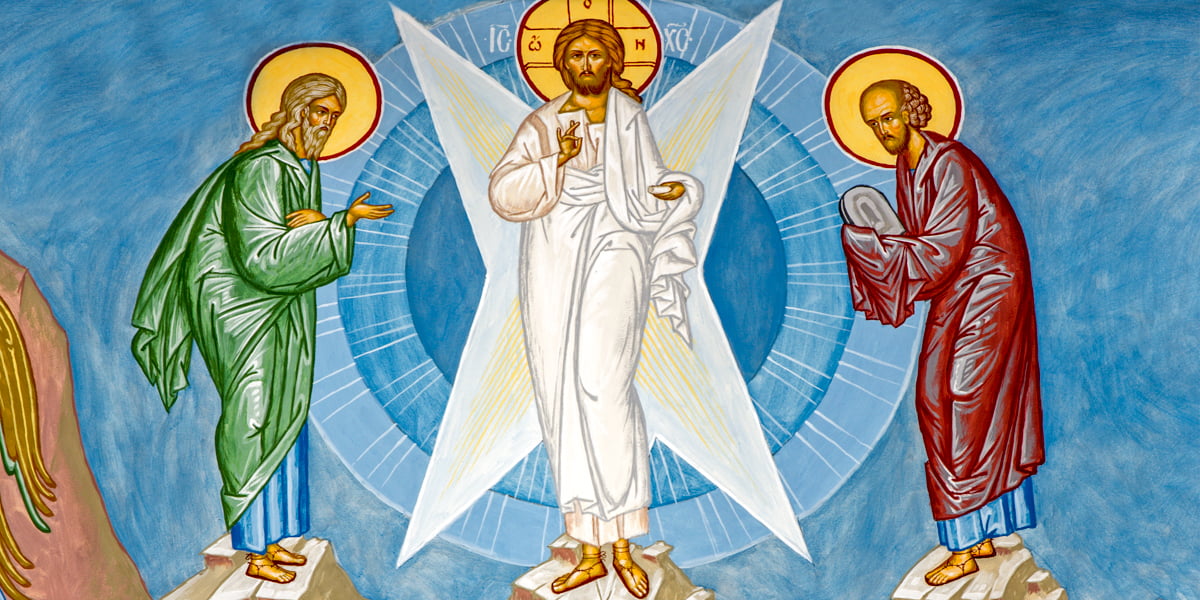
Today we have this classic tale that we call “The Transfiguration”. Our Lord takes his inner cabinet of Peter, James and John up the mountain and there for a moment the veil is lifted and they see The Master as he truly is in all his dazzling glory. Moses and Elijah even pop in for a nice cappuccino and all is right with the world.

Much is made of all the loveliness of this perfect moment and thats right. It’s a terrific experience and once in a life time it might just happen to us.

But what we don’t know in this story is what was being said on the way up the mountain. What were Peter, James and John chattering about? What was Jesus teaching them? Perhaps they were reflecting on how Simons mother in law was keeping, or how Zebedee was doing in the fishing trade or their suspicions about Thomas, or what a great guy Judas was and where the couple at the wedding at Cana were living now.

My pet theory.. is that it wasn’t as interesting as that. I reckon they were just having a bit of a whinge as they trudged ever upwards. Why did Jesus ask them to come up this hill? Why us? And Peter, how come you forgot the water bottle and James you're no better for forgetting the bread and olives for morning tea. And boyo isn’t it hot and aren’t the flies despicable.  And.. the age old question “Are we there yet?” Sound familiar?

Tedious, everyday banter complaining about the human condition and the drudgery that so often overtakes our thoughts, our hearts and our lives.

And then the veil slips away and this other world is revealed to them. Suddenly, somehow, they slip into that other dimension and it is indescribably heavenly. Any attempt to stuff this experience into the English language can only mangle it and so it is better not to and just let the experience speak for itself, if in fact that is what experiences do. Maybe they just are and that is all they need to be.

Now these two worlds, the world of tedium and the divine are often thought to be two quite different worlds and they never collide or overlap. But what if that is not true?

What if our whinges and our complaints and our mutterings are just as authentic in prayer as those little moments when all is serene and joyous? In God’s eyes, and that is how we must always try and see it, is one somehow better or less regarded than the other?

The  heartfelt mutterings of a 6 year old for great gran to get better, compared to the weeping ‘Have mercy’ by the alcoholic, to the wise old nun whose been singing  the psalms for 52 years and 4 months. Aren’t all valid prayer moments?

So while we might smirk and belittle James, Peter and John,  perhaps they weren’t so far off the mark after all. Doesn't that mean that there is hope for us in our flimsy prayers no matter what form they might take.

But there is a deeper chemistry going on here and perhaps a story to finish with might help.

Shane was an aspiring lad who badly wanted to study medicine at Melbourne Uni. His folks were proud of him and everyone said that he would be great. He had superb people skills and would always be there to help someone no matter what the need was. He studied diligently for the year 12 score that would enable him to get in. And guess what? He failed to get the right number of marks. He was gutted! Absolutely devastated. So he goes to the University of Queensland to study physiotherapy. He must leave his home, family, part time job and pursue something which was and would always be only his second choice.

However it is on the campus of the University of Queensland where Shane meets the gorgeous Melissa who is just as besotted with him.

The future has rewritten the past. Shane’s grief is transfigured into unexpected joy. The past didn’t change. It’s not as though his disappointment never happened. Of course it did, but the icky is transfigured into something he could never have dreamt of.

 We have no idea what joys await us and what hard slog it is to get up the mountain. We might even be grumbling about the trek and how there is little food or water and its too hot and rocky and hard. But as long as we are always climbing upwards, staying within view of the Master who is continuously beckoning us on, encouraging us on, helping us up when we stumble, then one day we too will see HIm as he truly is.  Our mutterings with others are our first little steps to sorting out our relationship with our heavenly Father and when we have untangled our knotted relationships with ourselves and each other, then we will have that same union that Jesus and his Father have. We will see what Peter, James and John saw. The world as it should be, the world as it can be, maybe even the world as it is.

The gifts we never knew

Fr. Davids musings

The gifts we never knew

I saw them at 7:00am on Sunday. 3 smartly dressed police officers on Griffin street. They had captured three recalcitrant horses that had been spooked by the storms. Thanks to their calming vibe the horses were now grazing happily on the nature strip.

I thought of our police force as I went inside. Like me they probably had no idea what they signed for. Each day had its surprises, challenges, rewards, excitement and it’s tedium. We did not realise that expectations, joys, tears, giggles, reprimands and COVID were all coming.

We never knew what hoary dragons we would slay, or chocolate flavoured liqueur  we would savour. We did not know the emails we would write and the ones we wish we hadn’t. We did not know the friendships we would make, the lives that would be entrusted to us. How fortunate, how lucky, blessed we were; how blessed we are still. We did not know the gifts that would be given to us and the gifts that we would bring. The gifts we never knew.

All the time we were maturing, growing, being pruned, loving and being loved. We made mistakes and sometimes we got it right. We were rewarded not with large bouquets of flowers or limitless cash bonuses, but with that sweet, elusive sense of a job well done and the realisation that no matter the outcome, we could have done nothing more.

And while this cauldron gurgled, our gifts and talents gradually came bubbling to the surface. Shiny, glossy and unexpected. “Oh, I never knew I had it in me”. The gifts we never knew.

In a delicious irony that occurs only once a millennium, the reading that Sunday morning was the story of the three wise men bringing their gifts to the squawking Christ child.

I thought of those three police officers, and the three horses. Again, we had all discovered the gifts we never knew.

On Healing

A reflection on healing

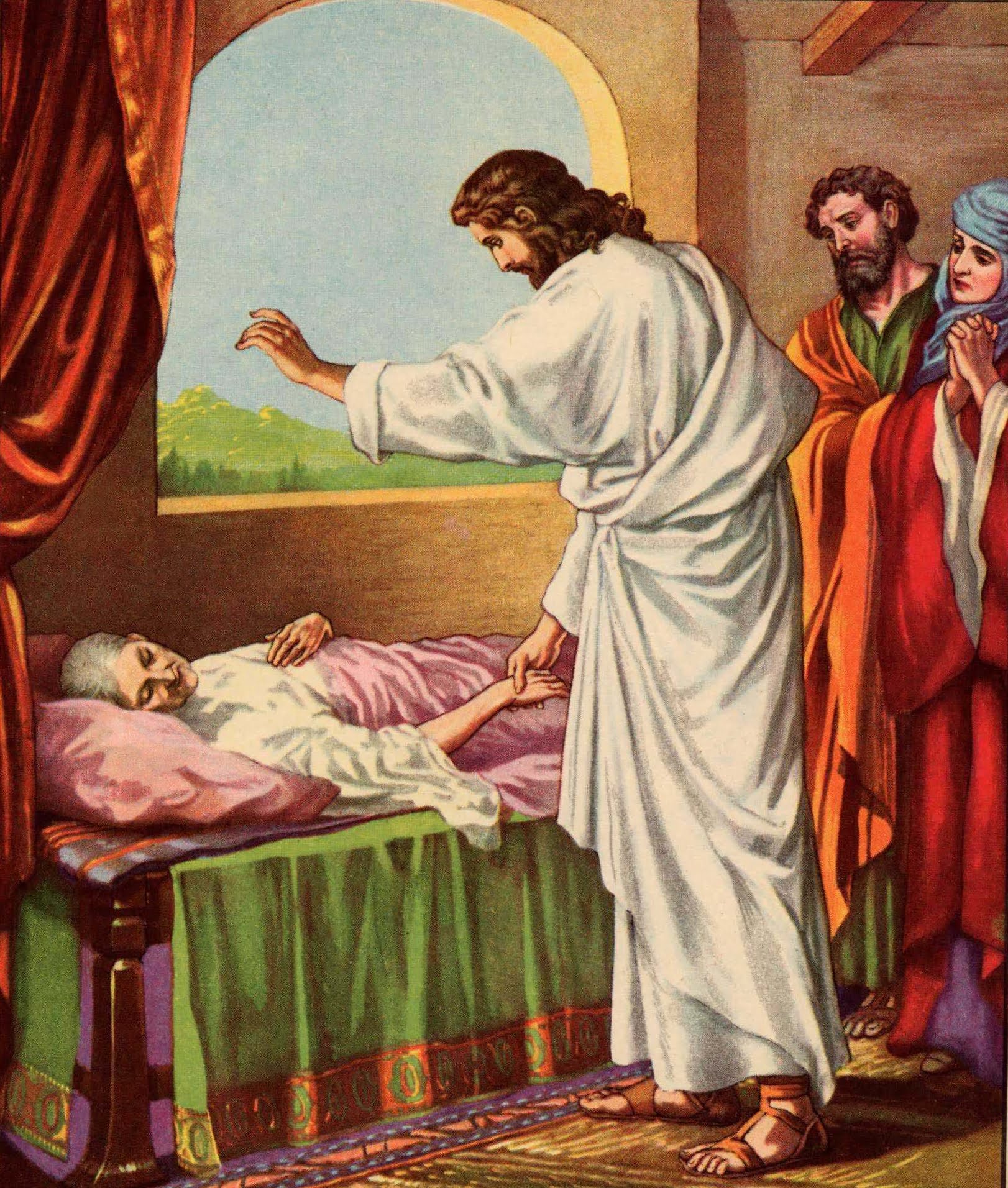
A couple of words that might set with these stories of healing. in context. The gospel begins in the synagogue on a sabbath. From there Jesus and his companions go immediately to the house of Simon and Andrew. And immediately (there it is again, one of Mark's favorite words) they tell Jesus about Simon's mother in law who is crook in bed with a fever. Later that evening when the sun had set we get multiple healings including the driving out of some demons. The phrase ‘when the sun had set’ is significant because it shows that the people were keeping the sabbath. To help or carry an ailing buddy to get healed would have been considered work. So let's have a look at the healing of Simon's mother in law first. Notice please that unlike the exorcisms later on, Jesus doesn’t say anything in this healing;. He heals not with a word, but with a physical action. He simply “came and took her by the hand and lifted her up.
”Sometimes healing is like that. It is not only in the physical action that the most effective healing often occurs. Often silence does its own healing. When there is a child we often touch and hold and hug them, but then somehow as the years flick by we often lose that intimacy. Why? One  of the most painful but understandable reactions to the whole sorry Church child abuse sadness, is that clergy have to be so very careful of showing any physical demonstration of care. I am old enough to remember a time when it was not so. The mistakes of our past have cost us more than just dollars.
The silence of Jesus is also I think symbolic. I strongly suspect that some of our most effective healing is done in silence where it is just a matter of sitting with and being with another. Words sometimes just muck it up. And sometimes it is just OK to say “I am sorry. I don’t know what to say so if you would like I will just sit with you awhile and not say anything”. Simon's mother in law shows her gratitude for her healing by waiting on them. Usually when someone recovers from a fever the process is long, arduous and tedious. What Mark is showing us is that she went from wretched to fit and healthy in a matter of moments. This is no ordinary healing folks. And the word gets out. Is it any wonder then, that as soon as it is spiritually proper, a grab bag of people come crowding around the door, bringing their sick, maimed, halt, blind and possessed to be healed.
There is a curious line where Jesus does not allow the naughty spirits to speak because they know who He is. The identity of Jesus must not be publicly proclaimed … yet. Presumably Jesus speaks to the evil spirits and gives them this directive. So sometimes an authoritative word brings about healing. Sometimes we heal by words that we did not even know we had within us. But dig deeper we understand that only when we know who Christ is, can our demons be expelled. Not just what Jesus does, not just what He can do, but who He is as the Messiah, the Saviour, our companion and Our God.
We should draw great comfort from these miracles for we all need a bit of healing. Hopefully not too much physical healing, but the healing that goes on deep inside. In that place where there are chips and blemishes and things that are not quite right. The bits and pieces of refuse of life that we draw to ourselves. We are not quite perfect, we are not quite as we should be. Clergy are just as good if not better than most, in trying to convince themselves that they are otherwise. The most effective and pastoral healer is the one who knows their flaws and reaches out with a mucky hand to my grubby hands. The grazed knuckles and the bits of skin that have been knocked off are what we have in common. And here's another lovely thing that I know to be true yet have no idea how it all works. We are most healed ourselves when we reach out and offer healing to others.
This process takes us out of ourselves. We may not feel as though we did very much, or we might think that we were a spectacular failure, but in simply being there, being accessible, being amiable, being approachable, we become more like the wounded healer Himself. If we stretched out our pierced hand to others who are wounded, would we not be imitating the Wounded healer himself? The most effective healing is when we bring healing to others. In this story we are the ones who bring others into the Living healing presence of the Master. We help our ailing buddies limp and falter and stumble along, all the time knowing that they are in fact helping us to come into His nearer presence where all are perfected and one in Him.