June 6

From misunderstanding to understanding. 

Dispersed and distributed throughout the gospels are an uncountable number of occasions where Jesus is misunderstood. And He is misunderstood by those who we think should have known better. Today's gospel reading has two groups of people who misunderstand Jesus.

First there is Jesus' family.

“When his family heard it, they went out to restrain him, for they said ‘He has gone out of his mind.’”

Then most of our gospel reading is taken up with the scribes from Jerusalem misunderstanding who Jesus is. They believe that he is possessed by Beelzebub “He has Beelzebub, and by the ruler of the demons he casts out demons.’

Then the next 7 verses (quite a lot for Mark who is usually very brief and to the point) have Jesus explaining that this is not the case and we have the classic line about a kingdom divided against itself which can never stand.

Then right at the end we again come back to Jesus family.

“Then his mother and his brothers came; and standing outside, they sent to him and called him. A crowd was sitting around him; and they said to him, ‘Your mother and your brothers and sisters are outside, asking for you.’ And he replied, Whoever does the will of God is my brother and sister and mother.”

So today's reading is rather like a sandwich.

A bit about Jesus' family at the  beginning and the end. The two slices of sourdough bread. The juicy, meaty filling is the bit about the scribes from Jerusalem.

But it is a sandwich flavored with what I call the pepper of misunderstanding.

There are various types of misunderstanding. There is the misunderstanding of when we are indecisive. “Lord shall we use the sword”.

There is the misunderstanding of forgetfulness. ‘Was it two or three o’clock that I was supposed to be at that appointment?’

But in the gospel it is the misunderstanding of who Jesus is. They thought he was out of his mind or working for the devil. They could not see what was right before them and so they misunderstand.

And you would think that being so close in time and geography to Our Lord, that these folk would have been able to understand.

And it is very easy for us to kid ourselves that if we had been there we would have understood, we would have known who this wild man was and what he was on about.

But would we? I think of how easy it is to misread, miscalculate and misunderstand myself and others.

People are always evolving, always changing, always growing, developing and always being formed by those around them and the adventures that shape them. None of us is the same person that we were a year ago and we ought to be patient and sensitive with others and perhaps most of all with ourselves. Hopefully we are continuously becoming the person we are called to be. The very image of The Master incarnate in the 21st century in Western Victoria.

But hang on… the title of the homily is … “From misunderstanding to understanding.

So where do we go in the scriptures to learn about this understanding business? How do we make this transition? There is a chilling, haunting and yet comforting question from Our Lord on the night before He dies.  Jesus got up from the table, took off his outer robe, and tied a towel around himself. Then he poured water into a basin and began to wash the disciples’ feet and to wipe them with the towel that was tied around him. Then He looks them in the eye and says tenderly “Do you understand what I have done for you?” Do you understand? Do you?

I think about that question a lot. Peter didn’t understand what it was all about. Remember his little tantrum “Lord you will never wash my feet”.

How do we make this transition from misunderstanding to understanding?

Part of the answer is to read and reread the scripture. Take the pew sheet home and read over just one of the lessons again. What strikes you? What did you miss the first time or second time around? What do you need to ask that clever Bishop Gary?

But more powerful and helpful than getting an erudite and clever answer from bishop Gary is this. The transition from misunderstanding to understanding begins with realising how grubby, grimy and pungent our own feet are.Then we pick up the implements of that upper room. We take up the bowl and towel and then just simply wash some feet. We make the move from misunderstanding to  understanding, when we are actually being and doing. When we wipe the feet of the gnarled and the disappointing and the unattractive. The feet that are bruised and have sores and ugly bits on them. This is how we move from misunderstanding to understanding.

We don’t always get it the first time round or second time but we must always be open to the possibility of new understanding, fresh perceptions and new truths. The best way to move from misunderstanding to understanding is to wash some feet, beginning with our own.

Some Mutterings

Some mutterings

It was  an abysmal day as I tiptoed tremulously down to the start of Parkrun. The sort of climate that makes a grown man weep with terror and gnash their false teeth.

There was a significant part of me that did not want to be there. But there I was.

Because of my reluctance, my mind was geared into the probability of achieving a pathetic time. The kind person invited us to start running with that simple word ‘Go’ and off I shuffled.

I fell into a slothful stride and I knew I wasn’t going to my maximum. My mind wandered onto frivolous things and I prayed fervently for the torture to be over.

Later, I got my Parkrun email and it was as I expected. A very slow tortoise type time indeed.

But there is a reason why I tell you this. And my reason is that attitude counts for everything. Our mind set as we head into our adventures counts. It matters and plays a significant role in determining the outcome.

If I lined up at the start of park run with a grim determination to give this my very best shot and nothing was going to stop me, and to hec with the rain coming in sideways and the sub zero temperature, then I have no doubt that my time would have been significantly better. In fact I proved it to myself the next week when the bathroom scales and I saw things quite differently and ferocious words were muttered.

This mental attitude before starting applies to just about everything we do. So instead of toddling across to the church in the dark because ‘I spose I better,' what would happen if I went in excited and expectant; convinced that I was going to encounter the presence of the Risen Master? What might happen then?

Holy Trinity

In the name of our Trinity Family, Father, Son and Holy Spirit.

Trinity Sunday is the only Sunday given over to a concept or idea, rather than a person or an event. The Trinity is always irksome for to squish God into our vocabulary is impossible.

There is a story of how St. Augustine had a dream the night before he was supposed to speak about the Trinity. In the dream, he was walking on a beach, and saw a young boy digging a hole in the sand. The boy would grab a seashell, fill it up from the waves, and then pour it into the hole. Augustine approached the boy and asked him what he was doing. “I’m trying to empty the ocean into my hole,” the boy replied. When Augustine responded that that was impossible, the boy answered, “Not as impossible as you trying to explain the Holy Trinity.”

It’s probably easier to say what the Trinity is not rather than explain what the Trinity is.

We could say that God is not evil, not hateful, not vengeful or spiteful; but that still leaves us with a gawping vacuum of exactly what He really is.

There are various images and parables that go a goodly way to being helpful for us but inevitably, if you push the image too far and try to take it too literally, then it must fall over.

One classic image, is that the Trinity is like water. It can be found in three forms; vapor, ice and liquid. All are water and yet all are different, with unique properties. One is not somehow better or more important than the other, they do not compete against each other and one seems to quickly transition from one to another.

However, we don’t put God the water into the kettle to boil Him up and produce steam and have nice cup of tea with a chocolate muffin. Nor do we drop God the ice into a gin and tonic with a slice of lemon.

So with that caveat, the image that I want to dabble with is that of the Trinity as a family.

The Father, the Son and Holy Spirit live in complete harmony one with another. They understand and communicate perfectly with each other. The Son is obedient to the Father and He is empowered by the Holy Spirit to do what is asked of Him. No-one is more important than the other and each are absolutely essential to the life of other two. They are the perfect family living in stability and consummate unity, each pointing to and embracing the other two in pure love.

So far so good; let’s push the parable of family a little further. One of the things that people cherish and frequently have on display, are family photos. They are there as reminders to those who live in the family home, but also as a witness to those who visit.  God the Father sent his Son as a kind of photo so that we know what God is like. Compassionate, a servant, loving, sacrificial and yes, sometimes rebuking when we get it wrong and are not the person we are called to be.

We glimpse this family unity and we experience the Trinity in a unique way when we gather around the altar as a family. We hear our family stories, we partake of Holy food and we offer all that is upon our hearts. The grist of daily family life is shared, offered, sanctified and made holy. It becomes the stuff of God. Our pain, our joy, our suffering, our tears, our giggles are His, are ours.

And we will glimpse the Trinity at another table later on this morning when some  of us toddle off to a café at Tarrington. As always, with a shared meal together, nothing happens and yet everything happens. There will be catching up, there will be a fresh learning of where we are up to. There will probably be smirks and burps and laughter and listening. There will be coffee and wine and yummy food. All this will be thoroughly enjoyable and it is absolutely essential for the life of our parish family together. No wonder the master chose the image of a wedding feast to describe the party of Heaven.

And maybe in the car on the way home, we might realize that in some way, some how, in the banter and jocularity… somewhere between entrees and the last desert, the smiles and listening, we have sensed something of the Trinity. A unity so enjoyable that we did not know how hungry we were for Him. And perhaps by the time we get home and maybe have a little snooze or  a walk around the Lake, we will come to realize that we have been fed in that sublime way that matters most to us. We will know that our souls will have been nourished and sustained and now replenished, we can walk along little further, closer to the party where the wine is always of exceptional quality, where we never get indigestion, where the laughter is voluminous and we can dance in a way that knows no embarrassment, because everybody else in our Trinity family will be dancing with that same ecstatic bliss.

In the name of our Trinity Family, Father Son and Holy Spirit.

Fr David’s Mutterings

A friend of mine has an interesting turn of phrase. Whenever we part he says.

“I hope my words find a home in you”.

I have never thought too much about this phrase. It’s always just been something he has said and sadly I have brushed it off as too much caffeine or some other ‘hidden ingredient’.

But on a rare moment that is unlikely to happen again this side of a pink moon, I gave some thought to his words.

I recalled who it is that is at home with me and how they influence me. I also remember those who have shared my home over the years and how they have moulded me to be the person I am today. I hope that I am a little more polished, a little more empathetic, a little more sympathetic. There is no question they have changed my way of life and the way I now interact with others. This I hope, is a good thing and my feeble desire is that the world might be just a little shinier because of those who have I lived with and still live with me today.

Some words we ignore or are too busy to hear. Some words linger for a little while and some find a home with us. We take them through the front door, take off our shoes, relax and have a ‘conversation’ with our new friends, our new words, our new phrases. They have an influence on us, if only it is to bewilder, encourage, inspire  and startle us into a different way of thinking, a different way of behaving.

So you may like to reflect on the words that have found their home with you and what words you send to peoples home. May your word live in us.

Pentecost

A reflection for Pentecost

Today's homily

This morning's story begins at Chelmsford cathedral in England in 2013. There are several hundred of us clergy types in this marvellous stone cathedral which has been sensitively, yet exquisitely restored I am at the synod of the local diocese and we begin by singing a hymn ‘O thou who camest from above’, the words of which I have put in the pew sheet. The words of our hymns are very important and many of them have much to teach and to remind us. Some fail in this important task.

The sound bounces around the walls of the cathedral and the organist does flash twiddly bits. And just for a few moments, a few ecstatic seconds, all is as it should be. I am completely absorbed and caught up in an act of worship of the God who loves me. It is a moving, joyous, sublime and yet indescribable experience . It is I imagine, how that first Pentecost, that first coming of the Holy Spirit may have felt for those funny old disciples and Mother Mary all those years ago.

For them, something significant happened and things could not be the same again. Yet outside, the persecutions were still rife and the eucharist was celebrated in secret and in fear.

For us too today, our outside world knows not and cares not. Nothing seems to have changed and nothing seems to be different. The shenanigans of our fearless leaders seem unstoppable, lawyer, lawyer and co are still very much in business and we still experience that struggle as we try to draw away from our dark side. Into the clay of our everyday existence, comes the divine spark of the Holy Spirit to inspire and inflame us. The strength, the understanding that this is not all there is. The power of God which is the Holy Spirit, which is his love descends again and agitates deep within us.

God again taking the initiative in a way that we could never foresee, never comprehend and understand. For those first apostles fear is conquered and sorrow gives way to joy. Instead of being locked in a room with isolation and loneliness for company, their message goes out through all the earth.

But… there is a trap here and the trap is this. That having had such an experience we may be tempted to hunger and search for that same religious ‘high’ and forget why we have today.

  • We come because He loves us and He wants us here.
  • We come because we know that it is the right thing to do and you do the right thing because it is the right thing and you know it to be the right thing.
  • We come because we know that we are sinners and we need forgiveness.
  • We come because we want to be with our brothers and sisters in the Lord.
  • We come to offer our thanks and our triumphs.
  • We come to offer our needs and our praise.
  • We come to offer our tears and our mess.
  • We come because we want to offer to the world the fruits of the Holy Spirit.

These are not something we can buy at the deli section of the supermarket. To attain these very desirable but necessary fruits takes a lifetime of failing and crafting and much, much courage.

Some things to think about.

First. I began the homily with what I call a ‘Big church’ experience. I should point that I have had far more ‘small church’ experiences of the nearer presence of God. There is a sense of intimacy and closeness where only 2 or three are gathered, that could never be replicated at Chelmsford Cathedral.

Second. After the Holy Holy Holy bit in the middle of the Eucharist, the priest asks the Holy Spirit to descend upon the bread and wine at the altar. The outward action is the priests hands descending over the bread and wine. The flash church word for this moment is the ‘epiclesis’; but the important bit for me and you to remember, is that it is not something the priest does. It is the action of the Holy Spirit. One example of these words is “and we pray that by your word and Holy Spirit we who eat and drink them may be partakers of Christ's body and blood.”

Finally, if I close my eyes and remember Chelmsford, it is almost as if I am right there all over again.

Now if God is truly present in all time and in all places, is it not possible, that in some sense that I am with those people just as surely as I am with you here today? There is a sense in which all our worship, no matter the year, or the place, is one continuous act of loving God, even in our death and especially after our death.

This would make sense of the last verse of the hymn which is a splendid place for me to stop.

Ready for all Thy perfect will,
My acts of faith and love repeat,
Till death Thy endless mercies seal,
And make my sacrifice complete

Easter 6

“He transformed the pain of his tormented life into ecstatic beauty.”

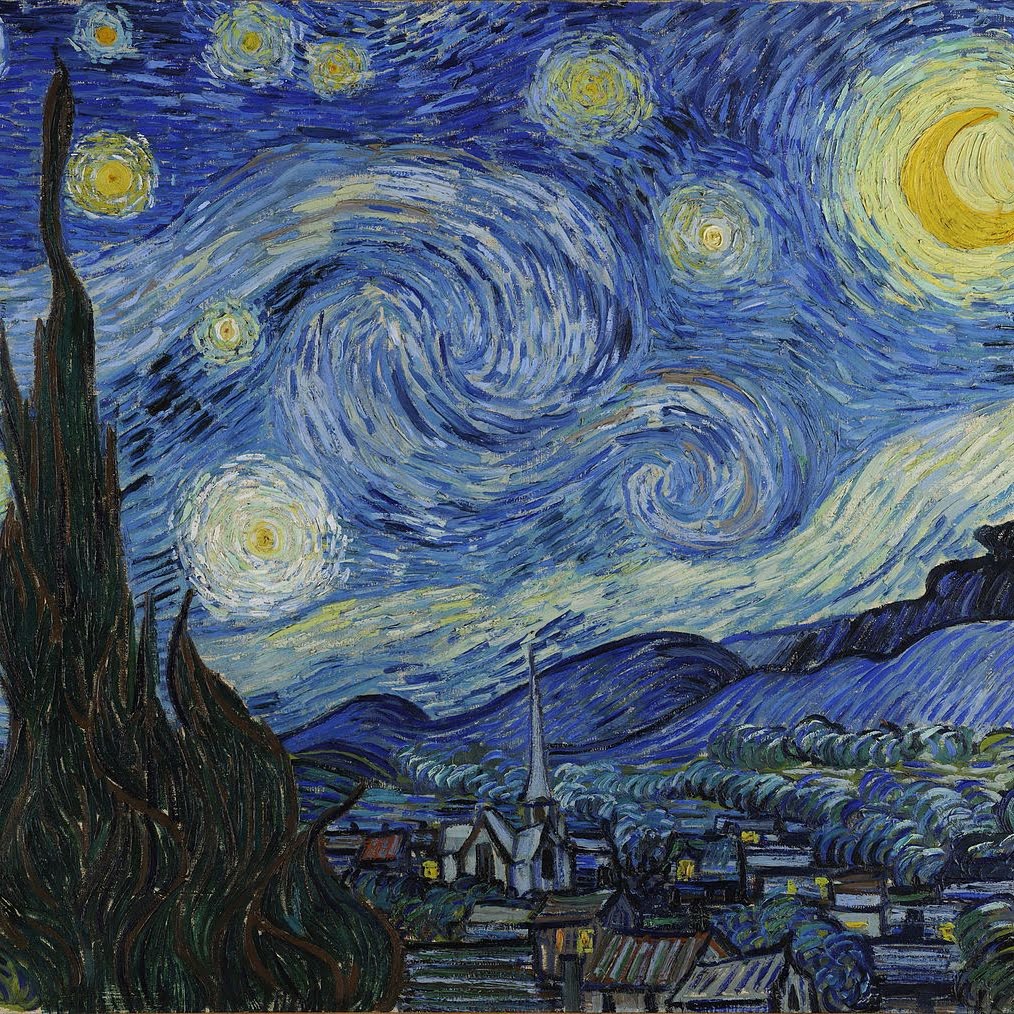
Today's story begins at the  Museum D’Orsay in Paris in 2013. I am admiring Van Gogh’s  painting of Starry night. The picture to go with the story is in the pew sheet. I am deeply moved. In fact, there are real live tears because I know the story behind this painting and I know the story of this man.

Vincent van Gogh painted Starry Night in 1889 during his stay at the mental asylum of Saint-Paul-de-Mausole.. Van Gogh lived well in this hospital; If attended, he could leave the hospital grounds. He was allowed to paint, read, and withdraw into his own room. While he suffered from the occasional relapse into paranoia and fits, it seemed his mental health was recovering.

Unfortunately, he relapsed. He began to suffer hallucination and have thoughts of suicide as he plunged into deep depression. Accordingly, he returned to incorporating the darker colors from the beginning of his career and Starry Night is a wonderful example of that shift.

Van Gogh suffered from psychotic episodes and delusions and though he worried about his mental stability, he often neglected his physical health, did not eat properly and drank heavily. His depression continued, and on 27 July 1890, Van Gogh ended his own life.

This painter was unsuccessful during his lifetime. He was considered a madman and an abysmal failure. But…

“He transformed the pain of his tormented life into ecstatic beauty.”

In our gospel Our Lord makes the distinction between living physically in the world and living according to the world's standards.

One is the geographical place where you happen to eat, sleep, walk, talk and live. Your physical, touchable, tangible world. The other is your spiritual and moral world and life.  Your relationship with God. The world where you dwell in God and He in you. That house with many rooms.

To the art world of the time and his contemporaries Van Gogh was not understood and never celebrated. He was not of this world. But perhaps in his delirium and his illness he was more closely aligned with the divine and creative skill of God than what we could ever understand.

And I can’t help wondering who it might be that is living amongst us today that is misunderstood, misaligned, mistreated and mistrusted; that will be rejoiced in and marvelled over, in a hundred years time.

The contrast between the two worlds; the physical, outward, touchable one which must inevitably pass away…  and the spiritual, inward, divine world… is spectacular. For the outward world, the highest ideals are power, prestige and control. For the spiritual world we aspire to service, humility, gentleness, love and sacrifice.

Todays gospel is from John 17. At the start of that chapter Jesus says

“Father, the hour has come. Glorify your Son, that your Son may glorify you.

“The hour” that Jesus refers to is the hour of crucifixion. The “glory” He is referring to, is his mangled death.

And to this disfigured figure of love we turn our thoughts, our hearts and minds again. To be inspired and so to emulate The masters love for us once more.

“He transformed the pain of his tormented life into ecstatic beauty.”

So Van Gogh is my hero not just because he was ahead of his time, not just because he was a clever painter. I admire him because he was able to use his inward torture to offer the world something precious and enduring and lovely.

There are times in our lives when it is sweetness, light, honeymoon, champagne, liqueur chocolates, roses, sparkle and dancing. And that’s right,… we ought to celebrate those times and dance like someone who has had a strawberry milkshake or six.

But there are also times when it is dark and brooding and there seems no way out, or no way forward. The ache continuously sears us and it will not go away.

Then like Van Gogh and like our Lord on the cross, we use it to God's glory. We do this simply by offering our torment to the Master. We learn that this is the most authentic and legitimate  form of prayer we will ever attempt.

Perhaps it will help to finish with some stolen words. The person who wrote these words was speaking about Van Gogh, but they could just as easily be speaking about another wild man … the Master craftsman who roamed the dusty streets of Palestine.

“Van Gogh is the finest painter of them all. Certainly, the most popular great painter of all time. The most beloved. His command of colour, the most magnificent. He transformed the pain of his tormented life into ecstatic beauty. Pain is easy to portray, but to use your passion and pain to portray the ecstasy and joy and magnificence of our world. No one had ever done it before. Perhaps no one ever will again. To my mind, that strange, wild man who roamed the fields of Provence was not only the world's greatest artist, but also one of the greatest men who ever lived.”

Fr. David’s Mutterings

Meet Deidre and Dave.

They were given an undeserved chance to lease an orchard. A cracking plantation bursting with a booty of delectable produce.

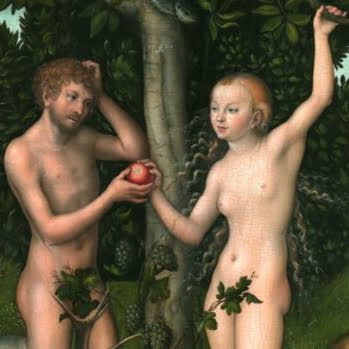
Leonardo their Landlord was a groovy guy with a goatee beard, shades, designer jeans, a shoulder length ponytail and a charming twangy drawl. Leonardo was a dream landlord. He would frequently pop round in the cool of the evening with an award winning beverage just to see how his tenants were doing. And always just as Leonardo was leaving he would remind Deidre and Dave not to mess with the tree in the middle. That was His job. His responsibility. They could and should eat as much of all the other fruit, but please ignore the fruit of the tree in the middle.

This didn’t bother Deidre and Dave. What with mangoes, avocados, lychees, bananas, cumquats and macadamia nuts what more could they want?

Then one sunny day when Dave had finished pruning the Pink Lady apple tree and Deidre had harvested 16 coconuts, they happened to glance at the tree in the middle. …(You know where this is going right?) And despite having more than enough scrumptious tucker the one thing they wanted more than anything else was the fruit of the tree in the middle of the orchard.

And so the inevitable happened. A lead to Q, lead to Leonardo being very cranky, which led to their lease being torn up and Deidre and Dave were now homeless, hungry and sorry. Sure it’s an old tale but it tells us a very important truth.

That no matter how much we have, the thing we want most of all is the one thing that we cannot and shouldn’t have. Look around. Rejoice in the bounty that you do have and don’t let envy bring you down.

Opportunities

a musing we will go.

‘Right! What are the opportunities?’

I heard an encouraging tale the other day. Another parish was vacant when the COVID shooting match came to town. A parish without a priest can sometimes become despondent and sad around the edges. But not the one I heard about.

A few of the key players sat down with a refreshing beverage (and possibly some chocolate caramel slice) and began to unpack the new situation.

This is what we are confronted with. There was a big silence until… one of the folk rubbed their hands together and with unrequited enthusiasm exclaimed.

“Right! So what are the opportunities?”

And then the meeting took on a completely  different timbre. Ideas flowed, initiatives were … um … initiated and people came away with excitement in their belly and a list of things to do. There is much to be inspired by with this little tale.

First it was exciting, but not surprising, that the spark came not from a priest but from the pew sitters. This is very much the case here in this parish. Far from leading the wave, I am usually just swept up along with it.

Secondly was the catch cry ‘Right! What are the opportunities?’ In the face of a bleak situation this simple phrase turned everything upside down. A fresh vision for the future winked alluringly.

This phrase is not limited to parishes trying to navigate their way through a quagmire of COVID. It can and should be applied to every conundrum that we find ourselves in. Personally, as a community and as a planet of people.

I offer it for you. Give it a go next time you find yourself boggled by the unexpected. Boil the kettle, inhale slowly, take your time and ask yourself… ‘Right what are the opportunities?’

You did not chose me

You did not choose me but I chose you. And I appointed you to go and bear fruit, fruit that will last, so that the Father will give you whatever you ask him in my name.

 “You did not choose me but I chose you”.

As a very young adolescent I failed to grasp the full significance of these words. Perhaps I was incapable at such an early age. There was a crass, naïve part of me that thought that I had cooked the whole vocation thing up myself. That somehow it was all my idea and of course I had rattled God’s cage first and not the other way round. Mind you to rattle God’s cage is something only done by the foolish, the brave and the desperate.

But there I was in the Bishops study one day, dewy eyed and dripping with idealistic piety. Apparently later on the Bishop said to someone that I was like a young puppy dog falling all over itself in a rush to get to the altar. Little did I realise that the altar was the place of brokenness and sacrifice.

Somehow I had thought that this priesthood thingy was all my idea. Didn’t I carefully choose my year 12 subjects with theological college in mind. Hadn’t I, all by myself, come to the inescapable understanding that there was nothing else that I would rather be?

It took countless years to come to a more helpful perspective, a clearer understanding that it was actually God’s initiative a very long time ago.

You did not choose me … no I chose you. Read it more carefully, more diligently. What does the text tell you? What does the text actually say?

But all this vocation is equally as important and right for you as well. God had always wanted you to enjoy him and over the years has provided opportunities for you to respond. They may have been subtle and they may have come in strange wrapping paper, but God has always taken the initiative with you and wanted you to be here with him at the altar today.

Now for the irksome bit.

If God sends us out to encounter and engage with other people, then he must also send other people to rub shoulders and to challenge us and draw us ever closer to Him. And that is a celebratory and challenging vocation. Further we are called to be the fruit that will last and not wither at the first blight of fear or disappointment.

And while I wonder who it is that you might engage with and enjoy this week, I wonder who it is that God will send into your life to help you grow into the person He has called you to be. Sometimes we need to have a few rough edges sanded off us and so God will send us the appropriate person. Sometimes we need to be soothed, sometimes we need to be listened to and sometimes we just simply need to listen.

You and I are in the terrifying business of worshipping a God who takes the initiative and calls liquorice all sorts into His family as our brothers and sisters. A quick think about some of the clergy that you have had should tell you that God has the most outrageous, scandalous and puzzling sense of humour.

And I can’t help but think that sometimes He just plays with us given the curious people He gives us.

We don’t get to choose the people God sends into our lives. He takes the initiative and gives us who will be best for us and sometimes they are not altogether to our liking.

Ultimately it must always be who we need. Not who we want. It must always be what God wants. Sometimes the God of surprise and vocation is exasperating but He is never boring.

You did not choose me… no I chose you And I appointed you to go and bear fruit, fruit that will last, so that the Father will give you whatever you ask him in my name.

Michael Leunig knew this well so I conclude with a prayer he wrote. It explains this vocation or sending concept in charming but confronting words. It would take a very courageous soul to use it. One day I might be trusting enough of God to pray it.

God give us rain when we expect sun.
Give us music when we expect trouble.
Give us tears when we expect breakfast.
Give us dreams when we expect a storm.
Give us a stray dog when we expect congratulations.
God play with us, turn us sideways and around.
Amen.

Parable of the 3 Tea Cups

For this morning's exercise I want you to imagine that there are three tea cups in a line on your kitchen bench. Two of the tea cups are very close to each other, in fact they are touching each other. The other is some 6 inches or more apart from the other two. Got it? OK. Just hold that image in your brain.

Now in this morning's gospel Jesus highlights the intimacy and relationship that He has with His Father. “I am the true vine, and my Father is the vine-grower.” This is not the only time Jesus highlights this closeness with his Father. “The father and I are one”. “Father, glorify me in your presence with the glory I had with you before the world began”. In fact John 17 pretty much oozes with this companionable, loving unity. It seems that Jesus and his Father are inseparable.

So the two tea cups that are placed very close to each other  on your shiny kitchen bench are the Father and Jesus.

Now…Lets have a look at the rest of the gospel.

“Abide in me as I abide in you.”

“The branch cannot bear fruit by itself unless it abides in the vine.”

“I am the vine, you are the branches”.

So the third tea cup is… you. And the very good news is that the intimacy, the closeness, the companionability, the unity and the love that the Father and Jesus enjoy…. is the very same delicious companionability and unity and love that Jesus wants to enjoy with us. So shuffle your imaginary 3rd teacup close to the other two that are nestling together. Next in the gospel there is a fairly salutary lesson about producing fruit. It does not happen, it cannot happen, unless our tea cup is placed very close to the other two and stays there or in the imagery of the vine we cannot bear fruit, unless we are grafted into Christ and stay there. Just as the branch cannot bear fruit by itself unless it abides in the vine, neither can you, unless you abide in Him. “Those who abide in me and I in them bear much fruit, because apart from me you can do nothing.”And while our tea cup might slide away a bit, we keep on coming back each Sunday to re-establish that connection which to us might seem flimsy, flawed and fragile but from the Masters point of view we are always close.

This is good news for us and it is good news for the world. The Master wants to have, longs to have, aches to have, craves the same inseparability of relationship  with you, as he effortlessly does with His Father. And its when we allow that to happen, that fruit does ultimately blossom. Sometimes it takes a long time. Sometimes the fruit is not voluminous; always the growing is hidden from us and always it is to his glory. We are outrageously and undeservedly privileged if we glimpse from time to time, the growth of new fruit. Sometimes too, it is the most unlikely vine dressers that produce the most fantastic fruit.

A little story from a long time ago to finish with. Once upon a time I used to take tours around Seppelts Great Western. It was a fabulous job and my first authentic 9 - 5 work a day week experience. It taught me much.

In the blithering cold of a Great Western winter, when the rain was chucking it mercilessly down, I used to catch the odd glimpse of the invisible people who would be out in the vineyards doing the pruning. I still think of them whenever I read this bit of St. John’s gospel. Sometimes it seems as though everything is agin the work of God. That we labour in vain in the most appalling of situations and climates and nothing much seems to happen. Very much like those workers at Seppelts. But come February, March when the harvest happened, there was a buzz and activity and joy and sunshine. It seemed that we had waited a long time for this and the abysmal situation in the middle of June was a distant, dissolving night mare.

Sometimes we simply just have to do the hard yards, the praying in the freezing cold with no apparent result. But what do we say to ourselves and to others when this is the case. When  it all seems too hard and you cannot do it any more, or you simply don’t want to do it any more. Then you might remember the invisible people in the vineyards of Seppelts. Or if it is easier, you might just remember the three cups on your kitchen bench and nudge yours a little closer to the other two where it belongs and revel in the closeness that is yours for the enjoying.

Finding the sweet spot.

Finding the sweet spot.

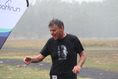
Here is a photo of a dishevelled greying guy at Park run. This photo is not glamorous or sexy.

You can see my countenance is contorted with the strain of trying really hard. I look as though I have all the problems of the Church of God on my shoulders.

It is a curious quirk that every so often I find what some sports people refer to as the ‘sweet spot’. The sense where body, soul and mind all align in a perfect harmony. This ‘space’ is an elusive little critter that you cannot write into your diary for 8:00am on Saturday morning. You do not find this ‘sweet spot’; rather it is almost as if it finds you. It happens sometimes when I am jogging around by myself and I am not motivated by selfish ego in trying to catch the person in front of me.

No, this ‘sweet spot’ catches me by its own stealth and I don’t realise it until I am actually there, in the moment.

A surfer will also speak to you about the sweet spot. They will tell you that sometimes they catch and ride the perfect wave. Try to replicate this of your own volition and you are doomed to never experiencing it again.

Sometimes it works like this with prayer as well. Every so often, you may find Him or rather He finds you.

And because we can’t orchestrate this encounter, the best we can do is make sure that we continue to run round the lake, go across to pray, front up at the altar, make ourselves aware, practice and make ourselves available.

There are some blustery dark mornings though when all seems lost, forbidding and lonely and I wonder why?! and then…-

A reflection for Anzac day

A reflection for Anzac day

What I do know

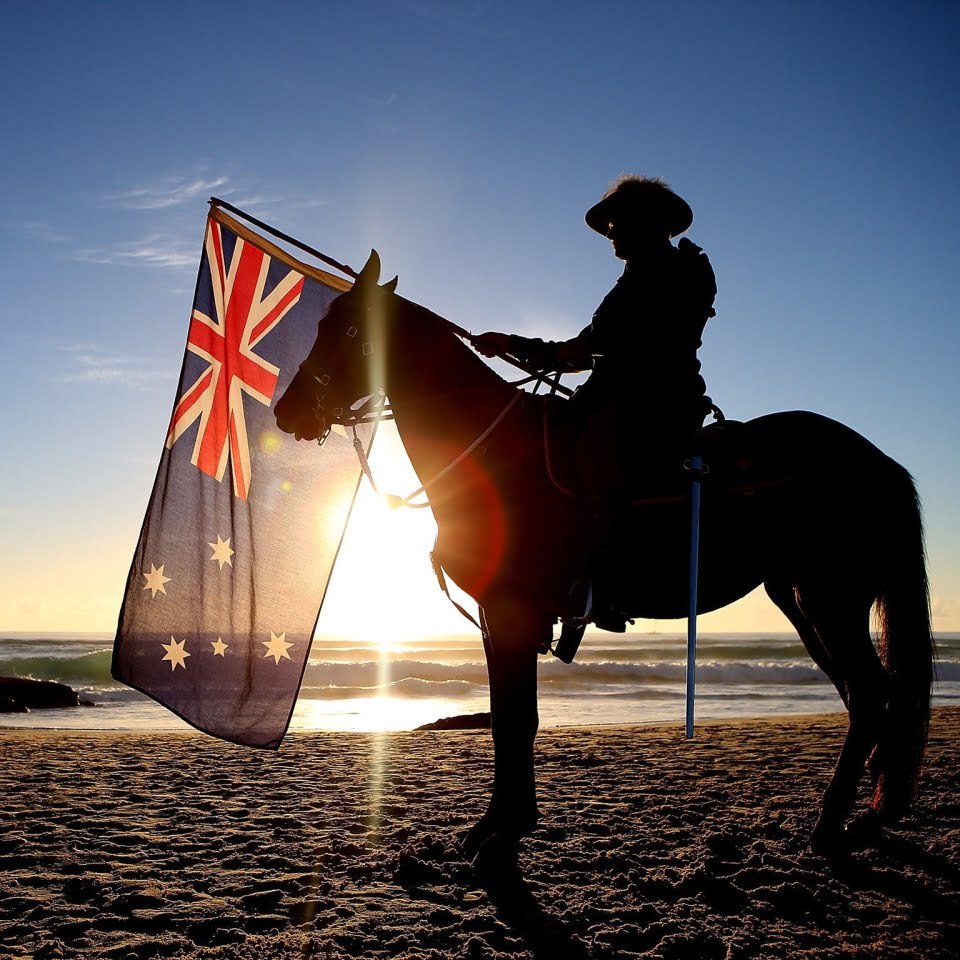
On the 25th of April 1915, Australian and New Zealand soldiers formed part of the allied expedition that set out to capture the Gallipoli peninsula. These became known as Anzacs and the pride they took in that name continues to this day.

On the morning of 25 April 1915, the Anzacs set out to capture the Gallipoli peninsula in order to open the Dardanelles to the allied navies. The objective was to capture Constantinople (now Istanbul in Turkey), the capital of the Ottoman Empire, and an ally of Germany.

The Anzacs landed on Gallipoli and met fierce resistance from the Ottoman Turkish defenders. Their plan to knock Turkey out of the war quickly became a stalemate, and the campaign dragged on for eight months.

At the end of 1915, the allied forces were evacuated. Both sides suffered heavy casualties and endured great hardships. Over 8,000 Australian soldiers were killed. News of the landing on Gallipoli and the events that followed had a profound impact on Australians at home. The 25th of April soon became the day on which Australians remember the sacrifice of those who had died in the war.

The Anzacs were courageous and although the Gallipoli campaign failed in its military objectives, the Australian and New Zealand actions during the campaign left us all a powerful legacy.

What I kind of know.

The lads from the farms who upped their ages and never returned. People from this district whose names are not recorded but neither are they forgotten. The women who waited back home and those who dressed gaping wounds. Those who lived amongst corpses and mud and freezing cold. Those who had to make the decision to knowingly send others to their death. Those who went ‘over the top’ knowing that this would be the last thing they did.

What I do know.

Sometimes the only prayer is

“Have mercy”

A litany

On those who are prisoners of conscience have mercy

On those who mourn in secret have mercy

On those who suffer mentallyhave mercy

On those whose service went unnoticed  have mercy

On those who stayed behind  have mercy

On those who delivered telegrams have mercy

On those who are still fearful today have mercy

On the souls of those who have died in conflict. have mercy

On those who are prisoners of war have mercy

On those who negotiate for peace have mercy

On those who can no longer march have mercy

For the times I have not perceived the tears of others

have mercy

For the times that I have held onto grudges and anger

have mercy

For the times that I have misunderstood

have mercy

For the times that I have not listened

have mercy

For the times I have chosen prejudice over understanding

have mercy

For the times I did not want to be reconciled

have mercy

For the times that did not choose helpful words

have mercy

For the times I have not been at peace with God

have mercy

For the times I have not been at peace with others

have mercy

Almighty God and Creator, You are the Father of all people on earth. We beseech You to guide all the nations and their leaders in the ways of justice and peace. Protect us from the evils of injustice, prejudice, exploitation, conflict and war. Help us to put away mistrust, bitterness and hatred. Teach us to cease the storing and using of implements of war. Lead us to find peace, respect and freedom. Unite us in the making and sharing of tools of peace against ignorance, poverty, disease and oppression. Grant that we may grow in harmony and friendship as brothers and sisters created in Your image, to Your honour and praise. Amen