Palm Sunday – The Donkey

Palm Sunday  - The Donkey

During this Lent, we will be offering some homilies under the theme of ‘Instruments of resurrection’. We will discover that the most unlikely, commonplace, mundane things are instruments of resurrection. How clever that the master would use everyday, simple things to communicate and help us enter into the most profound mysteries.

Today it’s a donkey. … or rather The Donkey or That  Donkey. That’s right… the one who carried the Messiah on his back into Jerusalem.

Why use a donkey? Because the Master really needed to get to Jerusalem, the holy city, to offer up his sacrifice, the new and everlasting sacrifice, and he needed to do it in such a way that would make us stop and think.

So, a few things about THE donkey.

Our Lord could have entered Jerusalem on any beast or any first class ticketed chariot he liked. When you’re the Messiah, you have choices, many choices and some of them are rather lush, salubrious, flashy and very much ‘Look at me’.

A big, black, shiny war horse, such as one might see on the racetrack on the first Tuesday of November, was also an option for the Messiah and friend, but it is not the one he chose.

I think he chose the donkey because it authentically symbolised his style of leadership. Humility. “I am gentle and lowly of heart, and you will find rest for your souls”. A big brute of a warhorse would come crashing into our world, an intrusion and an act of confrontation. This is not the Master’s style.

He always came as an unobtrusive invitation. There were some who accepted and followed. There were some who fell in love… for a little while, and there were some who saw and understood the price tag and decided that this little man wasn’t for them.

When I think… about it, a donkey was exactly the right beast to carry our Lord to a selfless crucifixion and thus resurrection.

If you’re anything like me, you have days when you try to do the right thing consistently over a period of time, and the road is long, hot, rocky and uncomfortable. Being only a lowly Donkey this animal could have no idea of who he was carrying or the importance of the trek. I’ll lay odds, pretty jolly good odds, that when we get to the other side of the grave, and we see things much more clearly than we do now, that these tiresome treks, those confusing conversations and the rubbish tasks were actually some of our finest and most important missions. They may not have been gratifying and to our liking, and we may have wanted nothing more than to shirk this responsibility, but carrying it through to its completion, without faltering or questioning, will be our reward when we are with Him.

Something else about that donkey. One author of disrepute postured the theory that the donkey heard the Hosannas and cheers and, for a few minutes, thought that the adoration was all for him. How easily we can be deceived. How easily we are flattered. Our palms that turn to crosses say it all. The way to love must include pitstops of vulnerability, disappointment and rejection; for the vocation of love and service must involve mistakes and failures.

A little anecdote to finish. One priest I knew, and I have known many, began our relationship with words like these.

Well, Fr. David. I’m a bit of a donkey. You will learn far more from mistakes and blunders, the things that I get stupidly, stubbornly wrong, than you will from the few things that I get right.

He spoke with great honesty and authenticity, and he was absolutely, categorically right. I did learn many things that should not be done. He may well have been a bit of a donkey. He may well have been seduced from time to time with the ‘hosannas’ that were offered to him on his better days and he would be first to say that sometimes he just didn’t get it.

But his greatest strength was just to stay the course. To simply persevere, be persistent and get on with it. Like the donkey, he never pretended to be anything else or anyone else than who he was. As such, like the donkey, he too was an instrument of resurrection.


Lord Jesus Christ, by the three days you lay in the tomb, you sanctified the grave to be a bed of hope of resurrection.
Grant that when we lie in our own grave, we may sleep in peace until that glorious day when you awaken us to your glory.
Then we shall see you face to face and in your light we shall see light and know your splendour, for you live forever and ever Amen.

Remember …

Remember…

On Ash Wednesday, we have a splendid custom where the ashes from last year’s Palm crosses are imprinted on our foreheads. You may have seen folk walking around with this grey smudge on their forehead and wondered what all the fuss was about.

The words said while the ashes are being placed on the person’s head are…

“Remember you are dust and to dust you shall return”

It’s pretty confronting stuff, but it is both real and authentic. There’s no getting around it. The mortality rate for any given population anywhere on the earth is always 100%. Nothing more… nothing less.

Ash Wednesday this year saw me having some surgery.  You see, clergy, too, are mortal. Very mortal. Cut us, and we bleed. Snatch away our loved ones in death, and we sob. Hearten and embolden us, and we grin broadly. If you happen to be part of a worshipping community, you may consider how to minister to your minister… if that makes sense.

As I tried to prepare for surgery (how do you do that anyway?) I pondered that as my mortal body was being sliced open, right around the world, people were praying, being reminded that they are dust and to dust they shall return.

Ash Wednesday catapulted us into the forty days of Lent, onto Easter, to infinity and beyond.

The good news of Ash Wednesday is that death does not have the last word. Life does. The cross on the forehead should be a visible reminder of that. The seemingly inconsequential guy on the cross actually has great consequences for us, especially when we find ourselves gathered with others in the presence of a shiny coffin.

And it all began with a smudgy cross on our forehead and muttering those humbling but necessary words.

Remember you are dust… and to dust you shall return.

Everyone’s an Expert

Everyone's an Expert/Ambassador

Around the time Jeanine and I were considering a Parish exchange (2013), we were deluged with advice on a whole raft of subjects, which was the best time to fly, which airlines to fly with, who was grumpy at which border, which cities to avoid, which pub serves the best pint and who does the most marvellous English breakfast. Not necessarily the most nutritious, but something that meant you’d only have to eat a single banana for the rest of the day. Everyone was an expert, of course and spoke with the authority of experience in 2010 or earlier.

Of course, things change, people change, businesses change hands, or go out of business altogether. What was purportedly the place to go to have great bangers and mash now had the windows boarded up and no one around.

Everyone’s experience is different, and what sort of day the staff were having will determine the vivaciousness of hospitality. It’s very easy to come out with a brash and sweeping generalisation like… All the people in that quaint little village are… great fun, grumpy… hungover… snobs.

But it works the same way with us, too. When people come to our communities to live, holiday, or shop. Every time we interact with someone who is not known to us and we have not met before, we are an ambassador for Hamilton and sometimes for Australia.  Of course, our visitors will tell their friends and relatives about the time when they met those people in Western Victoria and how … and then they …

How quickly we are to make a quick assessment of a broad population on a single fleeting encounter. Every day we are an ambassador for our community, our parish and our nation. A great privilege and joy.


Instuments of Resurrection: Vinegar

Sunday March 22nd

Lent 5

Vinegar

During this Lent, we are offering some homilies under the theme of ‘Instruments of resurrection’. We are discovering that the most unlikely, commonplace, mundane things are actually instruments of resurrection. How clever that The Master would use everyday, simple things to communicate and help us enter into the most profound mystery of resurrection. Today, we’ll be thinking about Vinegar and Our Lord’s thirsting on the cross.

Here’s the reference to vinegar from St. John.

“Jesus knew that all was now finished, he said, (to fulfil the scripture), ‘I am thirsty.’  A jar full of vinegar was standing there. So they put a sponge full of the wine on a branch of hyssop and held it to his mouth.  When Jesus had received the vinegar, he said, ‘It is finished.’ Then he bowed his head and gave up his spirit.”

This is not the first time that The Master asks for a drink. He shows his humanity, his need, to the woman at the well in John chapter 4. At Sychar, he comes to Jacob's well and asks a woman for a drink.

Over the next 19 verses there ensues a conversation between Jesus and the woman. Jesus gradually draws out more information from her,… or rather shows the woman that he actually knows quite a bit about her.

Peel away the top layer or two of the story, and we learn that the real issue is not just Jesus’ thirst for water, but what is going on here is his desire for the conversion of the woman herself. By drawing her into a clever dialogue, she learns a lot about who The Living water is.

So at Jacob's Well, we glimpse both a human Messiah who needs to quench his thirst and also the divine one who offers eternal life. It’s a masterful piece of work by John.

From the cross, we also see the same Messiah who is both human and divine.

When I read the story of Jesus on the cross expressing his thirst and being given vinegar, we know that sometimes we thirst as well. Sometimes, when we ask for water, we only seem to get vinegar.

I am also pretty sure that there are times when The Master asks for water from us, and if we hear his request, and sometimes we don’t, then what we offer is not to the same high standard and quality that is needed.

Still, like the Master on the cross, he accepts what is offered, and even in the spirit of our ambivalence and sometimes downright reluctance, he can use even vinegar to his glory. Even then, it is enough for him to accomplish what He needs to do. Yep. Even vinegar can be an instrument of resurrection.

And there is an understandable temptation to hang our heads and give way to despair. I could have, should have done better, but that is not the way forward. The way forward, I am fairly sure, is to give thanks that we were even asked, that we had a go, and to offer something, no matter how rudimentary or lacking, is better than nothing at all.

The cry ‘I thirst’ is an expression of vulnerability. He is needy, perhaps dare I say it, even weak and helpless. His words are our words. To be fully human is to say “I thirst”.

In his cry from the cross, we hear Jesus saying to us, ‘I understand, I know your limitations, I can and do identify with you.’

Augustine put it this way

“Man's maker was made man that He, Ruler of the stars, might nurse at His mother's breast; that the Bread might hunger, the Fountain thirst, the Light sleep, the Way be tired on its journey; that Truth might be accused of false witnesses, the Teacher be beaten with whips, the Foundation be suspended on wood; that Strength might grow weak; that the Healer might be wounded; that Life might die.”

But like the woman at Jacob's Well, the deep abiding thirst is actually The Master’s unending love for us.

The vinegar and his wanting of us, his need for us, his vulnerability is what makes him such a necessary and loving saviour. The vinegar and The Master’s thirst are the instruments of salvation. Even from the cross, especially from the cross, when death is imminent, and it is then that his work of resurrection is accomplished.


Lord Jesus Christ, by your thirst on the cross and the three days you lay in the tomb, you showed your relentless desire for us, and you sanctified the grave to be the bed of hope of resurrection. Grant that when we lie in our own grave, we may sleep in peace until that glorious day when you awaken us to your glory. Then we shall see you face to face and all shall be accomplished and fulfilled in you. Then we shall see your light and know your splendour, for with you we shall live forever and ever, Amen.

So This is What it is All About

So this is what it’s all about!

I found some words the other day that were helpful for me. For some, they might be too churchy, for others, the style will be familiar. For others… go gently with it and see where it might lead you. I use these words to conclude this little reflection and hope you find them useful.

The words begin with.…

Compassionate God,
As you know, each star you have created,
So you know the secrets of every heart;

And here I could not help but think of a wise old adoring couple who, knowing each other’s every wrinkle and flaw, still chose to wake up together. Over the years, they found out not only the fun bits, but all the other uncomfortable, pongy, grungy bits. The way he kicked his slippers off at night… and left them there. Or that annoying little idiosyncrasy that made the hypertension flare up.

To be found out, known, forgiven and loved even when everyone knows the cost, pain, privilege and joy of the relationship and still wants to sign on for an eternal amount of time has to be good news, right?

The truth I have come to realise too late in my little life is that this is exactly the relationship that The Master chooses to have with me.

When I understand this and mirror this compassion to the others in my life, then all may be citizens in his city of peace.

Compassionate God,
as you know, each star you have created,
so you know the secrets of every heart;
in your loving mercy, bring to your table
all who are fearful and broken,
all who are wounded and needy,
that our hungers may be satisfied
in the city of your peace;
through Christ, who is our peace.

When God Created Mothers

Sunday March 15th

Lent 4  15 March 2026

During this Lent, we will be offering some homilies under the theme of ‘Instruments of resurrection’. We are discovering that the most unlikely, commonplace, mundane things are instruments of resurrection. How clever that the master would use everyday, simple things to communicate and help us enter into the most profound mysteries.

Today it is tears, and it is also Mothering Sunday.

This reflection, written by someone else, combines both tears and Mums… and it’s short

“When God Created Mothers"

When the Good Lord was creating mothers, He was into His sixth day of "overtime" when the angel appeared and said. "You're doing a lot of fiddling around on this one."

And God said, "Have you read the specs on this order?" She has to be completely washable, but not plastic. Have 180 moveable parts...all replaceable. Run on black coffee and leftovers. Have a lap that disappears when she stands up. A kiss that can cure anything from a broken leg to a disappointed love affair. And six pairs of hands."

The angel shook her head slowly and said. "Six pairs of hands.... no way."

It's not the hands that are causing me problems," God remarked, "it's the three pairs of eyes that mothers have to have."

That's on the standard model?" asked the angel. God nodded.

One pair that sees through closed doors when she asks, 'What are you kids doing in there?' when she already knows. Another here in the back of her head that sees what she shouldn't but what she has to know, and of course, the ones here in front that can look at a child when he goofs up and say. 'I understand, and I love you' without so much as uttering a word."

God," said the angel, touching his sleeve gently, "Get some rest tomorrow...."

I can't," said God, "I'm so close to creating something so close to myself. Already I have one who heals herself when she is sick...can feed a family of six on one pound of hamburger mince...and can get a nine-year-old to stand under a shower."

The angel circled the model of a mother very slowly. "It's too soft," she sighed.

But tough!" said God excitedly. "You can’t imagine what this mother can do or endure."

Can it think?"

Not only can it think, but it can reason and compromise," said the Creator.

Finally, the angel bent over and ran her finger across the cheek.

There's a leak," she pronounced. "I told you that you were trying to put too much into this model."

"It's not a leak," said the Lord, "It's a tear."

"What's it for?"

"It's for joy, sadness, disappointment, pain, loneliness, and pride."

"You are a genius, " said the angel.

Somberly, God said, "I didn't put it there.”


Lord Jesus Christ, by the tears you shed at the grave of your friend Lazarus, sanctify our own tears that when we weep,
we may come to know that you are already there, embracing us in our distress.
Then bring us at last to that place where those who mourn are comforted, and every tear wiped away with your pierced hand.
Then we shall see you face to face and in your light we shall see light and know your splendour, for you live forever and ever Amen.

The Two Faces of WhatIf

The Two Faces of ‘What If?’

They came to me with a bewildering tale of how they were lining up for a lifetime of ongoing tests. Each one is seemingly innocuous in and of itself, but any one could be life-changing. It wasn’t an easy way for this person to live, but that was their lot. In the end, we agreed that we were fortunate to live at this point in history and in this culture where we had such attentive medicos and access to such great medicine.

It took my friend a while to get into this way of thinking, but most of the time, that’s how they came to reason and live. Most of the time… But… with each looming appointment and icky test, the inevitable question would raise its hoary head and roar… “What if?” That was a long time ago, and the last time I heard, they had gone on to live a rich, long, fulfilling life.

But the question ‘What if?’ also has a flip side.

What if we made an honest and long-lasting attempt to be quieter for longer? What if we wrote that ‘Thinking of you card’? What if I didn’t look at a screen for 24 hours?

You see the two faces of the question ‘What if’.

When my fearful friend asked this question, it was an understandable inward-looking, at self-inciting doubt and fear. For a few days, it would cripple their potential and joy.

The other way of asking the question looks outward to others and how we might enhance someone else's life.

Both have their place, but the former will frivolously waste our time pondering unknowables, whereas the 'other face' can inspire us to actually do something positive and enriching.

I know which face I would rather gaze upon.

Instruments of Resurrection – The Lance.

8/3/26 

Lent 3 

Instruments of Resurrection - The Lance.

During this Lent, we are offering some homilies under the theme of ‘Instruments of resurrection’. We are beginning to discover that the most unlikely, commonplace, mundane things are actually instruments of resurrection. We discovered last week in our reflection on the hammer and nails that God can even use the implements of suffering and death as instruments of His resurrection.

Today’s reflection is on the lance that a soldier used to pierce Jesus’ side on Calvary.

But I want to begin our reflection in a different place and a different time.

The place is Wimmera Base Hospital. The date is July 22nd 2008. The time is 5:20 am. My father has suffered a massive cerebral haemorrhage and has died. The nurse on duty astutely walks that delicate line between being compassionate and being professional. She courteously explains that there are a couple of minor procedures that have to be done to confirm my father's death. A doctor arrives, obviously dragged out of heavy slumber. First, a gentle light shines on my father's eyes. Then the stethoscope is used to make sure that there is no heartbeat.

I have been privileged to watch this procedure many times, and I guess if you were looking for a catchphrase to describe what is going on, you would call it ‘proof of death’ as opposed to proof of life. And I want to come back to my father's proof of death at the end of this homily.

Today I want to reflect on the lance that pierced Jesus’ side.

The story goes that to bury a corpse on the Sabbath day is breaking the Sabbath law and doing work. Our Lord died on a Friday, and so the Jewish leaders of the day did not want the bodies to remain on the cross but to be taken down by sundown.

To make sure that the criminals were really, truly, truly dead, soldiers were sent forth to break the legs of Jesus and the two criminals. Breaking the legs fast-tracks the process of crucifixion. The soldiers break the legs of the two criminals; however, when they get to Jesus, they discover that he is already dead; but just to be sure… (no funny business, the Romans were sensational at this death business), a lance is used to pierce Jesus’ side. Blood and water flow out, and proof of death is displayed for all to see. It cannot have been glossy and glitzy. In fact, it must have been a rather grisly and gruesome sight.

So for the soldiers and for us, the lance is the proof of death, and therefore it is vital for our own personal death and resurrection. Yours and mine.

Flip the argument over from the other side…

If Jesus was just pretending to die. Just sort of held his breath and somehow managed to survive and get out of the tomb, then somehow break out of the tomb, then our  Christian faith doesn’t address our mortality.

God would not have made death Holy, the grave holy; he would not have embraced my own death and taken it into himself.  The soldier’s lance is the proof of The Master's clinical, authentic, physical death, so that when I die a clinical, authentic, physical death…. I can also enjoy an authentic physical resurrection.  The lance is like the modern-day torch in the eyes and stethoscope on the chest.

Something else the nurse also said, which has stayed with me for the last couple of decades.

‘Well, Rob, I don’t know where you are now, but you aren’t here.’

It was compassionately said, and they are wise and helpful words.

It tells death as it is, but it also gives hope. The life Rob enjoyed was no longer with us in the way that we had known him, but that doesn’t mean it was over altogether. It was just that the life he was living was being lived somewhere else in another dimension, in another way. Thus I could pray…

Lord Jesus Christ, by the three days you lay in the tomb, you sanctified the grave to be a bed of hope of resurrection.
Grant that when we lie in our own grave, we may sleep in peace until that glorious day when you awaken us to your glory.
Then we shall see you face to face and in your light we shall see light and know your splendour, for you live forever and ever Amen.

Observe the Rest

Observe the rest

Some time back Jeanine and I went to see the film. ‘The Choral’. It’s a charming movie and it involves a choir with all the sparkle and hard work that goes into making intoxicating music. There was a line in the film I remembered long after I walked out of the cinema.

One of the choir leaders is guiding one of the choristers and helpfully says ‘Remember to observe the rest’

Now in ‘Muso language’ I think it means to make sure that the chorister observes the pause in the music.

Pauses and silences when adroitly used in music can lead us on and draw us into the mystery and magic of the music.

It works the same way with a good preacher / speaker. You can either prattle quickly because you are nervous and want to get it all over with, something I have been guilty of on many occasions, or you can have a practice or 6 and find out how it flows.  Where do you want to ladle in a nice dollop of silence to enhance the message?

It also works in the art of personal conversation. The most fruitful, potent and luscious conversations are those where silence is blended gently with the talking bits. In the quiet nothing is said, because nothing needs to be said; yet the ‘rest’ or silence serenely weaves a bond between the two people.

Finally a little lesson for myself. ‘Observe the rest’ is a solemn lesson and a warning to make sure that there is at least one day off a week, the required annual leave and a week of retreat. It's enriching for me and my family but also the folk I serve.


Observing the rest is not a luxury where nothing is happening, but it is an essential implement to make sure everything can happen.

Instruments of Resurrection: Hammer and Nails

Lent 2 1/3/26

Instruments of Resurrection: Hammer and nails

During this Lent, we will be offering some homilies under the theme of ‘Instruments of resurrection’. We will discover that the most unlikely, commonplace, mundane things are instruments of resurrection. How clever that the master would use everyday, simple things to communicate and help us enter into the most profound mysteries.

They were just my tools of trade. Simple things that I reached for every morning as I went to work. Almost a part of me and who I was.

The trusty hammer that I had ever since I was an apprentice carpenter. An implement designed to send a nail through the wood and hold the thing fast and secure. It wasn’t supposed to come undone.

Same too with the nails. Sharp and pointy so they went easily and quickly in. It all made a lot of sense when I was just starting out, knocking up the odd chair, a table and once we got a big job for a boat. That was 10 days of work. We thought we were made. But then work dried up…

I got an offer for a different job. The pay was better, the work assured, and the contract was pretty much open-ended for as long as I wanted.

I’d never watched anyone die before, let alone gone to a crucifixion. So it was all strange and new to me.  I was told to bring my biggest, strongest hammer and all the nails would be supplied. Not carpenters nails though this time. Long rusty spikes that weren’t very sharp and we were way ahead of our time. We’d recycle em from the crosses we used of the day before.

Bang Thud, Bang thud, Bang thud. “Next!”

There’d was no variety in it. It’s not hard. Just three simple blows. One each for the hands, one for the feet. Bang Thud, Bang thud, Bang thud. “Next!”

You try not to hear the crowds. Some with their screeches of grief. Some with the roar of sport and blood lust. Bang Thud, Bang thud, Bang thud. “Next!”

You try not to look at the eyes staring back up at you. Just focus on the hands and feet. Nothing else. Get the job done.  Bang Thud, Bang thud, Bang thud. “Next!”

After the second day I reckon I could do it in my sleep, and that was the trouble. In my dreams, I was still at work. Blokes younger than me. Inevitably losing the wrestle. Writhing. Bang thud… Bang Thud… Bang thud… “Next!”

Writing helped… sort of 

And a Good Friday Was Had by All
Bruce Dawe

You men there, keep those women back
and God Almighty he laid down
on the crossed timber and old Silenus
my offsider looked at me as if to say
nice work for soldiers, your mind’s not your own
once you sign that dotted line, Ave Caesar
and all that malarkey, Imperator Rex
well this Nazarene
didn’t make it any easier
really-not like the ones
who kick up a fuss so you can
do your block and take it out on them
Silenus
held the spikes steady and I let fly
with the sledgehammer, not looking
on the downswing, trying hard not to hear
over the women’s wailing the bones give way
the iron shocking the dumb wood.

Orders is orders, I said after it was over
nothing personal you understand -we had a
drill-sergeant once thought he was God but he wasn’t
a patch on you

then we hauled on the ropes
and he rose in the hot air
like a diver just leaving the springboard, arms spread
so it seemed
over the whole damned creation
over the big men who must have had it in for him
and the curious ones who’ll watch anything if it’s free
with only the usual women caring anywhere
and a blind man in tears.


Lord Jesus Christ by the three days you lay in the tomb you sanctified the grave to be a bed of hope of resurrection.
Grant that when we lie in our own grave, we may sleep in peace until that glorious day when you awaken us to your glory.
Then we shall see you face to face and in your light we shall see light and know your splendour, for you live forever and ever Amen.

I Feel Guilty

I Feel Guilty

You know those magazines at the supermarket checkout? One of them had the curious headline in lurid, stand-out, knockout colours: “I feel guilty”. Presumably, the attractive, smiling person on the cover belonged to this headline, but they didn’t look as though they felt guilty. They looked positively radiant, which, of course, is how people on the front cover of magazines are supposed to look.

The quote ‘I feel guilty’ is called a ‘hook’. A tag line to arouse your curiosity and make you want to find out more. ie. To buy the magazine. What were they feeling guilty about? How long had this feeling of guilt persisted?

I found myself thinking Hmmpph and phooey. Over my little life, I have cultivated ways of dealing with my guilt. I’ve had to tell you, because I can muck up with the best of them. When deluged by guilt, you fess up, suffer the consequences, try to make amends where possible, say you’re sorry, mean it and then move on, always leaving the door open. It’s not a whole lot of fun or as pleasant as 2 scoops of chocolate ice cream, but it is necessary and important to do.

But there are other questions that this tagline stirred within me.

Like… Why is this even on the cover of a magazine in public view? Do people actually buy this stuff, and if so …why? I can think of nothing more intrusive or tedious than reading about someone else’s guilt journey.


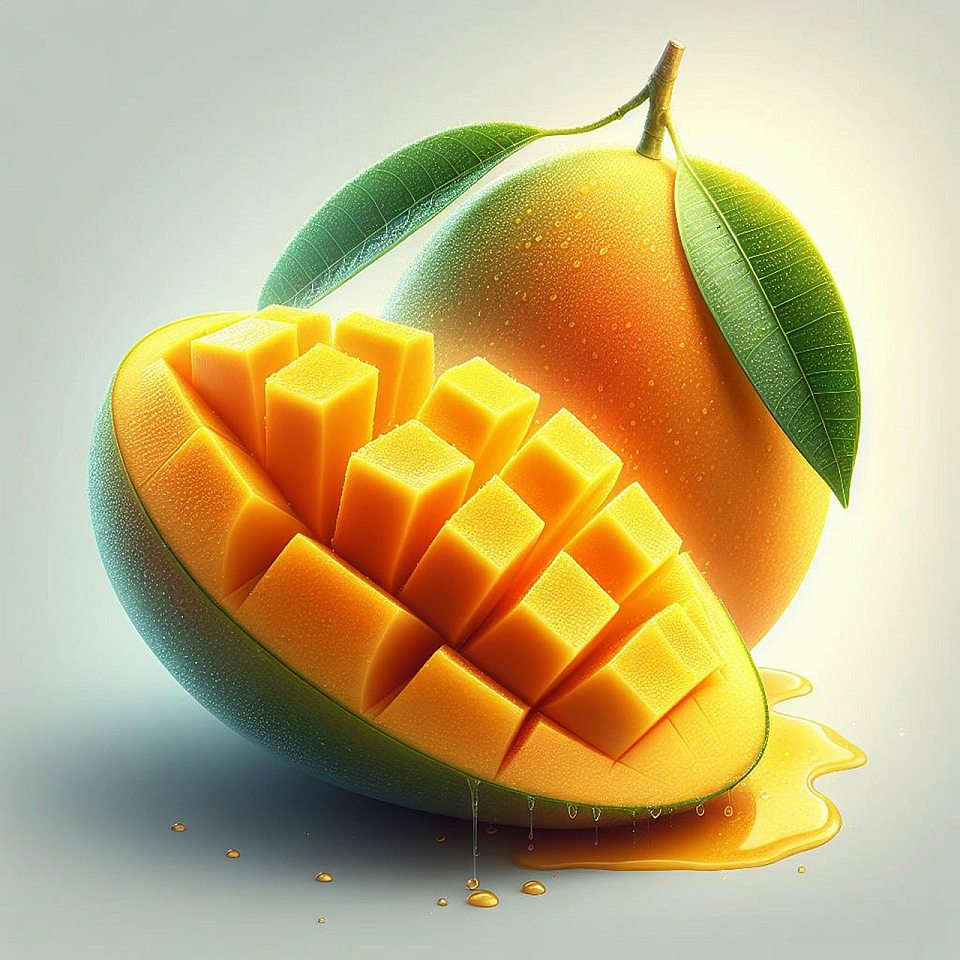
Of course, I chose not to buy this magazine. Glamorous the front cover person looked, there is enough guilt, recrimination, retribution and shirking of responsibility. I don’t need to read about someone else's guilt journey. No matter how artfully this ‘hook’ was offered, I will get better value buying and devouring a mango.

Instruments of Resurrection – Bread and Wine

Lent 1 22/2/26

Instruments of Resurrection - Bread and Wine.

During this Lent, we will be offering some homilies under the theme of ‘Instruments of resurrection’. We will discover that the most unlikely, commonplace, mundane things are instruments of resurrection. How clever that the master would use everyday, simple things to communicate and help us enter into the most profound mysteries.

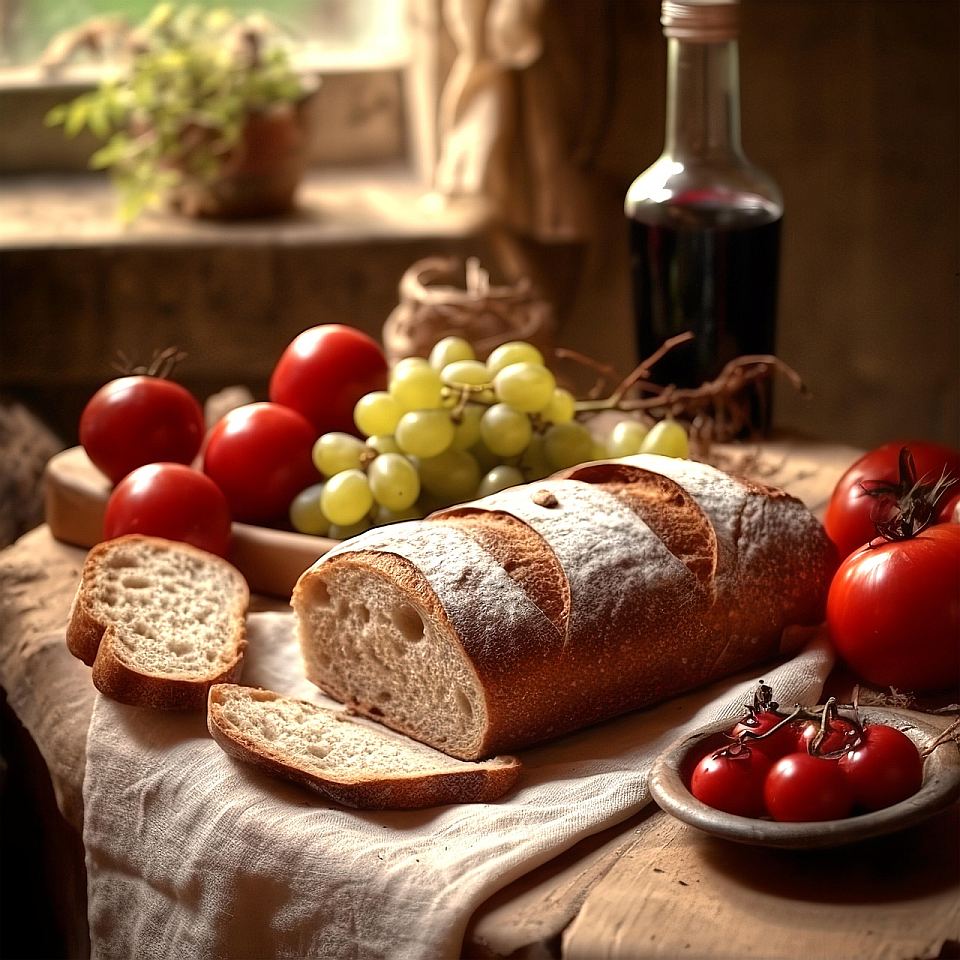
Today’s homily is about bread and wine, which are very much instruments of resurrection.

Let me explain.

John has Jesus teaching his disciples about the strong connection between Eucharist and Resurrection.

He who eats my flesh and drinks my blood has eternal life, and I will raise him up at the last day. (John 6:53–56) 

Later, on Holy Thursday night, Jesus will do a show and tell.  He takes bread from the table, and then takes the cup, saying, “This is my body... This is the cup of my blood,” and when you gather together, this is what I want you to do. “Do this in memory of me.” Now the word Jesus uses for “memory” is a flash church word ‘anamnesis’. It means so much more than simply remembering I have to put out the bins on Wednesday. When The Master says ‘anamnesis’ at the table, He effectively brings past events into the present. In other words, you’re not repeating the action of the past; you’re entering into the event of the past. So today at the Eucharist when the priest says ‘Do this to remember’ (anamnesis) we are not just looking back to a past event 2000 years ago in a shonky upper room, we are actually entering into the events of the upper room and we are there with him and his motley crew at the table. It’s why we say or sing  ‘with angels and archangels.’ This phrase, ‘With angels and archangels,’ is not something that is said lightly or to make us feel gooey inside; it’s telling it how it is. It expresses the reality that we are surrounded by a great cloud of witnesses.  So too we are there at the foot of the cross, and we are there with angels and Mary Magdalene at the empty tomb on Easter Day.

Further, when Jesus tells the Apostles to “do this in memory of me,” on Holy Thursday, he is also foreshadowing what was going to happen the next day.

You’re thinking I’m nuts now as I say these words in the upper room tonight, chaps, ... but just wait and see what happens tomorrow afternoon. You’ll understand that I knew exactly what was going to happen to me and that I wasn’t afraid to die out of love for you.

There’s something else that’s going on here.

When we eat a steak sandwich, muesli or an apple, that food becomes part of us. We assimilate it into our bodies. But at the Eucharist, We become part of his body.

On the altar, through this mysterious exchange of grace, bread and wine become instruments of resurrection.

Something I learnt this year. Most of the resurrection stories happen within the context of a meal. Why is that? Not by accident, surely. The Risen Christ could appear to anyone and within any context he liked. When you’re God, you have lots of choices. But the Risen one chooses the context of congenial meals, food and refreshing beverages to appear.

These appearances—on the road to Emmaus, in the Upper Room, on the beach—all have echoes of what we do here at the altar.

Emmaus with its glimpse of Him who walks with us and disappears the moment when we realise He’s with us. The upper room ‘Have you anything here to eat?’ On the lake of Galilee ‘Bring some of the fish you have caught’. Let’s eat together.

He who eats my flesh and drinks my blood (bread and wine) has eternal life, and I will raise him up at the last day. Bread and wine are instruments of his resurrection. They are Instruments of our resurrection.

Lord Jesus Christ, by the three days you lay in the tomb, you sanctified the grave to be a bed of hope of resurrection. Grant that when we lie in our own grave, we may sleep in peace until that glorious day when you awaken us to your glory. Then we shall see you face to face and in your light we shall see light and know your splendour, for you live forever and ever Amen.