A Transcendent Moment

5/8/25

A transcendent moment. What is really going on here?

It happened on a Saturday. I wasn’t really expecting it and certainly didn’t plan it, but as with all the finest and exciting moments, it found me.

I found myself watching with rapture as a magnificent pelican glided gently over our lake, slowed, almost hovered, and then calmly settled onto the water.

Now, outwardly, there is nothing remarkable about this. Pelicans pull this trick all the time, but walking along, I had time to ponder. I began to turn my rusty, creaky, decrepit mind to the logistics of it all.

An adult pelican (the screen reliably tells me) is about 10 kilograms for round figures. Some weigh more, some less. That's just over 22 pounds for old fogeys like me.

You see where this is going, right? If a young human being who was 22 kilos tried to land graciously and gracefully on Lake Hamilton, they would inevitably sink straight to the murky bottom. And if I at a nimble 69 kilos, tried to confidently stride onto Lake Hamilton then I would become embarrassed, humiliated and very wet.

So how come this magnificent creature can skim the water and rest comfortably on the surface of the water with all the ease of me settling into my easy chair, complete with fluffy slippers on my feet and a glass of something heart-warming in my hand?

I’m sure that a veterinary/zoology/physicist type person could explain it to me, but I would need a rather simple explanation with some stick figure diagrams and finger puppets, and even then, it's doubtful I would get it.

Perhaps it's better not to understand but to simply enjoy being enthralled by these precious opportunities. The transcendent moments where you find yourself asking, ‘What is really going on here?’

First – Get Right With God

3/8/25

First,…Get right with God.

He was a wise, crusty old gent. Someone who had a sharp tongue and soft heart. A no-nonsense guy with few pennies, but lavish hospitality.

The first couple of times when I went to take him communion at home, I asked

“Would you like to have a chat first or communion? His repose was instinctive, forthright and confident.

“No! When we get right with God first, then we have the best chance of sorting ourselves out. And with that lovely beaming moon face of his, he would look at me with a wry grin and say, “Afterwards we can sort out the Church of God”. His wisdom was incisive and always helpful.

If you get right with God first, everything else falls into its proper place, although I have to admit that we never did quite manage to sort out the Church of God. However, I always came away with the assurance that at least my friend and I were tidy, contrite, blessed and refreshed.

Having lost money in the GFC and being diagnosed with something ugly and unpleasant, my companion knew today’s gospel very well. He also had the clever knack of putting the gospel stories into an accessible language, so here is how he would have told it to his great-grandchildren.

Once upon a time, there was a corn farmer who couldn’t help but get rich because the ground he owned was rich and fertile. It never got blown away with dust storms because it always rained exactly when it should, and the sun shone exactly when it should.  All he had to do was plant seeds…. And up came the most luscious crops. The farmer had more than anyone else, even Abe next door. One year he had so much corn it wouldn't all fit in his barn. It was bursting at the seams. So he drew up plans to build a much bigger barn – I mean…really big. Bigger than a Coles supermarket warehouse. But when harvest came around next year, even that wasn’t big enough. Probably because he had also planted carrots. No problem, thought the farmer – I’ll build an even bigger barn – this one will be humungous. This was by now the biggest barn anyone had ever seen… Like ever. Even on a landline. He had a frightful time getting town planning approval, but in the end. It was still too small for the corn and carrots, and by now, the farmer was also growing a few cabbages on the side. So the farmer decided that this time he wouldn't mess about and he would build a barn so huge there was no possibility it could be filled. The barn almost touched the sky and the farmer thought to himself, tomorrow, when I bring in my huge harvest, I can simply stop and enjoy myself. From here on I will have a wild party. But that night wasn’t going to end nicely for the farmer… because that was the night God told him his time was up – his days were done, his life was over. Jesus says – how silly for the man to spend his whole life storing up riches for himself, and not having treasure in heaven.

My home Communion guy would make the obvious but necessary point that the rich farmer was so driven by accumulating his produce that he had forgotten the generous God that had made it all possible in the first place.

He was so focused on getting his planning application through the council and trying to find a way around the cyclone-proof question on the form that he had no mental space or energy for those who were sleeping rough and hungry in town. And forget about going on “Farmer Wants a Wife” and finding someone special to cuddle and share his wealth with.  That was never going to happen.

Part of the sadness of this story is not the farmer’s sudden and shocking demise. The thing that makes my heart twinge and writhe is the wasted potential. There is so much that he could have accomplished and so many lives he could have enriched and changed. The rich farmer would never understand that you always get back more than what you give, no matter the commodity. Time energy, carrots, corn, dollars or cabbages.

When we read this familiar story we know how it all ends. It’s a bit like watching a slow car crash and being unable to stop the carnage and catastrophe.

So while we might be tempted to feel anger or envy towards the farmer, which is perfectly understandable, a better emotion would be compassion and pity. The farmer was not wealthy at all. He died quite poor.

Sometimes, My Home communion guy would simply say

“ First, …Get right with God”

But sometimes he would dress it up a bit more and use this prayer

Heavenly Father, when greed triumphs
And the poor are betrayed,
Come to your kingdom.
Strong and holy God, destroy the masks of selfishness and ego and fill us with the riches of your poverty
through Jesus Christ our Lord.

When Silence Speaks Loudly

When Silence Speaks Loudly.

Some of you might recall an incident like this.

You and a ‘special friend’ have been invited over to baby sit the neighbours children.  Everything is laid out, the food is prepared for them and for you. The youngsters are amenable and go to bed on the second time of asking, which is pretty good actually.

Which just leaves you and your ‘special friend’ to watch some TV and wait for the neighbours to get home. You’re young, perhaps in your teenage years and you both feel things pretty strongly. Surely a quick snog wouldn’t go astray. I mean it's not like you're actually hurting anyone, right?

And so by entirely mutual consent, with a racing heart and a little clumsily…

And then all of a sudden there is the swing of headlights up the driveway. Two car doors shut, the front door opens and you and your friend are now at opposite ends of the settee, furiously, studiously, watching an absolutely fascinating documentary on the mating habits of the praying mantis in deepest darkest Africa. Riveting and compelling viewing!

Your hosts aren’t fooled for a moment. The frisson in the room is grabbable. Once upon a time they too were teenagers. This is why they have kids for you to babysit.

But bless em, they don’t say anything about the obvious and instead politely ask if the children ate all their vegetables.

It occurs to me that some of the finest things are said loudly in silence. Looks of forgiveness, looks of longing, the firm handshake, the blushing baby sitters at opposite ends of the couch.

Why do we feel that we have to fill up silence with words and shrieks and chatter? Silence has always been far more articulate and effective in her ‘speech’ than noisy words. May silence continue to speak loudly.

Their Potential Lies Hidden From Us.

Their Potential Lies Hidden From Us.

At this time of the year, particularly at morning prayer, the stained glass windows are just a cold slab of black glass. I can sort of make out some of the outlines, but that’s just about it. The detail is missing, and the colours are nonexistent.

I sort of remember the picture, but the more I look at this sheet of black glass, the more I forget and the more it all seems drab, almost hard and uncaring instead of bright and engaging.

I consider myself extremely fortunate to have lived 65 years of a great quality of life. I look back on the odd childhood photo and reflect on the wonder of my life and how it all turned out, and the places I’ve been to and the people I have encountered, could not have been foreseen or predicted 64 and a half years ago, with my incontinence, inability to walk or compose this article.

It seems that as the sun has gotten higher and the ‘day ‘of my life has unfolded, all that was obscured and concealed has gradually come to light and been available and accessible to those around me. And while I have been slow to glimpse it in myself, others have frequently seen remarkable things in me that I have not been able to see myself. Why is that?

But it works the other way as well. Over the years, I have been privileged to watch others develop and change and grow and mature and shine in ways no one could ever have dreamed of.


The potential in a friend and also in a total stranger is always there, and in ourselves. Sometimes we just need to wait a little while and open those ‘other eyes’ to see the potential that is all around and within.

The scorpion and the egg.

The Scorpion and the Egg.

This is one of those many homilies about a mythical person in a mythical parish. This person is a collage of people whom I have been privileged to minister to.

I’m going to call this person Seraphina. Seraphina was one of those remarkable people who danced in the shadows of the parish. She had never been a Sunday-by-Sunday person and was never going to be. Apparently, there had been a ‘to-do’ with Reverend what's-their-name, and so that was that. The exact details of the debate had been lost to time, but according to parish legend, it was a fiery contest with no clear winners. There never are, except maybe the pharmaceutical companies that make blood pressure tablets.

Some Sundays, I’d just look up and she would be there. And by the time the last hymn was finished, she would be gone again.

So the first opportunity I had to really get to know her was when she turned up in the Hospital.

She had been diagnosed with something nasty and incurable. The long-term outlook was pretty grim. That’s me dressing it up and trying to be polite.

Seraphina and I had some scrumptious chats, and she taught me much. I shall always be deeply and profoundly grateful for her patience and skill. And even though she may not have been a Sunday by Sunday pew sitter, I always came away from her bedside knowing that I had been in the presence of the living God. And that was both a scary and an exhilarating experience.

I was young and inexperienced enough to believe that prayer might go some way to sorting all this out. So pray I did, as pray I might, as pray I tried.

I would come back to today’s gospel frequently.

The Lord’s prayer was always a good place to start. I knew how this one went, and I could prattle it off quick smart and give myself an A+ every time.

I would read again the bit about the guy who had unexpected visitors and knocked on his neighbour's door at 3 am in order to get a sandwich loaf and some sliced honey leg ham, and a bottle of Chianti to give to his visitors.

“ Because of his persistence, he will get up and give him whatever he needs”. There! It's in the bible, so it’s gotta be right. If I am just persistent enough, then Seraphina’s next scan will show a reduction in the tumour and we’ll be well on the way to recovery and a full, healthy and happy life.

And I read and prayed the next bit.

“So I say to you, Ask, and it will be given to you; search, and you will find; knock, and the door will be opened for you.  For everyone who asks receives, and everyone who searches finds, and for everyone who knocks, the door will be opened”.

I was sure searching and knocking and asking, all it seemed to be to no avail.

How do we reconcile Our Lord’s promise in this gospel reading with the cold, hard reality of Seraphina in a coffin? For me at least, the scorpion of death had not lost its sting at all.

What do we say when God seems to fail?

A tiny baby step forward was given to me once by a wise old priest. “Hmmph!” he snorted. “This God of ours, I shake my fist at Him”.

And I can tell you that after every Seraphina’s funeral, there is a good deal of passionate fist shaking and long may it last.

Perhaps part of the answer is that we are not supposed to have all the answers. Perhaps our fist shaking and our silent sobs are the prayers that we should be offering more frequently instead of the quick, trite I’m the religious prayer professional person.

And perhaps another part of the jigsaw puzzle that we never see completed on this side of the grave is the line ‘your will be done’ which would infer that God’s will isn’t always done. Perhaps, sometimes God’s last word will be spoken convincingly and lovingly sometime in the future and Seraphina’s story is just Episode 2 of a huge blockbuster mega series the final episodes of which are only just being directed and rehearsed.

One other thing that I think about. I refer you to the very last bit of the gospel with the scorpion and the egg.

‘What parent, if the child asks for an egg, will give them a scorpion?’

On the surface of it, I was asking for an egg for Seraphina(s), and it felt like, feels like I was handed a stinging scorpion.

But what if, by asking for a continuation of poor quality, pain-riddled, morphine fuelled life for Seraphina, a delay of what is inevitable for all of us, I was in fact asking for a scorpion for her?

And is it not possible, that through Seraphina’s gentle, superb and holy ministry from her deathbed, that God offered me an egg? A new life, bursting with blessing, enrichment and potential to share with the world. Maybe now I can finally, authentically learn to say…

For the kingdom, the power and the glory are indeed yours, now and ever amen.

The things we do for love

The things we do for love.

The story of Martha and Mary only appears in Luke, and these 6 little verses somehow draw us into quickly choosing one sister over the other. Usually, we reckon it’s Mary who’s the good one; Mary who gets the gold star and the heffalump stamp. “Mary has chosen the better part.” There, the Master says so, so it’s got to be right and there’s an end to it … or is it?

Surely both have something to teach us.

It is Martha who opens the door to the Master and his potpourri assortment of disciples. And all the domestic things that she does that surely do need to be done. Like scrub the loos, vacuum the floors, put the roast lamb on, decant the wine, peel the spuds, put out the hummus, olives, figs and pomegranates and put a posy of flowers on the table. Then make sure the dog is outside, watered, fed and done its business so it doesn’t do whoopsies on the carpet in front of the guests.

Martha surely does get an A = for Home eco and just as importantly hospitality. She knows who it is that is coming over the threshold. Not all of us do, all the time.

And Mary also has much going for her. The ability to just sit still and listen is not easy. To be focused and let your guest's presence just wash over you, calm and soothe you, without being distracted, can be tricky. Listening can be jolly hard sometimes… a lot of the time.

But these girls are sisters and growing up in a family of four and then spending a little time in a blended family, I know that it is not always sweetness and light and sugar and spice. Sometimes it is frogs and snails and puppy dog tails.

If I read it right, The Master doesn’t tick Martha off for doing the household chores, but it is that the angst and the fretting of doing the laundry and carving the roast take away from the joy of having a house guest.  Doing all those lovely, necessary things with joyous expectation is the way to go. Not thinking ‘Wouldn’t it be a whole lot easier if Jesus and his cronies phoned ahead and let me know that they had got a better offer?’

And there may be other things slushing around here. One is that they might see their reactions to the house guest in a transactional way. If I do this, then my good friend Jesus will love me more. I’m sitting quietly at his feet … or I am doing all these tasks so that, so that, I might win his favour. And the good news is that we don’t have to try that hard, and probably the most important thing and therefore often the hardest thing, is to just open the door. It is often difficult and very risky because when we open the door, invite Him to step across the threshold and into our lives and maybe even make a few polite suggestions, we make ourselves incredibly vulnerable. And once he has stepped inside, He can irritate and enthral, disquiet and infuriate: He can be quiet and evasive and so we miss Him all the more and long just for the whisper of his voice. A nudge, a look, a smile, heck, even a frown.

Do we fluff and faff around, or do we sit up and shut up? And when and how will we ever get the balance right?

One other crazy Fr. David thought. To my shame, there were times when I was growing up when, consciously and deliberately, I chose to push my siblings' buttons. I did something or didn’t do something that I knew would exasperate and anger my brothers and my sister. Now I’m sure that has never happened to you, but knowing families as I have done and do… is it not possible or even probable that Mary and Martha have both chosen to do things that they know will infuriate the other? And in yet another wild, completely unsupported and unsubstantiated theological heresy, what if they had set this whole thing up as a kind of competition? You do this, Mary, and I’ll do that, and we’ll see which one of us he likes the best. You’ll see that I was right and you were wrong. So there, rudely poking out her tongue.

Like that game has never happened before. Sorry, but clergy are very good at it, and we didn’t even have to have a lecture about it in college.

Mary, Martha and their brother Lazarus are good friends of Jesus. Some suggest that their home was the Master's bolt hole. His safe place or safe house, where the crowds couldn’t get to him.

He would have known his hosts' games and trickiness long before he came to them on that day. Perhaps the good news is that, like Mary and Martha, he still chooses, wants to knock on the rough, gnarly, knotted door of our hearts, step across the welcome mat and come and drink with us. Even though we might be fizzing or sullen, buzzing or resistant. Still, he determines to visit and longs to stay.


Even when we are Martha and Mary… even when we are being our truly mucky selves. The Things we do for love. Even so, come Master Carpenter, wash our feet,  bless our bread and wine, drink and eat with us, love us, even as we love you.

Something I Stole from Someone Else

Something Else I stole from someone else.

What follows comes from someone who happens to have grown up in a different denomination from me, but their message, I believe, is for people of all faiths. I found it helpful. I hope you do too.

" Brothers, sisters…

I speak to you, especially to those who no longer believe, no longer hope, no longer pray, because they think God has left.

To those who are fed up with scandals, with misused power, with the silence of a Church that sometimes seems more like a palace than a home.

I, too, was angry with God.

I, too, saw good people die, children suffer, and grandparents cry without medicine.

And yes… There were days when I prayed and only felt an echo.

But then I discovered something:

God doesn't shout. God whispers.

And sometimes He whispers from the mud, from pain, from a grandmother who feeds you without having anything.

I don't come to offer you perfect faith.

I come to tell you that faith is a walk with stones, puddles, and unexpected hugs.

I'm not asking you to believe in everything.

I'm asking you not to close the door. Give a chance to the God who waits for you without judgment.

I'm just a priest who saw God in the smile of a woman who lost her son... and yet she cooked for others.

That changed me.

So if you're broken, if you don't believe, if you're tired of the lies...come anyway. With your anger, your doubt, your dirty backpack.

No one here will ask you for a VIP card.

Because this Church, as long as I breathe, will be a home for the homeless, and a rest for the weary.

God doesn't need soldiers.

He needs brothers and sisters

And you, yes, you are one of them."

Robert Prevost (Leo XIV)

Where Do I Begin?

Where do I begin?

Of Vincenzo and Elaine

I'd like to tell you a story about a man who was born in Italy. Some of you will have watched him in the series called ‘The Piano’ on the ABC. His name is Vincenzo and he is 73.

Growing up, he played in a band in Italy. One night, when in a restaurant, his father prompted him to go and help a young woman with the menu that was written in English.

She must have appreciated the kindness and probably the looks of this helpful young man, because when the menu was sorted, she offered to buy him a beer.

In 1975, they were married and came to Australia. Music became an integral part of our relationship.

In 2015, Elaine suffered a stroke and Vincenzo became her carer.

He told us that when you have something and someone special that you might lose the essence of the marriage becomes even sweeter.  Elaine was one in a hundred million.

So on the TV he plays the theme from Love Story, also known as ‘Where do I begin.’

It was a piece of music that Elaine liked, as they had a love story for 50 years. Between the initial casting for the series and Vincenzo appearing to play on TV, Elaine died, so he dedicates the piece to her.

He plays at the Market City in Sydney’s Chinatown and is therefore surrounded by a community of not only his daughters who have come to watch him play, but also those who fortuitously happened to be there who have come to watch and to listen and to hear not just his playing but also his story about he and Elaine.

And on the TV, when the last note is played and the piano falls silent, there is no silence at all. Rather, there are tears and applause and joy and triumph.

Whilst watching this little snippet, I couldn't help but think of the two disciples on the road to Emmaus. A bit of a jump, but stay with me. Their hearts are heavy with grief, and they tell their story to a complete stranger just as Vincenzo did. The gospel story finishes with them in a community of those who know that the while song has been completed, there is now a different sound to make. One of celebration and triumph. They know just as surely as Vincenzo, also a lonely traveller like Cleopas, that their music, the music of Elaine and Vincenzo, was merely keeping a rest. A period of silence so that what comes next is even more heightened and powerful. The silence, the hiatus between death and resurrection, between silence and applause, is merely an implement to expand our longing and heighten our expectation for what comes next.

You see, Vincenzo and Elaine gave thousands of viewers and listeners the gift of their love to share. Having performed so very publicly and so very well, he has begun to conquer his loneliness, his fear and pain.

The piece Vincenzo played lasted for less than three minutes, but it could have been an eternity as I slipped into that ‘other’ and didn’t ever, ever, want it to finish. Please, please, let his never end. I ached. Did not my heart burn within me as Vincenzo played? And centuries ago, the disciples would sa,y ‘Did not our hearts burn within us …?

Sometimes we have to listen and wait patiently for a long time

The Master on the road waits for Cleopas to simply talk. Jesus initiates and prompts the conversation, and then, it seems simply shuts up and lets the breaking of the bread at the supper table say everything that needs to be said just as Vincenzo’s brokenness and exquisite playing say everything that needs to be said and in a medium that words can never hope to convey.

Death does not speak the last word, play the final note. Love does! And it is a beautiful sound and the note that we thought was the finish, the final one to signal that it is all over and kaputt, was actually the one that, blended with our tears, is the beginning of the symphony of heaven which goes from strength to strength and from silence to exotic thrilling music.

I’m well aware Henri Nouwen put this all far more eloquently so I’ll let him tell it his way and have the last word.

“Having entered into communion with Jesus and created community with those who know that he is alive, we now can go and join the many lonely travellers and help them discover that they too have the gift of love to share. We are no longer afraid of their sadness and pain, but can ask them simply: "What are you talking about as you walk along the road?" And we will hear stories of immense loneliness, fear, rejection, abandonment, and sadness. We must lis- ten, often for a long time, but there are also opportunities to say with words or simple gestures: "Didn't you know that what you are complaining about can also be lived as a way to something new? Maybe it is impossible to change what has happened to you, but you are still free to choose how to live it."

What is the Flavour of Love?

What is the Flavour of love?

Over the past little while, I have been speculating as to what hope and faith might taste like if they were food. Or to put it another way, what dish would best describe these essential life ingredients?

This article completes the trio of reflections and speculates about what flavour or dish would most closely align with ‘love’.

I should begin by pointing out that we only have one word in our English language to describe love. Other languages are more nuanced and have distinct words for family love, romantic love, brotherly love, and divine love.

The dish that comes to mind when I think of the word love is this. A desert of chocolate brownies served with brandied kumquats. A little dollop of whipped cream on the side if you must, but not enough to take away from the heady dish that is set before you. For the purest love is often that which finds you. Actively  and relentlessly pursue it and it will elude you. If perchance you should capture it will probably not be to your liking and may even turn sour and disappointing with the years.

This delectation is the culmination of faith and hope. It follows on naturally from the two other courses and is the scrumptious reward for persevering in faith and hope, sometimes for a long time in a barren wilderness. Savour your desert with swooning and adulation. Allow it to thrill you and delight you and above all do not, under any circumstances, rush its consumption. Make it last for as long as possible over a bubbling and effervescent conversation. Laughter and mirth should pop spontaneously into the air.

Served with a fiery cognac which inflames and warms the soul, your life experience should be fulsome and leave you relaxed and sated. Yes!

What Does Faith Taste Like?

What does faith taste like?

This is the second of three articles trying to encapsulate what hope, faith and love would taste like. What sort of dish would best convey these three basic and essential ingredients of life? Last week, I flirted with the idea that hope was like a very small teasing taste of spiced almonds.

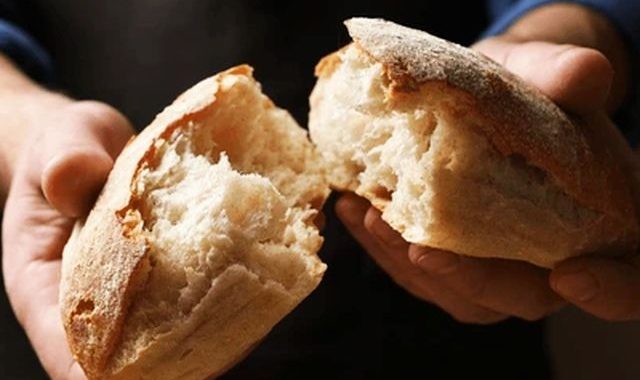
Today I suggest that faith is like bread. Not just any old bread. Not like the sort of bread that some would cheekily describe as ‘cotton wool’. Oh no, our faith/bread is the thick, crusty, warm bread with lots of texture and comes complete with that ‘I've just come out of the oven aroma.' This is the fragrance that draws you in on the promise of something sustaining and nutritional, and delicious.

Eating this bread is part anticipation, part taste, part satisfaction, but mainly it is an experience.

Our dish of faith is best served with a deep, mysterious, complex glass of superb red wine. The sort that just when you think you’ve got it worked out leaves a surprising and particular zing on your palette. Something that you weren’t quite expecting. Something that is unique and leaves you wondering how the clever wine Master got it so right. He’s saved the best wine until now. This is not a wine to be rushed and gulped down. This is not a quaffable, rough Barby Red. This is a wine to be played with, enjoyed slowly, stringing out the pleasure for as long as possible.

This combo deal of faith, bread and wine is nothing new. It’s been enjoyed for literally centuries, and those who dabble in this wonderful mystery come to imbibe with faith in their souls and joy in their hearts. I reckon they’re onto something.

We Shall Follow the Breadcrumbs and they Will Lead Us Home

We shall follow the breadcrumbs, and they will lead us home.

I invite you to recall the story of Hansel and Gretel. There are a few different versions of the same story, but basically here’s the plot.

Hansel and Gretel are the young children of a poor woodcutter and his wife, who are working well below the basic recommended minimum wage. When the cost of living rises so high, the woodcutter and his wife decide that they can no longer afford to feed their children, and so they hatch a cunning but rather grizzly plan.

They will lead the children deep into the woods and leave them there to fend for themselves, thus halving their grocery bill and making a massive saving on school fees.

What the wicked parents do not realise is that the children have overheard the plot, and Hansel quickly sneaks out of the bedroom window, goes outside and gathers some white pebbles. The next day, as the family walks deeper into the woods, Hansel leaves a trail of these white pebbles.

After their parents abandon them, the children wait until night falls and the moonlight reveals the white pebbles shining in the dark. The children safely follow the trail back home, much to the surprise and befuddlement of their parents. Hansel proudly tells his parents how they managed to find their way home with the white pebbles.

However, the recession continues, and this time the parents lock the children in their room the night before, leading them into the woods, thus ensuring that they have no opportunity to gather white stones.

Instead, the sinister parents give their children some crumbs of bread and once again lead them into the woods. Hansel cleverly drops the crumbs of bread as they go. Now there are a couple of different versions of the story. One of them has the local magpies consume all the breadcrumbs. Hansel and Gretel then wander aimlessly about, and they go on to encounter and conquer a wicked witch and have a wonderful adventure.

Another version goes like this. They wait until dark, when Gretel, who is unaware of Hansel’s cleverness with the breadcrumbs, wails…

“Oh, Hansel, whatever shall we do? How shall we make our way home?”

Hansel replies, “Never fear Gretel, my dear sister. We shall follow the bread crumbs that I have left along the path, and we shall find our way home”

Of course, it’s just a charming, delightful children’s story, completely unbelievable, but great fun.

But… doesn’t every life have its ogres and disappointing characters? Some of them are even human beings, whilst others are the monsters that we wrestle within the shadows of our own personal ‘woods.’

Doesn’t every life have times when we are cast out and we feel that we are left to fend for ourselves by those whom we had trusted and come to rely on?

Doesn’t every life have times of light and darkness, clear undulating plains and deep dark woods?

And aren’t there times in all our lives when we are so very lost and don’t know where to turn? We long to go home, but aren’t quite sure where Home, with a capital H, really is.

The reason why Hansel and Gretel is still in print and is being read today is not just because  it's an exciting story, but because it resonates in all sorts of ways at our deepest inner being. Hansel and Gretel’s story is our story as well.

But the line that really struck me and which I hope might be helpful for you, is Hansel’s line of reassurance to fearful, distraught Gretel.

“We shall follow the trail of breadcrumbs and we will find our way home.”

In those times when we are lost, when we are hurt, when we don’t know the way home, when we have wandered far into the woods and night has fallen. Then we follow the bread crumbs home. The meagre, tiniest, wispy, crusts of bread nourish us not with the basic five groups and vitamins, but sustain us at those deepest levels and help us to conquer the beasts that threaten to eat us.  We come to the altar once again to find the next piece of bread along the path, because we know at some level that what we really find, is actually Him. The one who is always leading us on, encouraging us to follow, to leave our darkness behind and to come back home to Him and with Him.

And yes, sometimes the bread crumbs are hard to find, sometimes we only glimpse Him or maybe just even sense him and then sometimes the crust of bread does not seem enough and leaves us hungry for more.

Part of the reason I really like Hansel and Gretel is that it does not pretend. It doesn’t dress up life in unicorn wrapping paper and with a pretty bow on top.

Its beauty lies in its ugliness and being unpretentious, not just its tidy happy ending and victorious conclusion. But it is also a story that offers us a way forward, a way out of the forest, a way back home. “We shall follow the breadcrumbs and they will lead us home.”

What Does Hope Taste Like

What does hope taste like?

Hope is an elusive commodity. It is something that tantalises and teases us. We all feel it from time to time, and when we don’t, we ache for it, which is itself a sign of hope.

To be without hope is to be hope/less, which is a very repugnant flavour indeed. Hope can be pouring over the tattslotto ticket, searching the inbox for that email from that special someone, or even awaiting the results of that medical test you had exactly 5 days 2 hours and 16 minutes ago.

But what if you could describe Hope as a dish or a flavour? How would you describe it?

I guess that it would be like a very small dish of Cajun Seasoned Almonds. The size and quantity are important here, for hope seems to be doled out in very small portions. I think this is because we have been disappointed in the past by any number of circumstances and plops from on high, so we dare not invest too much or expect too much.

The flavour of hope should spark our palette and imagination. It should lead us on to wanting more, longing for more, hoping for more.

Hope is definitely an entrée or a tapas. It is not supposed to be the last course. It is supposed to be the very first. The starting place, and whilst we will always need hope, it should lead us onto the next course. That is its role. To help us look forward to what is to come.

The cajun spiced almonds should be served with a very small glass of refreshing bubbles, just to cleanse the palate and entice us onwards. What might be the next course? What fresh and wonderful dishes are in store for us?