The Sound of Silence

The Sound of Silence

I’m typing this with one of my ears heavily waxed. I am given to understand that this is not like having your legs waxed, but an experience that lasts much longer in time with quite different outcomes.

I expect that this situation will last a few very annoying weeks when I visit a medical guru who will get out their ‘dewaxing gun’ and make my hearing all better again.

But in every ‘adversity’ (and really it’s not a life-threatening ailment no matter how much of a ‘woosey boy patient’ I want to play) there are valuable lessons to be learnt.

There are countless people in our community who live ‘deafness’ as a part of their everyday, humdrum, routine life. Some live with hearing aids, some have learnt to ‘sign’, and some have devised other tricks to help them survive. It is highly likely that I have spoken to and listened to many such people. Perhaps dear reader you are one of them.

Hear then I must say a hearty and heartfelt sorry for it is inevitable that I have not listened and been as patient and as understanding as I should have. I have more sympathy for you now than in the past and while I hope that my situation is resolved swiftly, your condition may well be permanent. If I have misjudged, misinterpreted and not been as patient as I would have, could have, should have, then know that I will try to do better and go more like a glacier in my judgment and decision-making.

On retreat I savour silence. There the sound of silence is delicious and much-needed. This sound of silence is not nearly as much fun, but I take to heart and into my life, the noisy lessons it has thrummed into me.

So Who is Gill Hicks?

So Who is Gill Hicks?

Gill was an Australian woman living in London in 2005 when she got on the tube on the Piccadilly Line on her way to work. It was just another day and she was on the way to the office. On this particular day amazingly and weirdly, she was running late. Gill never ran late but that morning she had a blazing row with her fiancé and she was determined to give him the flick and begin a new life. She was banging drawers to try and wake him up and it meant that she took a scarf to wear which crucially would later save her life.

In the crowded carriage, she was standing close to Jermaine Lindsay who was carrying a bomb. Only one person was separating her from Jermaine. In effect, he saved her life with his own body even though he didn’t plan it that way over his cereal that morning. Later Jill would meet this man’s wife who said

“If this is the last thing he did with his life to save mine, then what a wonderful thing he's done in his last moments.”

As the bomb was detonated, she felt as though she was being enveloped in inky blackness.

In the explosion, Gill lost both her legs, as she waited for help to come, she made a contract with herself to survive. But she says, she wasn't fully aware of the 'fine print’.

After an hour in the dark, she was rescued and on the way to the hospital, she experienced clinical death several times, and had to be resuscitated.

During this time Gill heard two insistent voices in her head: one was female, inviting her to surrender into the peace of death. The other voice was male, and it was demanding that she choose to live.

This is where the wonderful scarf came in “because I still had the scarf on and calmly managed to tie tourniquets around the tops of my legs. And I knew that I was in a very, very, very serious situation. But, there was a girl across from me saying, you know, what's your name and what do you do?" and trying to keep each other awake.”

From the start of her recovery, she was determined not to dwell on hate or revenge. Instead, Gill became close friends with the many police officers and medical staff who saved her life. She says the love she received from complete strangers is much more important to her than the hateful attack on herself and her fellow passengers.

Later Jill would say that I received unconditional love from strangers. That is why I don't feel any hatred; it's too precious. What I've been given back is too precious to allow the cancerous nature of hatred and bitterness to decay my life.

I would say I'm angry and I think that's okay. But equally, it's the anger that gets me up in the morning to say, what am I going to do about it?”

We now know a fair bit about the bomber on your train. He was a troubled 19-year-old who'd fallen under the influence of a bad mind. Many people wouldn't see him as troubled and wouldn't want to say he was wicked. Jill had this to say about the bomber.

“I'd like to believe, and this is again, you know, he's dead. And so we can only ever presume what he thought. And I'm very cautious of making presumptions because on that morning, he presumed a hell of a lot of things about me. He presumed I was his enemy and he never asked me. I never had a choice.

So I don't want to presume too much about him, but the space that I like to think about with him and indeed what he symbolises is that there is a passion to the crime and that these are people that are wanting to make a difference, albeit in a very misguided way. So it's how do we highlight that... The killing of innocent lives, an eye for an eye doesn't make a situation better.

I feel a great pity for him and pity is perhaps the only emotion I can offer him as he's not here.

I thought about, you know, how this happens, how anyone could feel justified in that type of attack. Indeed, how common this attack is throughout the world and a source of terrorism is a very effective source of getting people to sit up and listen and take notice. And I thought about how do I end this because I'm just one person. So what I can do is... I can... Actually stop an idea of a cycle of this continuing, of wanting retribution. So how can I reverse that cycle and in fact go out and do the complete opposite?

There has to be a line that is drawn. It is not ‘us’ and ‘them’. It stops here.”

Our Master Teacher put this way

“But to you who are listening, I say: Love your enemies, do good to those who hate you,  bless those who curse you, pray for those who mistreat you.
Love your enemies, do good to them, and lend to them without expecting to get anything back. Then your reward will be great, and you will be children of the Most High.” 

Of Faith, Hope and Carnage

Of Faith, Hope and Carnage

Some of you will have heard me speak of Nick Cave and heard me quoting him.

I devoured his book ‘Faith, Hope and Carnage’ on Retreat last year in pretty much a single gulp, which is a really big deal for me.

I decided to find out a bit more about Nick and of course, much of what follows is a direct filch from the magic of the internet. Faith, Hope and Carnage pretty much describe his life and this homily comes with a health warning. It is not pretty or glamorous or sexy. His life is a cocktail of Faith, hope and carnage mixed through with 20 years of heroin. So here goes.

Nick was born in Warracknabeal (which is a marvellous place to spend your infancy) in 1957 and then moved to Wangaratta where he was a choir boy in the Anglican cathedral there. So far… so good. What could possibly go wrong?

At 13 he was expelled from Wangaratta High School and sent off to Caulfield Grammar. After his secondary schooling, he studied painting at the Caulfield Institute of Technology but dropped out the following year to pursue music. It was around this time that he began to use heroin and continued to do so for the next 20 years.

Nick was 19 when his father was killed in a car collision and his mother told him of his father's death while she was bailing him out of St. Kilda police station where he was being held on a charge of burglary.

It took him a while to find English model Suite Back and they married in 1999. That’s me putting a large dollop of chocolate sauce on history and protecting a few people.

Nick is a father to four children and outlives two of his boys. One had taken LSD and then fallen off a cliff, and the other to suicide. So it is with the greatest level of authenticity and integrity that he can offer us these words.

“Grief is something that you get practiced at”
“Hope is optimism with a broken heart”
“Grief and joy can coexist in the same moment.”

What started me on this quest to learn more about Nick’s life was just one of his many songs.

The song is called ‘Into My Arms’ and  I hope that the words will appear in the pew sheet. My interpretation of it is that it is pretty much a love ballad for his wife but you will discover that The Master also makes an appearance.

“And to walk, like Christ, in grace and love And guide you into my arms”

The verses of the song begin with “I don’t believe in …” and then later say  “But,… if I did…

So we get

I don't believe in an interventionist God
But I know, darling, that you do
But if I did, I would kneel down and ask him
Not to intervene when it came to you
Will not to touch a hair on your head
Leave you as you are
If he felt he had to direct you
Then direct you into my arms

And in a one swift verse, we caught up in that lovely endearing, delicious slush between believing and disbelieving, bobbing around with faith, doubt, despair and hope. Wanting to believe whilst barely existing in a very inky black cavern.

Now if we are brutally honest and tell the truth, as we are meant to do, is that not also true of each and every one of us in here and everyone out there? Doesn’t every life have darkness and light? Don’t we all live a life of faith, hope and carnage?

But we should let Nick have the last word here.

He once clarified his view on Christianity as "non-political and fully personal and emotional" and described his religious beliefs as "bound up in the liturgy and the ritual and the poetry that swirls around the restless, tortured figure of Jesus, as presented within the sacred domain of the church itself.”

“My religiousness is softly spoken, both sorrowful and joyful, broadening and deepening, imagined and true. It is worship and prayer. It is resilient yet doubting, and forever wrestles with the forces of rationality."

Cave's religious doubts were once a source of discomfort to him, but he eventually concluded:

“Although I've never been an atheist, there are periods when I struggled with the whole thing. As someone who uses words, you need to be able to justify your belief with language, I'd have arguments and the atheist always won because he'd go back to logic. Belief in God is illogical, it's absurd. There's no debate. I feel it intuitively, it comes from the heart, a magical place. But I still fluctuate from day to day. Sometimes I feel very close to the notion of God, other times I don't. I used to see that as a failure. Now I see it as a strength, especially compared to the more fanatical notions of what God is. I think doubt is an essential part of belief.”

Of Our Concrete Pylons

Of our Concrete Pylons

The idea for this little reflection came to me when I had the indulgence of visiting Stonehenge. Huge big chunks of stone in a circle, some capped with more blocks of stone.

It occurred to me that sometimes we are tempted to encircle ourselves with impenetrable  lumps of grumpiness and ‘hoomphiness’. Sadly I know this to be so, not only because I have seen it in others and myself.

This process is different to just having some time out to be by yourself to recharge, and revitalise because the aim then is always to come back re energised and restored.

When we surround ourselves with an edifice of concrete self pity and anger, the aim is to allow no-one else in and not to come out.. perhaps ever.

This is not a healthy way to exist and while we are hurting and smarting and we might feel self justified and self satisfied we become seriously close to self destructing and we are in fact being selfish.

Outside there are usually others who are concerned, worried and perplexed. ‘Was it something I did, something I didn’t do, could have, should have?’ Where to now? What needs to happen and how can I help?

Some ’S' words that might be useful for the helpers. Sit in Silence. You don’t have to say anything. Sometimes the dollop of silence brings its own form of healing and helps to erode, almost imperceptibly, the concrete slabs.

‘Sorry’ is another  ’S’  word. It’s terrifyingly simple and yet often difficult to utter. Saying it will cost us and hurt us, yet I can think of no more effective way to begin the conversation that needs to happen. There are trained people whose gift is to release others from their Stonehenge and there are people who simply care, worry and pray.

Of Revenge and Retribution

Of Revenge and Retribution.

This is a story about no one particular funeral.

There were two sides to old Merle’s family just as there were two sides to the argument that had been tossed about over the decades. Exactly how long no one could actually say. The cycle of retribution had grown stale and then viciously flared over the years. Perhaps it had started when somebody had eloped with someone they shouldn’t have. This was just one incident that was posited as to why there were ‘strong feelings’. Allegedly water was stolen, fences ‘damaged’, the footy shed jacked up in the middle of the night and returned to its ‘rightful’ resting ground.

When it came to arranging Merle’s funeral, delicate negotiations were the order of the day. Clearly no one side was going to ‘win’ and conversations were not helped by the lack of planning by Merle herself or a will.

Ultimately one side organised ‘’The Church bit” and the other side organised “The Wake bit”. It seemed an honourable compromise with both sides having a voice about some of the arrangements.

It is hard to get some calming perspective in scenarios like this but what I return to is the prayer that was found by the body of a dead youth (one of an estimated 50,000) in the Ravensbruck concentration camp. Perhaps it would have gone down well at old Merles funeral?


“O Lord, remember not only the men and women of goodwill but also those of ill-will.
Do not remember all the suffering they inflicted on us;
remember the fruits we have borne thanks to this suffering
– our comradeship, our loyalty, our humility, our courage,
our generosity, our greatness of heart and when they come to judgement
let all the fruits that we have borne be their forgiveness.”

It was Never About the Fish

It was Never About the Fish.

A few observations

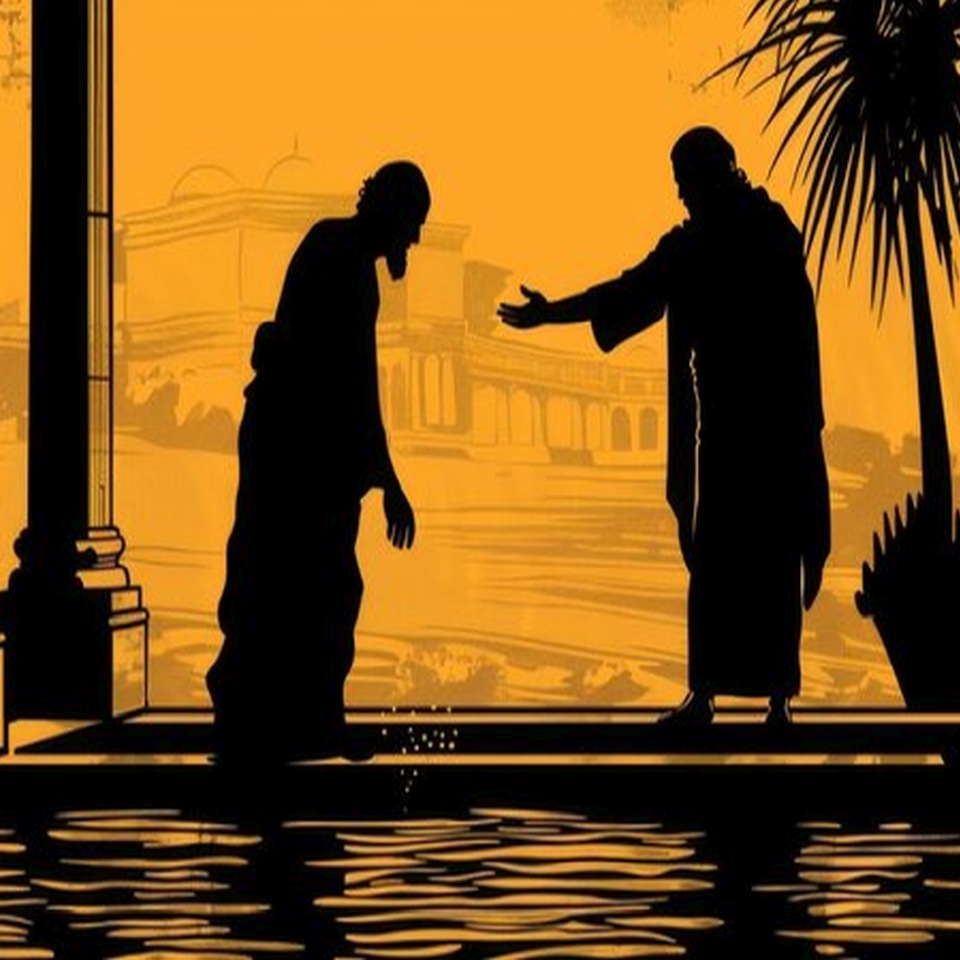
First, this story shares elements that are common to John’s story of Jesus meeting his disciples at the Sea of Galilee for a BBQ. See John 21:1-10.

In both stories, we see a futile night of fishing,

Jesus offers some unsolicited fishing advice, an overwhelming catch of fish, and a recognition of Jesus’ identity that focuses especially on the response of Simon Peter. And in both stories, Peter begins a new chapter in his life.

Today’s story from Luke is not strictly a post-resurrection/easter story like John’s, but it is certainly a ‘New life’ story.

Secondly, this is not Simon’s first encounter with Jesus. Jesus has already been to Simon’s home in Capernaum and has healed his mother-in-law (4:38-39). Perhaps that explains Simon’s willingness to let Jesus use his fishing boat as a floating pulpit.

Third, it is one thing for Peter to ask The Master into his home to heal his mother-in-law. It is something quite different to allow Jesus into his workplace, into his office if you like, and accept some complimentary fishing advice from this Johnny come lately, this apprentice carpenter especially when just a few hours ago the fish were not biting and every trick had been relentlessly tried and failed. The nets had come up empty. What could this itinerant little man possibly do?

Fourth, This call of Peter has much to teach us about the nature of sin and especially our handwringing, ‘Oh my goodness’ dwelling on sin.

The trouble with dwelling on our sin is that it stimulates fear. In fact sin and fear are best buddies and one is seldom experienced without the other. Take it from someone who knows and has done the practical work on this far too many times.

These two henchmen, sin and fear thwart your potential and your possibilities and we are tempted to ask God to depart. Sin and fear can curdle deep within us and often we are not aware of them until they  manifest themselves differently, a different vibe, an out-of-left field action, and we are left scratching our heads thinking ‘Where did that come from?’ It is into this vacuum of fear and unworthiness that our Lord speaks and says

“Don’t be afraid; from now on you will fish for people.”

We cannot move on in our path and vocation when we are tied tightly, tied down, and tied up with fear and a sense of guilt.

So the disciples have tried all night and caught nothing. Everything they have learnt from their dear old dad, every trick, every bait has proven fruitless and they are empty at all levels.

It is when we recognise our emptiness that we have the potential to be filled and be fulfilled, to be generous with the overabundance of what God has given to us. When we have tried everything we think we know and then some, and come up with nothing…. That’s when the work really begins, that’s when we are free to move on. That’s when the serious business of catching people for the Kingdom can truly begin. Why? Because in our bankruptcy, foreclosure and destitution we can never be transactional. There is no quid pro quo when you have nothing to offer, nothing to bargain with. All we have is His initiative.

His initiative to get into the boat, His initiative to teach and preach, his initiative to produce the fish, his initiative to tell us not to be afraid, his initiative to call us.

Perhaps then, the real miracle is not the large haul of redfin and mullet at all. Rather the miracle is in the catch of Peter allowing himself to be caught. Being set free by forgiveness so that he allows himself to swim in the delicious waters of God’s love.

You see, Simon Peter could have continued to say "No. Go away" and then what would have happened? But he doesn’t. He understands that Jesus is not a free meal ticket but the Master before him is the source of unstoppable grace and forgiveness. Peter understands it was never about the fish. It was always about him.

The real miracle in this story is that Peter understands that he is called even as an incomplete, work-in-progress, person. Just as he is. And the good news, the miracle for you and I brothers and sisters, is that that is exactly how The Master calls us today. Incomplete, with jagged edges, mucked about and mucking about, with distractions and disappointments with far too many flaws and ugly bits. We are exactly the sort of people He needs. The unfinished and insufficient ones. The ones who are lacking and found to be badly, sadly wanting. Perhaps this is so that He can shape us into the people we are supposed to be. There is more scope for him without our preconceptions and rigid ideas when there are big gaping holes.

So Yep, count me in. I fit all the selection criteria.


Final question? What happened to the two boatloads of freshly caught fish in the story? They were right there for all to see yet they are never mentioned again. So what happened to them?… Who cares?! We're off to catch some of our own. Anyway, it was never about the fish. It was always about Peter, about James and John. It was and is about you … and me.

Presentation of Our Lord

Presentation of Our Lord

Three cheers for the old fogeys.

In my little lifetime, I think I have begun to see the first glimpse of a recovery of respect and concern for those folk who are ‘mature years’. Maybe you’re familiar with some of those charming TV shows where there is a cross-fertilisation of generations in nursing homes. Primary school and youth visit and engage with senior citizens in all sorts of formats, games and opportunities.

Today, along with Mary, Jesus and Joseph there are two such folks who are the knockout stars of the gospel. Simeon and Anna are stalwarts of the synagogue, have much to teach us and they are old.

Like many who have several decades under their belt

They know how to wait, they know how to pray and they know to tell anyone who will listen, to the good news of God in the temple.

Simenon and Anna saw the messiah amid the hubbub of the temple. Seniors see things that the rest of us miss.

Further, they know that this life is not all there is. They know that there is more to come after they have taken their last breath and are finally released from the trappings and restrictions of the 21st century they blossom into angels and saints.

Old people have come to know how much they need God and how much we all need each other.

Part of the good news of Anna and Simeon is not only that they recognise the messiah in the midst of the hubbub and busyness of the synagogue, but they know how much they need him.

And when we are younger and spritely and trying to save the universe and sorting out the Church of God this is something we are not always aware of.

We need each other in order to completely be the person we are called to be and we especially need those who we have never met before and those who might come to our temple who really aren’t quite sure of the moves and rules. And they might feel rather afraid. Will they be spotted as a stranger? Will people be looking round and scrutinising them and saying 'They obviously don't belong here; they don't know what to do'? Here are all these people (that's us) apparently doing strange things without giving it a second thought. We know the moves, we know the rules, and they don't. Rather like going into a club whose rules you don't know and a school whose habits you don't know (if you're a child): so the Church feels too many. It's bizarre, it's eccentric, and it is frightening.

They might be unsure if they need us, But boy, we should know that we really need them.

  • Rowan Williams put it this way

So all of us have some good news. And the good news is really this: in the infinite variety of voices singing praise in God's universe, your voice – trained or untrained – is as welcome as anybody else's. And the language you speak is a language we all need to hear. Because to be part of that overwhelming, overflowing abundant fellowship, is to recognise that no part of it is complete or alive without the others. In the letter to the Hebrews, the writer speaks of all the great heroes of Israel's past; and then says, 'Without you, these people would not be made perfect.' All the great giants of biblical history: Abraham and Moses, Joshua, Gideon and Samson: are all waiting for you to join them because without you their joy and their fulfilment are not complete. It's as if when you turn up into the fellowship of God's people, Abraham comes across to you beaming all over his face, asking ‘Where have you been all my life?!’ The great heroes, the great saints, the people we think we have very little in common with — they want our company too, because God wants our company and God wants each one of us to grow into maturity, fulfilment, and love in that fellowship. So Abraham may have been a man of exemplary, outstanding, unimaginable holiness, courage and devotion, and yet he still needs me and you to make him completely Abraham.

And as we think back across the years of our church’s existence, and the witness that's gone on here, we might think of all those people who have served God with exemplary devotion and courage and sanctity, all looking at us and saying, 'Where have you been all my life? I need your voice, your friendship and your fellowship to be myself.' Out of that deeply unlikely exchange, the holy fellowship is born: everyone, happily and gratefully, in need of everyone else; each one of us waiting expectantly and joyfully for what the neighbour can give; not only the neighbour here and now in this act of worship today, but our neighbours through history and our Christian neighbours in the future. This is not an easy idea to get your head around, and yet we are also the people that future Christians will need, and we'll need them, that's the nature of the fellowship into which we are drawn, and that is holiness, the not being without one another. It is the relationship that makes us who we are, because ultimately the holy God we serve and love, the holy God who comes among us in this temple is a God of relation, Father, Son and Holy Spirit: Amen.

Plunge Into Grunge

Plunge into the Grunge

Over the years it has been my undeserved privilege to totter along to a few dinner parties. These were often colourful and riotous occasions with tasty food and refreshing beverages. Sometimes new acquaintances were initiated. Frequently old relationships were enhanced and strengthened. There was often giggling and sometimes uninhibited, raucous laughter. As far as I’m aware no one ever got arrested and the experience is recalled with fondness and affection.

But those ingredients of friendship, conversation, privilege and service are also to be found in what comes after dinner party. The grungy, inevitable dishes.

Some of my most fruitful conversations were not at the dinner party table but at the kitchen sink doing the washing up. Here in the hot sudsy water, adorned in my finest rubber gloves and Mothers Union apron, I learnt about the important stuff. The argy bargy over that will that was made last century and is still hotly contested at vast expense. Old so and so’s gout/hernia/tonsillectomy. The time when The Reverend X did the unthinkable and unspeakable.

It’s easy when the wine is flowing, the food is fabulous and the company is witty and sparkly, but this is only a small part of the whole life experience. Such bliss is unsustainable. Real, authentic service, the gritty nitty stuff, the muck that really matters, is often not attractive, a bit on the nose and not at all glamorous. There must be times when we roll up our sleeves, maybe even put on a pair of gum boots, take a deep breath and plunge into the grunge.

It is there that we do some of our finest work and some of our most rewarding service. It is there in the bathing of wounds with patient listening and reaching out with a compassionate heart that we will find … we will find Him.

It’s time to Play!

It’s time to play… “Catch the Snowball”

I heard of this endearing game the other day from the other side of the globe. You create a snowball and allow your pet dog to see it. Then you hurl the snowball into the distance where it splatters into a thousand snowflakes.

Your dog has followed the flight of the snowball through the air and has bounded off exuberantly to chase the snowball but then when the snowball has exploded, runs around in quizzical circles almost as if to say ‘I know it’s around here somewhere.’ Then, called back the process is repeated with both owner and pet enjoying the game and sense of fun.

As I imagined this game it seemed to bear an uncanny resemblance to my own quest to grasp the divine. The glimpse of something unquestionably real, the bounding along with hope and delight only to find that somehow what I thought I was chasing has morphed into a different dimension and I am left puzzled and intrigued. ‘What just happened here?’

What if the aim is not actually to capture the snowball and claim it solely for myself? Maybe the thrill of the chase is what it’s all about.

I ponder that the snow is all about and around. What I saw was perhaps just a concentrated and compounded glimpse of something that is not elusive, but is natural, available, reachable and as infinite as snow in the northern hemisphere on a chilly February evening.


And then I turned the whole thing on its head and asked. ‘What if in fact, it is we who are the elusive part in this game?’ Maybe it is an exuberant and enthusiastic God who simply is chasing us and longs to play ‘Catch the Snowball’.

Where is Home?

A reflection for Australia day

Where is Home?

Today’s story begins in 1981. I am visiting England for the very first time and somehow this naive country boy had not only managed to navigate Heathrow airport, the London spaghetti of railway lines, but also the regional rail service all the way up to a place called Malvern Link.

I’m going there for two reasons.

First, I have a great uncle living there who I have only met once before. Secondly, because my Father grew up in this region. He had spoken fondly of this area, especially the Malvern Hills and I wanted to see what all the fuss was about.

It had been snowing heavily on the way up and the train trip was frustrating and tedious. I arrived when it was dark and knocked on a door. The thought that I might have got it wrong had never occurred to me. The Angels and St. Christopher must have been working overtime on this journey because the door opened and Hey Presto, there was my great uncle who ushered me in with an effusive grin, a gregarious hug (well gregarious for an English gentleman), and a nice pot of tea by the fire.

The next day I set off to visit the Malvern Hills and what struck me most powerfully was not the picturesque snow, nor the exhilaration of tobogganing, nor the crisp temperature, but the almost palpable sense of connection and homecoming. Even now as I write/read this, the potency of this moving experience stirs a physical ache and a deep emotional longing.

Remember please that I had never set foot in England before. So what was it that stirred me so? And it is not just me; there are others who will tell you of a similar experience. They have gone to a place for the very first time and it is as if they have known it all their life and belonged there.

Those who dabble in understanding how our minds and emotions work can posit many theories and while I do not wish to diminish their fine work and the plausibility of their reasoning, I would layer over the top of their research that there is something extra, a spiritual dimension that cannot be explained away with the maths and science in the research laboratory. For me this ‘something extra’ is the attractive and delicious part, purely because it is mysterious, alluring and inexplicable. Give me a taunting, intoxicating, almost rational ... but not quite, experience any day.

It wasn’t until much later when I was allowing the experience of the Malvern Hills to be stirred and marinated with the ingredients of time and distance, that a confronting, uninvited question popped up.

Where is home?

I’d always assumed that home was where I laid my head at night, but that’s not entirely true. On my travels I’ve put my head down in some pretty wacky and weird places, but not all I would call home.

Perhaps a better answer might be where our loved ones are, or where collected memories have been made, or where there are pictures of loved places and people around us.

On this Australia Day there is also a sense in which we celebrate our nation as home. It’s a mighty big home with all sorts of quirks and joys and conundrums. We must never forget what an undeserved privilege it is to live here.

The quickest glimpse of our brothers and sisters overseas, their troubles, particularly their political argy-bargy, should pull us up short and make us fall to our knees in gratitude for where we live and the way we live. While we might have the odd whinge about our pollies, we vote ‘em in, and we chuck 'em out and after voting together we share a democracy sausage and just get on with it.

But of course, I haven’t completely answered the nagging question. Where is home? Even the family home, the property, or the suburban house will not be our ‘forever home’. The reality is that it is a passing shell where memories of laughter and tears, boredom and high spirits are fermented and formatted over the years.

A starting point for  the answer might be from today’s gospel.

“Jesus went to Nazareth, where he had been brought up, and on the Sabbath day he went into the synagogue, as was his custom”.

The place where we are brought up will always be potent for us. For some it is the place of great misery and suffering. For others it bestirs fond memories and a sense of gratitude, but these places are also transient and fleeting. The farmhouse at Sheep-hills where I grew up, is no longer standing.

Rather, it is our spiritual home that is truly enduring through all ages. It might be a synagogue as it was for Our Lord and is now for our Jewish brothers and sisters. It might be this church where we encounter the presence of the one who still speaks to us through the scriptures and sacrament just as surely as he did all those years ago. Or maybe it is that moment where we sense we are at table with Him, with other disciples and angels.  Perhaps our true home is not a geographical place, but the spiritual home where we belong which is why at funerals we do not send our loved ones away from us, but rather we send them to that place which is their true home and therefore our true home.

It is there that we truly find each other. It is there that we find home. Ultimately We find our enduring Home simply in Him.

Three Cheers

January 19th 2025

Three cheers for Felicity and Fr. Scott.

Clergy aren’t supposed to have favourite readings from the bible … are they?

So perhaps it would be a better turn of phrase if I told you that today’s gospel resonates more powerfully with me than say… the beheading of John the Baptist or Judas hanging himself. For one thing, the water into wine story reminds me of the four glorious years I spent at Seppelts Great Western.

But for today I simply offer some glints of gold that I glimpse and hope that you might find them helpful too

The gospel begins with that telling phrase “On the third day” which is a cue for the readers and listeners of this passage that something momentous is about to be told which will usher in a radical, fresh exciting chapter of new life. New life is about to burst uncontrollably forth and change our very existence.

Remember John writes later than the other gospel writers so by the time his audience hears the phrase “on the third day”, they are already familiar with the potency of these words.

The old wine runs out. The old way of existence is over, kaput and something fresh and exhilarating is about to happen.

Interestingly it is Mother Mary’s quiet insistence that helps to inaugurate this next chapter. It’s almost as if Jesus has to be nudged and cajoled into action. Mother Mary is a powerful advocate for all Christians and just as occasionally I’ll ask my own earthly Mum for help from her place on the other side of the grave, so too I have no qualms about asking Jesus' Mum to pray for me just as I ask you to pray for me and I am well aware of your prayerful support and will always be grateful for it.

Her words to us are a powerful mantra - one that I come back to time after time after time.

“Do whatever he tells you”…. “Do whatever he tells you”….

Seems obvious and straightforward forward doesn’t it? But it isn’t. The Master will ask complex and tricky things of us. Sometimes we will be led to places and people and situations ….

“Do whatever he tells you”….

Notice please that it is the underlings, the wait staff, the dishwashers, and the working class that get to do the most important work.

At the wedding, they were invisible to the guests but their role is crucial, vital and life-changing for everyone including themselves.

I mean, once you had done and witnessed something like that, you would have to be changed.

And what do you think would be the first thing they would do when they finally got home from the wedding? They’re going to tell their spouses and anyone who will stand still long enough, what happened.

There are many people whose lives were changed that day at Cana. The bride and groom, the waiters and who knows, after a couple of glasses of the really good wine and a bit of Dorky Dave Dad dancing, maybe some other relationships were kindled.. enhanced.

Our Lord’s life was changed too. He has now been outed - ousted and could not go back to being a simple itinerant wandering rabbi with a few disreputable friends.

He was outed largely by His Mum. If she hadn’t intervened and pleaded the case for the happy couple, then maybe he could have remained in blissful obscurity. Yeah, Thanks a lot, Mum.

And I wonder if being a Mum, with all the perception and foresight that Mum’s have… I wonder if she knew that her words would change the relationship she had with her son, and did she regret this shift?

Relationships are always ebbing and flowing, warping and bending, treading on new ground, sometimes gingerly and with fear, sometimes with exuberance and enthusiasm and never going back to how things were.

I’ve called this Homily ‘Three cheers for Felicity and Fr. Scott’. Bear with me as with the flimsiest of connections to today’s gospel reading I connect the dots and try to finish this interminable homily.

In just a few swiftly fleeting weeks, Fr. Scott will be consecrated as our assistant Bishop. Two Sundays a month he will be out in the parishes doing … well Assistant Bishop-type things. Behind and with Him is his wife Felicity.

They will not be able to go back to how things were last year. Their relationship with Bishop Gary, The parish of Warrnambool, the lay people and the clergy of the Diocese will irreversibly be changed. They will be outed and ousted into a completely new dimension and the old doors will shut firmly behind them.

Like the waiters in the gospel, their work will be hidden from us. Most of it unrewarding and all of it unheralded. Every child abuse case and there are lots of them, every recalcitrant priest and there are far too many of us, every tedious meeting, every tricky situation, every grumpy letter will be dealt with discreetly and pastorally, consuming stonkering amounts of brain power, spiritual and psychological energy.

We will see none of this but I am confident with Felicity and Fr. Scotts experience, verve and wisdom, the good wine will come and we will be the happier and the more joyous for their labours. We might even go back for more  good wine and do the dorky dad Dave dance. There is a sense in which the good wine has been kept until now and we will all be the more blessed in this year of 2025 and beyond.

Cynicism

Today I shamelessly pinch some words from the guru Nick Cave.

"You are right to be worried about your growing feelings of cynicism and you need to take action to protect yourself and those around you, especially your child. Cynicism is not a neutral position - and although it asks almost nothing of us, it is highly infectious and unbelievably destructive. In my view, it is the most common and easy of evils. I know this because much of my early life was spent holding the world and the people in it in contempt. It was a position both seductive and indulgent. The truth is, I was young and had no idea what was coming down the line. I lacked the knowledge, the foresight, the self-awareness. I just didn't know. It took a devastation to teach me the preciousness of life and the essential goodness of people. It took a devastation to reveal the precariousness of the world, of its very soul, to understand that it was crying out for help. It took a devastation to understand the idea of mortal value, and it took a devastation to find hope. Unlike cynicism, hopefulness is hard-earned, makes demands upon us, and can often feel like the most indefensible and lonely place on Earth. Hopefulness is not a neutral position either. It is adversarial. It is the warrior emotion that can lay waste to cynicism. Each redemptive or loving act, as small as you like, Valerio, such as reading to your little boy, or showing him a thing you love, or singing him a song, or putting on his shoes, keeps the devil down in the hole. It says the world and its inhabitants have value and are worth defending. It says the world is worth believing in. In time, we come to find that it is so." ~Nick Cave