3 May 2026
God of the Unlikely - Hear Our Prayer.
Usually, the first lesson at the Sunday Eucharist is normally from the Old Testament; during Eastertide, the first lesson is taken from the Acts of the Apostles. It’s the story of the early Church as reported by Luke, and we do this to enhance the underlying theme of ‘New life’ during the Easter tide.
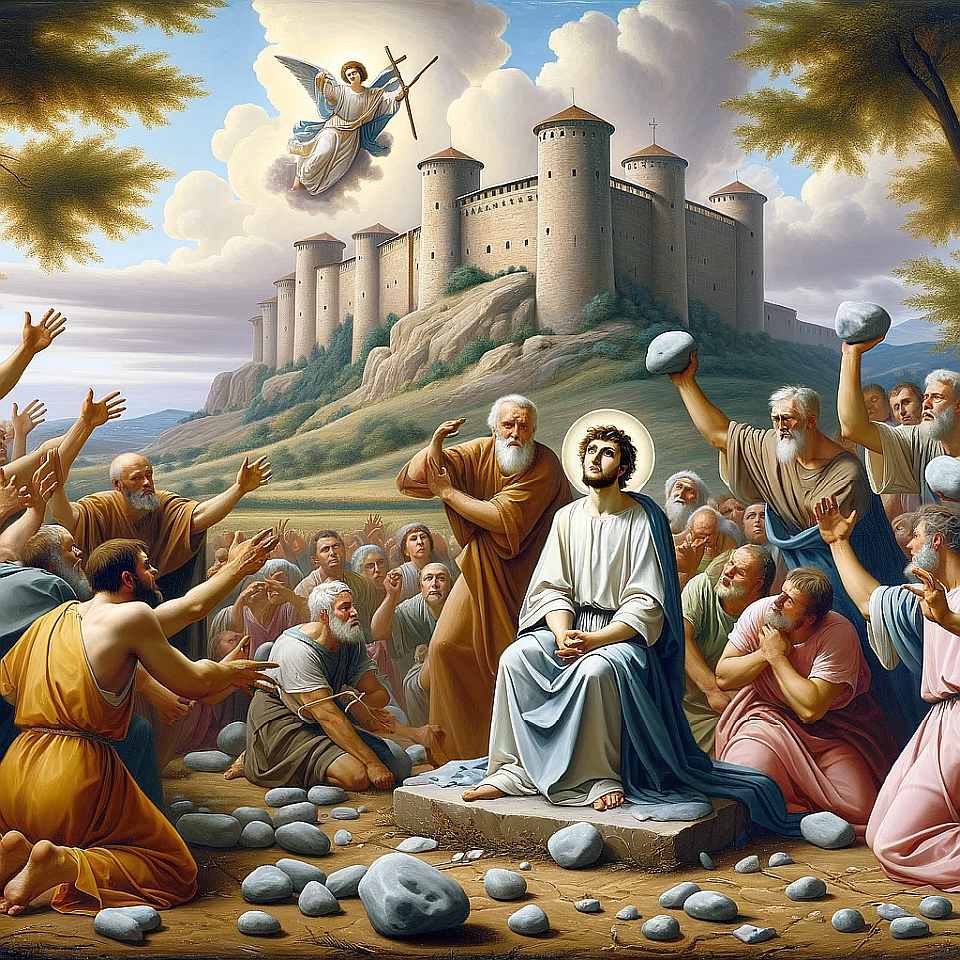
In today’s first lesson, we have the macabre death of St. Stephen. A guy who was well thought of by the local worshipping community and was ‘full of the Holy Spirit’. He was pre-selected and then ordained a deacon. He was full of God’s grace and performed (and I quote) ‘great wonders and signs among the people’.
Now, you would have thought that having someone like this would ensure that all would be well in the Church of God. Further, Stephen would have a deliciously swimmingly sumptuous life and convert lots of people. He would then go on to become a wise old sage, offering counsel, advice and absolution to an uncountable cast of enthralled Christians. He did, after all, have the face of an angel.
But…it seems that not everyone was enraptured with Stephen and his message. They started malicious rumours about him. We’d call it a smear campaign today.
The rumour they spread was that Stephen had spoken blasphemous words against Moses and God. The opposition stirred up the people, the elders and teachers of the law, and they seized Him and brought him before the Sanhedrin.
They produced false witnesses, who testified, “We have heard him say that this Jesus of Nazareth will destroy this place and change the customs Moses handed down to us.”
So Stephen, in his defence, gives them a wide-ranging Old Testament lecture, and I get the sense that he had almost talked them around. But right at the end, he lambasts the Sanhedrin with these words.
“You stiff-necked people! Your hearts and ears are still uncircumcised.
You are just like your ancestors: You always resist the Holy Spirit!
Was there ever a prophet your ancestors did not persecute?
They even killed those who predicted the coming of the Righteous One.
And now you have betrayed and murdered him—
You who have received the law that was given through angels but have not obeyed it.”
And so we get today’s first lesson, where St. Stephen is martyred. The first adult person who died for his faith in our Lord.
Before that, we have to go back to the Holy Innocents that Herod martyred in his paranoia shortly after the magi had dropped in for a cuppa. God of the unlikely - hear our prayer.
Odd, isn’t it, that the plot never seems to go exactly as you would think and certainly not as we would like. Not for the Magi, not for Herod, not for the Sanhedrin and certainly not for St. Stephen.
There he was, rising through the ranks when his life was ominously cut short, and his fan club was crushed just as surely as St. Stephen himself.
But there is something healthy about worshipping a God whose story takes us on unforeseen adventures, disappointments, joys, flotsam and jetsam; good-quality red wine at a wedding, the aching, desperate loneliness of the garden of Gethsemane and broken bread.
The God I am getting to know is both reliable and unlikely. Unrelenting and unambiguous. The good news is that the plot is not ours to write, and that should be liberating for us. The Master is uncontainable or and uncontrolled. You can tell him to wash his hands before dinner or raise an eyebrow at the grubby company he keeps. Goodness, you can even put Him in a cold tomb with a gargantuan boulder to keep him there … but he is unstoppable and unrestrainable.
We often construct a mental image of God as a distant, predictable force of pure power. Yet, our faith reveals a God who is surprising—a God who chose a humble virgin in a small town, rather than a queen in a palace, to bring salvation into the world. This "unlikely God" operates in "God-incidences" rather than human convenience. He is found in the everyday, the small, and often in the midst of messiness, contradicting our need for logical order.
Our "unlikely God" requires us to abandon our need for control and our limiting definitions of how He should act. Our Rabbi friend calls for a childlike trust—a total dependence on God's providence rather than our own efforts. When we stop trying to dictate how God should intervene and instead surrender to His often unexpected will, we find the peace that comes from knowing God is in control of the “unfathomable" and the unlikely.
Isn’t it grand that we have as our friend the master who will nudge us with our new way of thinking, an unthought-of perception. The one who will be remarkable purely because he chooses the unremarkable, which is startling and confronting in itself. And if you need any further proof, think of the ratty 12, think of St. Stephen’s young death, think of the sinful vagabond clergy you know, think of the wine and bread and then look at your friend in the mirror.
God of the Unlikely - Hear our Prayer.