The not so gentle art of finger pointing.

To my horror a memory bubbled to the surface the other day. I recalled with shame that I was denigrating one of my fellow clergy. Quite a tirade it was and my ever so patient listener took it all in good natured silence. When I had exhausted my verve and vocabulary, they quietly gave me the rest of the picture.

Was I aware for example, that Fr. Blogg’s wife suffered from a rare medical condition that sapped time, energy and dollars? Did I know about their child's addiction and there were some other unmentionable factors as well.

I apologised and went away chastened and disappointed with myself. Not only was I more sympathetic to Fr. Bloggs next time I met him (in fact I was almost effusive) but it also taught me a lot about the ‘not so gentle art of finger pointing’.

We have no idea what another is going through. No concept at all. We are oblivious to the daily trickiness and complexities that others stumble into, wade through, and the monsters they wrestle with.   Yet we are swift to engage in the not so gentle finger pointing sport particularly behind their back and especially with our fearless leaders no matter their platform or area of expertise.

Would it be such a terrible idea if instead of pointing our finger with retribution and scorn, we instead pointed at another with praise and support? We might disagree in principle with another on all sorts of issues and ideologies, but deep down they are just like us. They laugh, they cry, they get grumpy, they love and are loved. We’re not so different. In this little fleeting life, our opportunities to point a finger with understanding and encouragement evaporate all too swiftly.

A reflection for Sunday Of Sacred Spaces

August 16th

When it's not COVID season, I enjoy the undeserved privilege of going to people's homes.  Sometimes you get a sense of the vibe that is in the walls. There are some homes where the atmosphere is downright fractious. Nothing is said, nothing much happens and yet you know that all is not right and all is not as it should be.There are other homes where it is sweetness, light and comfort. This is a good place to be. People have loved and laughed here. You feel welcome and encompassed by the love that has been relished. This then is a sacred space and I want to reflect on some sacred spaces today. There are areas or spaces that are consciously set aside for the contemplation of and enjoyment of, the divine.
The space where God is sought and found.At an obvious level, our churches are a sacred space. They are consecrated, and set apart. Prayer is offered here and over the years, the walls soak up the prayers, like a sponge. In turn, when others come into our church, they are able to experience something of the divine. The rest of the noisy world is shut off and for a little while, sometimes all too briefly, it's just God and the individual.We might have a sacred space at home. An area that is designated just for contemplation and meditation. It might be a comfy chair, a little study nook or a seat at the table. There might be a crucifix, a bible or a favourite devotional book. This is the sacred space where the wrestle of prayer occurs, this where we sort God out and this where He sorts us out. This is the sacred space where we understand that it is OK to go very softly.
The world doesn’t have to be converted in a simple 3 point plan next week, and it really is alright if I am not perfect by September 12th.This area, this space… is just as important as the kitchen for both are sources of sustenance and nurture.  And in these befuddling times we need to take very good care of ourselves and to make sure that we are fed both physically and spiritually.Then there is that sacred space deep within us. It is not a tangible space, but often we would point to our chest or heart if we had to describe where it was physically. This is the sacred space, where God seems to speak quietly, yet powerfully to us and often we have a heart full of things we want to offload onto Him.Mother Mary is another living, sacred space where God dwells. For 9 months she carried the saviour of the world in an intimate and beautiful way that no other human being experienced. She gave birth to the Saviour and thus she gave Him to the world. And in giving Him to the world, allowed Him to be vulnerable and to experience the worst that human beings can inflict on each other.When you think about it, God the Father could have chosen any woman, at any place, in any time in history.  In his wisdom and love He chooses this teenage peasant lass from a backwater town, probably about the size of Coleraine, to be the mother of God.
Fr. David’s pet theory is that God chooses the lowly to thumb his nose at the haughty and to reassure the downtrodden. A bit like always barracking for the underdog at the footy. Like Mother Mary, we too are called to have a living intimacy with God’s Son. We are called to nurture Him in that sacred place deep within us. We are called to give Him and share Him with the world, so bursting is our joy, so great is this treasure, that we simply must share it with others. And when we think about it some more, if the body of Jesus  is at the altar on Sunday, then so too Mother Mary must also be with us.Mother Mary made room for God in her life. Like all mothers she gave up not only physical space, but emotional, and psychological space. In that lovely irony, when you give up something for someone else, it finds you, comes back to you and floods your soul in ways that you could never imagine in your wildest longings and dreams.Mother Mary looked after the outward, physical space, but she also knew how to look after the inward, sacred space and that is what I would encourage you to do. It is what I know I need to do.
Recognise that the sacred space is around you and within. Nurture it, sustain it, allow it to grow and flourish. Weed out and prune the junk. Prosper the good stuff. Make room for God and take His  written word which is His living word, into that sacred space within you. Then give it to those around you, so that all may delight in Him.

Fr. David’s musings

It was very early in the morning and still dark when I toddled across to morning prayer. It had not been a pretty time. I had dreamt badly, I was concerned for someone in hospital and there was that tricky letter to write. Multiples of paper had screamed at me for urgent attention.

When it came time to find some words there were none. The well had run dry and there was only sand at the bottom. I sat for what seemed to be the longest time and …nothing. But much later some words did come. They came from a lady leader of another country who spoke into the face of unspeakable horror. She recalled the time when she could not find any words.

What words adequately express the pain and suffering of 50 men, women and children lost, and so many injured? What words capture the anguish of our Muslim community being the target of hatred and violence? What words express the grief of a city that has already known so much pain?

I thought there were none. And then I came here and was met with this simple greeting. As-salaam Alaikum. Peace be upon you.

They were simple words, repeated by community leaders who witnessed the loss of their friends and loved ones. Simple words, whispered by the injured from their hospital beds. Simple words, spoken by the bereaved and everyone I met who has been affected by this attack.

As-salaam Alaikum. Peace be upon you.

They were words spoken by a community who, in the face of hate and violence, had every right to express anger but instead opened their doors for all of us to grieve with them. And so we say to those who have lost the most, we may not have always had the words.

We may have left flowers, performed the haka, sung songs or simply embraced. But even when we had no words, we still heard yours, and they have left us humbled and they have left us united.”

It was very early in the morning and still dark, when He came and said to me ‘Peace be with you’.

Of Our AGM

You would be painfully aware that we can only have 20 people inside for Church gatherings. This means that at the moment our Parish AGM will be limited to 20 people. We really hope that this will change in time and everyone can come.(Hoorah)

In order to allow ample time for the possibility of election and for the forms to go back and forth, the AGM has been set for September 27th.

If you would like to nominate a People's Warden please use the yellow form.

If you would like to nominate a parish councillor please use a blue form.

If you are over 18 and have received communion more than 3 times in the last year you need to fill out a white form affectionately known as schedule A.

Nomination forms and any items for general business need to be in by the end of August.

An item for general business might look like this. This Annual meeting congratulates the work of the organists in our parish and assures them of support and prayers into the future". moved .... 2nded ...

Got a question. Please see that local friendly priesty guy Fr. David.

Fr. Davids mini reflection

Most of my best words are pinched or inspired by someone else. The phrase “Self discipline for the good of everyone else” is an excellent example. I have shamelessly filched it from another source.

Its tempting to think that self discipline is a new thing that was just popped in yesterday, but actually self discipline has been around ever since Adam and Eve were tempted to eat that yummy, succulent fruit.

But we are particularly aware of the need for self discipline at this time and in this place. The stakes are so much higher now. In fact, quality of life and life itself, are the highest possible currency.

Self discipline requires something of us. There is a cost to be paid and we make this payment for someone else, not for ourselves. It is an outward looking gesture and the focus is on someone other than little ol me.

It’s good news, not just for the feel good factor. Not just because we might feel smug. It is great news because we realise that it isn’t always about me; my wants, my needs, my rights. It shouldn’t always have to be about me. 

And its not just about the self discipline, sanitiser, face masks, testing and 1.5 metres. The other 50% of the question is what is going to be best for the most vulnerable and the voiceless. And what is going to be most helpful for those who relentlessly, sacrificially tend them.

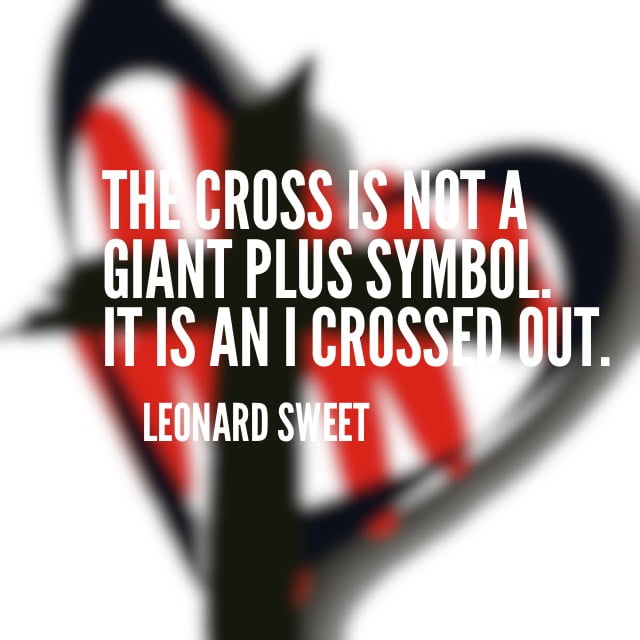
I come back to the Master pinned to cross, who in the ultimate act of self discipline, exclaims silently but unequivocally, it’s about the other. The I crossed out. So in this time of tumult we set the bar just a smidge higher, take a deep breath, … run like hec and jump. “Self discipline for the good others”. What a great turn of phrase. I wish I had thought of it.

Most of my best words are pinched or inspired by someone else. The phrase “Self discipline for the good of everyone else” is an excellent example. I have shamelessly filched it from another source.

Its tempting to think that self discipline is a new thing that was just popped in yesterday, but actually self discipline has been around ever since Adam and Eve were tempted to eat that yummy, succulent fruit.

But we are particularly aware of the need for self discipline at this time and in this place. The stakes are so much higher now. In fact, quality of life and life itself, are the highest possible currency.

Self discipline requires something of us. There is a cost to be paid and we make this payment for someone else, not for ourselves. It is an outward looking gesture and the focus is on someone other than little ol me.

It’s good news, not just for the feel good factor. Not just because we might feel smug. It is great news because we realise that it isn’t always about me; my wants, my needs, my rights. It shouldn’t always have to be about me. 

And its not just about the self discipline, sanitiser, face masks, testing and 1.5 metres. The other 50% of the question is what is going to be best for the most vulnerable and the voiceless. And what is going to be most helpful for those who relentlessly, sacrificially tend them.

I come back to the Master pinned to cross, who in the ultimate act of self discipline, exclaims silently but unequivocally, it’s about the other. The I crossed out. So in this time of tumult we set the bar just a smidge higher, take a deep breath, … run like hec and jump. “Self discipline for the good others”. What a great turn of phrase. I wish I had thought of it.

A reflection for August 9th

Last week Jesus made a valiant, but unsuccessful attempt to carve out some time to grieve cousin John's death. However His cunning plan was thwarted by the crowds. Remember this bit?

“Now when Jesus heard of John's death, he withdrew from there in a boat to a deserted place by himself. But when the crowds heard it, they followed him on foot from the towns. When he went ashore, he saw a great crowd.”

So today Jesus has another go at being alone. This time He is quite adamant about it.

Immediately he made the disciples get into the boat and go on ahead to the other side, while he dismissed the crowds. 23 And after he had dismissed the crowds, he went up the mountain by himself to pray”. 

We then get the whole stormy waves story, Peter has a go at walking on water and bless Him, he nearly nails it. Jesus' words of reassurance and a willing hand to help Peter to rise above the waves.

There is a place and time when we need to say things to God and we need to create a space for him to say things to us. Let’s do the speaking to Him bit first.

If you think of the word ACTS | A - C - T - S.

A is for Adoration.
Now isn’t God wonderful. God you are awesome and amazing. 

C is for Confession.
Well God I seem to have stepped into this muck again. I knew that it wasn’t right and I knew that there would be consequences, but that didn’t seem to stop me. Help me to extricate myself from this goop, help those who I have made a mess of and give me resolve to avoid all ickyness in the future.

T is for Thanksgiving.
Thank you God that you give us Harley Davidson motorcycles, glorious refreshing beverages made from the juice of the grape that maketh glad the hearts of all people and for those little saints who have taught me the faith and encourage me still.

S is for Supplication.
Watch over Fred, my neighbour and his wife Wilma. I heard them arguing the other night  and their kids were crying. Also great aunt Flo is having an uncomfortable medical test next week and I ask you to be especially close to her. 

And all that is right and proper, but we must also set aside a  time to listen. 

This setting apart business, is what Jesus was doing when he sent the disciples and the crowds away.

The question must not just be “What do I want to say to God, but it must  also be 

“What does God want to say to me?” Yes, I’ve always got heaps I want to tell him and how in three quick, easy to do at home, steps, He could sort out the Church of God and end world poverty. That’s the easy bit. The hard bit is to actually be quiet and ask 

“Lord, What is it that you want to say to me today?”

So often like the gospel, the wind is against us. There are all sorts of waves slushing around inside. There are fears and doubts and misgivings and complications and trickiness. There are distractions, some of them alluring, some of them downright terrifying. There are ‘what if’s’ and ‘should haves’. Like Peter, we do not see who it is that is right before us. We assume that it is something else altogether and we are fearful of what the waves might do to us. No wonder we can so easily sink  and falter.

Jesus' words to Peter are simple and there is a very real sense in which he might be speaking into whatever storm might be raging inside of you today. So listen and make space friends. 

What if the Master wants to smile upon you and chidingly but lovingly say

‘Why did you doubt?’

What if he is already saying to us 

“Take heart, it is I?” 

Maybe he wants to say to you today

“Do not be afraid.”

What if he wants to say to you.

“Well done good and faithful servant?”

I conclude with a prayer that I learnt a long time ago. I’ve printed it separately in the pew sheet and hope you find it helpful. It is one that I use before saying morning and evening prayer and it is about making space for God to speak to us. Sending the crowds away and stilling the turbulence, so that we might hear him and we in turn can say “Truly you are the son of God”.  

Open thou our lips O Lord to bless your holy name,
Cleanse also our hearts from all  vain, froward and wandering thoughts;
enlighten our understanding, enkindle our affection,
that we may offer our prayers worthily,
attentively devoutly and maybe counted worthy to be heard
before the presence of your divine majesty through Christ our Lord. Amen.

A reflection for Sunday 2nd of August

The gospel today starts with Jesus hearing of cousin John's death. This is a great blow. The two had quite a bit to do with each other even before they were born. Remember the story of Our Lady and Elizabeth, and John jumping around in the womb for joy so near was his Saviour.  John baptised Jesus, they were cousins.So upon hearing of John's death, Jesus does the infinitely sensible thing.

He gets into a boat and withdraws to a lonely place.He needs a quiet place to weep, to reflect and just to be by himself. Maybe there were some things He needed to say to His heavenly Father and maybe there were some things that the Father needed to say to Him. Yes he gets into the boat to do some good, honest grief homework. And that ought to teach us something about the Master. We believe and love a compassionate Christ, who knows what it is to weep, grieve and miss someone. Jesus' withdrawal also ought to teach us about our need to take very good care of ourselves when we are mourning.

Alas, Jesus' cunning plan is thwarted. The people beat him  there so as Jesus steps ashore, he is greeted by a great crowd who all have the lurgy, or a hammy leg, or an unfortunate rash on their shoulder. Being the sympathetic and understanding Messiah, he sets to and heals them. Night descends, so the disciples tell Jesus that he ought to send the crowds away to get something to eat before the supermarket closes. However Jesus challenges the disciples to give them something to eat. Does he know their meagre rations and does he know what is about to happen? Maybe…And then the really good bit occurs.Out of the meagre rations of five loaves and two fish, Jesus feeds the 5000. And that’s marvellous and miraculous, good and dandy. But look a little deeper at the four steps that make this possible. Jesus takes the bread Jesus blesses the bread Jesus breaks the bread Jesus distributes the bread.Sound familiar? It is the fourfold action of every Eucharist. Bread is taken, bread is blessed, bread is broken and  bread is distributed.

See if you can spot this later when your local priesty guy gets to the altar. Listen for the words that are said … and … watch out for the outward physical actions.The words to look out for are “Before he was given up to death a death he freely accepted. “He took bread… and gave you thanks (or blessed it). He broke the bread… and gave it to his disciples…This is  also a summary of Our Lord's own life. He was taken, blessed, broken and given for us. Now at one level the story is about the feeding of the 5000 tells us how generous and loving God is. He feeds us abundantly with more than we can ever need. Remember there were 12 baskets of leftovers for breakfast the next day. But remember where our story begins. It begins with Jesus bereft in a lonely place. It is with an embarrassingly meagre amount of food that so many are fed. So The Master nurtures us not only when things are good and luscious, but also takes our brokenness and out of our ache and muck, something quite magnificent occurs.

In ways that we know not, by means that are sublime and invisible, The Master continues to  satisfy not only our immediate needs, but also our deepest longings into the future.I have watched this process often. Not only at the Eucharist but in my dealings with sad families. Somehow, from deep within, even in and particularly in, the most gruelling of circumstances, people rise and are outstanding in the way they look out for each other and love each other. I see it also in these COVID times. When all seems quite puzzling, scary and stupefying. The way you have grasped the opportunities and each other has left us all sustained and encouraged in ways that we never thought possible. In our brokenness, we actually feed the world.I conclude with Nouwen who put it this way.“When Jesus took bread, blessed it, broke it and gave it to the crowds, he summarised in these gestures his own life . Jesus is chosen from all eternity, blessed at his baptism, broken on the cross and given as bread to the world.“When we take bread, bless it, break it and give it with the words “This is the body of Christ” we express our commitment to make our lives conform to the life of Christ. We too want to live a people chosen, blessed, and broken and thus become food for the world.”

Fr. David’s Musings

I was at the high altar when I  took a tumble the other morning. Fortunately, I was by myself, so my embarrassment was minimal as there was no one to guffaw at my ineptitude. It all happened very quickly and it was certainly not something that I had written in my diary.  It was something that I was not proud of, nor was I ready to tell the world about it.

So who to tell? Someone who would understand, someone who would know what it is like to suddenly find one's self where one did not intend to be. Someone who also had fallen. They would know how to listen, what to say and how to say it.

It also occurred to me that compassionate, empathetic people are the ones I instinctively turn to when I have had other ‘falls’. I’m cheerily minding my own business at the altar, thinking I am ‘Georgie Porgy, What a good boy am I’ and instantly I’m at the bottom of the heap feeling foolish and sore. Who to turn to…?

Someone who has also floundered. Someone who has been bumped and knows the herculean oomph that it takes to get up again. Don’t give me a squeaky clean, precious, glib, pious, gloating, holier than thou, do gooder oozing with platitudes.

Give me please, someone who is a little grubby round the edges. Someone who is besmirched, a bit chipped and flawed. Someone who will reach out a pierced and mucky hand to help me up. Someone who will say “Come on friend .. we’ve got work to do”.

Someone who knows that there is only one direction from the moral high ground and that is headlong downwards. None can afford to stand there, for all have tumbled, stumbled and been crumpled. I rejoice that the Master delighted in tax collectors and prostitutes and had great dinner parties with them.

Reflection for Sunday 26th of July

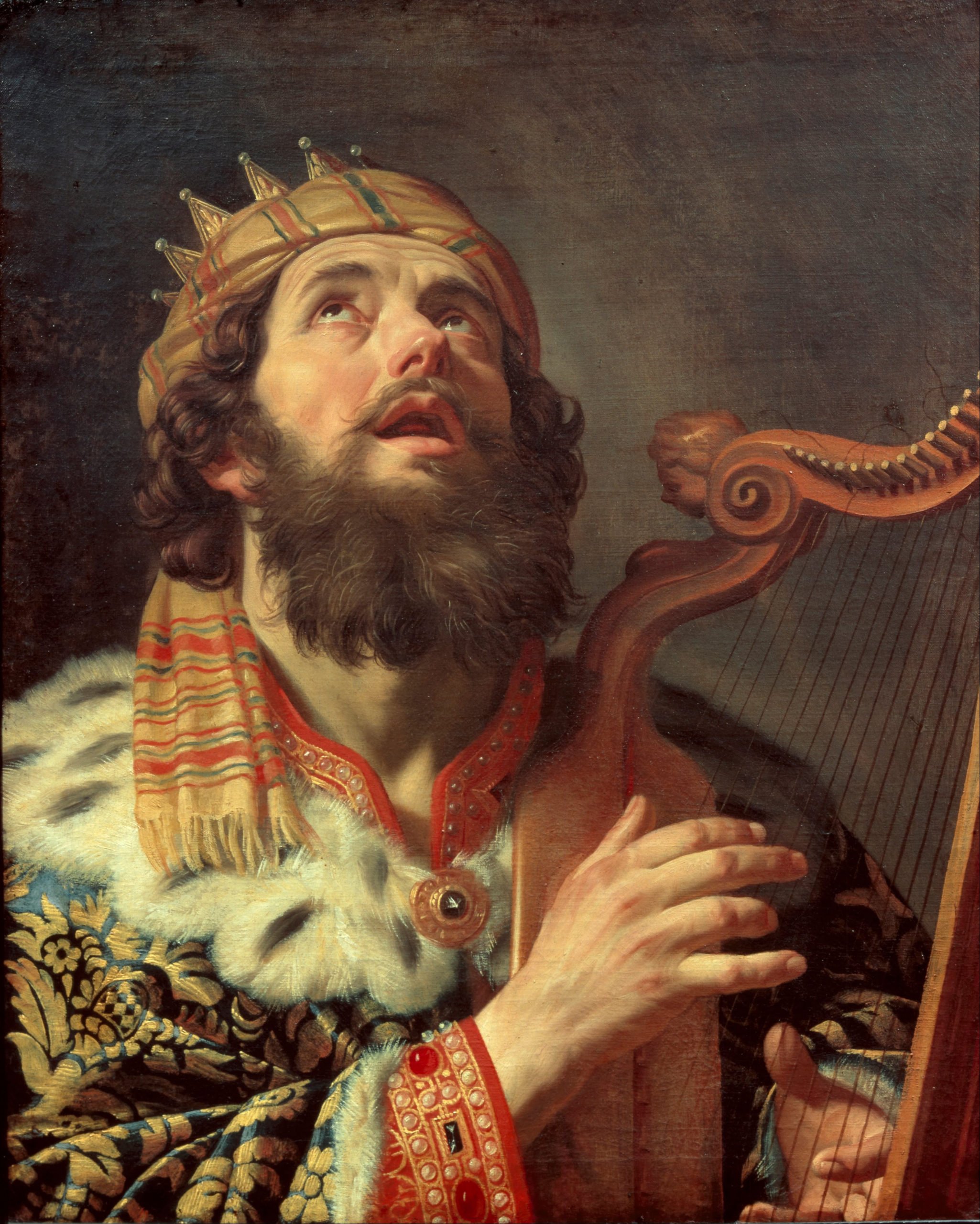
A memory of  Christmass came to mind the other day. It was evening, the Christmass services were all completed and around the dinner table were Jeanine, Jeanine’s mum Sonia, Michael and his lovely Steph, Jacky and her amazing David. There was wine and great food, there was laughter and jumping plastic frogs and there was ham and wine and candles and bon bons and giggles and wine and turkey and a Glenthompson Christmass pud and quirky paper hats.This memory sprang to mind because Psalm 128 came up on the rota for Morning prayer and by a happy coincidence it is the psalm we are using this morning. Within that Psalm 128 there is this verse “Your children will be like olive shoots around your table”. Sadly the psalms are often ignored in preaching and in the general currency of our christian reflection. This is a pity because they are a great resource for us, so I wanted to say a few things about the psalms today.
First thing. The Psalms are not really a book.  It is a collection of 150 songs, prayers, poems and hymns gathered over a very long period of time.  There are different types of psalms.  Some tell stories.  Some are songs of praise.   Some are prayers of repentance.  Each psalm has its own unique character but they are all deeply emotional and profoundly spiritual.   They encompass the whole range of human emotions from sorrow, lament and depression to joy, praise and celebration.  Collectively the psalms are known as the Psalter.We get part of a psalm each Sunday. I rather like the way that we all get to join in with alternate verses of the psalm. It focuses our attention and we have to concentrate a bit.
Second thing.The first half of each verse is expounded or unpacked a bit in the 2nd half of the verse. For example Psalm 119 verse 76 The first part goes “May your unfailing love be my comfort”,…The next bit elaborates on this theme    “according to your promise to your servant”. “Let your compassion come to me that I may live,….    for your law is my delight”.
Third thing about the psalms. They are authentic. They speak to every imaginable emotion that we have ever experienced and even some that we probably haven’t. There are psalms when we are very grumpy and we want God to do something, particularly with those we are not fond of. “Arise, Lord! Deliver me, my God! Strike all my enemies on the jaw; break the teeth of the wicked”.There are psalms when we are feeling guilty.“Have mercy on me, O God, according to your unfailing love;according to your great compassion blot out my transgressions. Wash away all my iniquity and cleanse me from my sin”. There are psalms of celebration for when you have won tatts.“I will exalt you, my God the King; I will praise your name for ever and ever. Every day I will praise you and extol your name for ever and ever.”There is the 23rd psalm when we are walking in a dark place and we need some reassurance.“Even though I walk through the darkest valley, I will fear no evil, for you are with me; your rod and your staff, they comfort me”. There are even psalms for when we are in the doctors waiting room.“Have mercy on me, Lord, for I am faint; heal me, Lord, for my bones are in agony. My soul is in deep anguish. How long, Lord, how long?”
There is not one human emotion that is left out of the psalms. But this brings with it a quandary. It can be a bit odd when we are feeling exuberant and the psalm set down for the day is a wowser. What I try to do is offer the psalm for those who are feeling terrible.  Even though I personally might be in a good space, the psalm   reminds me that while I am going about my joyful day there are those who are having a perfectly wretched time and they need prayer and support.

Last thing about the psalms. A wise mature parishioner from another parish said. “The good thing about the psalms is that you know someone else has been there before you”. So when the author of the 23rd psalm writes about that dark valley; the psalm may well resound deep within you; because you too are walking in that foreboding place; If this is you, then you know that someone else has walked that way before you. The author of the 23rd psalm has been there and I guess in a sense is still there with you. You are not alone. Your experience is not unique, you are not isolated. Someone else is treading this path with you.I commend the psalms for your use. They are not just supposed to be read, they are to be prayed.  Not all of them will be helpful for you all the time, but they are worth reflecting on and they make up an important  part of our Sunday readings.

Fr. David’s Musings

The homework of understanding.

I left the shopping bags near the back door the other day. I thought this was a masterstroke, a very cunning plan. The next time I went out the back door it would be a simple matter of just picking up the bags and popping them straight into the boot. What could possibly go wrong?

You can imagine my befuddlement when I got to the supermarket, opened the boot to get the shopping bags and Voila! The boot reprimanded my absentmindedness with mocking emptiness.

So I understand afresh, that it is possible to see and not “Observe”, to listen and not “Hear”, to understand and not “Comprehend”.

The forgetfulness of the shopping bags is one thing and no harm was done. However, it is quite something else in our encounters with people. We have to be incisive and frequently ask questions. Like… “Did that makes sense?” “Tell me more” “I didn’t get what you meant when you said…” So you’re saying that .. “Green eggs and ham really does have all the basic five food groups?”

If I am having a good day I remember to ask myself “What is really going on here in this chat?”

The furthering of a relationship, the sharing of a burden, venting, an act of forgiveness, an invitation. Maybe it is a combo, maybe it is something else entirely. The real answer only bubbles up much later on.

The master said “Listen you who have ears”. I am just beginning to understand what He meant. I am only starting to hear. The homework of understanding. My ears are not developed and they are poorly tuned. There is static and unnecessary babbling. Still I try to listen.. I look, I see and then I go back home for the shopping bags.

The Prayer Book/s

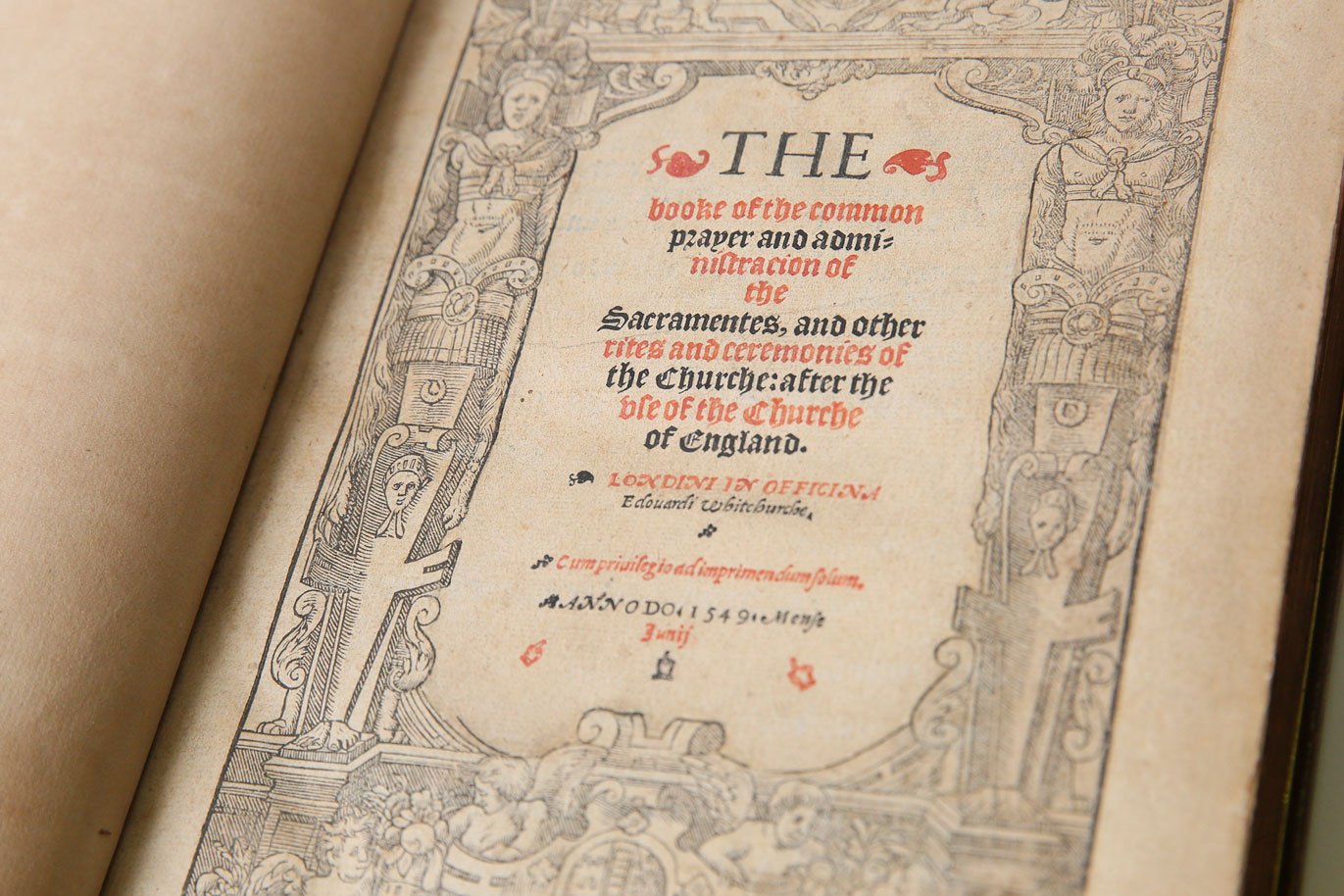
Once upon a time, in a parish far far away, a young man in his teens had the task on Friday mornings of leading the recitation of The Litany, a form of petitionary prayer, using The Book of Common Prayer.  He had grown up using the book from his early days, indeed His mother had given him his first copy of the said book for Christmass in the early 1960s.  He was thus familiar with the cadences and forms of the Book of Common Prayer, and was very much at ease in its use.

One particular Friday as the Litany progressed he was especially struck by the words of one of the petitions in the Book: “By the mystery of thy holy Incarnation, by thy holy Nativity and Circumcision, By Thy Baptism, Fasting, and Temptation, Good Lord deliver us.”

The book’s composer had obviously intended that its contents, of which that petition was representative, should not only be a form of prayers to be used by the Church of England, which indeed it still is (including us here down under) like some sort of prayer manual, a device to provide a pattern of worship; but that there should be much more to it than that.

To cut a long story short the intent of its original author, mainly Archbishop Thomas Cranmer (1489-1556), although he drew on many other sources, was that a mystical idea which we call Incarnational Theology, should be found at the very heart of how the creature we know as the Church of England, would worship the Holy and Triune God.  That church, of which we are a part, although having a few of the benefits, and not to mention some of the great faults of the english reformation, would no less still share in the ancient faith and emphasis passed on from the Eastern and Western Churches.

The book of course has itself had a varied and interesting history.  Its first edition was approved in the year 1549.  A revision, less well crafted, was published in 1552, with a further, better one, being authorised in 1559 during the reign of Elizabeth I.  Those of you who have seen the film in which Cate Blanchett played Queen Elizabeth will remember the scene in which the usage of the book as part of the Act of Uniformity was debated in parliament.  If you have not, it is well worth searching out.  The book had some revision to it again in 1604.

Sadly, for a little while when the monarchy and Church of England were under attack after the period of the English Civil Wars (roughly 1642-1651), and with the martyrdom of King Charles I and the suppression of the Church of England, the book was not used, except by those Anglican Clergy who kept faith and were effectively living under internal exile.

A yet further revision was approved in 1662 after Charles II was restored to the Throne and the Church of England, not to mention the whole country, was set free of its oppression from puritan/commonwealth forces.  It is that book which is still in effect even today.

An attempted revision was undertaken early in the 20th century (referred to as the Book of Common Prayer as proposed in 1928), which was regrettably rejected by the British Parliament (for reasons too complicated to go into here).  Many bishops though still authorised its use anyway, as they did not believe that Parliament was competent to act regarding such a matter.  (They were right)

Since then each province of the Anglican Communion has issued modern prayer books, all of which are supposed to follow the pattern and doctrine of the Book of Common Prayer.  Here in Australia we did so in 1978 and 1995.  The USA and South Africa did so in 1979.

So, why do we have prayer books, missals, overhead projectors, whatever?  Why do we organise the way we worship at all?  Surely we could just get by ad hoc.

The answer in part is because worship does need to be organised.  St Paul recognised the need for some conformity in worship when he took the Corinthians to task for making a mess of it in one of his letters to them.

More than that though, the Church needs to frame its worship in relation to how God has made himself known to us, and how important doctrines relating to that are made understandable and memorable to its members.

A prayer book is more than just a business paper arranged in point form with paragraphs and subparagraphs, debated clause by clause.  It is, or it should be, an expression of doctrines and precepts that have to do with how God loves us and grants us his mercy and makes himself present amongst us, whilst we for our part respond faithfully to him.

The young man progressed as he grew older, and has used other forms of liturgy, some very good, some appallingly bad.  Still he has a respect for the book that has sustained this part of the Church Catholic for so many centuries and whose cadences are so well known.  Hopefully it will continue to be useful and encouraging to others as well.

Sunday Service Times July 19

Sunday Service times

Saturday night Vigil mass at Christ Church Hamilton will be celebrated at 5:00pm on Saturday 18th of July.

Sunday Morning's mass at St. Marks Cavendish will be celebrated at 9:00am on Sunday 19th of July .

Sunday Mornings mass at Christ Church Hamilton will be celebrated at 10:30am on the   19th  of July. This service will be live streamed and can be viewed at https://www.facebook.com/AnglicanHamilton

Sunday mass at St. Mary's Dunkeld will be celebrated at 5:00pm on Sunday 19th of July.

To comply with social distancing please contact Fr. David beforehand. p. 557 1137 m.0423 671 692. Email droulton72@gmail.com  if you would like to attend any of these services.