Take The Plunge

11/1/26

Take the Plunge.

Most of you will be aware that it took centuries, literally, for the Church to decide which books of the Bible make it into the formal Bible we have today and which didn’t.

Our Book of Revelation, right at the end of our bible only just made it. There are books like the Maccabees that appear in some Bibles and not in others, and there are other writings that didn’t make it in at all. For example, there is a fabulous piece of literature called the gospel of Thomas. To read this on the surface with a refreshing beverage and a dish of pistachio nuts, you would probably find yourself asking how come Revelation made it in, and The Gospel of Thomas didn’t?

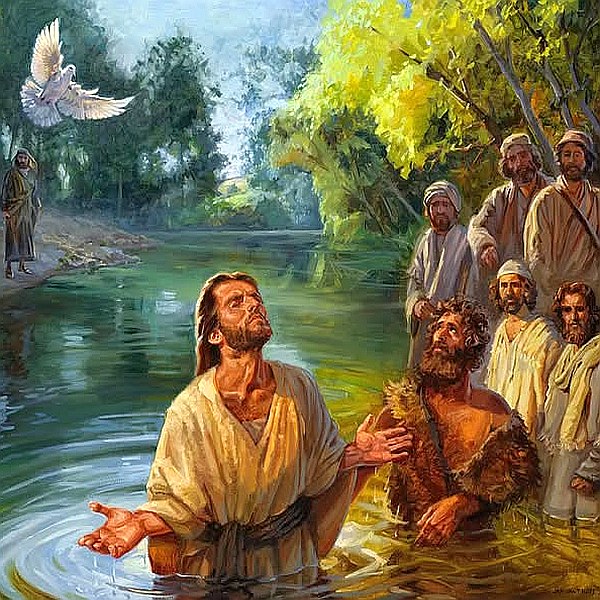
Another candidate that didn’t make it into our bible was called ‘The gospel to the Hebrews’, and the gospel to the Hebrews gives us one answer to age-old thorny questions that lie in the story of the Baptism of Our Lord.

  1. Why did Jesus, the sinless Son of God, receive the "baptism of repentance" meant for sinners?
  2. Why did Jesus wait for thirty years to begin his public ministry?

The strange answer for the first question given by the apocryphal book, The Gospel according to the Hebrews, is that Jesus received the baptism of John just to please his mother and relatives. Anything to stop the whinging… please. And there is an echo of ‘wanting to be obedient to Mum’ in the story of the wedding at Cana.

In John chapter 2, Mother Mary makes it quite clear to her adult son that he should do something about the depletion of wine at the wedding reception. She seems to put her son in an impossible situation, where, in front of the bar tenders, she says, ‘Do whatever he tells you.’

Ultimately, I think (and I am not a great theologian) The Master must always have free choice and to do as He pleases. Think of the story of him absconding in Jerusalem at the passover when he was just a lad. Nothing could be further from the wishes of St. Joseph and Our Lady. Even lying down on a splintery wooden cross and having nails driven through his hands and feet was something he did because he chose to. And I think it is this line of reasoning that is why the Gospel to the Hebrews does not appear in our Bibles today.

A better answer to the question as to why The Perfect Son of God was in the skanky, muddy water of the Jordan was because he wanted to identify with us. Like the manky manger of Bethlehem, God actually wants to be in our sludge with us.  God reveals himself as One who is not just pie in the sky when you die, but as one here and now, with the poo of the cow, and in the crud of the mud of the Jordan.

Thankfully, there are people in our lives, though who do give us a bit of a nudge, who shove us towards that course of action, that uncomfortable conversation, that apology that we know we need to offer and will be good for us and even better for the other who we are called to serve. The gnarly crusty twisted feet we know we must wash because they are really His feet after all.

These ‘nudgers’ as I call them, are those who are a little further down the road, people who see us objectively, who can counsel, advise, walk with us and encourage us.

The really good news is that while these are often the clergy, they don’t necessarily have to be.

Often, our first nudgers are our parents and then someone else takes over.

But what happens when the next generation of nudgers go home, too? I can think of a couple of people in my life who I relied heavily upon, who are now in the nearer presence of God, and I miss them terribly.

I can’t just phone them up or go and have a cuppa, a whinge, a wine and a laugh. And so it hurts.

I have to console myself with the sure and certain knowledge that their prayers are more potent and more loving because they are in His nearer presence.

So when I have a difficult choice to make, not only do I consult my modern-day confidants and prophets, but I ask the prayers of those on the other side of the grave who love me still. I ask for the prayers of Mother Mary and her Son, the same folk who once stood on the banks of the grungy Jordan River.

What are they saying to me?

I can either stay standing on the banks, dithering and procrastinating. These are fine skills that I have honed to an art form over the years.

Or…


I can put on my big boy bathers, draw in a deep breath and take the plunge knowing that He is already in there waiting for me. Even in and especially in the unseeable murky waters of death.


 

The Thing I Don’t Understand

So Here’s the Thing I Don’t Understand.

I was counting up the many different ways we have of communicating. There are emails, letters, phone calls, Messenger, Facebook, Instagram, Skype, Google meet and FaceTime. There are probably others that the next couple of generations beneath me use frequently and to great effect.

Our sense of connectedness and our understanding of each other should therefore, in this day and age, be at its zenith.

But here’s the thing. In the age where we communicate on the screen, we seem just as distant and isolated as ever. Why is that? The screen can be effective to signal and point to things, and in some cases where the distances are exorbitant, it’s all we’ve got, but ... it does not and cannot ever replace face-to-face conversation in the same room. Those who are clever at these things will tell me that in those cases where we actually really converse with someone under the same roof, we actually reveal more to each other by what we don’t say, as we do with the words that pass from our lips. The screen can seem ‘cold’ and impersonal. We should have woken up to this by now, but it seems that we are well and truly addicted to the convenience and speed of the screen. There does not seem to be any going back or desire to go back.

Part of the way forward, then, is to send pictures, images and those cute little emoji things. A picture really does send a very clear message, especially the photo of a loved one(s).

Or maybe… we could just put a line through the diary, make a time and a place, grab a cuppa and do it the old-fashioned way; face to face with silence, words and a smile.

Holy Family

Holy Family

28/12/25

We just don’t seem to be able to write good history.

Today’s gospel is not a pretty story.

Grumpy old King Herod hears that his political rival has been born in Bethlehem and, rather than face a leadership spill in the party room, decides to slaughter all the Jewish males under 2 years old.

The intensity of the widespread and long-lasting anguish can never be underestimated.

No matter who you are in the story, the henchmen, the fathers, the mothers, the children, the bystanders, those in authority, or those fleeing for their lives … This is not a fun piece of history. It’s not glamorous or sexy or shiny. We are left squirming that this should be part of our heritage and the Bible. The preacher may be tempted to preach instead of the master wanting to welcome, touch and bless little children rather than have babies run through with a sword. Today’s gospel is not merry and bright, but it is vital.  It reminds us that Christmas is not about escaping reality, but about finding God in the heart of all reality, in all its terrors as well as its comforts.

What do we say when we look into the face of such an atrocity, and does it have anything to say to us in our cushy world of Western Victoria in the 21st century?

A few random thoughts.

The innocent have always suffered. There is nothing new here. Go into any paediatric ward of any hospital, go into any ward of the Royal Children’s hospital, and there you will be deluged by a tsunami of grief and fear. Unanswerable questions are draped heavily upon the shoulders of every parent, every child, every doctor, every nurse and every visitor who is brave enough to wander in and take their place amongst the tears, the vomit, the blood and the needles.

And where is God in all of this, and where was he when Herod sent out his goons with their sharpened swords?

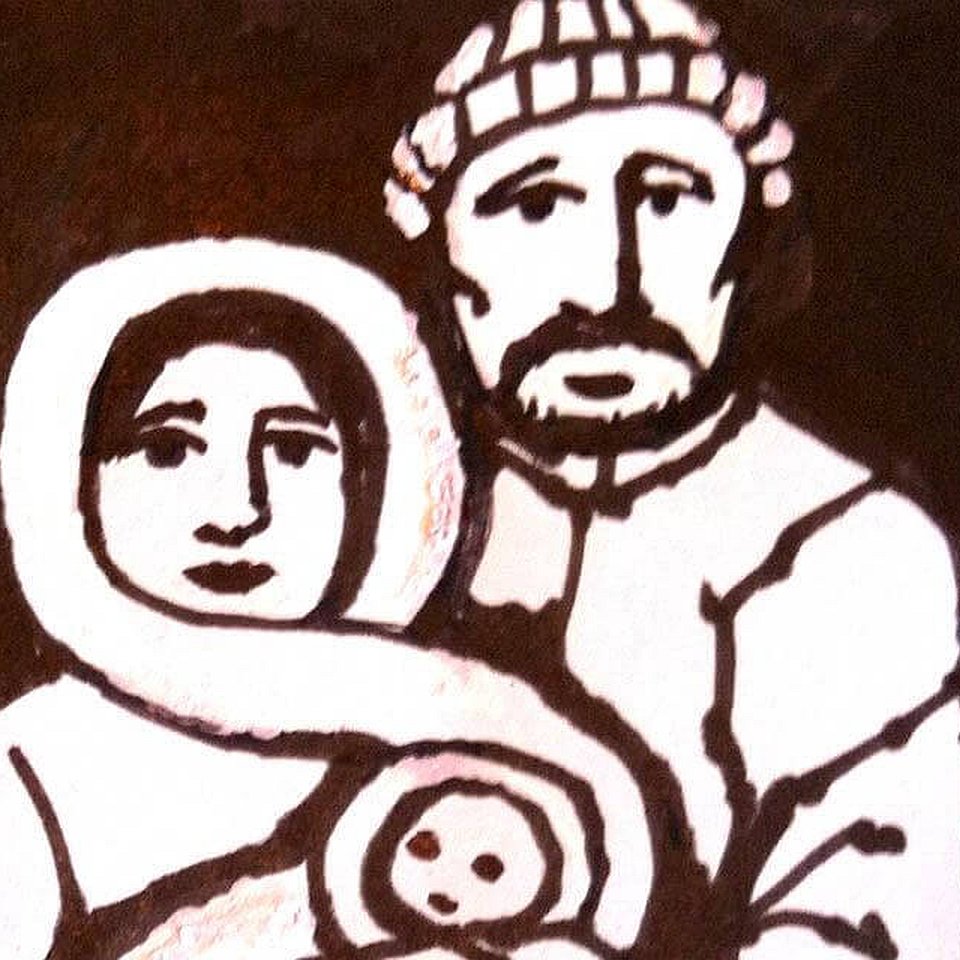
Right at the centre. At the very heart of the story is Our Lady, St. Joseph and the Christ-child. The Holy Family are not absent, resting comfortably from afar, tut tutting ‘How appalling,’. They are right there, inseparable from the muck itself.

And in the Royal Children's Hospital? He is there in the dedication, resilience, courage, unswerving dedication and love of everyone who walks through those big shiny glass doors day after night after morning after evening. Where else could He be? Where else would He be? Being the God of infinite love, he is most potent where love and reason seem most appallingly absent.

The very reason that Our Lady and St. Joseph are fleeing so emphatically and urgently is simply because they love their child so very much.

Sometimes we glimpse refugees and distraught families on the screens in our lounge rooms. We have been seeing these images for a long time now, almost to the point where we can be desensitised.

In a bizarre irony, it is often the Holy Land, yet again, where the fabric of humanity unravels, and the littlest of people, who are the strands and wisps of vulnerability, are caught by the gusty winds of greed and fear and tossed on the winds of neglect and futility.

The message of every christmass tide is that the master is not distant from our muck, but right in the middle of it. And each day we have a choice to roll up our sleeves and to share in his redeeming work of love to those who must leave everything they have ever known, loved and cherished, and flee to a place and a people who they hope will make them welcome and cherished.

The work of love is a skanky, mucky, manky, risky work. It goes unnoticed and unheralded for it seeks no recognition or fanfare. It seeks no payment or glamour or wage, save that we know that we are trying to do our best for those who are least.

And there will be times when we fail, times when we become disheartened, times when we will hear a question in our heart. Is it worth it?

Yes… faintly,.. tentatively… yes. For responding to these little ones, we are, of course, responding to Him.

In a few days' time, we will turn over the calendar, open a fresh new diary, and we will have an unblemished opportunity to start afresh in 2026.  Along the way, you and I will have opportunities to welcome the fearful and distraught. To love the ugly and those who seem odd and peculiar to us. We may not ‘get’ their story because we can’t. We might not capture their nuances and culture, but we can receive and welcome them. And we may not know who they are, but boy, we can really show them who we are.


I suspect that you and I are unable to write picturesque history on an international scale, and we certainly can’t change what is past. But locally, in our own community, and in our own lives, we can write some marvellous history in 2026.

300 Words

300 words

The Symphony of Life! 

I first wrote a version of this reflection for a different occasion, and some found it helpful. I hope that you might too.

What is it about music that stirs us so? How does it move us, excite us and make us slightly gooey around the edges?

For one thing, music speaks to the whole smorgasbord of human emotion. Some pieces are sweet, poignant and voluptuous. There is music that makes us want to dance, even if we are dorky and gawky in the shaking of our bodies. There is music that stirs us, is triumphant and makes us feel that we could do almost anything.

This, in part, is what we celebrate about music.

Any ‘muso’ would say that the poignant, tragic bits are not diminished in any way by the gutsy, stirring symphonies. Both have their place, both should be played, listened to and enjoyed. Both are appropriate and right. No one is somehow ‘better’ than the other.

Another thing that may be helpful is that music takes us to another place, another dimension. You will not find this location on Google Maps, Google Earth or Google Anything else for that matter. But it is all the more real, authentic and lovely because of that. The means of transportation to this place is not a vehicle of any description. The music itself is your mode of transportation. The notes are the signposts. At some level ,we all understand this.

As people of death and resurrection, we know how swiftly music can flow from joy to grief, to surprise and wonderment.


Whatever mood, whatever occasion, whatever piece of music, allow the music to stir you, to excite you and to take you into that other dimension where tears of joy and grief are the perfect enhancement of your symphony of life.

Christmass

Christmass

Who’s in the pub? = We are!

This  Advent, we’ve been thinking about some of the hypothetical characters who were at the pub when pregnant Mary and St. Joseph arrived and were unable to find a room. The overarching theme for this Advent has been a question.

‘Who’s in the pub?’

It’s been a bit of a romp, actually, as we have theorised and speculated wildly about some of the folk who may have been there.

We opened up this trough of crocodiles with the character Zacchaeus.

Zacchaeus, who was short of stature, but not short of a bob or two, thanks to his own greed and flouting of the tax system. If there is lucrative and easy cash to be made, then the inn at Bethlehem on the night of the census is exactly where such a shady character would have been. Tax on the wine, tax on the chicken parma and the land tax for the pub.

And yet somehow he knows that this is not all there is. Having accumulated his wealth, much of it illicitly, he never really knows who genuinely, authentically likes him. Is there anyone? No one will ever tell him. He understands that not only is he morally bankrupt, but he has a dearth of friends, and his credit rating of authentic love is negative 26. Fear and business are his diet, not laughter and affection.

He hungers for a way out of this hollow cave of existence.

Then there was Jehu, son of Nimshi. The Census consultant. A whizz with pie charts, graphs and spreadsheets. A census consultant is a wonderful career opportunity that he must excel in, even if it costs him time, energy and burnout. While the profits might be going through the roof, his relationships have dwindled, and his marriage is not only on the rocks but is now mangled in unfixable pieces of driftwood on the beach.

Then there was Rahab, the barmaid and prostitute. A single Mum just trying to find enough money to feed her child and stay alive herself. There are some nights when she feeds her daughter and not herself because, well, there just isn’t enough housekeeping for both of them.

She is muttered about, called names, and the physicality of her relationships sometimes results in bruises and blood.

Deep down, she knows that she is of infinite worth and sees past her client's actions into their heart. She sees the loneliness, the need, the longing for something more than the superficial encounter, for that is her need too.

And of course, no hotel is complete without its local drunk. The person who comes in on a very regular basis, sits at the same spot, and drinks all night, every night.

The one who has taken his medicine to try to un-see the things that he has had to see. The one who, deep inside, longs to have his past stripped from him and to start again with a blank canvas. A white bit of paper on which to write a new story with no mistakes, blotches, smudges, corrections or cross-outs.

Yes, it was a wild old Advent as we allowed our imagination to introduce us to characters that may or may not, probably weren’t at the inn.

But if we look a little more closely at each of these people, and if we look deep into ourselves… There is a bit in all of us that has done some silly things. There are times when we have had to weigh the moral dilemmas carefully because there was no straightforward answer. We’ve all been tempted to the murky side, and we share the same mortal ache and longing that this is not all there is. Little wisps of ‘the other’ allure us and tease us. We long to break free of the tedium and treadmill that we have been on for far too long. And if of our own volition, we can’t break out… then maybe He can break in.

And break in he does, not with next week’s tattslotto numbers, not with a press release or Facebook posting. Not with lightning, earthquakes and rainbows. Not with sophisticated, eloquent, polished people who have all the glib, trite answers that caress our ears and make us feel all gooey inside.

He comes into the mucky straw. He comes in the bewildered, teenage peasant lass, terrified because she is in the first stages of labour and a gnarly-handed old carpenter who is even more frightened and in tears.

He is a God who comes in the unexpected, who surprises us, makes us feel embarrassed and flusters us. We are boggled because he comes and wants to live with us, and he wants us to live with him.

“Jesus, Master Carpenter, when you knock upon the woodenness of our indifference and sloth, give us the will to open the door and greet your arrival with joy. Grant us the strength to open our souls, our lives and our hearts to you. Step across the threshold of our complacency and lodge within us. Weep, dance and laugh with us.  Make us uncomfortable, surprise us, disturb us, disquiet us and challenge us. Replenish us when our cup has run dry and when we are famished, nourish us with the bread of life. And finally, when our earthly temple collapses in death,  bring us to the home you have prepared for us, where your eternal banquet goes on forever and ever, Amen.”

Elah the Drunk

Advent 4 

Who’s in the Pub? 

Elah the Drunk (cf 1 Kings 16:8-10)

I sit quietly in my usual spot at the darkened corner of the inn. I’m comfortable here, and the locals know me simply as Elah, although they also call me the village idiot and the town drunk. I would be the first to own up and say that I am all three. You’d have to be an idiot to be a drunk.

But I have seen too much, and the wine seems to be the only thing that numbs the pain… until the next morning.

But it wasn’t always this way. I vividly remember the verve with which I went to war against the Kenites, the Kenizzites, the Kadmonites,  the Hittites, the Perizzites, the Rephaim,  the Amorites, the Canaanites, the Girgashites, and the Jebusites.” My job was to loot all the corpses. That was it. How hard can it be, and what could possibly go wrong? It’s not as though they can jump up and cut your head off.

Most of them were mutilated and decapitated with their eyes still open, gazing accusingly up at you and their mouths twisted in the agony of their death. Take the swords, the purses and the shields. It’s easy… or is it? For you just can’t forget those sorts of things. I still see every one of them when I close my eyes at night.

Eventually, my tour of duty ended, and when I returned from the battlefield, sleep became elusive, my dreams became more vivid, the fuse on my temper became shorter, and my anger became more intense. After all the thrashing nightmares, Elkanah, my wife, left me to become a temple prostitute.

So, for medication and company, I find myself here at the inn. There was, after all, no one left at home, and it became easier to eat bar meals than to go to the market, buy the produce and try to toss something together by myself, for myself.

My indifference and sloth spiralled downward into a maudlin self-pity. I am complacent about the injustices I hear at the bar. My heart is hardened to my fellow compatriots, who, like me, have traded one kind of savagery for another. The death they inflict is no longer towards the enemy army, but rather a slo,w torturous death upon themselves and those who are closest to them. The wives, the friends, the children, the brothers and sisters. There are no winners except, of course, the Romans who tax the wine I drink and the publican who makes a killing from my misery.

Every so often, I sense that this is not all there is. Other people are leading happier lives, different lives, and just for once I would like not be labelled as old Elah, the town drunk and the village idiot, or is it the town idiot and village drunk? I am more than that … surely… aren’t I? It is not who I am.

What would it take to break free from the wine and the solitude? How do you do that? Who could help me, and what would they be like?

I need to be surprised, disquieted, shocked and shaken. While my wine goblet is never dry, I have never been emptier. Whilst my belly is stuffed full and gorged with lamb, olives and bread, I am famished for a fresh new beginning.

And not just me, but everyone who drinks with me, whinges with me, ignores me and belittles me. Our world is tired, and it is time for something quite radical, quite different, something quite surprising. I know this is what is needed, but I cannot do it by myself. I am allowing this to ruminate in my sozzled mind when all of sa udden there is a loud, urgent knock on the door and there stands a rough-hewn, grubby carpenter with a teenage girl in labour.


“Jesus Master carpenter, when you knock upon the woodenness of our indifference and sloth, give us the will to open the door and greet your arrival with joy. Grant us the strength to open our souls, our lives and our hearts to you. Step across the threshold of our complacency and lodge within us. Weep, dance and laugh with us.  Make us uncomfortable, surprise us, disturb us, disquiet us and challenge us. Replenish us when our cup has run dry and when we are famished, nourish us with the bread of life. And finally, when our earthly temple collapses in death,  bring us to the home you have prepared for us, where your eternal banquet goes on forever and ever, Amen.”

The Beauty of Bread

The Beauty of Bread.

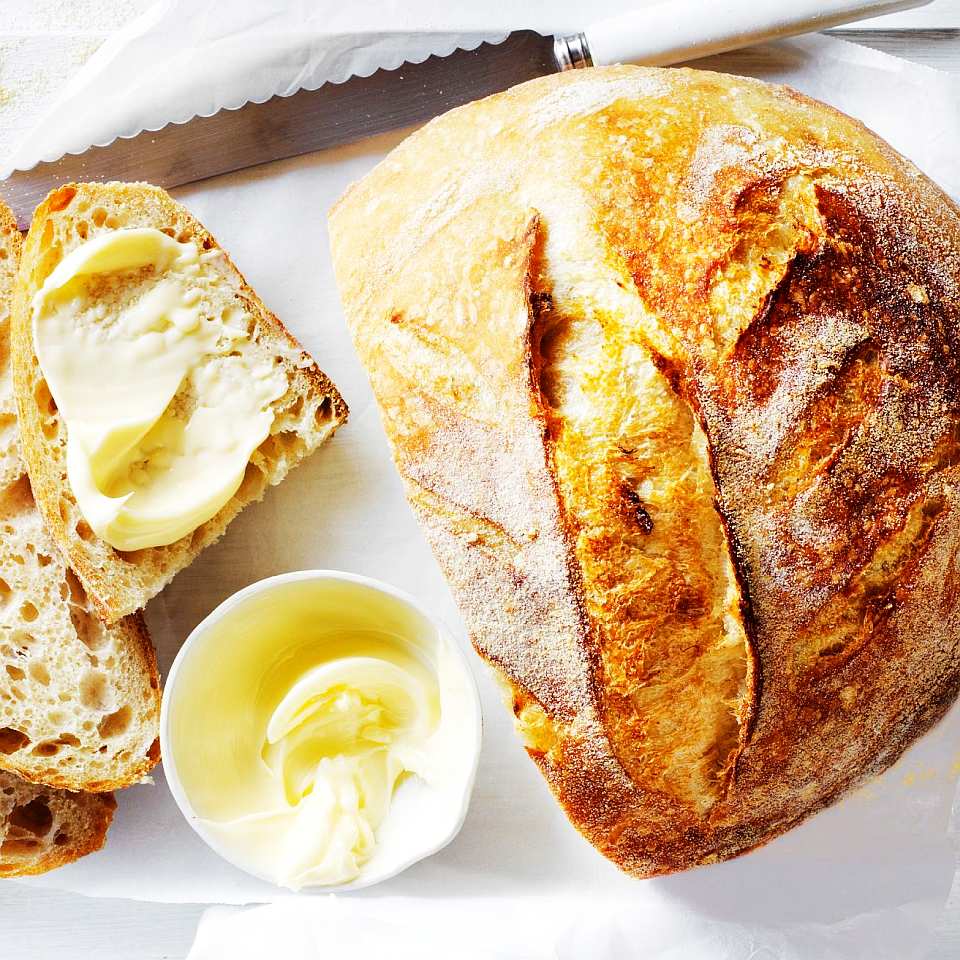
Bread comes in all shapes, sizes and styles. Sometimes there are healthy bits in it, sometimes it is just cotton wool to wrap up a sausage and some onion. But apart from the outward texture and flavour, there is something deeper, more profound and more lovely about bread.

There is a simple, uncomplicated humility about bread. It doesn’t pretend to be anything other than what it is. There’s no fanfare with it, and it is seldom the ‘main game’ on the table.

It’s happy just being a slice of toast, or the chunks that hold the ingredients of a sandwich together. Hec! It’s happy just to help you mop up a delicious soup or the spicy sauce from a beef rangoon. Because bread is content not to be the main attraction, probably doesn’t want top billing, that’s what makes it so luscious. The self-effacement is what makes bread so absolutely essential. I mean, imagine a sandwich without a minimum of two slices of bread. Or garlic bread without the bread.

Perhaps that’s one of the loveliest things about bread. It knows that it is important, nay even essential, but it never boasts about this.

As I reflect on the last 40 years, I find that I am trying to become more and more like bread. Offering what is important and essential, but in a quiet, background, supportive way. Mopping up the muck, holding together that which needs support, allowing the other to be the flavoursome and the colourful. Always nurturing and sustaining. Sometimes with healthy bits and often being a bit crummy and broken myself.

When the self is selflessly offered, everyone is given the strength to journey on. Everyone is nourished and is given the strength to get where they need to be. May we become, and always be, bread for each other.

Where to Buy 2 Kilos of Anger

Where to Buy 2 Kilos of Anger.

It was one of many conversations that I enjoyed in this interconnected community.

The person ahead of me in the aisle spotted my collar and proceeded to tell me with great vigour about an article they had read in a newspaper. Based on the two sentences they quoted from the article, I understood why they felt so strongly.

Given the effect that it had had on this person’s blood pressure and with the wise voice of my doctor and the word hypertension echoing faintly in my mind, I chose not to follow up on the article.

Understandably, my friend was looking for an agreeable advocate in their line of questioning, but as I had not seen the article, I had to politely decline. It would be churlish of me to comment on something I had not read and did not understand. I would be casting doubtful aspersions in ignorance.

Part of the dilemma is the brevity of time and space that our friends in the media have to dispense complex concepts in bite-sized, easily digestible morsels for our consumption. It can’t be easy. At least the scores in the footy are accurate and indisputable, even if the process of getting the score on the board was fraught with danger, knocks and bruises.

The other thing that perturbs me is that the front page with its BOLD  headline is often crafted to incite anger and or fear. I know where to go to purchase a kilo of grumpiness. It might be good for sales and the pharmaceutical company that dispenses my blood pressure tablets, but it doesn’t always make for congeniality and laughter, which are gifts that we all crave.

Ultimately, I look forward to many happy conversations in this splendid connected community of ours.


The Bar Maid

Who’s in the Pub? The Barmaid.

Harlot … Prostitute. This is what they call me. Not to my face, mind, but I hear them muttering on the other side of the bar…. as I leave the table after pouring their wine. And while they might scowl about me in derision and call me names, this does not stop them from gawking at me and reaching out inappropriately.    On a good day, they call me by name, Rahab and here at the inn, I am often just called the barmaid.

In the 21st century, when they are being polite, they will refer to me as a ‘sex worker’ and when they are not being polite, well,… There is a colourful array of names that are not particularly helpful. None of these words really describes me properly, for no one really knows me for who I am… not really.

My parents and my siblings have had nothing to do with me ever since I came to work here. I call them the name of “hypocrite” as all of them have had their indiscretions. It’s just that since my soldier husband died,  I had nowhere to go and no trade to support myself. I was left penniless, and I needed the money to live.

I see no way out of this, but I know that one day, my looks will fade and someone younger and prettier will take my place, and I will be in a worse position than I am now.

I’m not a monster, and I am always honest in my business transactions. What you see is what you get. I reckon that everyone, the businessmen, the soldiers and tax collectors, appreciate integrity. They certainly seem to keep on coming back.

Occasionally, there is small talk, gentle pillow talk, but usually there are the slaps and bruises after they have got what they wanted. After all, what am I going to do? Tell on them? But I know them. After all my dealings with men, I can see past their actions into their hearts. I see the loneliness, the need, the longing for something more than the superficial encounter.

But this is true for me too. I am more than just the figure they see and a body they take pleasure in. I know that I am unique. I have hopes and dreams, needs and wants, and apart from good ol' commandment no. 7, I do try to keep the law and commandments.  I do go to synagogue, I do say my prayers, I do go to Passover and Yom Kippur, and if there is someone in need, I keep some of the leftovers from the bar meals for them.

But some of my clients are often dishonest, uncaring and brutish. They are always a ‘someone’ to me, whereas I am always a ‘no one’ to them. I find that I hang out with tax collectors because they, too, are despised and belittled, but we both have an extensive list of clientele, and because of our principles, I actually think we align more closely with the Torah than the scribes and Pharisees. Perhaps the tax collectors and prostitutes will get into heaven ahead of the clergy and the teachers.

I long for the coming of the messiah. To straighten out this squalid, upside-down mess of ours. To see everyone as they truly are and to shout it from the rooftops. And it would take nothing less than the Messiah to do this. We’ve got ourselves into quite a mess.

I long to be seen and loved for who I am, not what I do, and I think that is true of everyone who comes through the front door or the back door of the inn. To be seen, known and loved for who we truly are, not what we do.  I am turning this over in my mind and heart when all of a sudden there is a loud, urgent knock on the door and there stands a rough-hewn, grubby carpenter with a teenage girl in labour.

“Jesus, Master carpenter, when you knock upon the woodenness of our indifference and sloth, give us the will to open the door and greet your arrival with joy. Grant us the strength to open our souls, our lives and our hearts to you. Step across the threshold of our complacency and lodge within us. Love us for who we are, not what we do. Weep, dance and laugh with us.  Make us uncomfortable, surprise us, disturb us, disquiet us and challenge us. Replenish us when our cup has run dry, and when we are famished, nourish us with the bread of life. And finally, when our earthly temple collapses in death,  bring us to the home you have prepared for us where your eternal banquet goes on forever and ever, Amen.”

Advent 1

Advent 1 30 /11/25

Who’s In The Pub? Zacchaeus?

“And Mary gave birth to her firstborn son, wrapped him in bands of cloth, and laid him in a manger, because there was no place for them in the inn.”

While the focus is rightly on the Blessed Virgin Mary and her newborn son, I can’t help but wonder who else might have been at the inn that night. Who else got in ahead of them and actually remembered to book, as clearly Joseph did not or could not, have emailed ahead.

During this Advent, we’ll be having a bit of play with some of these forward-thinking characters and what they might have to teach us. The theme for this Advent is ‘Who’s in the pub?’

Today I’d like to speculate that a tax collector called Zacchaeus might have been one of those at the inn. My thinking is that the Nazareth Hotel at census time would have been exactly where our friend Zacchaeus would have placed himself. On this night and in this place, there is lashings of money to make.

Luke is the only gospel to record the story of the short-statured gentleman, and he only occurs in the story of the sycamore tree and the crowds. But it is this story that we get a glimpse of the sorts of people that the Master came to love, redeem and take pleasure in.

In the story of Zacchaeus up a tree, we see someone eager to see the master, but he can’t see because of the crowds.  We sense not only his eagerness but also his frustration and see his inventiveness to get a glimpse of what has been invisible to him. And I wonder what it is that sometimes crowds out the Master that we know we need. The one we long for and the only one who can actually begin to put things right.

Where did Zacchaeus’  drive come from, and when did the sense of wanting to put things right begin? Perhaps what we see in this story of Zacchaeus really began one night in Nazareth.

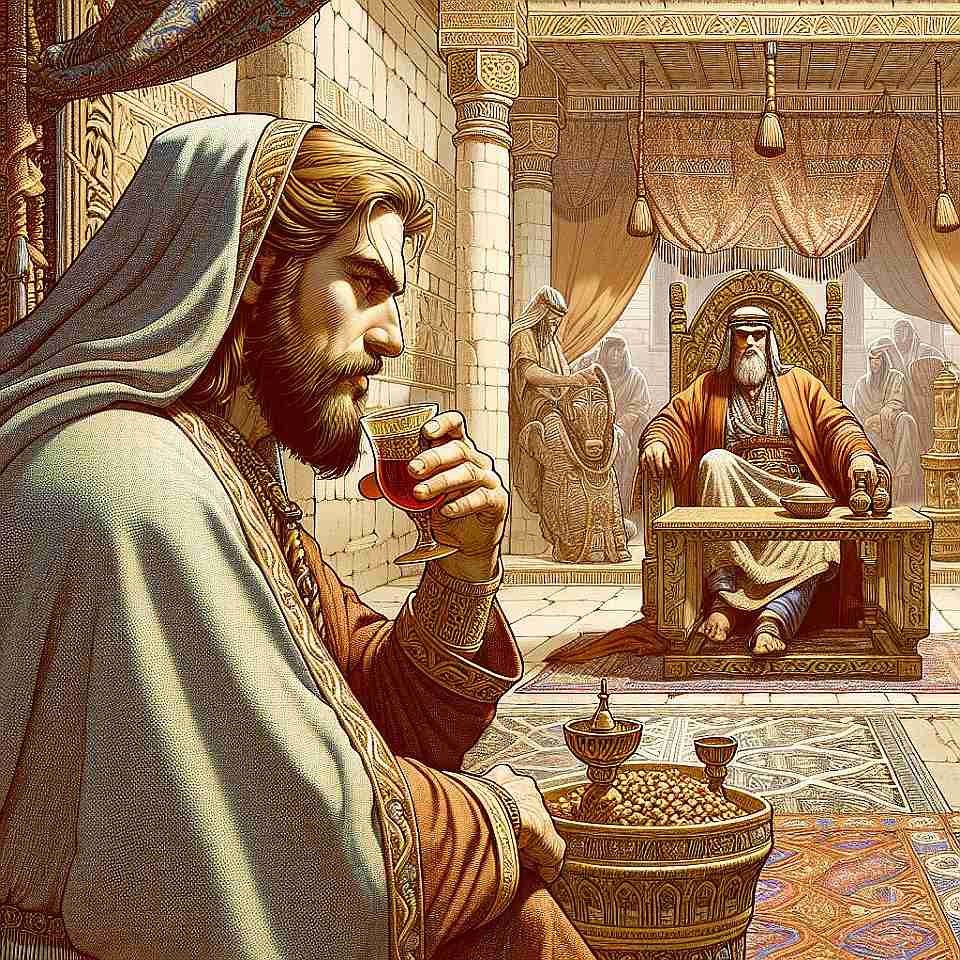
Being short of stature, he has to sit on a tall barstool. There he is swilling the good quality cabernet, nibbling on some nuts and olives, all charm and palaver, making oodles of money, but all the time he has a sinking feeling that this is not all there is. It is all so hollow. He never really knows who truly likes him, or not, but he has a fair idea that most don’t and out of fear, they will never tell him. Zacchaeus has the power after all.

His conversations this chilly night are courteous and thin. Manners and business are all there is. Deep down, at that level where the dollars do not count, but faith, trust and sacrifice do, Zacchaeus is actually bankrupt. He knows all this but chooses to wash it away with another glass of house red.

Perhaps it is in that seedy establishment with its dim lighting and the swirling sticky pub carpet, that the imperative to actually seek out that something more, that deeper something that Zacchaeus knows he needs and which we know we need as well.

But there is a mirror quirk in the story of the crowds and the sycamore tree. Not only is Zacchaeus urgent in his endeavours, but it seems that the Master is just as emphatic that something needs to happen. Like now.

“Zacchaeus, come down immediately. I must stay at your house today.”

In our quest for the divine, we can easily forget that the Master is far more urgent in his endeavours to seek us out than we are in our attempts to find him.

Whilst Zacchaeus swirls the dark red wine in his cup, perhaps these postulations are beginning to swirl in his soul. He is lost in his thoughts, the wine and the banter of the crowded bar. When all of a sudden there is a loud, urgent knock on the door, and there stands a rough-hewn, grubby carpenter and a teenage girl in labour.


“Jesus, Master carpenter, when you knock upon the woodenness of our indifference and sloth, give us the will to open the door and greet your arrival with joy. Grant us the strength to open our souls, our lives and our hearts to you. Step across the threshold of our complacency and lodge within us. Weep, dance and laugh with us.  Make us uncomfortable, surprise us, disturb us, disquiet us and challenge us. Replenish us when our cup has run dry, and when we are famished, nourish us with the bread of life. And finally, when our earthly temple collapses in death,  bring us to the home you have prepared for us, where your eternal banquet goes on forever and ever, Amen.”


The Question I Fear Most

The Question I Fear Most.

I often find myself asking the Almighty lots of questions. Understandable, inquisitive things like … What were you thinking when you created tarantulas? How come we seem to be biased towards doing naughty things even though we know that there are fearsome consequences? Why is it so much easier to start a war than it is to finish it? I discover no clear-cut, well-reasoned answers, which arrive with thunder and lightning, but rather, in my dotage, I find myself just sitting gently trying to find the answer from within. Like reliable tradies, outside external messengers, angels, seraphim, and posties are a rare commodity.

But often it occurs to me that perhaps The Master might have some questions for me, particularly at the end of my life, when I know I must give an account of my good things as well as my villainous acts.

I don’t think the Almighty will ask me for references from 3 reliable witnesses, preferably one from my bishop. No, I think this will be a direct line of questioning, just Him and me.

Is it not possible that he might ask me, ‘What in my name were you thinking when you….here insert one of my many disappointments….?’

But it is not this particular line of questioning that I fear the most, excruciating and understandable as it might be.

The question that will make me squirm and writhe is this.

‘What did you contribute?’ We are given so much and so many chances to share our wealth, energy, talents, compassion, understanding and nourishment with others and to our collective community as a whole. Daily, the opportunities are there for celebration. I know that I have been given so very much by so many; now it's my turn to do the giving.

Shalom!?

23/11/25

On the 150th Anniversary of worship in our diocese, we also celebrate the feast of Christ the King. In his reign, there is no war but only lasting peace.

On 23 September 2025, at the UN Security Council session on Ukraine at the United Nations General Assembly in New York, President of the Republic of Finland Alexander Stubb spoke these words as a joint statement on behalf of the Nordic states.

He speaks clearly and emphatically about the hope for peace in one part of the world.

President,

I’m addressing the Security Council on behalf of the Nordic states, Sweden, Norway, Iceland, Denmark and Finland.

I’m probably given the honour to do this, because Finland shares 1340 kilometres of border with Russia.

Now, the Security Council has had Ukraine on its agenda for the last 11 years, with few results on paper and even less on the ground. At the same time, it’s quite clear that the General Assembly has overwhelmingly and on several occasions condemned the aggression by Russia.

The Council was entrusted with the primary responsibility to maintain international peace and security. And I think it’s quite safe to say that we have failed in that. Ordinary Ukrainian civilians, and actually Russians as well, are paying a high price for this.

Now, quite often I hear the words “we need to eradicate the root cause of this war”. The root cause is very simple. The root cause is that Russia is not abiding by the UN charter. It’s really as simple as that.

It is trying to violate the independence, the sovereignty and the territorial integrity of Ukraine.

Now, the UN Charter lays out the principles that underpin multilateralism. These principles, in my mind, are universal. Every country has taken a sovereign decision to uphold them when joining the UN. They are the minimum common rules at the core of the whole international system.

We heard that in the speech from the Secretary-General today, and we heard it from the President of the General Assembly.

Now, the prohibition of the use of force, sovereign equality and territorial integrity are fundamental to our co-existence. These rules are violated daily by the Russian Federation in Ukraine. Russia’s war of aggression violates the very essence of who we are. It violates the very essence of the UN charter.

If we allow borders to be changed by the use of force, it will set a precedent with global implications.

If I look around the room here today, I think most of us have had the experience throughout our history of war as a means of expansion. We’ve either been the victims thereof or we’ve been the aggressor.

And I always felt that after 1945, we should have all learned our lesson. And many of us probably believed that after 1989, that lesson had been learned and we’d be moving towards some kind of eternal peace.

But the truth is that when we don’t nurture the international institutions that are the foundations of peace, like the United Nations, we fail.

I think a just peace is in our shared interests, and the solution is quite simple. It’s in two phases.

The first phase is a ceasefire. Ukraine has accepted it. The United States has proposed it. Europe supports it. But there’s only one country that doesn’t want a ceasefire, and that is Russia.

And the second phase is very simple. You go into peace negotiations, and peace negotiations can last a long time, but they are indeed the only way we can get out of this. It’s in our interest to ensure that the peace is sustainable and without a relapse.

President Zelenskyi has repeatedly called for a ceasefire and high-level negotiations, and Moscow’s response has been more missiles and drones.

The message to my Russian colleagues around this table is: it’s time to talk about peace. There are too many people dying as a cause of this conflict.

I personally think that today could be a game changer for many reasons.

One of them was President Trump’s post on Truth Social, which I didn’t think left any space of interpretation. It was a clear message that it’s time to end this war. And I think Secretary Rubio noted that President Trump is running out of patience.

Now, of course, Russia is not operating alone. So we urge all states directly or indirectly supporting the invasion to stop.

We live in an era of increasing geopolitical tension and hardening rhetoric in international relations. I think we need to be clear. Might does not make right. Borders cannot be moved by force. Kherson, Zaporizhzhia, Donetsk, Luhansk, Crimea and Sevastopol are Ukrainian.

Membership in this Council comes with power, but it also comes with responsibility.

Please use that power to stop the killing and pave the way for a just and lasting peace in Ukraine for the sake of all of us.

And let me finish by quoting my mentor, President Martti Ahtisaari, who was a big friend of the United Nations and who received the Nobel Peace Prize in 2008.


He said that what humans begin, they can also end. Please, end this war.