What is Confirmation

Homily  What’s a confirmation?

Next Sunday Bishop Garry will be here to confirm 4 marvellous candidates and then we will retire off to the hall for a yummy ‘Bring and share’ lunch.

Confirmation is not something that happens every day, so I thought I would offer up a few reflections about the sacrament before next week.

Confirmation is one of our seven sacraments.

In no particular order, they are baptism, ordination, confirmation, marriage, eucharist, anointing for healing and reconciliation.

I want to begin in what might seem to be an unusual day and place.

Oil of Chrism

The day is Holy Monday, the Monday before Good Friday and the place is our Cathedral.  On this day at that place, the clergy of the diocese gather to renew their ordination vows and the holy oils are blessed.

There are three oils. First the oil of the infirm for those who are not feeling well; physically, emotionally psychologically or in other ways you care to mention. This healing oil covers the lot.

The oil of catechumens is for those about to be baptised.

The oil of Chrism is used at ordination and also at Confirmations and coincidentally for the anointing of Kings and Queens.

So the oil that is blessed at our cathedral on Holy Monday by the Bishop is the very same oil that will be used on our confirmation candidates next week in Hamilton.

So what’s so special about this Chrism oil? Chrism is a mixture of oil and fragrance.  The oil is a sign of anointing, joy, healing, cleansing, beauty and strength. Read your bible carefully and you’ll discover that oil gets mentioned frequently and always in a positive way.  It symbolises the anointing of the Holy Spirit and brings about this spiritual anointing.  The fragrance or perfume we add, symbolises the sweetness of Christ, which must always permeate our lives.  If you like others will come to know we are Christians simply by the fragrance of Christ’s love that flows from us as a result of Confirmation.

Laying on of Hands

There is another outward symbol or sign to watch out for next week and that is the laying on of hands by the Bishop. So the Bishop puts his hand on each candidate’s head.

This action is a sign of the outpouring of the Holy Spirit.  It’s a bestowing of this grace from person to person; from the Bishop acting in the Person of Christ to the one receiving this full outpouring of the Holy Spirit.

The word ‘confirmation’ can be a little bit misleading.

Confirmation is not so much about the person confirming their choice to follow the Master, it’s about God the Holy Spirit confirming the person.  It’s much more something that God does to you and your eternal soul than something you do for God or even yourself.

And this inward “God confirming the candidate” bit is something we can’t physically see or hear. Confirmation imparts an invisible spiritual character, or seal, upon the one receiving this Sacrament.  The flash church phrase is “indelible mark.”  Though this mark or seal is not visible, it is symbolised by the anointing with the chrism upon the forehead with the sign of the Cross.  During this anointing, the bishop says, “ Name ….Be sealed with the Gift of the Holy Spirit.”

The candidates also affirm the faith of the Church in the words of the creed, they affirm their turning to Christ and the rejection of all that is evil.

Confirmation is a wondrous Gift that was promised in the Old Testament, reaffirmed by Jesus, and fulfilled after Jesus’ Resurrection.

The fact that God gave us this Sacrament is His way of demonstrating to us that He wants all of the Gifts of the Holy Spirit alive within each of us. It is God reaching out to us. We use outward physical signs to show us that something inward and magnificent is actually really happening. Walking out of the Church, the candidates are not quite the same as when they arrived, just as surely as bread and wine we receive are changed or a happy couple become husband and wife

But what about the rest of us who are not being confirmed? We also have some words to say in the order of service.
With much gusto, we join with the Bishop in praying this prayer.

Defend, O Lord, these your servants with your heavenly grace,
that they may continue yours forever,
and daily increase in your Holy Spirit more and more
until they come to your everlasting kingdom.  Amen.

Our responsibility and joyous vocation is to support, encourage, watch over and pray for our brothers and sisters in faith. Not just on the day and over luncheon with the Bishop, but every day into the future. God has called them by name and made them His own. This is a cause of whopping celebration for the whole Christian community.

A Final prayer to watch out for next week.

Almighty and everliving God,
you have given your servants
new birth by water and the Spirit,
and have forgiven them their sins.
Strengthen them, we pray, with the Holy Spirit
that they may grow in grace.
Increase in them the spirit of wisdom
and understanding,
the spirit of discernment and inner strength,
the spirit of knowledge and true godliness,
and fill them with wonder and awe at your presence,
through Jesus Christ our Lord. Amen

Awesome

This word ‘Awesome’

Our language is not a static thing. In my lifetime a whole new lexicon has come hurtling into our vocabulary.

Words like email, algorithm, iPad and cybercrime are just a few examples.

Words have also been consigned to the dustbin of inappropriateness and you can probably think of a few examples.

But others have taken a more circuitous route. They were popular once, faded away and now have come back to us, full of vitality and sparkle. Leaping off people’s tongues as though this was a whole new word.

One of these reimagined words is ‘Awesome’. We think of it as fresh and 21st century. The truth is it was being sung lustily in 1885 when Carl Boberg first penned the hymn ‘How Great Thou Art.’ The word ‘Awesome’ crops up in the 2nd line

When I, in awesome wonder…

What are we to make of the regurgitation words?

First, we must never discount a word and think that it can never be used again. It might seem outmoded, out of date, out of favour, but these pesky little words can resurface again in fresh and vital ways. This is because words have different interpretations and what might be appropriate for Awesome in1885 (The sense of formidable and alarming) can be interpreted afresh in 2023. (The sense of wonderful, impressive and jaw-dropping.)

Words also resurface because we change. Our society is very fluid and we continuously strive to articulate in our clunky, befuddling English language things that we can no longer describe. So sometimes we must reach back into a dictionary of yore to find the appropriate word.

This ongoing struggle to describe, articulate, and put into words is often futile. Sometimes a physical hug, a tear, a handshake or a smooch can be better than ‘Awesome’.

Meet my friend Rembrandt 

Meet my friend Rembrandt

Rembrandt entered the world on 15 July 1606. He was a highly skilled painter, printmaker, and draughtsman. It is estimated that he produced a total of about three hundred paintings, three hundred etchings, and two thousand drawings. He became famous in his lifetime and he is well known 4 centuries later. He was one of the few that managed to be popular while still alive. His paintings, if they were ever to be sold, would fetch eye-watering sums of money.

And you would have thought, what a lucky ducky. What’s not to like? But his personal life was gashed deeply by tragedy. Three out of his four children died quite young and he was then swiftly widowed.

He became friendly with another woman and that was all good and dandy until the housekeeper moved in and then things became very angry, complicated and sad.

And as if that wasn’t enough, he took on a mortgage that was way too huge and outlived his surviving child Titus. Rembrandt died one short year later. A couple of things to draw out of this potted history.

First, the famous, the rich and the glamorous often have another more painful, personal side to them. It is well hidden, for very good reasons, but we must never assume from the outward glitz and gorgeousness, that all is as it appears.

Secondly, the folk who are most damaged and mushed often produce the most outstanding work. From the darkest places, they produce works of outstanding beauty and breathtaking talent. I’m not sure why or how this is so, but I have seen it frequently and rejoiced. Thank you Rembrandt for reminding me that we are all flawed and vulnerable humans. Thank you for reminding me that we are also capable of much.

Dress Code for the Wedding

The dress code for the wedding

Today’s parable falls easily into two parts. The first part goes like this.

The King has a son who is getting married and this is going to be a cause for serious celebration. Many oxen, cattle and turkeys are understandably nervous when they hear the news of the wedding. The silver is polished, the champagne is chilled, the linen napkins are artistically folded and the gilt-edged invitations are sent out in crisp beige envelopes. And yes the livestock’s fears were well-founded.

Now you would have thought that the folk would come flocking to the social event of the year, but that’s not how the parable goes.

“But they paid no attention and went off—one to his field, another to his business.”

And it gets worse. The poor old couriers and posties whose job it is to deliver the glitzy invitations get a rough time of it.

‘The rest of the guests seized the king's servants, mistreated and killed them.’

The king is understandably grumpy and destroys the ungrateful guests and then for good measure burns down their city. Hoomph!

So at one level, the parable is a warning. Don’t ignore the invitation or you’ll miss out on the party.

Perhaps the original point was that those who were invited did intend to come, but only after first taking care of their fields and business. In this case, the parable would be addressed to those who would like to be present when the kingdom of God comes, but don’t realise that it has already begun. Is this us? Is this our party?

Now look at the second half of the story. The intended guests haven’t shown up, so the King sends his servants to gather every Tom, Mildred, and Francis they can find.

‘The bad as well as the good,’

Now we’re talking. This is an image and idea that I can easily identify with and I hope that you can too. Here we are, a motley collection having been dragged in unprepared, sometimes not quite knowing why we’re here and sometimes wishing that God had left us alone to go about our daily lives. It would have been so much simpler then wouldn’t it?

But then there is a twist in the story. You see there is this guy who has come at the last minute, and he hasn’t got the right attire on. I felt a bit sorry for him because it wasn’t his fault that he only got a last-minute invitation and didn’t have time to hire a 3 piece morning suit with a top hat and tails.

But what I think the Master was saying is that coming to the wedding party requires a new mode of existence. We are to put on the new clothes of Christianity and discipleship. And these garments are something we consciously choose to put on every day of our life and sometimes we have to choose several times a day. We are to equip ourselves for this party because it is a great party and the company. At the same time, it can be challenging, can also be exhilarating and quirky, intriguing and sustaining and utterly and thoroughly enjoyable.

The clothes are simple enough and they are uncomplicated things like saying our prayers. So how’s your prayer life, lousy? So is mine but let’s see how together we might do something about that.

And we read our bible which can be puzzling and daunting and yet inspiring and challenging. Again let's learn from each other and we will discover more and more about the one who calls and invites us.

And finally, whenever we can we gather at the table we savour the briefest foretaste of The party. We slip through that other dimension and we understand again, that the party is already in full swing.

The good news is that every aspect of our lives is part of the festivities. Think about the things you are good at and things you enjoy doing. Can you set up for Mass? greet the folk, play some music, pour a cuppa, listen attentively to someone in a compassionate way in aisle number 7 of the supermarket? These are the gifts that you bring to the party. These are the streamers and balloons of the party. These are the things that the whole worshipping community enjoys. A gathering around your table, a gathering around this table, a gathering around His table. This is where God chooses to throw His extravagant party. With simple, but mysterious food. With the good and the bad alike, with Big-ticket saints and with little saints. These are the people who sit down with us and together we should operate as a single body, a community, yes even as a Church.

But the challenge is not just to participate but to grow into your wedding suit. To learn, to wrestle, to understand afresh, to relearn, to sigh with frustration and to whoop with delight. To be transformed.  Or as Charles Wesley put it.

‘Changed from glory into glory, till heaven we see his face, till we take our throne beside Him, lost in wonder, love and praise’.

Bottles of Show Wine

Bottles of show wine

The classic interpretation of this parable goes like this. It is the history story of our salvation in four, easy to understand, any idiot priest could get it.

First, it looks back at Creation and the choosing of the land of Israel: “There was a landowner who planted a vineyard… put a fence around it, dug a wine press in it, and built a watch-tower.” From the very beginning, God began to reveal himself and his plan of salvation through his caring act of creation. The second part of the story involves the sending of numerous prophets, including Moses, Issac, and Jacob right up to John the Baptist: “When vintage time drew near, he sent his servants to the tenants to obtain his produce…” The prophets were men of God’s word, calling the people back to the Law and the covenant, but usually with little success and often to their own peril. So we get “But the tenants seized the servants and one they beat, another they killed, and a third they stoned.” Which is of course Jesus taking a very thinly veiled swipe at the Jewish authorities and their treatment of those who have gone before him. Not surprisingly we can almost hear the leaders blood pressure rising and their hearts beating angrily as they realise that Jesus is really talking about them.

Chapter three; God sends a final messenger: “Finally, he sent his son to them…” The Incarnation, God becoming flesh ushers in the final age, in which redemption is offered to everyone. Or as someone far more eloquent than I put it. ‘The church of God has everything to do with everybody.’ … ‘The church of God… has everything… to do with everybody.’

The  fourth and final part refers to The End and is presented as a question: “What will the owner of the vineyard do to those tenants when he comes?” The religious leaders of the day condemn themselves with their own words

They said to The Master ‘He will put those wretches to a miserable death, and lease the vineyard to other tenants who will give him the produce at the harvest time.’

And you see there is also a transference here from the religious leaders of the day to The Master himself.  The succession of the Kingdom from Israel to the Christian Church. But more than that, there is a broadening and there is a deepening. The Kingdom is broadened to encompass the entire world, and it is deepened in that belonging to it is not a matter of geography or grace. The life of the family of God is not found in human genealogies, but in the gift of Trinitarian life through the Incarnate Son of God

And that four-chapter story is right and good and proper. Usually, the preacher will go on to say that we are now the tenants and it is up to us to produce some yummy, high-quality show wine. Further, we need to be on the lookout for those who approach us and are the people sent by God to challenge us, to inspire us and maybe even to tick us off.  I am sure that God continues to send people to our vineyards who see us with fresh eyes, to offer us a different insight and perspective. And while it might make us feel a little uncomfortable, it is an opportunity for us to try again (maybe) in a different way, with different gifts.

I would add the following insights for your reflection.

We hear much about the housing shortage in the media… of landowners and tenants and we hear much about the rights of folk to housing. What if we turned the whole thing on its head and said that this was not a matter of landowners and tenants and rights but rather it was simply a matter of …responsibility? I wonder whether that would change the debate and the dialogue?

Both from a landlord's and a tenant's perspective there is a lot of trust and a lot of waiting around. God has entrusted us with a humbling amount of responsibility to produce the wine for the good of all.

And yes we watch, we wait, we pray, but everyone has a place in the vineyard, everyone has a job to do and everyone has a place at the table to enjoy the fruits of our work.

Our fruits will be ones of trust patience and prayer. Our attitude at the front gate of the vineyard is to be gregarious and welcoming. When we accomplish this, the better our wine will be and the more plentiful the harvest will be.

A story and a question to finish with.

Most of you will know that before I went to college I had the marvellous job of being a tour guide at a winery and I was astonished to learn how long it took to make a very good bottle of wine. Years and years. The vintages that I was there for, would not be enjoyed until after I had left the winery and was safely ensconced in college.


Which is a jolly nice, but not-so-subtle way of asking... In a couple of decades' time, what sort of wine will we have left for future generations?

And so we came to Adventure Bay

And so we came to Adventure Bay

True story. There really is a delightful place on Bruny Island called Adventure Bay. The tourist spiel goes as follows.

‘There are many things to do in Adventure Bay Bruny Island such as water sports, fishing, bushwalking, scenic boat cruises and visiting the delicious raspberry farm. The caravan, shacks and relaxed, safe beach make it ideal for young families.

So if you are looking for theme parks or Scottish-sounding family restaurants you will be disappointed. We found ourselves at this appropriately named place around lunchtime and with our tummies nagging at us we thought that we would skip the non-existent 4-star bistro and try the local cafe. This place has had a whopping four (4) reviews posted on a well-known Trip Advisor site.

The decor was simple, humble and cheerful. The staff were hardworking with no obvious uniform but polite as all heck. We felt welcomed and cosseted.

The menu was different, there was no parma or steak sanga here, but intriguing items piqued our interest. So we ordered and we waited with a sense of adventure and anticipation. The food when it arrived was plated and served with gentle aplomb. We tucked in.

We were treated to an adventure as wave after wave of taste played across our palette. It was one of those special times when you really didn’t want it to end but quietly hoped that somehow the experience could last a very long time.

My hope for you is that you too might well have found an ‘Adventure Bay’. A place you didn’t specifically choose but nevertheless you were there and it found you. We are fed, nurtured and sustained by the most unlikely people in the most unlikely places, with the most unlikely gifts. Long may the adventures continue.

We are Connected

Pay attention… we are connected

It’s around this time of year that pet blessings abound and that we reflect, and give thanks for the life, work and witness of St. Francis. St. Francis is associated with pet blessings because he understood the connectivity of all nature which includes our relationship with every other human being. He understood connectivity. He knew what it was about and he practiced it. But it's an elusive thing. You can’t go to the deli section of the supermarket and ask for half a kilo of connectivity, so let me explain.

The best example I can think of to explain this connectivity business is to ask you to think of the closeness, the relationship, that you have with your pets. And if you happen to be a hard-working farmer, then the connection you have with your livestock. If your pet or livestock is hurt, then you are hurt too. In this part of western Victoria it is a very easy thing to understand and it a very delicious thing to enjoy.

St. Francis understood this vocation of connectivity very well and he lived it in his daily life. He knew how connected he was to creatures, and to nature. Thus he is famous for calling the moon his sister and the sun his brother.

But his sense of connection also extended to his fellow human beings. There is the famous story that whilst walking one day St. Francis and his companion came across a poor man along the road. Seeing the man’s misery, Francis was moved with compassion. He took off the cloak he was wearing and said to his travelling companion, “It is fitting that we should restore this cloak to this poor man, for it is his, and I accepted it only until I should find someone poorer than myself.” His companion thought this was ridiculous but Francis persisted, “I should be counted a thief by God were I to withhold that which I wear,… from him who has greater need of it than I.”

St. Francis understood that he was connected to the poor man on the side of the road and so he behaved in a certain way and did something about it.

But do you see there is something else going on here? Our connectivity calls us to respond by action and the best example I can think of today is the way we choose to behave towards our pets and animals. We choose to make sure that our pets have food and water. These simple things require action from us and require us to behave in a certain way. When our creatures are poorly, we make sure that they get the proper treatment from a vet. When they need a walk or the company of another animal or simply some one on one time, then we do something about it.

In a year where we have been clearly reminded of our interconnectedness and our responsibilities to one another, we must not forget our interconnectedness and our responsibility to creation – God's good gift to us. Our care for the Earth is expressed mostly in small things, commitments to change that may go unnoticed. Our connectivity requires us to behave in certain ways. It’s not just an academic exercise. Our responsibility for our pets, for creation and for each other must be expressed in tangible, physical, observable ways.

For a little while we are placed upon this earth and for a little while we have the opportunity to enhance and enrich not just Mother Earth, but also each other especially like St. Francis those who are less fortunate than ourselves. It’s why we choose to physically donate to Anglicare and why we choose to recycle.

For this fragile tiny blue planet in a vast universe is our mutual home and there is a nobility in the duty to care for it through our little daily actions.”

Our vocation of connectivity or interconnectedness is a wonderful vocation and a fine responsibility. When we are faithful in our vocation and bless others and creation through our actions, then we will find in turn that we too are blessed and united and enriched.

The first step is to open our eyes and pay attention.

When we pay attention, the Earth will teach us to understand harmony and balance, give and take.

When we pay attention, we will be inspired again by the audacious hope of all green things.

When we pay attention, we will understand God's steadiness, constancy in change and the mysteries of becoming.

When we pay attention, we will marvel at God's unseen order – the interconnection of all living things.

When we pay attention, we will know others to be our brothers and sisters, children of one common home.

Let us pay attention to the earth and pray.

God of all Creation, through your goodness you have given us the Earth as our home. We are grateful for all the wonders of the world which so clearly proclaim your glory. Teach us how to pay attention that we might learn from the natural world. Teach us how to care for each other as we care for creation. We ask these things through the intercession of Francis of Assisi and in the name of your Son, Jesus. Amen

The Cook & the Painter.

The Cook and the Painter.

It was one of these smulchy TV cooking shows with exotic recipes against splendid vista of an exotic country. Our master chef was chatting to a painter who did spectacular landscapes.

Towards the end, when the meal had sumptuously been prepared and probably devoured by the film crew, there was an intriguing little exchange.

The Chef said ‘I wish I was a painter like you’ and the painter replied ‘I wish I was a chef like you’. It was a tender moment to conclude the programme and touching in its own way but it did remind me of a little trap that is very easy to fall into. I know this trap well because I have often fallen into it myself and the trap is this.

That we become so bedazzled and besotted by someone else's talents that we forget and are blind to our own gifts. This happens in all sorts of ways, with all sorts of people in all walks of life. Sometimes it happens on the sporting field, sometimes in the thoughtfulness of another and sometimes in the physical attractiveness of another.

We can easily spiral so far downward that we are oblivious to everything except the fact that we don’t measure up to our own self-imposed, unreachable goals.

The trick I suspect is to admire the beauty in another and say ‘Now isn’t that wonderful’! Maybe it can inspire you, maybe it can teach you. But then we move on to celebrate our own attributes and gifts and we all have them. It matters not if you are a whizz-bang shoe polisher, a fantastic edge trimmer, or an adroit wordsmith. Every gift is infinitely precious and something to be rejoiced in. The world is chockers of amazingly gifted people and you are one of them.

It Not a Competition

Today's parable of the workers in the vineyard has much to teach us and the first thing that I want to offer is that God’s grace is not a business. It’s not transactional. I’m terribly sorry to say that God does not have an EFTPOS machine, nor does he take MasterCard, Visa or Amex. He doesn’t even take cheques. Nor does he have shares in the stock exchange or bonds and life annuities. You cannot collect loyalty points or a free cuppa after coming to church 10 times in a row. All God wants is … You

For, God’s currency, God’s economy is in a different dimension. It is a way of living. In God’s economy, there is only giving and accepting. No strings, no contracts, not even a barter system.

It is a living, breathing, working, loving relationship where we are invited to work in the vineyard but never forced, coerced, bullied or harangued.

The Master invites us because He wants us there and we are completely free to say ‘Yes please’ or ‘No Thank you’. Sometimes folk will say ‘I’d like to think about it’. Sometimes they might come and work for a little while then disappear. Some will fall in love with the workers and the Master and some will leave disgruntled because they don’t like the way the business operates or the other workers look different, or speak different or … as in the parable of the vineyard, the boss is far too generous with those who come and work alongside us.

God is equally generous to all who sign on and it’s not a competition.

And this theme of ‘it’s not a competition’ is something clergy need to be reminded of. ‘My parish has more people, more dollars, more sparkle, more tech stuff, than Rev X down the road. Or within a parish system, Centre Y has more people worshipping than Centre Z. Every soul, no matter where they turn up, is of infinite value and they are incalculably precious in the eyes of the Master. For whatever it’s worth, some of my own most profound experiences of the nearness of God have happened when there were very, very few people with me. Perhaps that might also be true for you.

The sin of presumptuousness is always very close and a very easy trap to fall into. It sneaks up on you and before you know it you’re the one who is absolutely sure about who should get what reward and why. Instead, we should simply roll up our sleeves, get out our secateurs and get on with it…

What else is in this parable?

Notice the astonishment of the workers who clocked on at 9:00 a.m. Sometimes I suspect because of the familiarity of the liturgy, or because we are busy or for a multiplicity of other reasons, we do not allow ourselves the space and energy to be astonished by God’s action and generosity. I think about a little child as they grow up and the sense of awe and wonder of this marvellous island planet in its rich diversity of life in so many forms. The privilege, responsibility and thrill of human relationships

Where and when did we lose that sense of wonder and awesomeness? Did familiarity wear away the gloss? Perhaps.  Maybe we just did not give ourselves the physical, psychological and emotional space and tools to capture what we so desperately need to sustain and feed us. So I would encourage you to simply allow yourself to be astonished. Or at the very least allow the space, time and the opportunity to be astonished and fascinated on a regular and frequent basis.

There does come a time when the day's work finishes at the vineyard. You would be acutely aware that our time is limited on this side of the grave. We should take advantage of time to produce lashings of luscious grapes. We are to use our time wisely, efficiently, appropriately and faithfully. Our time is not our own no matter how alluring the sentiment is because our time and our energy and our gifts really belong to Him, who gave them to us in the first place.

The parable also has something to say to our society. You see, a denarius was the minimum daily wage that a worker in Jesus’ day needed to survive. So in the story, the employer simply couldn’t bear the idea of paying his workers less than a living wage.

Consider that for a moment…. What would it be like if every workplace not only valued diligent work but also cared about how every family was living?…

Finally, in the parable, there are three groups of people. There are those who work for a long time, those who work for a short time and the Master winemaker himself. Aspire not just to be a labourer, but also to be the winemaker. Seeing how generous God is with us requires that we too be generous with others. Be the winemaker who is not in competition with anyone.

The one who is always gracious, always generous, always inviting others. Ask the Lord of the harvest that you may have a heart like his; one that anticipates with hope the coming of others into the vineyard and rejoices in the wonderful benefits that the Lord desires to pour out on every, single, solitary soul.

We might be sorely tempted to compare ourselves with others but the very good news brothers and sisters is simply this.

It’s not a competition. It was never a competition,

and Thank goodness, it never will be a competition.

Isle of Skye

I was prattling on about a recollection I have of the isle of Skye and the flavour of the memory was as potent and palatable as the here and now. After all my words were expended, the patient, sage gentleman eyed me carefully and completely unrehearsed and without any premeditation, offered the wise titbit for my edification.

‘You don’t miss places, you have fond memories of them.’ At the time it sounded great and I’m sure that it is true.

To miss a place poignantly and painfully is a bit lopsided. You’re so focussed on the ache within you, that it subsumes the splendid memories that you have. The balance is all out of whack. In an ideal world ‘the missing’ and ‘the memories’ should feed off each other. Deep within you, they should dance with each other. They should swirl gracefully around and perfectly complement each other.

I would want to add another element to this waltz. What is also significant is the people. It is the people that make it, the encounters that find you. The stranger who makes you welcome, that funny person who helps you to get on the right train and the concierge who smiles as you approach the front desk of the hotel. The cabbie who makes engaging chit-chat and has a funny story to tell.

The waiter who unobtrusively somehow knows your every whim and your favourite beverage. That relative or friend picks up the conversation again as if you only left yesterday when the truth is that it has been years and you have a deluge of grey hairs and new lines on your face to prove it.

By the time my cup was empty with this gent, another memory had been seamlessly crafted and one more marvellous human being had enriched me.

Peter’s nemesis / Our nemesis

Peter’s nemesis / Our nemesis

There is a curious little Q and A session at the start of today’s gospel.

Peter goes to Jesus and asks

‘Lord, if another member of the church sins against me, how often should I forgive? As many as seven times?’ Jesus said to him, ‘Not seven times, but, I tell you, seventy-seven times.”

Peter thinks that he is being very generous and magnanimous. Seven is the perfect number after all but he learns that forgiveness must come from the heart, not a calculator.

The King James version reads if my brother sins against me, but our more modern translations have

another member of the church.

And I think this change in language is right. The capacity of us to be annoyed by another is not limited to gender. If we are brutally honest we must fess up and say that people of both genders sometimes annoy us.

But there is something else going on here and the change in language reflects a deeper truth. Peter did not have in mind issues that affected the integrity of the whole community, but interpersonal differences and hurts. There is a nemesis, an individual,  lurking around in the background here. Yet, even unresolved hurts between individuals can affect the openness and warmth of any community. So that when one person in the community, religious or town community, annoys or sins against the other, it is not just the two people that are affected. When sin occurs, when there is disgruntlement and argy-bargy, then the whole fabric of the community can fray at the edges, or worse, become unravelled and it can mean a lot of hard stitching up and patience to knit things together again.

We learn that forgiveness is not just a one-way action from one individual towards another individual. There are more people involved here than we might think.

Forgiveness is also reciprocal. It flows both ways from one individual to another and back again. And more than that, forgiveness is reliant. Ie. Our forgiveness from God is reliant on the speed and depth of the forgiveness we offer to others. That's what the parable of the King is all about. And there is a rather chilling challenge right at the end of the gospel which says

Forgive your brother or sister from…   your …  heart. It is terrifyingly easy to utter the words of forgiveness from our lips, it is a different thing altogether to mean it from our heart and often I suspect the audible words come first and the forgiveness from the heart comes much later with time and a patient, conscious effort.

It is why the Lord’s prayer is something we need to say frequently and it is why the fifth petition is something we need to ponder and reflect on consistently.

And there is a solemn warning here to all of us and especially clergy that we ought to be so very careful when we kick things upstairs and seek clarification from above, because the answer we are given may not be the one we wanted or expected or hoped for and then of course you have nowhere to go.

I wonder if Peter regretted asking Jesus about his nemesis. 

I am intrigued as to who Peter’s friendly irritant was. A close friend, a fellow worshipper, a relative and what exactly were they doing to annoy Peter? And if you are very brave you might like to imagine yourself as Peter going to our Lord and asking the same question about someone you know so painfully well.

Of course, what Jesus is suggesting is not a larger ledger upon which we can keep track of offences. He’s not requiring an additional number of gracious acts. Instead, he is suggesting there is no need for a ledger at all. That we should cheerfully chuck the ledger out altogether.

The things of the kingdom of heaven are not quantifiable. They are not measurable. Things like love, forgiveness, compassion, joy, and peace do not fit into a mathematical formula and nor do they have a use-by date. There must never be a time when forgiveness runs dry and is all gone.

Perhaps our nemesis is not just a person. Perhaps the thing that also continues to annoy us, frustrate us and irritate us, is that whinging, nagging voice that says that we are not quite there yet. That we haven’t quite got this forgiveness business right and smooth and perfect.


And if we are honest we can say that there are times when we are a nemesis to another person. That we too are the irritants to others and that we can aggravate and bother other people.  And perhaps God in his patient loving, is a nemesis to us. That he will continue to love and cajole and harangue and persist and call us back frequently and with verve, and while we might be disappointed in ourselves, isn’t marvellous that He never gives up on us.

Pin The Tail on the Donkey

Pin the tail on the donkey

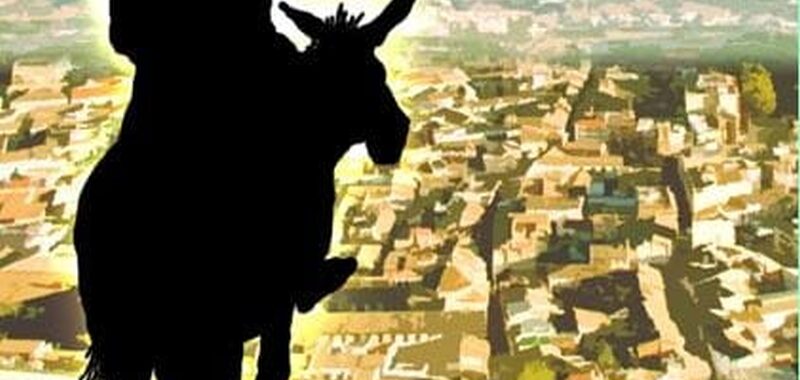
An early childhood memory came bubbling to the surface the other day. It was a child's birthday party and we were playing the classic game of pin the tail on the donkey.

You know the one where you take it in turns to be blindfolded and are then given "a tail"  to pin on a picture of a donkey on the wall.

The results were bemusing, to say the least, and wildly hilarious at best. The tail might finish up pinned to the donkey’s mouth, ear, or right foreleg, in fact anywhere except on the posterior of the creature where it should be affixed. It was great fun and the memory came with a happy little buzz.

As we get older our eyesight can grow dim physically and we frequently wear bits of glass in front of our eyes to help us read literature and enhance our vision.

Sadly though, we can also develop some cataracts over our vision of other people. We don’t see them as clearly as we should. Our vision of them is a little blurry because we might see them through the lens of prejudice or the distortion of past hurts and history. Not all clergy are bad apples. Some are peachy mangoes. Not all who happen to grow up in a particular culture are disappointments.

I have had the undeserved privilege of travelling to foreign countries and I hope that when I leave the natives will say ‘Wow! Those Australians were well-mannered, respectful, friendly, and easy to get on with!’

For when we see others through our own blurry filters we only cheat ourselves of a potential relationship and friendship where all can be enriched and enhanced.

In doing so we are both the blindfolded and the donkey. The creature who has its tail in the wrong place.