
Compassion Enfleshed

Compassion enfleshed.

Today’s gospel is thrilling and action-packed. There is a lot going on. While Jesus travels, he teaches, proclaims, and heals and that’s just the ministry we’re told about. Whew! That’s enough you would have thought but no... Matthew tells us that there is more to do.

Jesus sees the crowds, feels compassion and he does something about it.

He summons his inner circle of disciples and after giving them authority to cast out unclean spirits, and to cure the ill, he quickly dispatches them to continue and expand his endeavour of teaching, proclamation, and healing. Off you go chaps… and because there was no gospel written at the time or Church history, we can skip the theological degree and priestly formation. Learn on the job from your mistakes and rejoice in your triumphs; which is of course what every follower of the Master does. Clergy and laity alike.

But he is also specific about which diocese they are to serve in and who are the first people that they should call on.

“Go nowhere among the Gentiles, and enter no town of the Samaritans but go rather to the lost sheep of the house of Israel”.

And this initiative comes from the Master because he sees and understands that the folk were ‘harassed and helpless, like sheep without a shepherd’.

At first glance it might appear that he is launching his own healthcare program, dealing with the physical bits and pieces and a few nasty demons, but he’s also aware that people feel harassed and dejected. You might have all your bones intact, a great exercise regime and a healthy diet with all the basic five food groups….but… The Master is talking about a different kind of healing here. Jesus' compassion is not limited to illness or the lack of food. His compassionate heart is in response to all those who find themselves in a situation of vulnerability. He is moved by those who apparently live on the edges of society because of illness, disability, ostracism, and social convention that renders some people "harassed and helpless" (9:36), particularly in Judean Jewish life.

We are complex, intricate, multi-layered creatures and Jesus’ response is not just to the physical and spiritual, but also to those who are not seen or heard which is a debilitating and painful illness to have.

Can I put it to you, that often it is the predicament of vulnerability in which a person lives, that allows and almost guarantees that the physical ailments will quickly follow? Here I am thinking of those who sleep on the streets or in their cars. Their health must inevitability deteriorate.

The Master’s call to the 12 is also our call. Our compelling vocation is to recognise that we have been empowered to see particularly the people who are often overlooked and ignored, and then to act on their behalf in ways that address the circumstances that endanger their lives and communities. Seeing, feeling and then acting.

Jesus' compassion for others is always sparked by a single observation, which is… that "others" are "harassed and helpless" and we must do something to address it. What authenticates Christian compassion is the action that accompanies the one feeling it, not just the emotion alone.

It’s one thing to feel compassion but if it stops at the benign comment or the hand-wringing sympathy from afar then it is not true compassion at all.

Every one of us is being called to be a harvester. Each one of us can reach a corner of the paddock that is accessible to no one else. These include our family, our neighbours, our work colleagues and others who come into our life. I may be the only person who brings Jesus with his healing and compassion into their lives.

And of course, there must be times when it feels like nothing is happening, there must be times when we will make mistakes, and there must be tricky times, but then not respond to the multiplicity of needs we see, to just sit on our hands and say ‘Its all too hard’, is not what The Master asks of us.

Compassion must become enfleshed. That is why Christmass happened and it is what happens here at every mass. God becomes enfleshed in simple bread and wine to meet us in our brokenness, to show his compassion. He comes to us so that we may be nourished and sent out into our little paddock to be harvesters for him.

And in a very real sense, it is why we are here. This is our vocation. You and I are to be compassion enfleshed. Living, moving, talking, caring, thinking, breathing people of compassion. We make the invisible love of God, …visible.

We will be most effective though when we celebrate the undeniable fact that our own hands are pierced and our hearts have been broken.

When we can celebrate this, then we will have become …Compassion enfleshed.

Nothing

The sweetness of doing nothing

It was a simple line really. Something I heard in passing from the lips of Julia Roberts in the film Eat, love, pray. It’s also a book by Sophie Minchilli. The words have kind of lingered close to me ever since. The sweetness of doing nothing.

On the surface of it, someone who is doing nothing might be called a sloth,  a recalcitrant or simply a slack toad.

But what if there is something else going on here? What if the person who is stretched out on the lilo or on the couch is just simply enjoying the sweetness of doing nothing? What if they are allowing the body, the mind and the soul to recuperate, rebuild and rehabilitate?

Your brain can only cram so much stuff into it before it says ‘Enough! I refuse to take on any more, for goodness sake write a few notes to yourself and shuffle some of that other ‘essential’ stuff into the coming weeks in your diary.

Further, you should schedule some serious time to just sit and enjoy the sweetness of doing nothing. Like the succulent flesh of a mango the sweetness of doing nothing will not only nourish your body, but also your whole being. Who doesn’t feel better after eating a mango?

And here’s another advantage of savouring the fruit of doing nothing. You are far more effective, far more productive, far more efficient and far happier when you come back to the desk, the yard or whatever your workplace happens to be.

The sweetness of doing nothing is not just a dollop of something nice if you can get it. It is actually essential to your situation, to your colleagues, to your family and most especially yourself. Thank Julia Roberts.

10 Commandments (1st edition)

The first edition of the 10 commandments.

In last week’s homily I hinted that God had to have two goes at writing the 10 commandments. The first lot met a catastrophic end and this is how they came to be destroyed.

Moses goes up the mountain to get the 10 commandments and leaves Aaron his offsider in charge. It must have been quite a trek, or God had rather a lot to say to Moses, or perhaps Moses had rather a lot to say to God.

Suffice it to say, that Moses is delayed and is gone for about 6 weeks.

After all this time the people get twitchy and say to Aaron. “Come, make gods for us; as for this Moses, we don’t know what has become of him”

Aaron thought. Yeah, good point. .. What could possibly go wrong?

So Aaron says ‘Take off all your gold and bring it to me.’ Aaron forms a mould and casts the image of a calf. The people are delighted and say “Voila! This is our God who brought us up out of the land of Egypt.” Aaron throws a party to celebrate with burnt offerings and in a rather intriguing line ‘The people sat down to eat and drink, and rose up to play’.

Meanwhile, back on the mountain, God gets to hear about this and he is not happy. He’s been usurped by a hand-made golden calf. So he says to Moses ‘Go down at once! Your people, whom you brought up out of the land of Egypt, have acted perversely; they have been quick to turn aside from the way that I commanded them; they have cast for themselves an image of a calf, and have worshipped it and sacrificed to it. Step aside Moses so that my wrath may burn hot against them and I may consume them.’ I told you he was grumpy.

Moses goes in to bat for the people and points out to God that this would be bad PR.

‘Hang on a minute God…Why should the Egyptians say, “It was with evil intent that God brought them out to kill them in the mountains, and to consume them from the face of the earth”? Turn from your fierce wrath God; change your mind and do not bring disaster on your people.’

So the Lord changes his mind and Moses goes down the mountain to sort it all out.

 As soon as Moses came near the camp and saw the calf and the dancing, his anger burned hot, and he threw the tablets from his hands and broke them at the foot of the mountain.  He took the calf that they had made, burned it with fire, ground it to powder, scattered it on the water, and made the Israelites drink it.

Then he interrogates Aaron.

Aaron’s response is a classic.

You know the people, are bent on evil. They said to me, “Make us gods, who shall go before us; as for this Moses, the man who brought us up out of the land of Egypt, we do not know what has become of him.” (So it's their fault. They came to me). So I said to them, “Whoever has gold, take it off”; so they gave it to me, and I threw it into the fire and out came this calf!’

In other words, the people have always been a bit wicked, you were gone for such a long time (so it’s sort of your fault too Moses) and well .. the people whinged to me for so long and we just threw the gold into fire and Hey Presto, Abracadabra, out came this calf. You can’t argue with that… Can you?

There’s a bit more mopping up in this story, but I want to draw out the following points.

First, the inability or at least, the desire to sit still and wait patiently for the Lord is a very difficult thing. For some reason we expect God to be just as busy as we are. But it would seem that for God, not every day has to be crammed filled with action-packed miracles.

Secondly, remember this bit?

‘Moses took the calf that they had made, burned it with fire, ground it to powder, scattered it on the water, and made the Israelites drink it.’

Just as we enjoy savouring the fruits of the Holy Spirit… love, joy, peace etc. we sometimes find ourselves tasting the fruit of our foolishness and the taste we discover is not at all pleasant.

There was an echo of this in a speech by President Kennedy in October 1962.

“We will not prematurely or unnecessarily risk the costs of worldwide nuclear war in which even the fruits of victory would be ashes in our mouth”

Thirdly, With Moses and the Cloud of Presence gone, the people craved a visible, tangible something. They also needed a place to gather, to offer worship and sacrifice.

Our ache for the physical, touchable, and seeable is fulfilled and finds its completion in, the incarnation. God giving his physical, touchable, seeable Son because he knows how fickle we can be.

And here at this altar once more, He gives himself in palpable, touchable, broken bread and wine poured out. He gives of himself not in a flashy golden calf, but in little defenceless things because only the fragile and the helpless and the feeble things meet us just where we are. It is this powerful self-emptying love that transforms us into Him, even as He is transformed into us, as He always was and always will be, forever and ever Amen.

Of Kate and Doug

Of Kate and Doug

In the Adelaide Botanic Gardens, we chanced upon a bamboo plantation. Pretty much every trunk had some names, dates and love hearts carved into it.

One of them proudly announced that Kate and Doug were absolutely smitten with each other. Well… at least they were on 1/2/18. That was five years ago and it left me pondering a few things.

First I am delighted that these two people had discovered each other and were enjoying each other. The world could do with a lot more of this gooeyness.

Secondly, I have to admire the way they made their adoration for each other so very public. And not just Kate and Doug, but a whole lot of other people had unashamedly put their passion for each other on display.

But then I wondered … what had happened to Doug and Kate? Let's say they were eighteen at the time of their carving, that now makes them twenty-five. Did they go on loving each other? Did they marry, make children or did they separate painfully or worse maybe one had died suddenly and tragically?

I’d like to believe that they went on blissfully for the next five years. I reckon that there would have been arguments and disappointments, as well as champagne and kisses. But of course, I have no way of being sure.

But the one thing I do know for certain is that on 1/2/18, in the Adelaide Botanic Gardens, Kate and Doug were together, they were in love and they were not ashamed to profess it.  And they have left an inspiring and lasting legacy not only on the bamboo trunk but also for me. For when grumpy things begin to gurgle and bubble in my being, I stop and I remember Kate and Doug.

Lections

The folk who choose our readings Sunday do not choose them by random. There is a goodly amount of thought that goes into this process.

When you look closely you can often spot the theme. For example today it is all about God revealing himself and we also discover that there is work to be done.

In the gospel the disciples are sent forth to go and make disciples of all nations, baptising them in the name of the Father and of the Son and of the Holy Spirit. So we learn that God is Father, Son and Holy Spirit and the work to be done is to baptise all nations. We also learn that He surely is with us always, to the very end of the age.

In the first lesson, Moses is asked to bring two fresh tablets of stone so that God can write again the 10 commandments. (In next week's enthralling homily we’ll be learning what happened to the first draft of the 10 commandments.) Moses has some work to do and we learn something of the nature of God.

The Lord, the Lord, the compassionate and gracious God, slow to anger, abounding in love and faithfulness, maintaining love to thousands, and forgiving wickedness, rebellion and sin.

But there are other links between the first lesson and the gospel reading.

First, the invitation to be with God is fairly limited and I guess that is what makes them so precious.

In the Old Testament lesson, it's just Moses and the Lord.

In the gospel, it's only the 11 and The Master. That’s it. No great crowds, no thousands of people waiting to go into the bistro where fish and loaves are on the menu.

And notice the location for both of these events. It's on a mountain.

In the first lesson, it's Mount Sinai. In the second lesson, it's umm… well we are not actually told the exact location. It's simply ‘the mountain’ where Jesus had told them to go.

In both stories, the meeting is set up well beforehand.

In both stories, God is encountered. And as I mentioned on both occasions there is work to be done. We are not supposed to just bask idly in our near God experience. So where is your mountain?

We are indeed fortunate to have the Grampians in our very backyard and I know many of you go exploring them and enjoying them as well as we should.

But your mountain, the place where you encounter God might actually be anywhere. It might be at Church, or it might be the back garden, or it might be … dot dot dot here insert your own ‘mountain’.

Now I have to confess that I am more drawn to the Moses story than I am to the Jesus story today.

For one thing, There is a wonderful back story as to why Moses has to go up with a second lot of tablets for God to write on. The first two tablets met a ferocious end… you can read all about it in Exodus 32.

Further, the imagery of these tablets can be unpacked and reflected upon in several ways.

Sometimes like Moses, we have to have more than one go, or we have to have several goes, or a lifetime before the finger of God writes his commandments upon our hearts, our minds and… this is the really hard bit… upon our lives. It's one thing to read the commandments, another to academically understand them and it's something quite different again to actually live them. No sooner do we understand and want to live them, than we find ourselves distracted to disobedience. Not necessarily because we go out of our way to be wicked, but because we tend to have a bias for naughty things. We find them tempting and alluring.

Moses took two blank tablets up with him onto the mountain and I wonder what we bring with us today to God. What is etched onto our souls that we cannot leave behind?

Often, For me, it is what I affectionately but frustratingly call, the ‘scribble of distractions’. Petty, irrelevant things that can disfigure and frustrate me. They have no place on the mountain.

But it might be worth asking… what do you bring and from what place do you bring it? Is it something from long ago and far away, or a recent dilemma or skirmish?

I suspect that it is only when we go up to our mountain, wherever and whenever that might be, with a completely clean slate and wait patiently for God to write what he wants to write, what we need to learn; It is only then that we can discover who God is and what he wants us to do.

So for your reflection, you might want to ask what God wants to write onto your soul. What are the imprints that he dearly needs to stamp upon us? A few guesses. Love of our neighbour. Commandments 6 - 10

Love of Him, Commandments 1 - 5 or the Readers Digest abbreviated condensed version

Perhaps it is just a simple cross.

Bubbles and Bombs

Of bubbles and bombs.

In the Botanical Gardens of Adelaide, we chanced upon some white chairs neatly arranged and a table set just to one side. This was obviously the setting for a wedding.

It was a quieter area, out of the way a bit. Around the corner, there was a large marquee with people and beverages and music. Spritely adolescents sashayed with silver trays of delicious-looking morsels. The sound of conversation and laughter rose and fell. For a few precious moments, you could believe that everywhere and everything was as it should be. The world was a sweet and fragrant place to be.

But the news on the screen that morning had been pessimistic. Russia and Ukraine were still not at peace. People were fleeing everything they had known and everyone they loved, just for the chance to live. ’Reconciliation’ was still an elusive dream.

The two realities seemed to be at odds with each other even as I tried to hold them in loving tension. I was aware of both great love with a fantastic party while on the very same planet, death and destruction stomped all over my hopes and crushed them heartlessly into the rubble.

I thought of that custom now where people blow bubbles instead of throwing paper confetti. Bubbles in Adelaide and bombs in Ukraine. Give any sane person a choice between these two and they will always choose bubbles over bombs. Champagne over muddy drinking water, food over meagre rations. We must always choose relentless love instead of rebellion and revenge.

The oasis in the Botanical Gardens, where two people would say ‘Yes’ to bubbles and No’ to bombs. Where they chose to write selfless blank cheques with their life to each other, instead of choosing to write each other off.  There is hope, I thought. We must always choose bubbles, not bombs.

Of 2 Masterchefs

Of Two Masterchefs

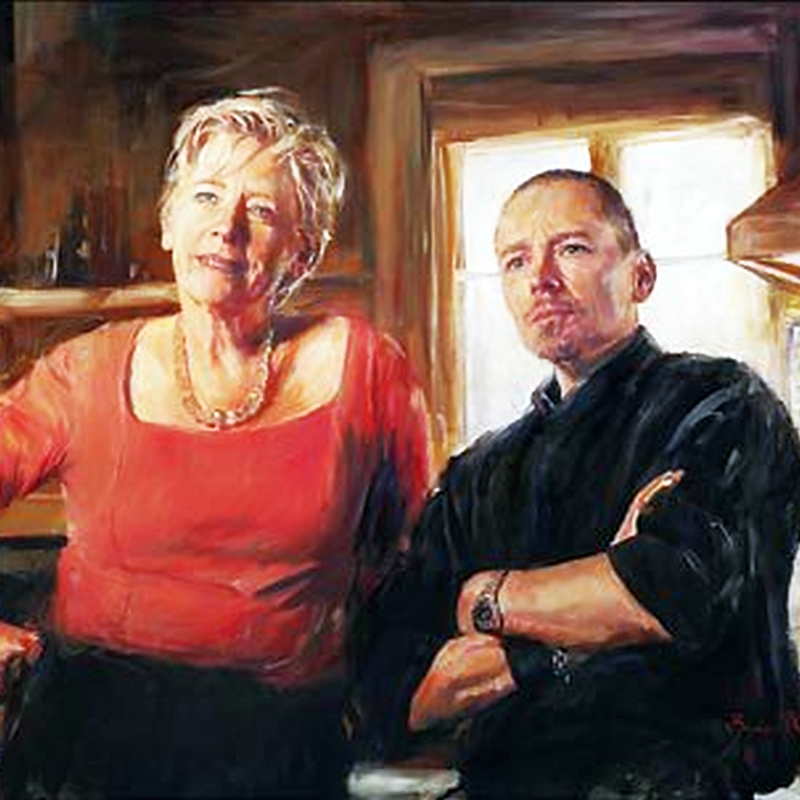
And so they came to our place. Two Masterchefs who unobtrusively simply worked gently together in our kitchen to prepare a different sort of meal for us.

The plotting of this meal had begun long before with the purchase of exotic ingredients. Then there was much chopping and dicing and preparation. The aromas seduced our senses and all of a sudden we were hungry and very ready.

The meal of course was sensational. Every meal you don’t have to prepare for yourself has an extra ‘zing’ but in and of itself this one was fantastic. We even tried relentlessly with our chopsticks with varying degrees of success. (That’s me putting it politely and being generous about our ability.)

But the real delight was not just in the eating. The thing that I want to rave about is how well these Master chefs complemented each other during the preparation and cooking process. There was a gentle ebb and flow of questions and answers. A delightful burble of complimentary conversation. No one was the boss and no one was the underdog. Both used their knowledge and expertise to enhance each other, the process and ultimately the food which was relished and enjoyed.

So here’s the thing… How good would it be if this spirit of cooperation and teamwork were to spread into the workplace, into our community, our nation and the world? Where everyone's gifts were appreciated and enjoyed. Our planet might become a place where all are honoured and everyone’s gifts are used to enhance everyone else. A place where our food was plentiful and no one went hungry for praise and enhancement by the other.


In short …Why aren’t we doing this?

The God of Surprise

Pentecost - The God of the Surprise.

We worship a God who surprises us. Who, when we reflect as always surprised us and continues to do so. In the second reading from Acts the Holy Spirit comes like a wind and a flame and the disciples' lives are transformed. You would be surprised at their transformation.

And in the Gospel, we read that the disciples of Jesus were hiding. They were hiding in fear behind closed and locked doors. They were shutting out the rest of the world which was hostile, persecuting and terrifying. They felt better huddled together, in isolation and planning what to do next, and where to go.

And then, Surprise! Into their isolation, Jesus comes. Through closed doors, He walks. Their reaction must have been one of surprise, then joy as they realised who it was. Jesus tells them to get out of their isolation and fear, and go and announce the good news. You are the bearers of the Gospel, the announcers of salvation and forgiveness. You must go, you have a mission.

But they are scared and unsure, so Jesus promises them the Holy Spirit because the Spirit will enable them to do what they cannot do themselves. The same Holy Spirit who brooded over the waters when God made heaven and earth. The same Holy Spirit who spoke through the Old Testament prophets. The same Holy Spirit who overshadowed a young girl and made her the Mother of God. The same Spirit would descend upon the Apostles in tongues of fire, and transform cowards into heroes.

That was then: does this happen now? The surprise of the Spirit in a cynical age? Perhaps it might help if I refer you to one of my heroes called Mother Teresa.  She originally belonged to a community called the Sisters of Loretto, which is a cloistered teaching order. That is they didn’t go out into the community at all. She was sent to a community school in India. It was 1947, and India became independent.

As soon as that happened there was a civil war. For the first time in fifteen years, Mother Teresa had to leave the cloister just to find food to feed the nuns. That day, over five thousand had been killed, and fifteen thousand wounded. Mother Teresa came back to her cloister a changed woman. Out of fear, the sisters would not leave their convent again, but Mother Teresa said she felt the Holy Spirit calling her to do something about what she had seen. So she did something unheard of: she asked to leave the cloister to live among the people. Surprise!

She moved out and found that the sick and the dying were everyday events. The turning point came when she found a woman dying on the streets. Mother Teresa went in search of help but there was no one, no hospitals, and no place to care for this woman so she took her to her small rented room, and took care of her.

Soon someone gave her a house. She gathered more poor and dying people from the streets slowly at first, but then she was overwhelmed by the poor. But more volunteers came, and more houses, and surprise… now there are 3,000 Sisters of Charity all over the world.

In her biography, Mother Teresa speaks of surprise. At her age, time and place, would she, could she do something different, be someone different? She was like the Apostles hiding behind the closed doors of her cloister. She said Christ surprised her. He came through the locked doors and breathed His Spirit on her. He called her to a second vocation.

The Spirit is full of surprises. We have to admit that secularism and affluence have muted the presence of God in our part of the world, but all is not lost. History has shown us that even in our worst moments, Jesus’ ever-present Spirit can break through and raise up saints who turn things around. They call us back to the Gospel and give us hope.

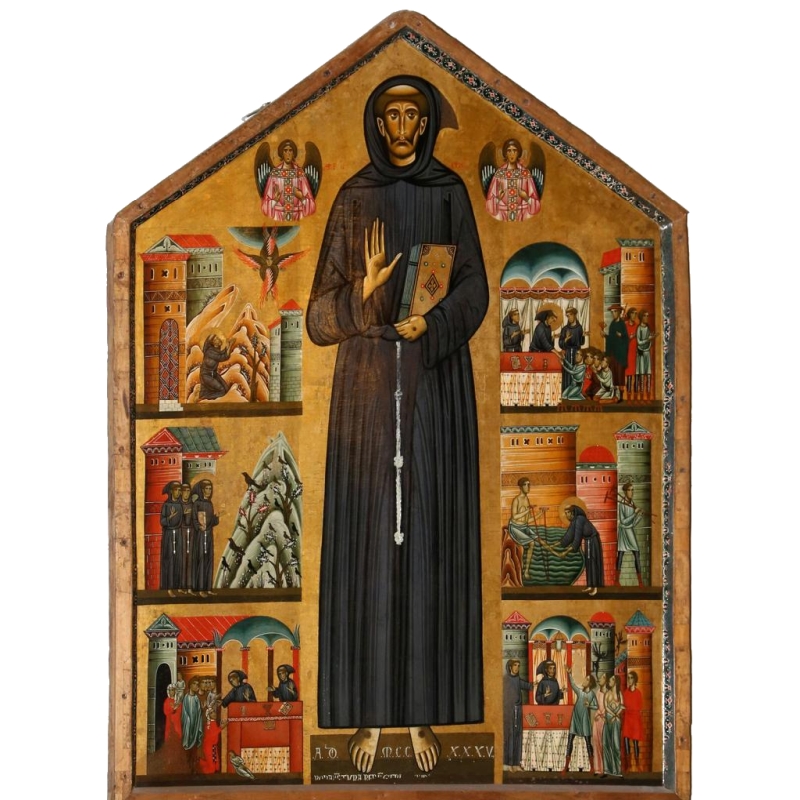
A Francis of Assisi pops up out of the moral mess of the twelfth century. Maximilian Kolbe steps forward from the Nazi madness to die a martyr. Rosa Parks says no to racial prejudice and refuses to move to the back of the bus. Nelson Mandela rejects apartheid and goes to prison for twenty years.

Ascension and Pentecost tell us that God is still present, still speaks, still sends out disciples to make a difference, and still calls. Not just St. Francis’ and the Kolbe’s and the Park’s and Mandela’s, but you and me. What Jesus said at Ascension still remains valid and indispensable: You be My witness. We are the Church, and what we do the Church does. And what we fail to do, the Church fails to do.

Be God's surprise… for the Church, for others and for yourself.

Gossip and Eavesdropping

Of Gossip and Eavesdropping 21/5

As a child, I have a very vivid memory of toddling down the hallway to go to the toilet in the middle of the night. My parents were in the lounge room and they didn’t hear me but I could hear them talking. I knew that I wasn’t supposed to be hearing this conversation because they were talking about..little old me. I was surprised by two things. First, they were talking about me and secondly, I was thrilled by the content of their discussion. They were saying all sorts of gooey things about me, but also expressing their worries. It felt a bit wicked, sneaky and delicious and I kind of knew that I shouldn’t have been listening and yet I really wanted to stay and hear more.

Later on, I would learn that overhearing a conversation like this was called eavesdropping and much later on I would have exactly the same sort of conversations about our children.

Today is the Sunday between the Ascension and Pentecost. Jesus has ascended into heaven and the Holy Spirit has not yet come with its flames and wind.  In this subliminal time, our Lectionary feeds us a text all about Eavesdropping and we get to overhear a conversation between Jesus and his Father. We are reminded that although Jesus has gone away physically and is now at the right hand of God the Father Almighty, the power of God the Father Almighty is also right here with us.

John 17 gives us the chance to “overhear” an intimate conversation between Jesus and his Father.

When you think about it, it’s rather stunning to realise that we are privy to a conversation between two members of the divine Trinity.   That alone is a signal that the things Jesus is praying about are already true: namely, that thanks to Jesus’ ministry, we have gained access to the God of the universe.   Jesus asks the Father to be mindful of us, to protect us, and the mere fact that we get to hear Jesus ask for this is proof that this is going to come to pass.  Indeed, it’s true already!

That’s why we get to hear all this.

Sometimes eavesdropping is a bad thing of course.   To consciously search out information that is not rightfully ours and then to use that information to our advantage… Well, you get the general idea.

But sometimes when you overhear a conversation, you hear people you love saying really wonderful things about you.  And when that happens, you feel great. Be careful of the information that you accidentally hear and how you use it. Ask yourself... ‘Do I really need to do anything with this information’? ‘Really??’ In today's gospel I think that all we have to do is simply rejoice and be delighted.

Gossip can work the same way. It’s one thing to tell the world about the birth of a new child with the consent of the ecstatic Mum and Dad. It’s quite another to let the world know that Mr Bloggs’ car was parked outside Mrs Smith’s house all last night and we all know what that means… or do we??

This solemn reminder needs to resound loudly and frequently to clergy and laity alike; Particularly in this stage of electronic history when we can send information to multiples of people literally right around the world in a few seconds. And once it’s sent… it’s out there, printable, there forever. And it can then be sent to an uncountable number of people and forums.

Might I encourage you in general and myself in particular to guard the information we hear with what I will call S.P.C. Severe Protective Custody? Also, it's not an entirely wicked thing to accidentally on purpose let it slip that what-their-name is just wonderful in the way that they… here insert their particular skill or something encouraging.

But back to the sheepish little boy in the passageway. My parents are both now on the other side of the grave. This does not stop them from loving me any less. In fact, sometimes I suspect that they love me more in a different potent way because they are in the nearer presence of God.

Perhaps their conversation with each other and with God has never really stopped.

But then what is true of me is also true for you.

For your reflection you might like to think about and be comforted by those who you love who have temporarily disappeared but are still loving you, still talking about you, still enjoying you. Perhaps the experience of death does not quash love but rather sends it rocketing into another dimension that is unassailable and triumphant.

So what are Jesus and His Father talking about today, right now? What if we could eavesdrop on the conversation they are having at this very moment? What might they be talking about and what would happen if we could eavesdrop on their chatting and then gossip relentlessly about it? Is this what it means when we say …Therefore with angels and archangels…?

Kitchen Sink

It all happens at the kitchen sink.

One of the most significant places in the whole home is the kitchen sink. There, with hot water and detergent, several vital things are happening simultaneously

First, the dishes are washed. You can’t just let them pile up and fester into gunky science experiments. There’s a whole O.H.& S Arch folder of reasons explaining why the dishes must be cleaned. Hygiene, detergent and microbes are part of this vital document.

Secondly, like mowing the lawn and trimming the hedge, you can actually see where you’ve been and what you have accomplished. There is a great smirking sense of satisfaction when you can put away shiny dishes knowing that you have been responsible for making something shiny.

Finally, and this is the really good bit, people talk to each other over the kitchen sink. It works especially well when one does the washing and the other stands next to them to do the drying and putting away. There is teamwork, there is cooperation, and there is conversation. A menial but important common task is accomplished together and the relationship is stretched, enhanced and enriched. I once knew a Bishop who understood this very well. He would always volunteer, almost insisting on helping with the dishes. I always used to think ‘Good Golly Gosh’ what a humble Bishop. How lovely and gracious. It wasn’t until years later that he fessed up and revealed his ulterior motives. By the time we got through the salad servers, the dinner plates and the whiskey glasses, he knew me better than I knew myself. He was a very good Bishop indeed.

So, while the kitchen sink might not seem particularly glamorous and sexy, it is where splendid intangible things occur. Do not shy away from this place.

Long Distance Relationships

Of a long-distance relationship.

Most of us are living in some kind of long-distance relationship. All our friends and family don’t just happen to live conveniently down the road in our community. Today's gospel has to do with living in a sort of long-distance relationship.

In order to put the reading into a helpful contextI want to go back to the Last Supper where Jesus has been telling the disciples about his coming departure. This raises for them the disturbing prospect of separation from the Master who they have grown to love so much.  In years to come the head of the table knows that the disciples will feel like “orphans.” Sure, Easter will be a joyous reunion, but the resurrection appearances will not continue indefinitely. As the years pass, people will be called to believe in a Messiah they have never seen or heard. Jesus’ words and actions will be conveyed to them through the tradition of the church in a world that may seem indifferent at best and hostile at worst.

In today's passage, Jesus anticipates the Easter moment when he says, “I will not leave you orphaned; I am coming to you” and “Because I live, you also will live” Our Easter message is that life rather than death has the final word, and this is crucial for our faith. In John’s gospel, faith is a relationship with a living being. For there to be authentic faith in Jesus, people must be able to relate to the living Jesus–a Jesus who is not absent but really present. Otherwise, faith is reduced to the memory of Jesus who died long ago.

But here is the conundrum: Why would anyone work so hard at a long-distance relationship with a Jesus who they cannot see? The honest answer is that no one would believe it–apart from the work of the Holy Spirit. For it is the Spirit who makes the presence of the living Jesus and his Father known.

Coming to faith and forming a relationship (long distance or otherwise) is like falling in love. You can’t fall deeply in love with an abstract idea. Love comes through an encounter with another living person. The same is true of faith. If faith is a relationship with the living Christ and the living God who sent him, then faith can only come through an encounter with them. And the Spirit is the one who makes this meeting possible.

So the Holy Spirit who Jesus promises to send is part of the answer to keeping the long-distance relationship aflame. But, can I put it to you, that in the day-to-day business of living a long-distance relationship, there is something else that is helpful? And what I am about to say may sound a little weird but bear with me on this.

We learn to live this long-distance relationship not just by the lovely intimate moments when The Master seems close to us, where everything is perfectly balanced, where everything is stable and reliable, but we also learn to love in the times when we are off balance, the times when we make blunders and are honest about our need for correction. If the twelve disciples are an example of anything, it is the universal art of making mistakes while journeying alongside God.

And it is in those times when we are called back when we realise that we are looking the wrong way at the wrong thing and actually we have been doing so for a long time; it is in those times when we have our errors pointed out to us that we come especially closest to him. It is in those moments when we say “Oops” or similar other words, that the long-distance relationship is not thinned and fractured as we might think, but it is actually strengthened because it is precisely in those moments that we know the joy of forgiveness and reconciliation.

Something else that is helpful with our long-distance relationship. That politically incorrect theme ‘obedience’ occurs at the start of today's gospel reading…

“If you love me, keep my commands.”

And it will occur at the end of the gospel reading.

“Whoever has my commands and keeps them is the one who loves me.”

If you like, today's gospel is a sandwich between two pieces of ‘obedience bread’ with a tasty morsel of reassurance in the middle.

Obedience and keeping the commandments are ‘the how and why’ others take notice of us. When they see that we are obedient when they hear us not only saying ‘Yes…welcome’, but also when they hear us saying ‘No, I choose not to do this, not to say this’. When they see us choosing to speak out for the marginalised, the disenfranchised and this is the confronting bit… when they see where we put our hard-earned cash, then they really take notice. Then, we give them something to think about, especially when they understand that we are doing so because we are enjoying a long-distance relationship with an unseen God.

Long-distance relationships are often lonely so as we walk confidently forward, I leave you with some of the Master's words of assurance and comfort.

‘I will not leave you as orphans; I will come to you. Before long, the world will not see me anymore, but you will see me.’

ANZAC Day

My questions of Anzac Day

So we gathered around the cenotaph against a spectacular backdrop of golden and russet autumn leaves and to the murmuring hum of the local community.

The wreaths were laid, the last post rang out and prayers were offered. In an unexpected and humbling gesture, I was asked if I would like to march with the folk. For a fleeting instant, I wondered if that would be appropriate. There was a family rumour that someone in my background had gone to Vietnam, but not much was spoken about this and I didn’t think it was my place to ask.

So would I march? Clearly, the local RSL gentlemen were comfortable or they would never be offered this sublime gesture. It was an undeserved privilege and I tried to keep in step with my gangly three left feet.

As we strode along the road I thought of those very young boys, who, not all that long ago, had also strode along the streets of their community.

So here are my questions about the day that is always poignant and sad and magnificent. I have never found answers to any of these questions but then perhaps I am not supposed to.

As these young men marched… were they excited, nervous, terrified, thrilled, proud or a combination of everything and other emotions that have no words?

We have learnt how to put a man on the Moon and a vehicle on Mars. We have mapped the human genome. We know how to do brain surgery and donate organs to one another. How come we have never learnt the secret of peace?  Has the wholesale slaughter of farm boys taught us nothing?

And on a crisp autumn day as I am walking along and the sun is shining and I am surrounded by a marvellous community and everything seems so right…then why am I crying?