11 August 1024
The bread of humanity, the stuff of God.
The creators of the lectionary had me stumped this week. In the first lesson, we have the heart-wrenching story of King David learning that his son Absalom has died a grizzly death. The details are all printed in the pew sheet in graphic detail. It would be the sort of macabre demise that would delight the most voracious journalist and feed the daily news cycle for a good couple of days, pushing aside anything else that was purporting to be news in the local area.
The Cushite who brings this news to King David has no idea that Absalom is David’s son and actually thinks that Absalom is the king’s enemy. So it is with fierce glee that the Cushite reports.
“May the enemies of my lord the king and all who rise up to harm you, be like that young man.”
King David of course is crushed. ‘He went up to the room over the gateway and wept. As he went, he said: “O my son Absalom! My son, my son Absalom! If only I had died instead of you—O Absalom, my son, my son!’
You can almost hear the King’s sobs and words. It rings disquietly and grimly authentic. Maybe you have heard something similar. Maybe you have said something similar.
Then in the gospel reading for today, we get a hefty wedge of John’s bread of life discourse with more to follow next week. The Jews are grumbling because The Master is saying some complex things. Jesus is misunderstood and all he really wants to do is feed his people with the gift of Himself.
So what common theme might these two readings have? Fr. David will have to try to connect the two together on the flimsiest of pretexts.
The death of Absalom has a few faint,… OK very faint, echoes of another death. Absalom dies upon a tree. He dies pierced and he dies at the hands of others. Sound familiar? Absalom, the departed is also the son of a King although this is not widely known at the time. It will be much later when this truth emerges.
But there is also another connection. The brokenness of Absalom and the brokenness of King David are part of the brokenness of the Eucharistic bread that John is referring to in his gospel where Jesus is playing a tough gig to a grumpy crowd.
Or let me try and put it another way. The only thing that begins to make sense of the shattering of Abaslom and David, and the times we are crushed, is the bread that is in pieces on the altar. It is there on the altar, on the paten and in the ciborium, that we glimpse the reality that His brokenness, is our brokenness, is His brokenness.
This does not take away King David’s pain, nor does it stop our tears, but the beginning of our healing is to realise that he is not a God who holds himself aloof when we need him most. He does not hold us at arm's distance but rather wraps his arms around us as we weep together. For as long as it takes, for as often it takes.
Perhaps the wounded and pierced Messiah is the one who can turn the grieving King David’s words “If only I had died instead of you” into victory, for the Master did die for us.
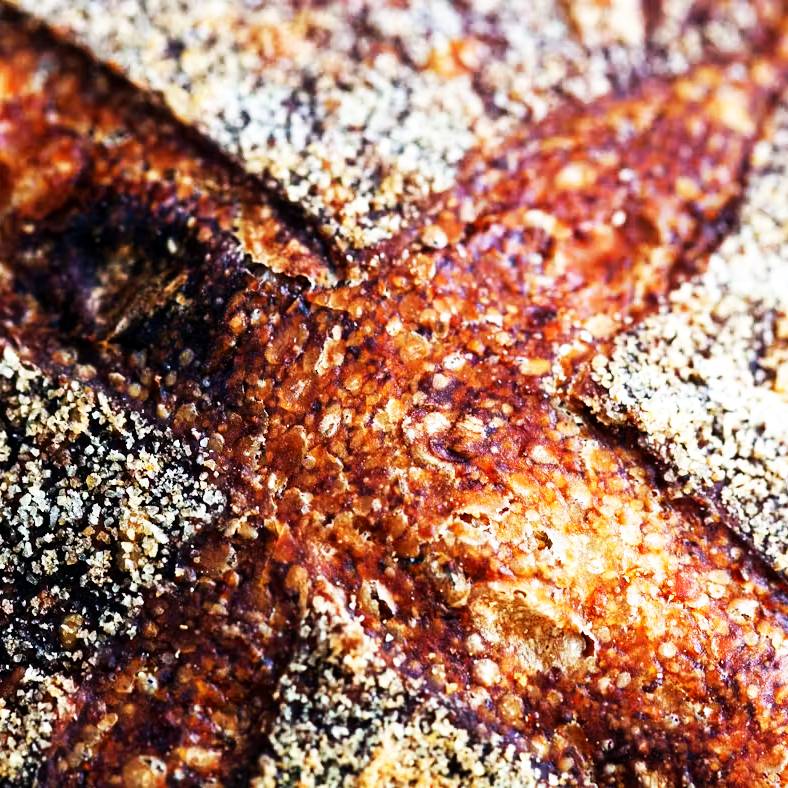
The bread which is Him on the altar does not somehow fix things and make it all better. The bread is still broken and once its broken you can’t somehow put it all back together again and magically make it as it was before.
King David's life cannot be as it was before he learned of his son's death.
At the altar, we understand again that our afflictions no matter our small or bewildering, are in fact sanctified. They are made holy, they are taken into that other dimension, His dimension. Our humanity is taken into his divinity and we are transformed, morphed and we can never be the same again.
One of the options when we bless holy water is to add salt as part of the ritual. Not just to remind us that salt is a cleansing agent, but also as a symbol of salty tears which are the most authentic form of prayer we can offer.
For the 30 years before today’s misunderstanding between the Jews and Jesus, the Master partook of the bread of humanity. In his daily meals, in the worship at the synagogue, in the meals of mourning, banquets of feasting and wedding receptions. In the hurdy gurdy dancing and in the laughter, in hidden weeping and the tedious grist of daily humdrum life. For 30 years he consumed our daily bread.
It is understandable to come to Him, wanting Him to turn back the clock and make things as they were. We come embarrassed by our scars and emptiness.
He comes to us, to show us that our scars are actually beautiful. Our tears are exquisite, and we have all we need and more. In Him we see what we are now and what we can be into the future.
The bread of Humanity / the stuff of God. The bread of God / the stuff of Humanity.