16/8/26
Of Homecoming
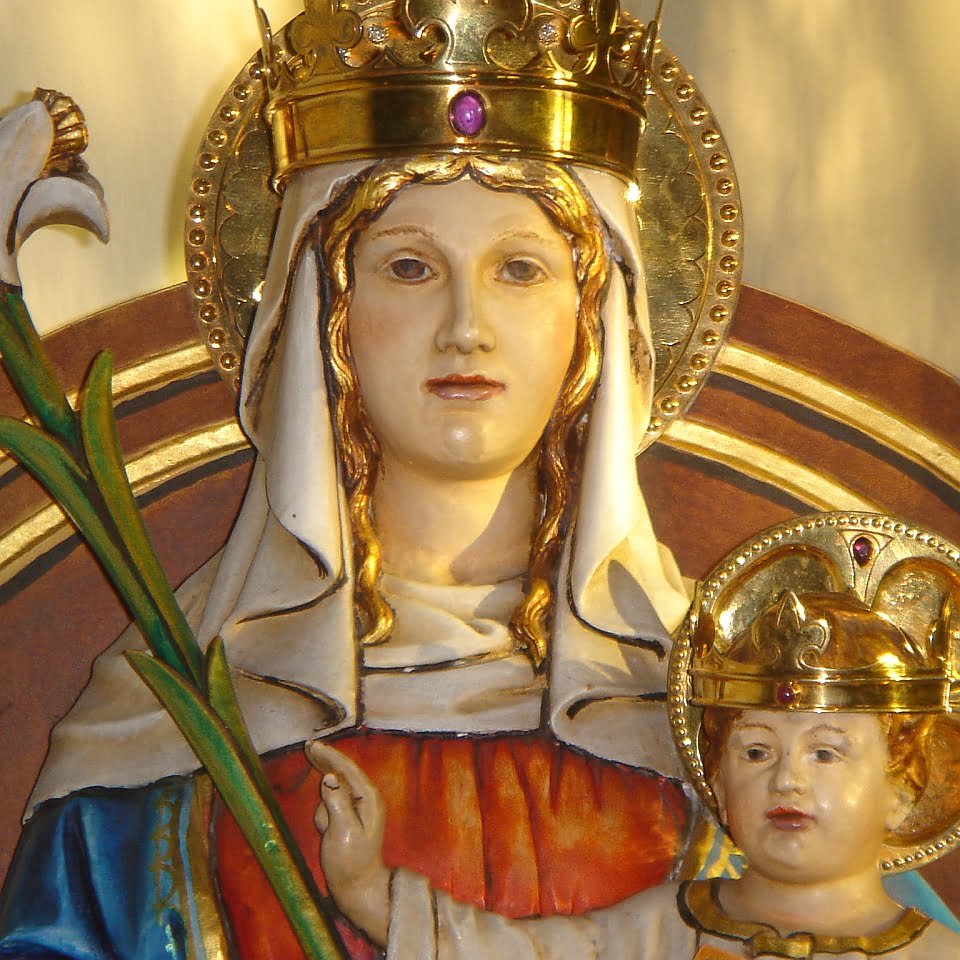
At this time of year, there is a curious day in our lectionary called Mary Mother of the Lord.
Our Roman Catholic brothers and sisters call this ‘the Assumption of Our Lady ’, and our Greek Orthodox brothers and sisters call it "The falling asleep of the Blessed Virgin Mary."
It's a day that we know must have happened. The day when the Mother of Our Lord died a physical death. There are at least two possible points of view.
One says that when she drew her last breath, Mother Mary was assumed body and soul into heaven. Much like our Elijah catching a ride on the chariot or Our Lord ascending into heaven.
The other says that she went to heaven after she died, much like you and I plan to one day.
I don’t think that it really matters which theory you subscribe to, but what does matter is that Our Lord and his mother are in heaven, united together in the love that they shared while they were here on earth. Today reinforces our understanding and enhances the teaching that love and life really do continue beyond the grave with those who we miss and cannot see temporarily.
For those who might be squeamish about such popery, a couple of simple little sayings might help.
One from a friend of mine who once quipped but quite seriously said
‘You can’t say I love you Jesus, but your mum's a dead roman catholic’
or
‘No Mary… no Jesus. It’s as simple and as mysterious as that.’
Or
‘If Mother Mary is not in heaven with her son, where exactly is she?’
This day should be a day of great hope and reassurance, for if a lowly teenage peasant lass can make it to heaven, then goodness gracious there is hope for everyone here today and those who are not.
But my feeble attempts to explain something of this beautiful and exquisite day were completely gazumped by somebody who had been saying their prayers a lot longer than I. They saw the reunification of Jesus and his Mother as a kind of ‘homecoming.’ Now how come I didn’t have the insight to see it that way? Perhaps it might be helpful to think of the next funeral we attended as a kind of homecoming.
Sister Carol Wildt in France wrote:
‘I picture the Assumption of Mary as her homecoming! Having completed the mission of her earthly life and longing to be with Jesus and Joseph, Mary is now reunited with her son and her husband. What a homecoming that reunion must have been like!
I also find myself wondering how Mary’s Assumption affected John and the other disciples. Mary was no longer physically present with them; they could not see or hear her, they could not confide in her and seek counsel from her. What a challenge to their faith in Jesus and His promises. With Mary’s body literally gone and no burial site to visit, there was no physical reminder of Mary, only memories and, at times, an unexplainable presence.
In our own day, many of us have met or know of persons who have experienced the loss of a loved one as a result of war, accident, violence, unknown circumstances, etc. and the body is never located. The feast of Mary’s Assumption gives hope and consolation to them as they grieve and mourn the loss of their loved one, believing that the person is not lost or annihilated, but enjoys eternal life with their God who loves unconditionally.
The Assumption symbolises for me the fulfilment of Jesus’ promise, “I go to prepare a place for you.” This scriptural quote speaks to me of transition. In these days of transition, Mary’s Assumption brings hope and a deepening realisation that present life, with its challenges, joys, struggles and dreams, is not the definitive heaven we seek. As the funeral liturgy states: Life is changed, not taken away. If I, like Mary, continue to walk the path of my baptismal and vowed commitment wherever God leads me, I, too, will be raised and reach the place that Jesus has prepared for me.
In several weeks, the global community will observe the 80th anniversary of the beginning of World War II. This period of history saw millions of people die as a result of genocide, concentration camps, slave labour, and the numerous evils of the war. The war showed the world what happens when the human person and human body are not valued and are perceived as unworthy of life. Mother Mary is a powerful statement that the human person and the human body are sacred and will be glorified for all eternity. God’s creation of each person (including you and me) is very good.
While the Assumption signifies God’s crowning of the creation of Mary as she ends her earthly life, it also signifies for me that I hope to follow her when my earthly life has ended. You and I can celebrate the hope of reaching heaven and living with the Trinity just as Mary has. My deepest hope is that following in Mary’s footsteps on the path that God has laid out for me will bring me to my true home and that I, too, will celebrate a homecoming with God, family, friends and all who I hold dear.’