Advent 3
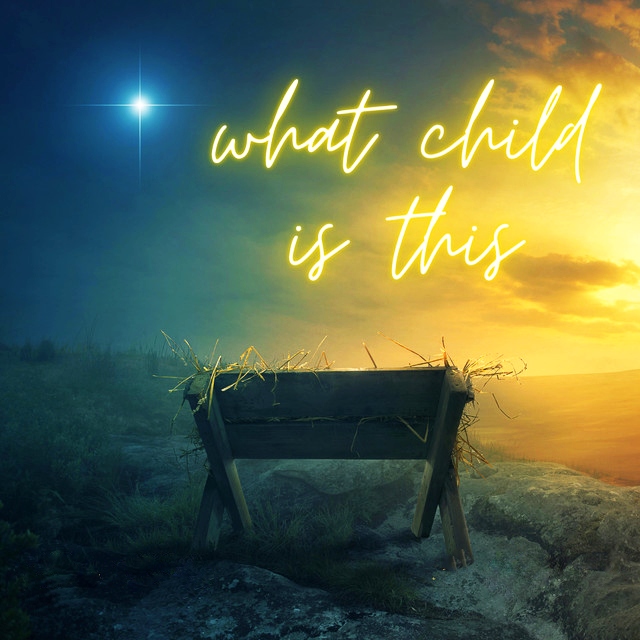
What child is this? …What child indeed?
We are reflecting on the words of some of our Advent and Christmass hymns this Advent. We sing them lustily and so frequently that we can easily forget that the words have something to teach us. The best hymns make us think a lot.
Today I want to unpack some of the words of that classic carol “What child is this?” I’ve put the words in the pew sheet so you can see the clever way the hymn is constructed. It comes to us in a question-and-answer format.
So who wrote this masterpiece?
A gentleman by the name of William Chatterton Dix in 1865 when he was just 29 years old. It was during this time that he suffered a near-fatal bout of sickness with depression. If you like, he very nearly died.
It was in this very dark time that he actually experienced a spiritual awakening that inspired him to start crafting hymns. A better-known hymn that He also wrote is ‘As with gladness men of old.’
The hymn itself speaks to us about the visit of the Shepherds during the birth of Jesus. The lyrics are structured around a series of questions and answers, with the questions reflecting what the shepherds might have been asking when they encountered The Master in the Manger. The hymn's melody is often described as "soulful" and “haunting" and it is that ever popular tune “Greensleeves”
This hymn gives us the feeling that God himself has through this baby, transformed into humanity and that the Almighty has arrived to rescue us. For the shepherds, it's a certain and clear sign, which they went on to declare with courage and fervour.
The skanky shepherds go from the marvellousness of the angels, expecting to see a glorious king and instead, they are shown the back of the local and into a dark cave. Is it any wonder then that William Dix places on their hearts and lips the first question?
What Child is this, who laid to rest,
On Mary’s lap is sleeping?
Whom angels greet with anthems sweet,
But more than that, do you see the clever way William has already drawn us into the drama so that we too, as we sing the words, are asking ourselves and therefore each other the same question.
What child is this?
And there is an undercurrent, a hidden but almost palpable sense of…
‘This is not what we were expecting. This is not the sort of king we had envisioned. This is not what we had hoped for and could we please have our money back. Having left our precious herds on the hill we were kinda hoping for something a little more… weren’t we?
The answer
The answer to the shepherd’s question and therefore our question is given to us in the chorus “This, this is Christ the King”.
And in verse two the concept of a God for all people is comfortingly reinforced.
Why lies He in such mean estate,
Where ox and lamb are feeding?
Good Christian, fear: for sinners here
The silent Word is pleading.
We are taught that what the shepherds see before them is a child for all levels of humanity.
When we read the hymn through and look thoughtfully at the words, we discover that it tells both a story and a mystery, which is of course everyone’s life. A story and a mystery.
And that is one of the reasons Christmas is such a poignant holy day for all, young and old alike. Christmas is both a story and a mystery.
What does it mean when we say that each human life is a mystery? It means there is a truth about each life that is deeper than anything any person can see. It is true that something of it can be seen from the outside, as an individual’s life story unfolds. Over the course of a year, ten years, or a whole lifetime, more and more of that deep truth breaks through. The story of a person’s life tells us a lot about who they are, why they are here, and where they are headed. This is their story.
The mystery part always remains hidden. The part that we can never quite understand. Sometimes we tantalisingly glimpse it, but such occasions are always fleeting. We can never analyse it, interpret it. At best these glimpses are fragmentary. Like the Master at table at Emmaus with the two disciples. Little snatches of the divine. Glinting, Mysterious. We sort of get it and yet we can never grasp it fully and tidy it away.
This mystery is what I believe our hymn writer William draws us into. By inviting us to sing with our lips and our lives ‘What child is this?’ he has already immersed us into the muck and the mystery of the manger. We are there with the angels, the shepherds, the animals, with St. Joseph, with Our Lady.
So again, in 2024 we ask ourselves ‘What child is this?’. What child indeed?