Lent 1 18/2/24
Bishop Stephen Cottrell
The things he did.
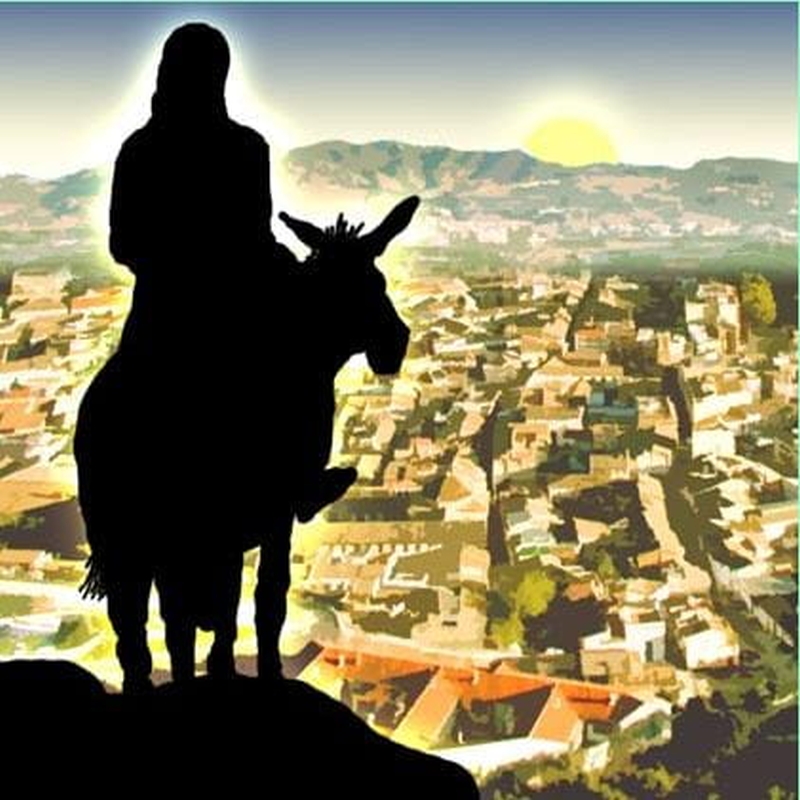
He rode into Jerusalem on a donkey.
Part 1.
Jerusalem was in ferment. Knives were being sharpened. Well-worn grooves were smoothed and oiled. Loose tongues wagged. Accusing fingers jabbed. Small children either ran for the cover of their mother’s apron or picked up stones ready to join in the excitement. Nobody knew what was happening, but everyone had a theory. They said he was coming: the man, Jesus. They said he was on the road today: the one who restored the sight to that beggar, Bartimaeus (that will put him out of business!); the one who lifted Lazarus from the grave; the one the Pharisees are petrified of. He was coming to Jerusalem, coming to keep the feast. What will he do when he gets here? What will he say?
In a small village near Bethany, close to the Mount of Olives, an unknown man tethered an unridden colt by the first dwelling you would come to if you walked in from the east. Unaware of its place in history, it yawed and brayed, irritated to be tied up and abandoned. And on the road to the east, just small specks on the horizon of a day that had hardly started, a little crowd was gathering and jabbering and coming towards Jerusalem. If you could hear them, then you would hear all sorts of things: laughter, raucous speculation, intrigue, political dissent, religious fervour. All of it was filled with a zealous and uncomfortable intent.
Walking with them, neither at their front nor at their rear, leading them, yet in the midst of them, was Jesus; and while everyone else looked at the road in front of them, or to left and right as if they feared something was about to jump out at them, his gaze was fixed on the distance that was gradually coming towards them, reduced inexorably by every step; his whole life, and the many meanderings of many journeys, converging and fixing itself on this last journey to Jerusalem. He had prepared for it carefully. Mused, not so much on how this day would pan out – how could anyone know that? – but on what it would mean. Today was the day when things would be said by the things that he did.
At Bethphage, he stopped. It was still early, still a few miles to travel; the fiercest heat of the day was not yet upon them. In the hedgerows corn parsley and rock rose grew in springtide abundance. The fields beyond were speckled red with lilies and poppies. A breeze stirred in the cedar trees behind him. ‘Keep on, keep on,’ it seemed to say to him, a still small voice fixing his resolve. He turned to two of his followers and whispered to them urgently, the purpose of the day starting to unfold. He said to them, ‘Go into the village ahead of you, and immediately you get there you will find a donkey tied up, and a colt with her. Untie them and bring them to me. And if anyone says anything to you, just say this, “The Lord has need of them.” And he will send them immediately.’
They looked at him blankly, incomprehension masking fear. They knew they were coming to Jerusalem for a reason, but they didn’t know what the reason was. Now this strange request. It wasn’t what they were expecting, but at least it was something to do. They hurried off into the village and, when they were out of earshot, let their embarrassment turn to gossip and chatter. After all, who was this Jesus? They had seen him do remarkable things; and how could anyone not be impressed when blind men see and evil spirits crouch in fear? These things he did were brilliant, compelling, and magnetic. The crowds flocked to him and asked for more. They cheered his every move. They said he was a saviour, a king, someone the Romans would fear, someone who could lead them to freedom.
But now what he said seemed different from what he did. He had started to speak darkly about what might happen to him in Jerusalem. He told a grim story about a vineyard where the workers rebelled against the owner and one by one killed off the messengers and servants that the owner sent to collect his dues, and then killed the owner’s son as well, thinking the vineyard could be theirs.
What did this story mean? Did it mean that Israel was a vineyard? That prophets sent by God were killed, and we had killed them? And was Jesus more than a prophet? Not just a messenger, not just a worker of mighty deeds, but a son? And would we kill him as well?
Yes, they knew he was from God – no one else could do such things; but a messiah, a king, a son, these were weighty things to carry.