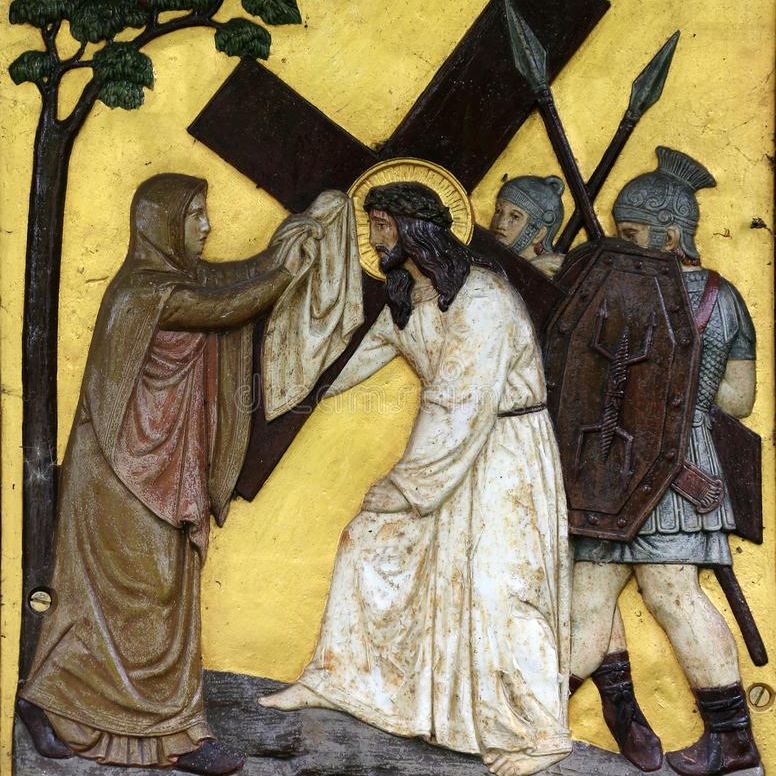
He carried the hopes of God.
Bishop Stephen writes
This is how he had come to see it –. That God had spent everything to try and create community with his beloved; with us; – through covenants, through prophets – everything except himself. And now, when all was exhausted except for the love from which this world was made there was only one way left: to communicate love in the only language that human beings really understand, the language of human life. And it was in his life and in his death that this new covenant would be spoken.
And now it was no longer about what he said. Nor could it simply be the signs and wonder he performed. Now it was just about what he did:
God was, at last, making good his promise to Abraham. A lamb for the slaughter was being provided. All he had to do now was be that slaughtered lamb whose shed blood saves. And as his forebears had painted the blood of the Passover lamb on the lintels of their doors to ward off approaching death, so his blood poured out on the lintel of this wood –this door between life and death – would save.
This last sacrifice would really be the end of all of that. But now, carrying himself into the inner sanctum, he saw it clearly: it would no longer be necessary for priests to go into the temple year by year to plead to God on humanity’s behalf. There would be no more barriers protecting God’s presence and keeping us out. No more systems deciding who has favour with God and who does not. This blood will be shed for all. It will be the end of it.
He carries to the cross every person and every person’s death. For now, every person’s death will be the only entrance qualification required. There won’t be any other rules. There will be only him: nailed down and lifted up and shining a light through the darkness of death to a banquet where the least and the lost are ushered to the finest seats. And with this, he carried all the wild and lovely hopes of God. He carried the possibility of a new temple, a new covenant and a new relationship. And beyond death, and beyond the rest that is beyond death, he saw a new creation, a new heaven and a new earth. It was as if he were carrying a great table into the banqueting room itself. And now placing chairs around the table. Chair after chair, place after place. A vast multitude of places and everyone knew. There was no anonymity here. Each was separate – a set place for everyone – and each was connected; round and round the table they would sit, each honoured, each reaching out to serve. Can you conceive it? Every person carried, and every person’s death? His heart would break from it. Our minds will reel from it. Our common sense will deny it, but while there is a scrap of possibility that I might find a bit more love in my own feeble heart then surely his heart, fashioned by the heart of God, still beating, can accommodate.
And he carried a new commandment, a new commandment that could be seen in that reciprocity of love that grew around the table – we should love one another with the same love that we see in him. We should expand the dimensions of our hearts. We should let them be filled.
For in him all the fullness of God was pleased to dwell…
For he had also planted a table on earth: one that will abide until through the portal of death we take our place at that other table in the new creation. A table where feet are washed and where hearts are fed. A place of receiving; a place to learn from. Yes, Peter had been there. And so had Judas. They had received the bread. Their feet had been washed. Their hearts would be expanded.
Love one another as I have loved you…
Love your enemies as yourself…
Pray for those who persecute you…
If they are thirsty give them something to drink…
If someone asks for your coat give your cloak as well…
If they force you to walk one mile, walk a second mile as well…
This was what he was walking now: the second mile of love. He was oppressed, and he was afflicted, yet he did not open his mouth.
Like a lamb led to the slaughter…
Like a sheep that before its shearers is silent, he did not open his mouth …
He carried the determination that this new commandment should be lived out, demonstrated, here in his dying, no matter how difficult. This was the moment of disclosure, where the risky enterprise of tenacious love would stand or fall. All God’s hopes and all God’s purposes were poured into these hours of passion. This was the place where hate would spend itself. There was no fallback position; no Plan B. So, he forgave those whose dismal duty it was to bang home the nails; and he looked with mercy upon those who spat and scoffed and struck out. Not because it was a duty laid upon him, but because he carried in his heart the ways of love. There was no other way.