Bewildering the bullies with a twisted bit of ribbon
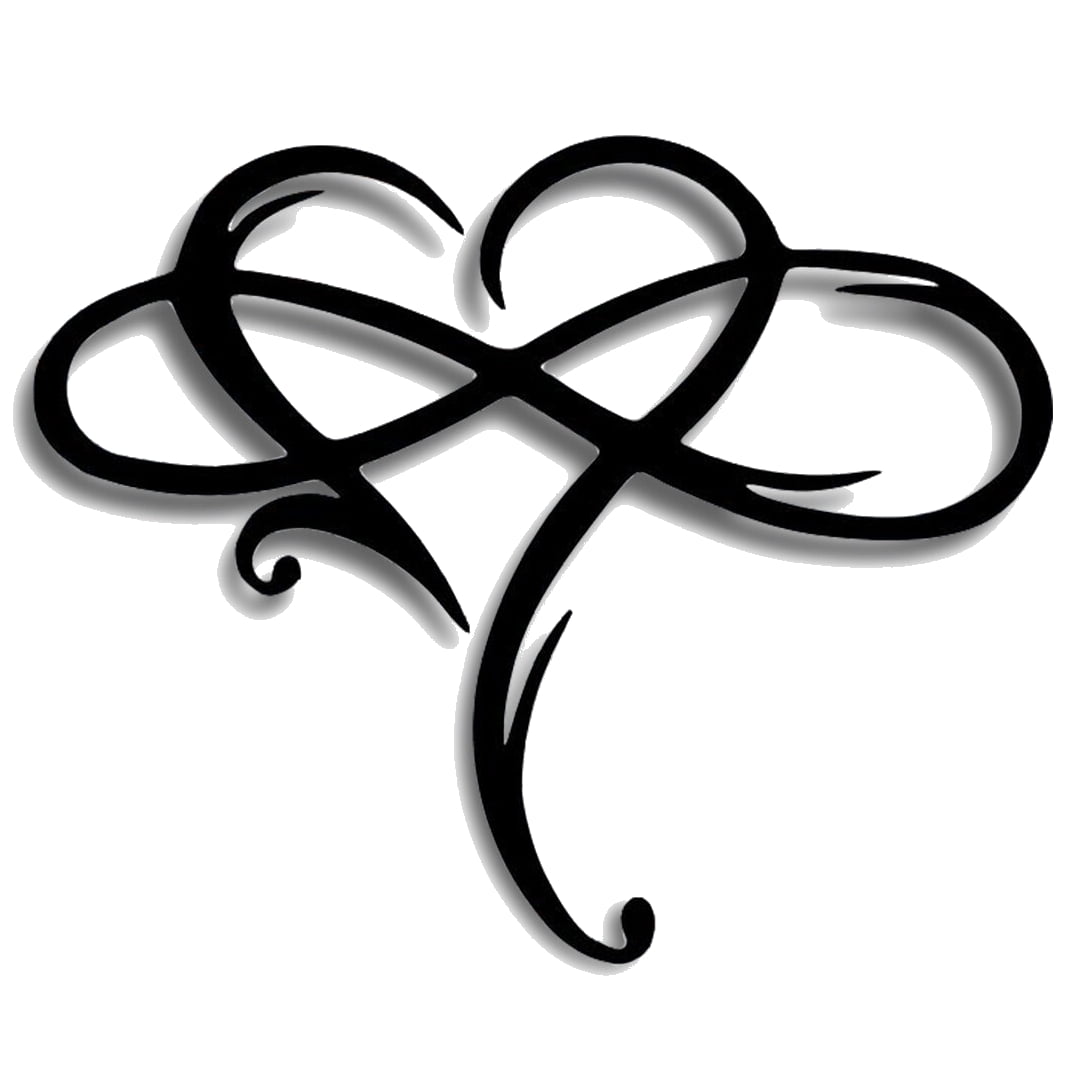
Many of you will know that this squiggly thing is the symbol of infinity. At school, it was a mathematical number and I could never get my head around it. Perhaps I wasn’t supposed to. What it was trying to teach us, thick-headed students is that there is no end to our numerical system because you can always just keep on counting. There is always one more number, another number after that and so on. I get that now but at the time it made my brain squelchy. Surely when you went to your maths lesson you were taught everything fits neatly and tidily within margins and perimeters. Maths was something you ruled off on neatly with a set and right solution every time and it was always the same answer for the same equation. The whole infinity thing stomped all over that, tossed it out the window and said in a loud voice “Hooey. There is no limit to numbers. It’s not that squeaky tidy.” So which was right? Infinity or the hard-won answer at the bottom of your working out. I’ll let you know at the end of the homily.
But it is this type of paradox, between comprehension and incomprehension, knowing and not knowing, that is woven through the argy-bargy with The Master and the Sadducees in today’s gospel.
The Sadducees believed that you ruled off life at the point of death. Once your heart stopped beating and the doctor signed the dotted line on the death certificate, there was no more. That was it… kaput, finito and good riddance.
To prove their point the Sadducees concoct a ludicrous story about a poor woman (I’ll call her Esmeralda) who had married seven times because each of the brothers had a genetic defect and kept falling off the perch. You know it goes. In Jesus' day if a woman found herself a widow she had to marry her husband's brother if he was available.
“So Rabbi Jesus, if there really is life after death then whose wife will Esmeralda be in the next life?”
Jesus sweeps aside their question by pointing out that in the next life you don’t, or can’t be married. The next life is beyond and better than the loveliest of marriages and the sweetest of lovings.
The Master also points them back to an Old Testament text that the Sadducees would have been very familiar with.
“So chaps …in the account of the burning bush, even Moses showed that the dead rise, for he calls the Lord ‘the God of Abraham, and the God of Isaac, and the God of Jacob.’ He is not the God of the dead, but of the living, for to him all are alive.”
What happens after we die is not just an extension of the good times of this life. It is infinitely more than we could ever hope for, think of or conceive. It is beyond our wildest imagining. It is in a different realm, a different dimension altogether. So what’s it like?
Some things that we can be sure of and then some wild speculation. First, the things that we can be sure of.
God is the God of living. The shiny box at the front of the church is not the end. It is the launching vehicle into that other dimension.
Joined in Christ’s watery death at our watery baptism, we also share in his mysterious, and glorious resurrection. Our Lord's empty tomb is our empty tomb.
And … it will be alright. We have The Masters promise for it and his promises are unshakable and unconquerable.
So now to the fun speculation.
One of my learned colleagues suggested that the first words we utter when we get to the other side will not actually be ‘Holy Holy Holy’ at all. but rather 'Ohhh… so this is what all the fuss was about.'
In my maths lessons, the tension between reliable surety and slippery infinity was and is resolvable. Surely both were right. There is a place where things are ruled off in nice tidy answers; always correct and sitting tidily on the line, but there is also a place for infinity which teases us on. She lures us to always go further and deeper. The two can coexist quite happily together. In fact, they need each other and complement each other.
There are hard unanswerable questions that we have on this side of the grave. The ‘why’s’, the ‘how comes’ and the ‘what's all that about.’ On the other side of the grave, through the veil, these will not be answered in a lovely easy to understand thesis with a pretty pink ribbon around it. In fact, they will not be answered with any words at all. They will be answered in that single nano-second when for the first time, we simply look into His eyes. Then we will understand and know that we are infinitely loved. Then we will be fully and truly alive forever and ever amen.