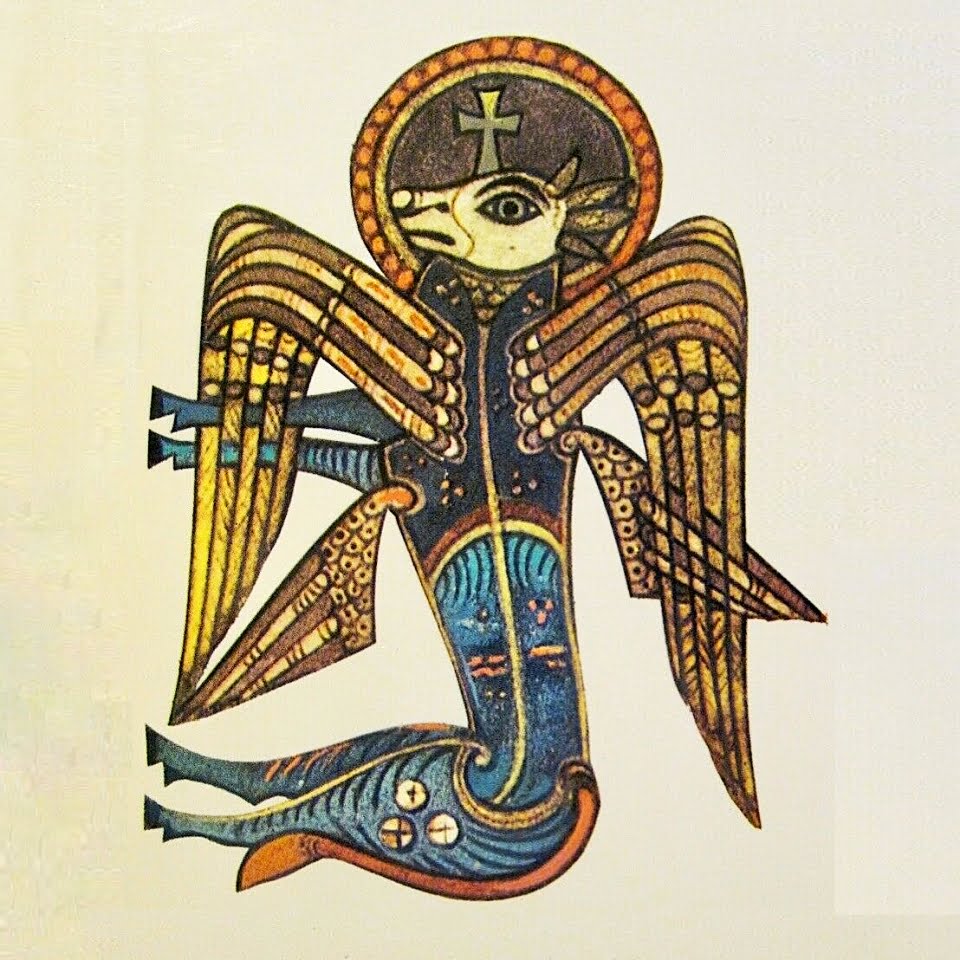
Meet my buddy Luke.
A Reflection for Sunday 28th of November
You’re probably aware that the gospel reading on a Sunday works on a three year cycle. So in 2020 we read Matthew. This year we have been reading Mark. We get huge chunks of John during Lent and Easter. In fact, the gospel for Good Friday is John’s crucifixion story. Today we begin a new Church year and it's Luke’s turn to shine. Here is a bit of background that I hope will be helpful for us.
First up, Luke wrote one work which included his gospel and the book of Acts as we know it today. Originally they were just one single volume. When the New Testament was beginning to take shape, the two books were separated so that all the Gospels could be put together at the beginning of the list.
Part 1 of Luke's work the Gospel tells us the story of Jesus from his birth to his ascension; Part 2 the Acts of the Apostles, tells the story of the early church from the ascension of Jesus to the preaching of the Gospel in Rome by Paul. As with the other gospel writers, we actually don’t know a lot about who Luke the person. We do know that he came pretty much top of the his class when he was doing Greek. His Greek is some of the best in the New Testament so we think that he was a well educated person, a gentile convert to Christianity. Luke is very passionate about certain themes and you will easily spot them in the coming year.
Theme one is universal salvation. Jesus came to save all people. The Gentiles and the Jews can be part of the Church of Jesus.
Theme two Jesus has great mercy and forgiveness. This is particularly focussed on Jesus' concern for the poor. Only Luke will have the story of the raising of the widow's son from the dead at Nain. Only Luke has the marvellous story of that recalcitrant, prodigal son who squanders his inheritance on unspeakable things and then comes bedraggled home to ask for forgiveness.
Theme 3, Luke is in touch with his feminine side. Women were often seen as second class citizens and this was the society in which Jesus lived. But Luke, bless him, goes to great lengths to include women in the Jesus story. For example the women Jesus meets on the road to Calvary, the woman who bathed Jesus' feet with her tears and the story of Martha and Mary.
Also unique to Luke is the entire saga of Junior Jesus. So the story of John the Baptist's birth, the archangel Gabrielle crashing Mary’s sewing session, the delightful story of Cousin Elizabeth and the Virgin Mary rushing to meet in each other, the children leaping around in the womb, and the two mothers to be swapping stories. The presentation of the infant Christ child in the Temple. Only Luke has the story of the naughty lad Jesus staying behind in the temple and teaching the scribes a thing or two while his bewildered parents go searching everywhere for Him. All these are recorded in Luke's gospel but are startlingly, puzzlingly absent in the other gospels. It begs the question… how come Luke has this stuff and the others don’t? Or… where did Luke get this material from?
Prayer is also an important theme for Luke. Luke associates prayer with the most important moments of Jesus' life. Jesus prays at his baptism (3.21), and after a day of working miracles. Before choosing the Twelve Jesus spends the night on the mount in prayer (6.I2). Before Peter's confession of faith and his first prediction of the Passion, Jesus prays alone (9.18;) Jesus goes to the Mount-of-the Transfiguration to pray (9.29). He prays with gladness and thanksgiving after the mission of the seventy disciples because of his Father's revelation to the little ones (10.17-21). His example leads the disciples to ask him to teach them to pray. Jesus prays during his agony on the Mount of Olives (22.39-46) and during his Crucifixion (23.34-46).So Luke has much for us to learn and relearn.
Two things from my muddy murky reflection.
Thing 1. The infancy narratives teach us that Jesus was once a vulnerable child; a child who did surprising and boggling things. He had a life before he began his public ministry and when we encounter him in others in a challenging way, we should not forget that this person before us has come along a road that sometimes has been rocky and uncomfortable and is always hidden from us. All of us here were once dandled on our parents' knees and all of us infuriated and delighted our parents.
Thing 2. Prayer is of the highest priority. The most important thing that I do each day is not putting things on Facebook, or trying to concoct homilies or, sorry to say it’s not the bonhomie at the Hamilton Hamper on Thursdays at 3pm, pleasant and sparkly as all that is. The most important thing I do is this wrestley, wriggly elusive prayer thing. Everything else, in theory at least, flows out of that and from that. I know that this is one of the many things that Luke will patiently teach us again. I wonder what else we will learn as we meet Luke again.