A Tale of Two Windows

Two windows in Christchurch. 2/1/22

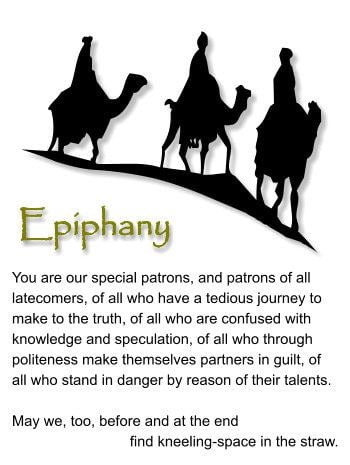
There are in fact two windows in Christchurch Hamilton which depict the visit of the Magi. Fortunately they are at opposite ends of the Church. One is in the Lady Chapel and one is near the font.

That’s not the only difference. The one in the Lady chapel is quite bright in its colouring. In fact you could almost be mistaken for thinking that the magi visited the Christ-child and his mother in broad daylight.

The one near the font however uses darker colours to show that it would have been night time when the Magi visited. They were using a star to navigate so it was probably night.

A couple of misconceptions that you probably already know about but which are good to be reminded of.

We easily and understandably jump to the conclusion that there were three kings because there were three gifts. But nowhere are we told how many of these chaps turned up. There might have been two or more kings plus a little entourage of people to do the cooking and water the camels and mend the sandals.

The image that we bring to mind is of a cute little scene in the stable, but in fact the Christ-child would have grown a bit because the magi got off track and had to ask for directions. Further we are told that the Holy Family were now well and truly ensconced in a house and had left the stable a while back.

Matthew tells it this way

2:11 On coming to the house, they saw the child with his mother Mary, and they bowed down and worshiped him.”

During the visit of the magi Joseph is blitheringly conspicuous by his absence. It’s not until after the magi have departed that he has one of his famous dreams and plucks his vulnerable family out of danger and goes second class express to Egypt. So where was Joey when his wife was getting all the presents?

One scholar of a very dubious repute posited the theory that when Mary saw these guys approaching with their camels and entourage, she panicked and realised that she didn’t have enough Tim tams, Stilton Cheese and red wine to properly entertain such distinguished looking guests. There was only one thing for it and that was to send Joey off to the supermarket with the credit card to get some party food and refreshing beverages. Alas, the 12 items or less aisle was clogged with other shoppers who had thought that the guys on the camels were coming to visit them; so by the time Joey got back from his shopping spree the magi had left.

There is nothing at all to substantiate this sketchy piece of academia which leaves us pondering where was Joseph and how come he missed out on getting all the nifty presents of gold, frankincense and myrrh.

The story over all is one of reassurance. That despite the trickery and deviousness of Herod, God’s purpose is still worked out and there is a very real sense in which God uses Herod to bring about his plan and if that be the case, then all is not lost and God can use whoever he will, in whatever way he chooses, to bring about the manifestation and epiphany of his Son.

Something that is a little odd and something I think about.

The thing that is odd. The window in the Lady Chapel. This window only has images of the three Magi. There is no cute vista of Mary and the Christ-child. It’s all about the magi.

I think about those funny gentlemen as they trudged through the desert in the middle of the inky black night. I reckon they might have got a little irritated with each other but give them their due… they got there.

So their journey, is my journey, is your journey, is our journey.

Someday I’ll find you and you will not be where I expected you to be. You will not be in Jerusalem the powerful epicentre of the land.

And it will not be when I expect; in brilliant spring sunshine but in the middle of my darkest night.

And you will not be what I thought. And you will not be with those I would expect.

Just like Herod and the people I will be perturbed and disarmed.

And I will bring my gold, my frankincense and my myrrh and go home by a different route, a fresh resolve, a new impetus.

And this pilgrimage to you goes on each day and every week. Off I go …setting out, asking, hoping, discouraged and disappointed sometimes, lost frequently, but always being steered by that distant star that I sometimes glimpse out the corner of my eye.

Someday, one day I will come home to you and not only will it be more than worth while… but every disappointment, every blistered footsore, every irritant will dissolve the moment I open my eyes in death.
To want to have faith

To want to have Faith..

There was just the two of us warming our hands over a serious mug of tea. Big black tea with just a smidge of sugar and scalding hot. We had put the world to rights; We had sorted out the church of God and found a cure for COVID. We had erased world poverty, ensured peace in the Middle East  and found a recipe for non fattening triple choc biscuits.

Then the conversation really started. We talked candidly and honestly about our faith or the lack of it. Our struggles, our doubts, our arid times and those rare fleeting moments when it all seemed so close and real. They disappeared so  quickly that we were left wondering if we had imagined the whole thing.‘If only we had more faith’ we muttered in unison.

Fortunately a phrase came to mind at just the right moment. Don’t worry, this will never happen again so there is no need to panic or get excited.

‘To want to have Faith, is faith itself’ Read it again slowly to yourself. ‘To want to have faith … is faith itself.’ It does make sense when you say it slowly and mull it over with a friend, a beverage and a non fattening triple choc biscuit.

That yearning, that wanting to have faith, that knowing that you fall short, that realisation that there is something more and craving it… that is faith in and of itself. It’s OK not to have reached and experienced your spiritual nirvana. Just to want to get there, just to walk stoically on with depleted courage and waning desire and yet still walk. That’s just as big a dollop of faith as actually having arrived.

To want to have faith… that’s all you’ve got to do. Just to want faith is enough.

Christmas 2021

Christmass 2021 In praise of the Manger maker

Mary wrapped him in cloths and placed him in a manger, because there was no guest room available for them.”

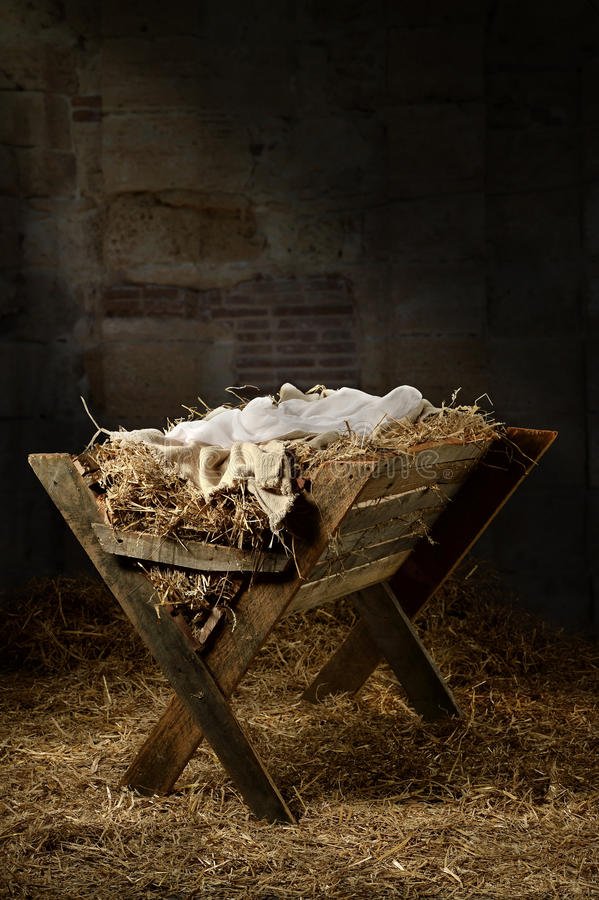
The gurus tell me that the word “manger” comes from the Latin word munducare which means “to eat.” A manger or crib is a wooden feeding trough or food box that holds hay for larger farm animals like cattle, horses, and donkeys. Mangers were located wherever livestock were kept, places like stables, corrals, or caves. The Farmer’s job was to keep their mangers well-supplied with fodder at all times so the animals would never go hungry. The cattle could walk up to a manger at any time, and then spend long, leisurely hours chomping away, chewing and slowly re-chewing their cud.

When Mary and Joseph arrived in Bethlehem there was no room for them at the local, so they were forced to find lodging elsewhere, probably in a cave where animals were staying. When Jesus was born, Mary would not have wanted to lay her infant on the hard, cold, stone floor. Instead, she had to make do with what was available and the manger proved to be a convenient alternative:  the hay was soft, the box was up and off the ground, and the sides tall enough to keep her child safely inside.

This manger gets another mention a bit later on. They went in haste and found the child in the feeding trough and they feasted their eyes on him (Lk 2:16).

A few things about this manger.

The manger was dirty.

Yes, we may be sure that Joseph and Mary cleaned it up as best they could. They, no doubt, padded it in some way to make a comfy little bed. But there is no way to romanticise this bed into anything other than a feeding trough for slobbering animals. The first bed for the Son of God was not a royal cradle. It was a common cold crib. It was meant to hold scraps to be eaten.

The manger is the way of discipleship.

The angel of the Lord came to shepherds, not to politicians or the religious leaders of the day, not to the parish priests or bishops or with the great of respect the local synods people.

Glory to God in the highest, and on earth peace among those with whom he is pleased! (Luke 2:14)

Not the wise. Not the understanding. But to mere pimple faced, adolescent youths. The ones who would take no offence at a baby in a feeding trough. The ones that would expect no better bed than their Saviour:

Something else about the manger.

At some point a carpenter must have made this wooden trough. It probably wasn’t Joseph, but it would have been someone like him. Joseph in his day, probably made several mangers along with coffee tables, and yokes. So at your Christmass table raise a glass to the guy who made the manger for God. The manger maker.

Joseph and Mary probably thought that the manger was rough. Here we are laying the most precious thing in the whole world into a wonky wooden manger and yet it is that or nothing. It is the best that can be found and in God’s plan it will do and it is enough. He desires to lie there to identify with all those whose life is rough and less than desirable.

As I was writing this I couldn’t help but think of the manger that you make with your hands as you come to the altar to receive communion. You too are manger makers.

At some point it would be understandable for you to think that my hands are not a worthy throne for the king of kings and Lord of Lords. That my hands are a bit care worn and rough and gnarly and calloused. And yet the miracle happens. The body of Christ is placed into your hands not because any of us are worthy, or brand spanking new, or highly polished and shiny and smoothly fashioned. He comes to us in the gentle vulnerable breakable things like a child, like bread and he comes because he so wants to be joined to us, to enter into our life, our cradles, our muck, our joy and our tears.

Someone at some point must have made that first rough wooden trough. The manger. The feed stall. They would have had no idea this would be the resting place of God. They might have even looked around the finished product and thought… I missed that bit there, or this corner here isn’t quite right. In anything we produce we know where the mistakes are, even if no one else spots our blunders.

Mary and Joseph would not have seen it that way. They would have been so pleased that there was something, anything for their Son. And so are we.


We come forward and we make our own manger. With unspeakable and unstoppable joy, with a divine Yippee! God becomes flesh and so He is inseparable from us. Here’s to you and I, for we are all manger makers with our hands, and with our hearts.

Don’t Dream it’s Over

‘Don’t dream it’s over’ A Christmass reflection

You’ve gotta love Youtube and the Crowdies right?! I was watching the song ‘Don’t dream it’s over’ ‘live’ at the Sydney opera house on that Youtube thing. The music was sweet, the crowd were really getting into it and just for a few moments, even now, years later in my study, the world was as it should be. It was perfect.

And as I watched, caught up in the delicious magic of the moment, there was a big part of me that was praying ‘Please God don’t let it end. Not now. Not ever. This is just so good, so perfect, so right. It should last forever. Don’t dream it’s over.’

But the song did of course. The moment never lasts, the perfection that we enjoy dissipates, evaporates and we are left craving more, but oh so blessed that we have touched the face of God and He has exalted and danced deep within us.

I wondered too about the shepherds that night and the heavenly music that came upon them without having the geeky stuff that we enjoy. Was it not possible, that having seen the heavens opened, that their prayer was simply that this also would never end? And then down to the manger to gaze upon the Master himself. Don’t dream it’s over.

But it did of course. Back to the freezing fields and a inky black night where nothing had changed, yet everything had changed and things could never be the same again.

Maybe with a few slurps of a warming beverage they too might have sung. …

‘Hey now, hey now, don’t dream it’s over’ at the top of their voices and somewhere, somehow in the middle of the night their prayer was answered. Because it was not over at all. In fact it was just beginning. Now while we didn’t sing any Crowded House at our Carol service nor will be singing any of the ‘Crowdies’ at Midnight mass on Friday 24th at 10:30pm we will be celebrating the fact that the story of our salvation has really begun for us.

A wooden yoke coming to life
after hours of woodwork
In the heat of the day

My yoke is light…
A wooden plough
constructed
by the masters hands
The seed that fell on the good ground

Aging saw dust cascading
to the floor
fine in the late sunlight

The master begins again.
Hesitantly
conscious of working against the grain,
against a lifelong of pure discipline
in taking a used girl by his side.

Dreams spin a new wisdom.
Impossible before
overriding the mallet’s fall
journeying them down the travellers path
to Bethlehem.  Anon

Hanging on by your fingernails

Hanging on by your fingernails.

A colleague and I were  talking about all things ‘clergy’ the other day.  We also spoke of that thing that we all can’t help talking about and would much rather jeer at it.

My colleague was stretched and struggling. There were a few extra bits on his plate which he found unpalatable and undesirable.

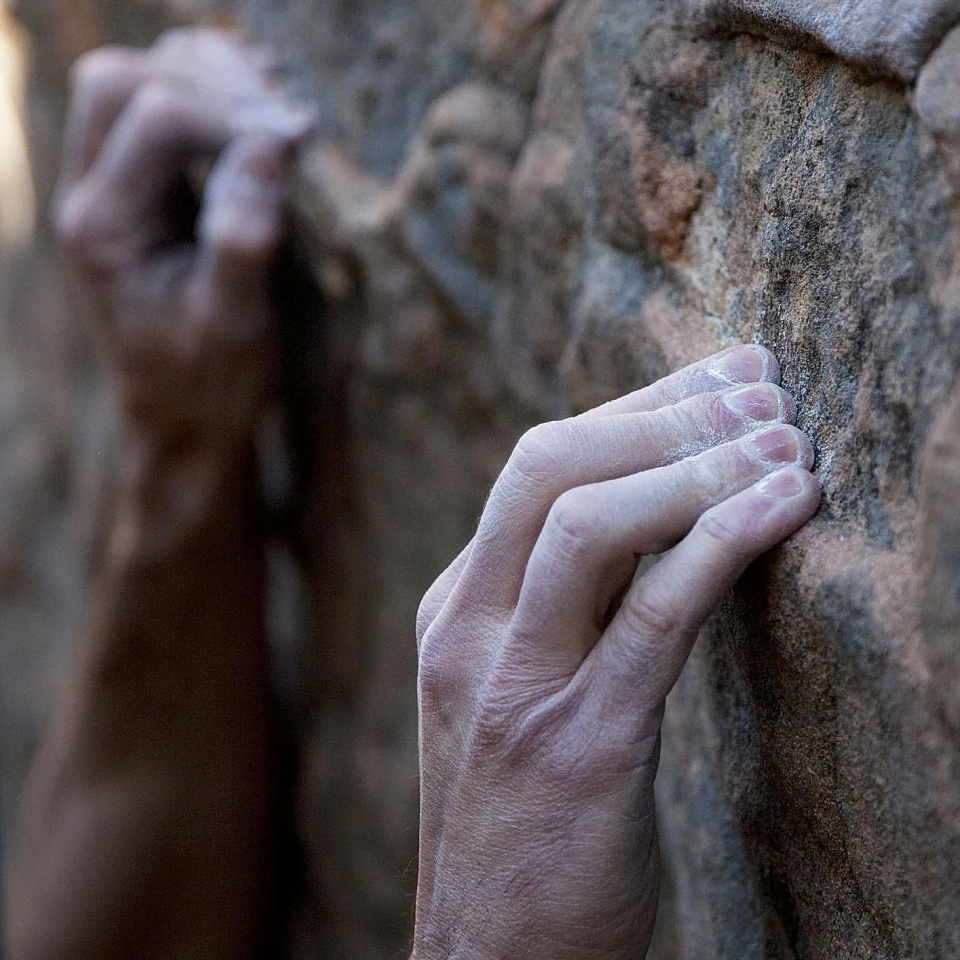
His energy was expended and he was hanging on, not by the tips of his fingers, but his fingernails. (His words not mine) I continue to worry and pray for him.

As I drove home I made a conscious choice to turn off my embarrassing choice of music in the 70's and do the inevitable post mortem on the conversation. Did I miss something? Was there something I should have said? And what on earth will I say to him next time I check in?

I found myself reflecting back on a few inky patches in my own life. I well recall the colossal amount of energy it took just to hang on by the flimsiest of grips. It was exhausting just getting through the day and there was never enough sleep. It took a long time for the situation to right itself and I sadly suspect that it will take some time for my colleague to arrive in a sunnier place.

It all changed for me when one day I said to myself “blow it”, or at least something like that and let go. And instead of landing with a sickening “THWACK” on the concrete with blood gushing out of my ears, there was an eerie sense of calm. I  realised that I had been supported and encouraged all along. Like the safety net for a trapeze artist.

Frantically holding by our finger nails is not necessarily the best use of our limited energy.

Who is Megan Phelps – Roper?

So who is Megan Phelps - Roper? a reflection for Sunday 12th of December 

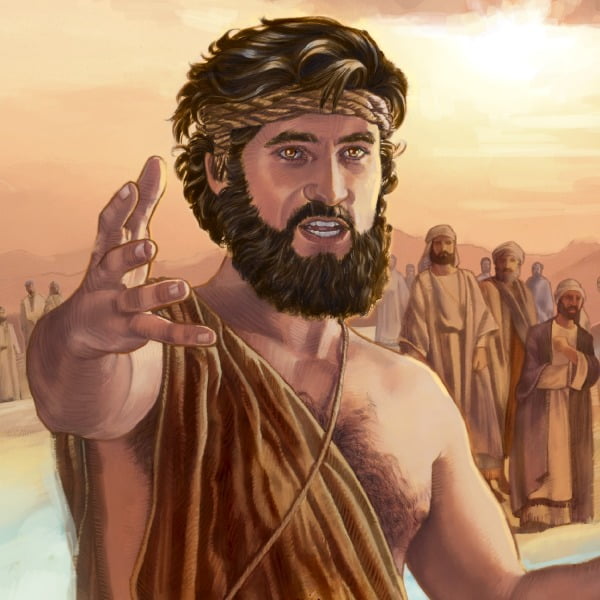
John the Baptist must have been a mean looking hombre and fierce orator. This morning he’s woken up grumpy and he’s just in the mood to tick everyone off.

‘You brood of vipers! Who warned you to flee from the wrath to come?  Bear fruits worthy of repentance. Do not begin to say to yourselves, “We have Abraham as our ancestor”; for I tell you, God is able from these stones to raise up children to Abraham.  Even now the axe is lying at the root of the trees; every tree therefore that does not bear good fruit is cut down and thrown into the fire.”

The people quiver and shake with fear.

“OK, so what do we have to do”? they reply. And John the Baptist gives them a step by step, easy to understand, any idiot can do it guide, on how to go forward.

‘Whoever has two coats must share with anyone who has none; and whoever has food must do likewise.’

You tax collectors in your lovely swish suits from the top end of town ‘Collect no more than the amount that is due.’

And you soldiers huddled over there in the corner

‘‘Do not extort money from anyone by threats or false accusation, and be satisfied with your wages.” No such thing as CPI in those days.

And from what we can gather the folk take all this on board. They adjust their lives accordingly. They are baptised and begin a new life. One of Luke’s pet subjects. Repentance, forgiveness and new hope.

It seems that judgement is withheld and thus there is hope. And its this nuance that I want to speak about today.

To be fair the idea came from a podcast I was listening to. But if you remember only one thing from this homily remember this

“To withhold judgment is the beginning of hope..”

The podcast was about Megan Phelps - Roper who grew up in an insular worshipping community. They had a very blinkered view of their own self righteousness. They were right and everyone else was wrong and they could quote chapter and verse from the bible to prove it. Further they genuinely believed that the reason people died in 9/11 and the ensuing Afghanistan war was because some gentlemen lived a particular lifestyle. What’s more our Jewish brothers and sisters were going straight to the fiery depths of hell. No questions asked, even the little children. This was God’s punishment on the planet and his retribution was fierce and warranted. As an infant of five years old Megan was  waving placards and protesting in the streets. God hates Jews etc.

But then social media happened and Megan used this thing called twitter to put out this unfortunate point of view. Of course other people engaged with Megan, disagreed and eventually she got to meet some of these people.

One day a peculiar yet lovely thing happened. A rabbi sidled up to her in the street and just began gently chatting about everything except what was printed on her placard. Judgment on both sides was suspended  and hope had an opportunity to take a breath and live.

And I reflect … would I have been as gracious and as wise and sensitive as the rabbi? Probably not. I think I would have been hurt and very crotchety.

In the conversation not only had the Rabbi withheld his judgement but also Megan was able to withhold her judgment.

In the end, because of this dialogue and other people engaging with her point of view in a non judgmental way, Megan actually left the worshipping community.

And then something even more powerful happened. She went to the Holy land where she was embraced, welcomed, sheltered and fed by the very people she had denigrated. The experience was humbling, full of hope and life giving for everyone.

I don’t know about you, but getting my own stuff together and trying to become the sort of person God wants me to be is a full on, full time, rich and challenging experience. I simply don’t have the time and the energy to worry about whether God is smiting this person, or that group, or that community. It is enough to listen to John the Baptist and heed his call to act appropriately.

But Megan’s story is a salutary lesson for us.

That God is bigger and wiser and more comprehensive and universal than we can ever know and that is a very good thing.

To harbour revenge, to execute retaliation, to give way to and be consumed by the fire of anger in our thoughts, words, and deeds can only extinguish light, hope and love. This leaves the world and especially our own soul in a very dark and foreboding place.

But to withhold judgment gives the best possible opportunity of hope and light and love to flourish. It’s a tough gig and something we need to be reminded of continuously. Perhaps when we are struggling to withhold judgment we might remember John the Baptist and his little tantrum of repentance and new life. Or if we can’t bring him to mind, maybe Megan or perhaps  just  “Forgive us our sins as we forgive those who sin against us” might do the trick.

Wise Woman from Park Run

Fr David's Mumbles

The wise woman from Park-run.

I was bemoaning my slower times at Park-run to a wise woman the other day. She listened patiently as I prattled on about the burgeoning time it took me to get around the lake. “Is it my age?” I wailed. “Is it my technique?” I moaned. I pleaded desperately. “Will new shoes make me go faster or a different breakfast?”

The wise woman listened compassionately to my pathetic tale of woe. She smiled graciously and incisively replied

“What if Park-run is not about the blood pressure or a personal best time? What if it is just about ‘doing and being’? What if it is just about putting  yourself in  the best possible place and just living the moment? Allowing everything else to just dissolve away. Would that be such a terrible thing?”

I thought about these astute and perceptive questions as I went to Evening Prayer later that day. Often it’s just mutter mutter, grumble grumble. There are no choruses of angels, bursting into glorious song. No beatific visions of St. Michael or Our Lady. The Archangel Gabrielle has so far declined to accept my generous invitations to show up and sit down beside me.

So what if I applied a similar philosophy to my prayers? What if prayer wasn’t having weird religious experiences in psychedelic colour with 5d surround sound, transmitted on the 7G network?

What if prayer was just placing myself in the best possible space and place and allowing the possibility of God to do His thing? Perhaps prayer is not about me trying to get a personal best while babbling through the psalms and scratching my head at the incomprehensible readings?

I shall always be grateful to the wise woman from Park-run. Maybe my personal best is actually when I am going slowly.

Roadworks

Roadwork.

A reflection for Sunday 5th of December

Last week I gave a very skimpy overview of some of the themes that occur in Luke's gospel. One of those themes is repentance and forgiveness and I pointed out that only Luke has the story of the prodigal son. In his gospel Luke points to his pet theme. “John the Baptist went into all the region around the Jordan, proclaiming a baptism of repentance for the forgiveness of sins.” Notice please where John the Baptist is preaching. He's not preaching in the city of Jerusalem, the top end of town, the plumb parish. No, he is preaching in the desert in the region of the Jordan. This is not salubrious and lush countryside. It’s hot, dusty, rocky stuff. No wonder he uses the imagery of Isaiah.

The voice of one crying out in the wilderness:
“Prepare the way of the Lord, make his paths straight.
Every valley shall be filled, and every mountain and hill shall be made low,
and the crooked shall be made straight,  and the rough ways made smooth;"

It would have made a lot of sense to those who were listening to him because all around them would have seen wonky, rough roads that needed some workmen in high vis vests and lollipop signs. They would have walked over these wonky rough hot dusty roads in order to get to hear John the Baptist.

Now the imagery of the wilderness and bumpy roads operates on at least two levels. There is the outward physical dimension that we would see and experience if we were fortunate enough to go to the Holy land. But there is another dimension as well. The voice crying in the wilderness is often that still small voice within us which is easily ignored, overpowered and silenced by other distractions and procrastinations. You could call it our conscience, or the voice of the Holy Spirit but every so often we know that something needs fixing. The rough ways need to be smoothed. The valleys of our inadequacies and shortcomings need to be filled. The potholes need to be sorted and the tarmac sealed, shiny and ready. This is hard work that goes on at the deepest level within us. It is not always comfortable and pleasant. It is often confronting and disquieting for us. It can’t be just fixed in a day and then left and ignored. Just as our roads needed to be continuously worked on, upgraded and painted and a whole lot of other things I don’t understand, but expect to happen, so too the highway of our souls will always need to be worked on. Sometimes its good to have a chat with someone who is just a little ahead of you or walking with you. Someone who perhaps has fallen headlong into the ditches and can give you a bit of a hint as to what might lie ahead. And when you fall in the ditches as we all do, get up, dust yourself and begin the important work of making all things smooth and level and straight. And perhaps you might be able to reach out your hand and help someone else out of the same ditch. Perhaps you might look them in the eye and say “Courage. I know all about this ditch because I fell into myself last week and this was the 4th time I have fallen into this trap.

Two things that occurred to me while writing this homily. First, why did the crowds leave their home to venture out in the blithering heat to hear this crazy guy dressed in the latest camel hair caftan. Why bother? Surely it would have been much more fun to sit quietly under the cool of a palm tree sipping a refreshing beverage. I reckon it because John’s homilies were corkers. He preached a baptism of repentance and the forgiveness of sins. And this is just the best news ever. It is what we all crave for and long for deep down. We need to know time and time again that we are forgiven because time and time again we bungle it. We need the refreshing water of forgiveness poured over us to cleanse us so that we can set out again. To start again with hearts that are lighter and ready to love and in turn pass on that forgiveness to everyone we encounter. That's why they went out in the midday sun. They shared that same deep longing and if it took a  couple of days of rough sleeping and a bit of sunburn and tired sweaty feet, then the trek would have been well worth it.

The second thing I wonder about. Why is this theme of repentance and forgiveness so important to Luke?

One day I will ask him but here’s what I reckon. I reckon Luke was a fallible, failing, sinful regular guy. I reckon that he might have fallen from grace in spectacular fashion. We know that he would not have actually met the Risen Christ, but he must have seen the good news in the message that was being handed down. Luke knew how much he needed it and of course he responded and wrote his message to us. Repent and believe the good news of forgiveness. So deep in your souls

Prepare the way of the Lord, make his paths straight.
Fill up all those valleys.
Flatten the hills and mountains
Smooth out the rough edges and then
You too shall see the salvation of God.

Mutter Mutter

Passport Photo

A very patient person kindly took my passport photo the other day. Tolerant and long suffering they led me gently through the necessary steps. Then they swiftly sent the image to my trusty email doodad.

Passport photos don’t capture you at your dazzling best. The image that looks back at me is unrecognisable.

The guy that I see is much more lined and jowly than I remember him. And the hair… The shiny brown locks have been subsumed by a curious shade of grey. It’s all a bit disconcerting.

This older bloke stares back at me unwavering and I have to ask ‘Who are you old man?’ I could answer him with things like rector, husband, canon, dad, uncle or husband. And each one of those is true, but only in part. None of them can tell the whole of ‘me’.

The same could be said of my childhood photos. They tell part of the picture. Brother, son, cousin etc. All of the photos leading up until now are an authentic but incomplete snapshot of the someone I am or was.

And there’s the rub! I have been many things to many people over many years; counsellor, priest, friend and client. To be any of those people and all of those people, is a rare, undeserved and unlooked for privilege.

But by far the most important thing is simply to be a child of God. A recalcitrant and rascally brat sometimes. A wilful, stubborn and stumbling juvenile who skins their knee on the same predictable rocks on the same erroneous path. But this is the fellow who looks back at me in the photo. And I might look disheveled and a bit worn round the edges but that can never diminish who I truly am and nor can the years steal who you really are.

Meet my buddy Luke

Meet my buddy Luke.

A Reflection for Sunday 28th of November

You’re probably aware that the gospel reading on a Sunday works on a three year cycle. So in 2020 we read Matthew. This year we have been reading Mark. We get huge chunks of John during Lent and Easter. In fact, the gospel for Good Friday is John’s crucifixion story.  Today we begin a new Church year and it's Luke’s turn to shine. Here is a bit of background that I hope will be helpful for us.

First up, Luke wrote one work which included his gospel and the book of Acts as we know it today. Originally they were just one single volume. When the New Testament was beginning to take shape, the two books were separated so that all the Gospels could be put together at the beginning of the list.

Part 1 of Luke's work the Gospel tells us the story of Jesus from his birth to his ascension; Part 2 the Acts of the Apostles, tells the story of the early church from the ascension of Jesus to the preaching of the Gospel in Rome by Paul. As with the other gospel writers, we actually don’t know a lot about who Luke the person. We do know that he came pretty much top of the his class when he was doing Greek. His Greek is some of the best in the New Testament so we think that he was a well educated person, a gentile convert to Christianity. Luke is very passionate about certain themes and you will easily spot them in the coming year.

Theme one is universal salvation. Jesus came to save all people. The Gentiles and the Jews can be part of the Church of Jesus.

Theme two Jesus has great mercy and forgiveness. This is particularly focussed on Jesus' concern for the poor. Only Luke will have the story of the raising of the widow's son from the dead at Nain. Only Luke has the marvellous story of that recalcitrant, prodigal son who squanders his inheritance on unspeakable things and then comes bedraggled home to ask for forgiveness.

Theme 3, Luke is in touch with his feminine side. Women were often seen as second class citizens and this was the society in which Jesus lived. But Luke, bless him, goes to great lengths to include women in the Jesus story. For example the women Jesus meets on the road to Calvary, the woman who bathed Jesus' feet with her tears and the story of Martha and Mary.

Also unique to Luke is the entire saga of Junior Jesus. So the story of John the Baptist's birth, the archangel Gabrielle crashing Mary’s sewing session, the delightful story of Cousin Elizabeth and the Virgin Mary rushing to meet in each other, the children leaping around in the womb, and the two mothers to be swapping stories. The presentation of the infant Christ child in the Temple. Only Luke has the story of the naughty lad Jesus staying behind in the temple and teaching the scribes a thing or two while his bewildered parents go searching everywhere for Him. All these are recorded in Luke's gospel but are startlingly, puzzlingly absent in the other gospels. It begs the question… how come Luke has this stuff and the others don’t? Or… where did Luke get this material from?

Prayer is also an important theme for Luke. Luke associates prayer with the most important moments of Jesus' life. Jesus prays at his baptism (3.21), and after a day of working miracles. Before choosing the Twelve Jesus spends the night on the mount in prayer (6.I2). Before Peter's confession of faith and his first prediction of the Passion, Jesus prays alone (9.18;) Jesus goes to the Mount-of-the Transfiguration to pray (9.29). He prays with gladness and thanksgiving after the mission of the seventy disciples because of his Father's revelation to the little ones (10.17-21). His example leads the disciples to ask him to teach them to pray. Jesus prays during his agony on the Mount of Olives (22.39-46) and during his Crucifixion (23.34-46).So Luke has much for us to learn and relearn.

Two things from my muddy murky reflection.

Thing 1. The infancy narratives teach us that Jesus was once a vulnerable child; a child who did surprising and boggling things. He had a life before he began his public ministry and when we encounter him in others in a challenging way, we should not forget that this person before us has come along a road that sometimes has been rocky and uncomfortable and is always hidden from us. All of us here were once dandled on our parents' knees and all of us infuriated and delighted our parents.

Thing 2. Prayer is of the highest priority. The most important thing that I do each day is not putting things on Facebook, or trying to concoct homilies or, sorry to say it’s not the bonhomie at the Hamilton Hamper on Thursdays at 3pm, pleasant and sparkly as all that is. The most important thing I do is this wrestley, wriggly elusive prayer thing. Everything else, in theory at least, flows out of that and from that. I know that this is one of the many things that Luke will patiently teach us again. I wonder what else we will learn as we meet Luke again.

Mutterings from Fr David

There are times in a priesty guy's life where he goes to a bedside with his heart in his boots because the person in the bed is someone who he has grown fond of. I wonder what on earth I will say. True the Church gives us formularies and books and prayers which are great, but often I think there is something more that needs to be offered.

Something else should be said. Surely the right words, spoken at the right time, in the right tones would make this all better. Sunshine and rainbows would ensue and there would be no more suffering, and every tear would evaporate. But no… I leave with an icky sense that I should have done more and said something else. Where are the prophets who can ‘up-skill’ me in priest craft?

Fortunately there are some leaders in the world today. People leave us inspired and hopeful. Every so often someone gets it right and for a time that is far too brief there is a chance for us. One such prophetess captured my angst exquisitely when she said to her weeping nation. “But even when we had no words, we still heard yours, and they have left us humbled and they have left us united”.

This ministry thing is a two way street. It’s not just about me trying to minister, it's about the person in the bed ministering to me to say nothing of their loved ones at the bedside who are … Well, they are simply magnificent! And even when the person in the bed is breathing their last, or has breathed their last, I am always left humbled and enriched. Perhaps the secret to this priest business is not just about trying to minister to others, but to begin by graciously accepting others' ministry to me.

Christus Rex

“What have you done?” A reflection for Christ the king November 21st.

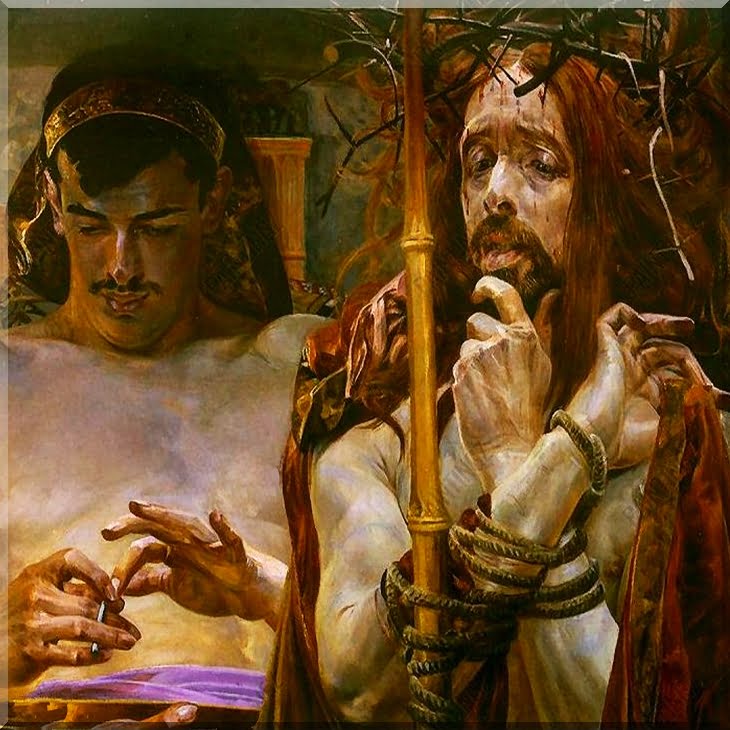
Pilate asked Jesus “What have you done?”

It’s a good question to have a play with because it applies directly to us in all sorts of ways. Notice please that in the scripture the question isn’t answered.

Let’s start with what Pilate is not asking.

Pilate is not asking Jesus for his CV.

He was not asking for a comprehensive list of all Jesus miracles, wine making, storm stilling and teaching.

Pilate is not asking if Jesus  matched up to the KPI’s and job description of a Rabbi / Messiah / all time good guy / faith healer / teacher.

We are not looking in on a job interview here.

In fact I actually don’t think Pilate is really looking for an answer at all.

I do think Pilate is really asking himself…

Yikes! What are my options here?

I think Pilate is searching for a way forward. Looking for an escape hatch.

I think Pilate is asking

Do you understand the mess that you have got yourself in, and me as well. I am constrained by pressure from above, my boss Herod, and from pressure below the baying crowds. What have you done… to… me?

I wonder how Pilate spoke  the question.

When I read the text I imagine Pilate asking the question in a hushed sense of disbelief. For me at least it’s almost as if he can’t believe that Jesus would be so crazy as to place himself under the possibility of crucifixion. Do you understand that the consequences of your actions could leave you as a mangled corpse on a cross?

So when I read Pilate’s question it’s like… Do you understand the enormity of your actions and what must certainly happen now?

It's a rhetorical question. I don’t think Pilate really wanted an answer; it was a cry of exasperation. This  recalcitrant Jew was just one more complexity that Pilate didn’t need on his desk. The chief priests and Jews have handed Jesus over and Pilate doesn’t know why. He has no understanding of the Jewish theological nitty gritty.

To dig a little deeper it might help if we have a look at the previous sentence.

“Pilate says ‘I am not a Jew, am I? Your own nation and the chief priests have handed you over to me”.

Your own people have handed you over Jesus. How is it that your own people can hand you over knowing what the likely outcome would be? How could they turn against one of their own?

What would inspire people who hate Roman rule to bring one of their own with demands for Roman judgement and death? You must have done something pretty jolly spectacular to make them so grumpy.

But dig a little deeper again. Jesus did not arrive out of the blue because the Jewish authorities got up one day, had a shower, brushed their hair, and decided that they had nothing else written in their diary. The question ‘What have you done?’ had been brewing for several years now. Both from the Pilate / Roman timeline and from Jesus’ own timeline. This encounter between Jesus and Pilate is where the two inevitabilities finally crash into each other.

But the question also applies to us and I leave you with some confronting stuff and some gooey stuff to finish with.

The confronting stuff.

“What have you done?”

I’m sure there are times in our life that we have asked this question of someone else.  And it is highly likely that we have had no understanding of the person, no understanding of  what has led them to this place, this time, this predicament, this future. Nothing happens in a vacuum. We ought to be very careful before we ask this question.

The gooey stuff which someone else wrote for me.

And Pilate’s question: “What have you done?” How is it to be answered in a few words? It is the story of Jesus from the moment of the Annunciation, through Bethlehem and Nazareth, to the public life of preaching and teaching, healing and liberating and finally suffering, dying and rising – out of love. Instead of answering, Jesus speaks of the nature of his kingship.

And us…

Your story, your life, what you have done cannot be answered in a few words. It is the story of you. Your own unique and fantastic story. From your parents, to your public life to your private life with all it’s triumphs and disasters. With all its tedium and dreariness, colour and sparkle. Sometimes for better, sometimes for worse. We can never have a complete perspective to understand what it is that we have truly done in a holistic and multidimensional way.

When you reflect on your life, what you have done, you will probably realise that it is far more boggling than you ever believed possible.

And when God eventually reflects on your life with you, then you will discover it is far more richer, far more complex and even far more lovelier than you could ever have imagined.