Reflection August 29

Our tears will dry

A reflection for August 29th

First a confession. The phrase “Our tears will dry” is an absolute and unashamed pinch from someone far more articulate than I, but as always you deserve the best and the best I can offer today is this simple but profound phrase “Our tears will dry”.

This mornings first lesson is from the book called the Song of songs. If you have never read it then you should. It will only take you about 20 minutes to read. It comes with a warning though and the warning is that it is a pretty racy raunchy read. Probably MA 15 years and older. Someone cheekily said it was the sealed adult section of the bible. So  if you thought that the bible had nothing to say about that marvellous intimate union between a man and woman then I am very pleased to be able to tell you that you are wrong. Check this out!

The voice of my beloved!
Look, he comes,
leaping upon the mountains,
bounding over the hills.

My beloved is like a gazelle
or a young stag.
Look, there he stands
behind our wall,
gazing in at the windows,
looking through the lattice.

My beloved speaks and says to me:
‘Arise, my love, my fair one,
and come away;

So here’s a bit of background.

The Songs of Songs was written in the 5th century, B.C., and is attributed to King Solomon the guy with lots of wives and concubines. It is written in a very poetic manner, and on the face of it, it is a love poem clearly showing the love, anticipation of, and of the great admiration for, the woman through whose eyes the male object of her affection is perceived.

     Look, he comes,
leaping upon the mountains,
bounding over the hills.

My beloved is like a gazelle
or a young stag.
“Marvellous stuff!”

There are three ways of interpreting this book:

First, it is speaking of God’s love for his People;

Secondly, it is a parable about the loving relationship between Christ and his Church.

Thirdly, it is seen as describing the love between a bride and groom. The book is intended to say how fabulous married love is in the sight of God. It is a wedding song honouring marriage, showing that human love and sex are good in God’s eyes. Sex is good because God gave it to us. But like all of God’s gifts it is not to be abused.

But I think this book speaks to another pining, another ache that is deep within us and all around.

In these times we are grieving and longing for the days of yore. We miss life as it was at the beginning on 2020. How idyllic and easy it all was back then. We grieve for the closeness of those who we cannot reach out and touch. We are also yearning for a future when all this is behind us and we want that just as surely and as potently as the bride wants her hubby in the song of songs.

The good news is that one day the flowers will blossom, our hearts will sing, we will giggle and chortle and the sense of His closer presence will be restored.

“But”, you rightly and understandably ask, “When will these things come about? When can we ditch the masks, the QR codes and the sanitiser?” My answer is that I don’t know exactly. I have scoured my diary and cannot find a single entry where this new era is scribbled in.

Mmmmm… perhaps ‘when’ is not the right question. Perhaps it is enough to know that it will be.

Remember the ache of the two parted lovers from the Song of songs?

The ache they felt for each other is as powerful as the same ache that we feel for the past and for the future. The difference is that our ache for a different time zone and reality is often about our own convenience or inconvenience. The ache of separation that the lovers feel is always about someone else, the other, our beloved. This is the same as our longing for Him, which is the same as the desire He has for us.

There will be a time when…
the winter is past,
the rain is over and gone.

The flowers will appear on the earth;
the time of singing will come,
and the voice of the turtle-dove
will be heard in our land.

Spring will come again, lovers will be reunited and our tears will dry. They will dry because He will be so close to us, that He will be able to reach out and wipe our tears away. And when all our tears have been expunged and are finally dried, then we will be able to see him as He truly is. Then we will understand that He also has been crying. Crying for us and crying with us.

Our tears will dry because we will again understand and rejoice in the simple fact that we adore a compassionate, broken, wounded healer who yearns to be close to us. Our tears will dry.

What did you learn?

What did you Learn?

Tell me… what did you learn?

I can’t have been any more than 12 years old. My dad had bought fish and chips at Warracknabeal. By the time he got back to Sheep Hills this gastronomic delight had cooled slightly.

“Here David. Pop these in the oven as a treat for dinner.” I was stoked. We hardly ever got fish and chips and McDonalds hadn’t quite made it to Sheep Hills. I dutifully did as I was told; then got really excited and really hungry.

Until… an acrid aroma began to fill the kitchen. Something wasn’t quite right. A little wisp of smoke hung in the air. My father, looking more than a little puzzled, strode purposefully toward the oven.

Opening the oven, even more smoke came out and my father said a rude word that I had never heard before. Well… actually, it was probably more than one word.

Little shapes of orange blistered the shiny white paper. Of course I had done the right thing and put the precious bundle, paper and all, straight into the oven. Perhaps I should have taken the paper off first? I mean… I guess that would have made sense right? But I was only very tender of years and this was my first foray into gourmet cooking.

My fathers emotions went from surprise, to horror, to anger, to befuddlement, to amusement, to disbelief and then the cycle was quickly repeated… several times.

I don’t remember if the fish and chips were OK and whether we got to eat them. What I do remember was a conversation that began with… “Well David… what did you learn?”

So next time you make a mistake, instead of lashing yourself mercilessly and endlessly, you might instead ask yourself.

“What did I learn?”

Reflection for August 22

Process and Event

It was in the summer of 1975 that I first put on the uniform of Horsham High school. The shirt felt tight around my neck, and the blazer was ill fitting, scratchy and awkward… I went tremulously through the front gate, found my way to where I was supposed to be and began.

Question. When I went through the gates for that very first time was I a student of Horsham High School or not?

There is a line of reasoning which says Yes, of course! My name was on the roll, and I was in a classroom.

There is another line of reasoning which says that I had a ways to go. That I actually became a student of the school as I made friends, played 500 at lunch time, went to the school fete and danced like an uncoordinated teenager at the social. All the time I was becoming a pupil of the school. I gradually became enfleshed in the life of the school community and the school became a part of me. There was an invisible something else that was going on apart from homework, classes, school bells and the uniform.

Gradually the uniform became more comfortable, more a part of me and who I was. Some days it was a joy to put on and I looked forward to the day at school. There were other days when I would much rather have slipped into my flared jeans and a suggestive T shirt (this was the 1970s after all)  and wagged.  Most of the time the uniform was just second nature. I put it on and went to school without a second thought. It was just what I did. It’s who I was.

St. Paul understood uniforms. Check out this morning's 2nd lesson where he is writing to the Ephesians. He cleverly uses the uniform of a Roman soldier as a kind of parable.

The belt of truth buckled around your waist, with the breastplate of righteousness, with your feet fitted with readiness. The shield of faith, the helmet of salvation and the sword of the Spirit, which is the word of God.

Truth, righteousness, readiness, faith, the word of God.

Pauls says put these garments on.  There are days when it is a joy to put them on. There are other days when we don’t want to put them on, but most of the time, hopefully, it is just second nature and we just put them on. It is just what we do. It is who we are.  People of Truth, righteousness, readiness, faith, who read our bibles, come to mass and say our prayers.  See the end of the second lesson this morning for Paul's encouragement about prayer.

Now all that might sound gooey and lovely, but have a look at Paul's imagery. A sword, a helmet, a breastplate, a belt. This is fighting gear!

Paul well understands how difficult it is to follow the path of the pierced and broken Saviour. He has obviously experienced his own temptations and allurements, or in his own words ‘The flaming arrows of the evil one’.

And just as God cannot stop loving us, so too the evil one cannot stop tempting us and tiresome as it is, we must make a conscious effort and a confident decision each and every day to put on our fighting gear.  There will be times when we will have to choose these garments frequently throughout the day. Sometimes the arrows from the evil one are fast, furious and frequent.

I don’t remember when it was. There was no special day or event that I can recall in my very sketchy memory, but at some point I felt as if I had become a student of Horsham High School. Even though I had been putting on the uniform day after day, had been enrolled and going to classes, somehow now the uniform was comfortable. I belonged to the school and it belonged to me.

My hope is that there has been such a time or even several times, when you have found yourself thinking. “I now belong to Him and He belongs to me”. I have become and I am becoming, the person I was called to be. I am part of that community which is on this side of the grave and the other. The heavenly host and especially in this parish, Our Lady of Dunkeld, St. Peter of Glenthompson, St. Mark of Cavendish and All the Saints of Penshurst. The  people in Church with me, they are my chums who have learnt lessons with me and encourage me still. They too have had rubbish days and sparkly days.

By choosing to put on the uniform consistently, faithfully daily, especially when we don’t want to, then we come to know who we truly are and we can rejoice in being who we are.  A moment's reflection will tell us that we were in fact that person long before we walked through the school gates. We have in fact, always belonged to Him. It just took us a few years, many lessons, some whacky teachers, some homework and a crazy uniform to get us there

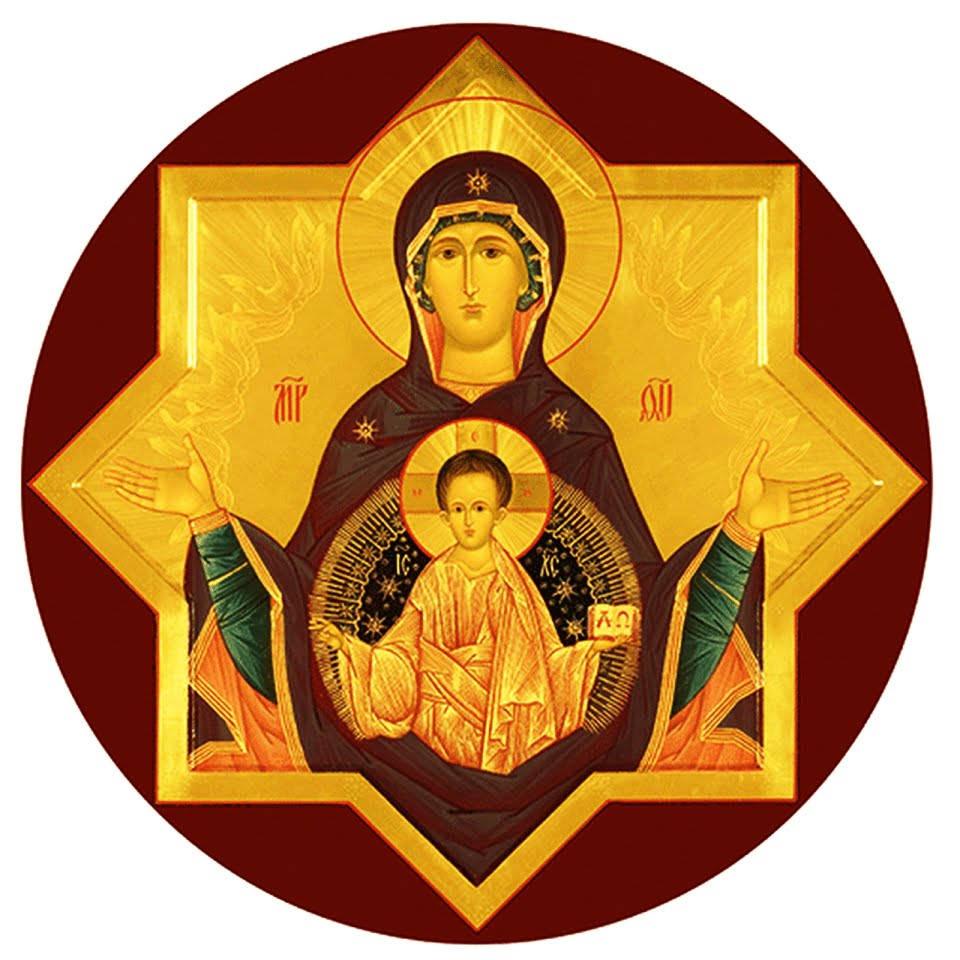
Theotokos

'What's all this about Mary!? A reflection for the 15th of August

Anglicans believe that good theology is

  1. Christ-centred,
  2. Bible based,
  3. Affirmed by ancient catholic tradition and
  4. Supported by human reason.

The flash churchy phrase for these 4 things is the Lambeth quadrilateral. This is very much the case with our understanding of the Blessed Virgin Mary, and whatever we believe must be consistent with these four principles. Christ centred, bible based, catholic tradition and supported by reason. Sometimes Anglicans believe that Mary is an impediment to our relationship with God. It will help if we take a peek at our foundational liturgical document, the 1662 Book of Common Prayer where we discover there are five Marian feasts.

  • Presentation of Christ in the Temple, 2 February
  • The Annunciation, 25 March
  • Visitation of Our Lady May 31st
  • Birth of Mary 8th of September
  • Conception of Mary December 8th

In the 1995 A Prayer Book for Australia, the Feast of Mary the Mother of Our Lord was re-established (15 August). This is the Anglican name for the Roman Catholic Feast of the ‘Assumption of Mary’ and the Orthodox Feast of the ‘Falling Asleep of Mary’.

Sadly, differing understandings of the place of Mary have been a cause of division and you would think that after more than 400 years we might have actually sat down with a nice cup of tea and some cherry flavoured Tim tams and sorted out our differences. Here’s a couple of sticky points.

In 1854, Pope Pius IX defined the Dogma of the Immaculate Conception.  This is the belief that from the moment of conception, Mary was “preserved immune from all stain of original sin.”

“What a load of poppycock!” Cried  the Anglicans. “We  reckon that there is no clear Biblical basis for this belief.”

In 1950, Pope Pius XII defined the Dogma of the Assumption. This is the belief that, at the time of death, Mary was “assumed body and soul into heavenly glory”. “Hogwash and humbug!” retorted us Anglicans. “The bible contains all things necessary to salvation: so if it's not in the bible or can’t be proved from the bible, then you don’t have to believe in it in order to be saved.”

Oh dear… Is there a way forward?  In 2004 we actually made progress. It seems that the Church of God can be saved by a pot of English breakfast tea and some cherry flavoured Tim tams after all. Not with a glass of single malt and some stilton cheese as some scholars of dubious repute have posited.

Now, remember the part where Mary is sitting quietly in her lounge room knitting Joseph a wooly jumper and the angel Gabrielle comes and calls her ‘full of grace’. Then He offers her the job of a lifetime. The detail and timing is important here. Mary hasn’t actually said “Yes” at this point and yet she already is full of grace. The Anglican Roman Catholic International Commission (ARCIC) issued An Agreed Statement entitled Mary Grace and Hope in Christ. It reads, “Mary is marked out from the beginning as the one chosen, called, and graced by God through the Holy Spirit for the task that lay ahead of her” and that, at the Annunciation, “the word of God delivered by Gabriel addresses her as already ‘graced’”.

In 1977 Michael Ramsey, the one hundredth Archbishop of Canterbury was asked “What do you believe about the assumption of Mary?” He answered simply and profoundly, “If she is not in heaven where then is she?” Mary is important for a couple of reasons.

First, because she is the Mother of the Lord. The oldest title applied to her by the Church is Theotokos, a term that means ‘God bearer’ or ‘Mother of God’. This was nutted out  at bishops meeting in Ephesus in 431. Not exactly a recent innovation.

Secondly, she is the example for all followers of Jesus. At the Annunciation, Mary responded to God’s invitation and said her Yes.

Now… if you remember nothing else from this flavoursome homily please remember this bit. Mary’s place in heaven is to be regarded as an anticipation of our destiny. Where she is and who she is with, is where we will be and who we will be with. Christians of every flavour, salted caramel, strawberry nougat, rum and raisin, all rejoice in this. If a pregnant, unwed, teenage peasant lass, from a one hick town can make it through the pearly gates, then goodness gracious me, there is hope for all of us. Like her, you and I are called to give God to the world in both good times and bad, but perhaps especially in woeful times. Just as Jesus' love for His mum was so strong that He wanted her in heaven with him, so too is His love for us is so strong that He wants us there as well. Getting there is a noble and joyful vocation; full of tears, struggles and chortles but we do not do it alone. We do it with her and we do it with Him. They are already cheering us on and waiting for us in splendid anticipation.

Meander

No Further!

It happened when Jeanine and I were out trying to spot those pesky, elusive whales from Logans beach in Warrnambool. We haven’t had a lot of luck in spotting these magnificent creatures; in fact we have never spotted any at all.

As we were leaving something happened that was as significant as a whale breaching. We were about to step into the car park and a toddler made to run past us into the car park. His mother cried out with understandable gusto. “Billy! No further!”

Billy did as he was told and halted at the edge of the car park although he did turn and face his mum with a cheeky grin, knowing that he had drawn the desired response from her.

It wasn’t until much later that I thought about this little encounter. I was on a stretch of open road with not another car in sight. It was a pleasant sunny day and the horses under the hood were champing at the bit. The temptation…But fortunately I thought about Mum's words. ‘No further’. There was a very good reason for the words that she wailed and the passion in her voice. Her words were exhaled in order to protect her son. Billy of course had no idea of the inherent dangers of rushing out to flirt with motor vehicles. How could he have any understanding at such a tender age? And it's easy to say it's ‘a baby lesson,' but it is a lesson for all of us every time we think we might chance a law that we don’t understand or believe that it doesn’t apply to us. I thought about that Mum as I set the cruise control. Ultimately she was not just protecting drivers from unspeakable trauma, but she spoke out of love for her son.

August 8

A reflection for 8th of August

I want to tell you about Bob, Ted, Carol and Alicia. They were great companions and used to go to lovely dinner parties together. Bob was your straight up and down sort of guy who had a deep and abiding love of history. Ted was always quick and straight to the point. What you see was what you got. He was always looking to move onto the next thing. Having struggled out of a ‘disappointing marriage’ Carol was an advocate for all ladies who found themselves in unfortunate situations and the wider community. That is dressing it up a bit and trying to be polite.

Alicia was your deep thinker, your plodder, the very measured one who thought about things deeply and often much later was able to offer profound insights into what was really going on at the dinner table.

This happy quadrant would often reflect on the dinner party on the morning after. They would ruminate over a cappuccino and wolf down some smashed avocado on toasted sourdough with poached eggs and hollandaise sauce. Alicia always had a herbal tea and the granola muesli.

One particular night the evening was very unusual so they all decided to write about it afterwards. Each one writing separately, offering their own account.

As you would expect they all remembered different things, but the really peculiar thing they all wrote about.

Bob wrote about the interesting herb crust on the roast lamb. He also wrote about the blessing at the end of the meal because it was not the one their host usually said.

Ted wrote about the marinated and stuffed olives. Fr. David has paraphrased his words. “The olives were rather jolly nice.” Ted also wrote about the blessing at the end of the meal because it was not the one their host usually said.

Carol wrote about flowers the ladies were given as they left and what a touching gesture it was.

She also wrote about the blessing at the end of the meal because it was not the one their host usually said.

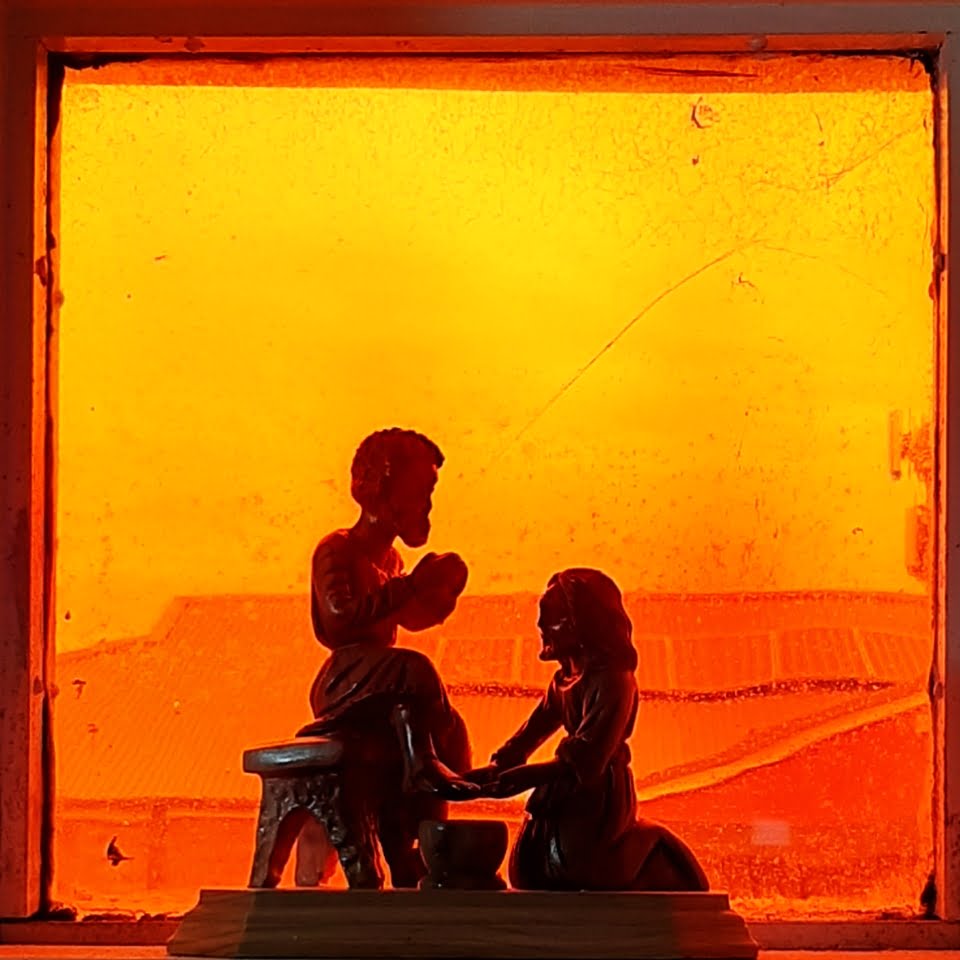
Alicia didn’t write anything for a while, but some time later wrote about the curious thing their host did in washing their feet. She also reflected on that special blessing that had piqued the others' attention.

Deep down. What was their host really trying to tell them? What was really happening? Their host was quite ponderous and measured in what he said and the way he said it. His words were very carefully chosen.

I have played around a bit here and of course what I am really telling you is the story of the upper room, the last supper and the gospel writers perceptions.

Bob is really Matthew whose gospel has a deep and abiding love of history. Just check out the genealogy at the start of his gospel if you're having trouble snoozing.

Ted is Mark who’s gospel bounces irrepressibly from one incident to the next. Carol is Luke who has the most references to ladies in his gospel.

Alicia is John whose gospel arrives much later, but has the benefit of distilling the deeper meaning of Our Lords words and actions. John also gives us a glimpse into the churches thinking or theology.

Matthew, Mark and Luke all tell us different things about the last supper and you would expect that. But the thing that they all mention, pretty much identically, is Our Lord's words ‘This is my body.. this is my blood’. This wasn’t part of the hosts usual grace. In fact he had never said it before.

Today's gospel comes from John. John's unique memory of the last supper is the foot washing, but John also offers us the church's teaching.

That something happens when the bread and wine are blessed. This is my body, this is my blood, or in today's words. “This bread is my flesh, which I will give for the life of the world.”

Our Lord always chose his words very carefully. No wonder the blessing at the end of the meal was the thing that Matthew, Mark and Luke all remembered and wanted their readers and listeners to remember. Something happens to the bread and wine on the altar.

And just as a married couple who walk out of a church are different to when they walked in, so too the blessed bread and wine are irreversibly changed.

Of course I don’t understand the metaphysics and food chemistry, but that just adds to the joyous mystery and the desire to go deeper into what is an elusive and splendid sacrament.

John would also point out that Our Lord knew exactly what he was saying. That he knew his body would be broken the next day and his blood spilled. That he would always be with them.

So three cheers for the gospel writers who all bring a unique perspective and different insight into this sacrament. Three cheers for you and me who all come seeing different things in different ways. Three cheers for the host who gives very self to us in simple gifts of bread and wine.

Ghandi

Where will you meet God today?

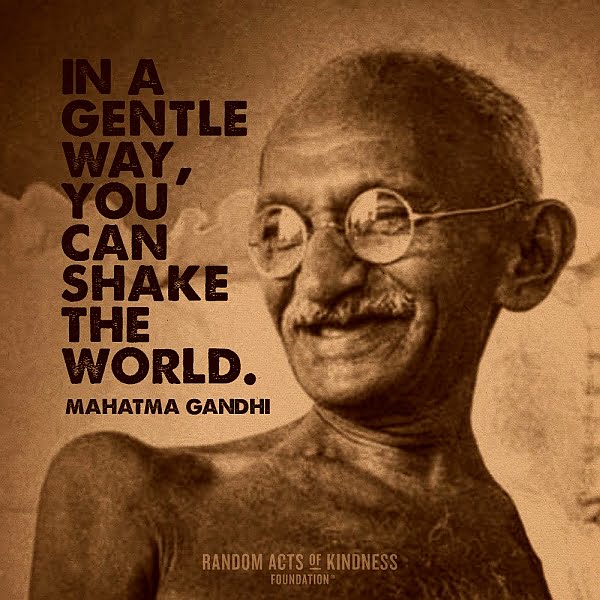
I am ponderously reading a biography of Gandhi. It's a comprehensive document with lashings of background and context. It transpires that Gandhi was in and out of prison on a regular basis. He made friends with those who kept him locked up and it didn’t seem to bother him. Why?

There is a telling little line where Gandhi says that the prison could be his temple. His point was basically this. That an encounter, a conversation with God can happen anywhere if you work hard enough at fostering that ethereal relationship. It can even happen in a prison cell. Fortunately God is not confined to any particular place and so the possibility of finding him in the most meagre and grungy of circumstances is never hopeless.

It’s splendid for us. We have sacred spaces that have been prayed in, loved and where the community comes together. It’s easy with the stained glass windows, candles and icons to catapult us into ‘that’ dimension. We ought to make the most of these privileges and opportunities. Gandhi was not exactly a Sunday by Sunday Anglican, but his point is still valid. God has taken the initiative and it is now up to us to encounter Him, find Him and most of all enjoy Him. To develop and enhance this relationship no matter where we find ourselves. It’s not always easy and it would have been an extraneous exercise in a prison cell in India. It is however, always achievable. It is something precious, to be sought and chased after all our lives.

Conversely we can find ourselves in a ‘prison cell’. A fraught marriage, the toxic workplace, in fact anywhere or any situation where we can’t see a way out or beyond ourselves.  For a gold star you might ponder your ‘temple’ and / or your ‘prison cell’.

Reflection for August 1

Humble and Gentle

Today I want to plunge into the second lesson given to us by St. Paul as he writes to his parish at Ephesus.

It is a marvellous letter and has been rightly called a  "Hymn to unity”.  This letter calls the Ephesians and us back to the"dignity of our vocation” which to be unified.

The first verse tells us that Paul is in prison. I imagine him as an elderly chap in dim light with grizzled beard, grey hair, twinkling eyes with fading eye sight. I see him stooped over his writing equipment, scrawling in a gloomy prison to the people he cares about.

Paul’s heart is resolute and he finds himself in a bit of a bind. He knows what needs to be said. He’s just got to find the right words to say it.

Some critical issues need to be aired. Paul needs to say them firmly, confidently, yet graciously, so that his very important message will take root in the lives of the people of Ephesus.

He has to tick them off a bit because they are not at one with each other. It seems that troubles and disunity have been growing and these weeds must be plucked out from peoples hearts and replaced with the fruits of the spirit.

He begins.

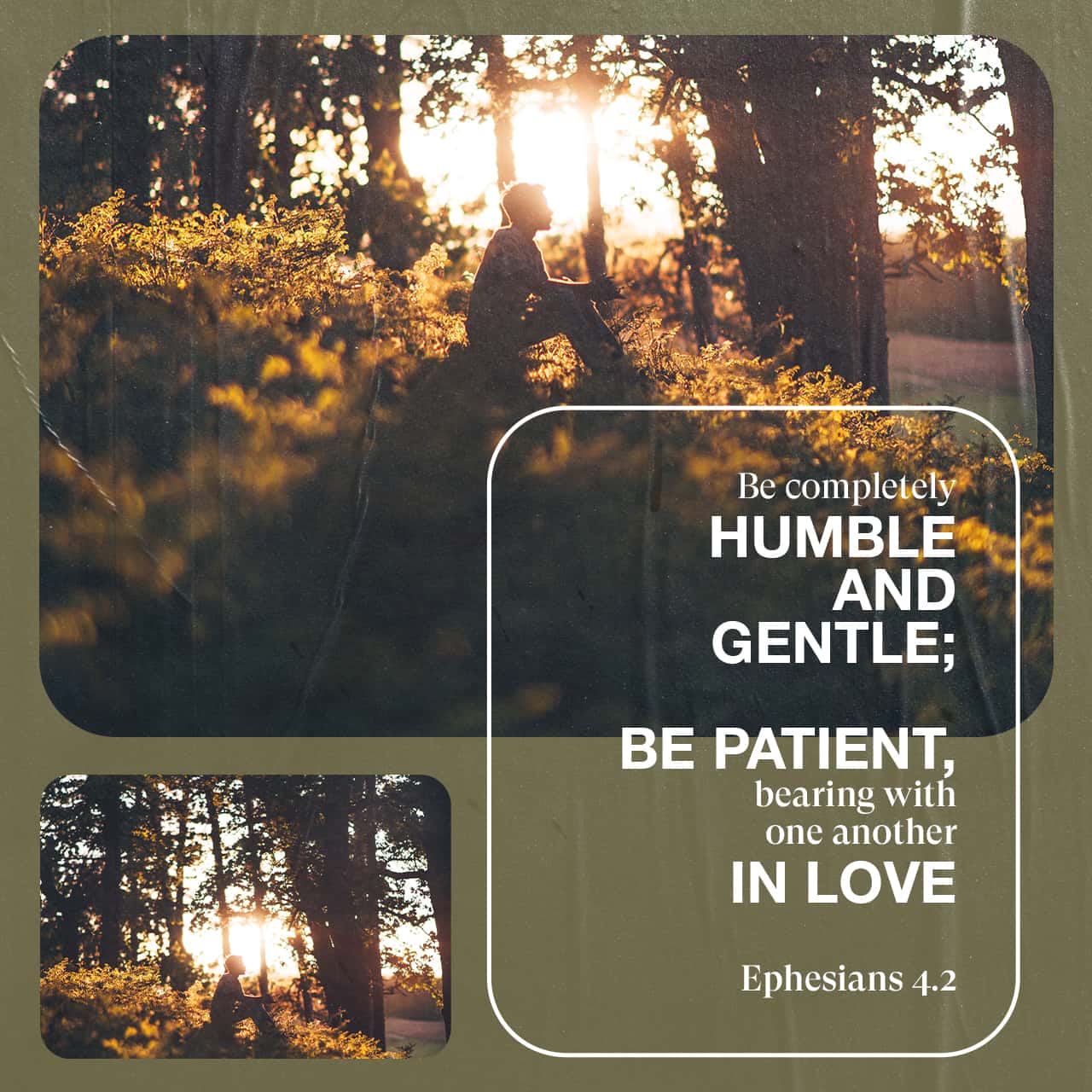
“Be completely humble and gentle; be patient.”

So there is a call for

Humility, gentleness and patience. Get these right my dear Ephesians and you are well on the way to unity.

Next …

‘Bearing with one another in love’.

When we read the word ‘love’ we usually think of the chocolates, roses and champagne love, but that is not what Paul has in mind at all.

The word love that Paul uses is agape love, a self-sacrificial love that works for the benefit of the loved one. So  the word that Paul uses ‘agape’ is never for the benefit of ourselves. Agape love, Christian love, must always be about the other person and what is going to be best for them.

Paul points out that when we speak the truth to each other with this agape love, then everyone is built up and we become mature, solid people for Church and for the world.

Speaking truth in love is not always easy. Often it comes out all wrong, but not to speak the truth in love, is far worse and can eat away at the body of church and most of all ourselves.

Paul continues to scribble away. He writes about the unity of the Trinity but you have to look fairly closely. It happens in verses 4 - 6

“There is one body, one Spirit, just as you were called to one hope; one Lord, one faith, one baptism; one God and Father.”

Further, Paul uses the word “one” no fewer than seven times. His  Ephesian listeners and readers know that seven was the perfect number.

Paul sallies on. He reminds his beloved Ephesians that everyone has a God given job to do and no one job is more important than the other.

 “So Christ himself, gave the apostles, the prophets, the evangelists, the pastors and teachers,”

I find it remarkable that in an age and a culture where communication has never been easier, somehow disunity still triumphs.

As one person put it.

“Today we are "used to breathing the air of conflict". Every day, in the media, we hear about conflicts and wars "one after the other", "without peace, without unity”. Agreements made to stop conflicts are ignored, thus the arms race and preparation for war and destruction go ahead.

Even world institutions created with the best of intentions for peace and unity, fail to come to an agreement because of a veto here and an interest there ... While they are struggling to arrive at peace agreements, children have no food, no school, no education and hospitals because the war has destroyed everything.

The author continues with a way forward.

“Christians open your hearts and make peace in the world taking the path of the “three little things” - "humilitygentleness and patience". Paul's advice is “bear with one another in love".

The advice of Jesus is to settle the matter and make peace at the beginning, which calls for humility, gentleness and patience. One can build peace throughout the world with these little things, which are the attitudes of Jesus who is humble, meek and forgives everything.” End of quote.

When we are not at peace with ourselves and with each other we are like Paul. We are in prison with our sight dimmed, our relationships compromised. The world is quite right to call out our disunity and hypocrisy.

We cannot hope to achieve unity and be released from our solitary confinement, unless we know gentleness, patience, forbearance and practice these in our own lives. Only then we can successfully engage with others. Humility, gentleness, patience, forbearance. When these begin to flourish then peace and unity will be the fruit we offer to each other, to our community and to the world.

Pregnant

Pregnant with Possibilities

I happened to notice a  woman who was pregnant the other day. In the olden days we would have said that she was ‘with child’. I’m really not quite sure why we stopped using that phrase because it told it as it was with all its trepidation, excitement and awe.

I thought some more and a phrase came gurgling to the surface. “Pregnant with possibilities”. The chance sighting brought back all sorts of fond memories from a very long time ago. All three of us … Mother, father and child were pregnant with possibilities. Some of them we knew about. Going to school, sleepless nights, scraped knees and soiled nappies.

Some we didn’t know about. Broken hearts, tricky decisions, fumbling words, spontaneous laughter in the most unexpected of circumstances.

It occurs to me now that most of the possibilities were hidden from our view, wrapped up in the years that lay ahead, invisible to us and maybe that was a good thing. We would never have believed a time traveller if they gave us some spoilers.

It also occurs to me that we are all pregnant with possibilities. Even in our dotage, there are still a multiplicity of possibilities that we can choose to ignore or run like mad with. The difference I suspect is that we are much more aware of the consequences of these possibilities and so we should, in theory at least, make wiser decisions.

It is perhaps a matter of being aware of what possibilities greet you each morning. Which will you choose to embrace with a passion and which will you shun and what are the unexpected ones that find you?

Like the page in my diary that pleads with me to scribble potentialities on it. All of us are pregnant with possibilities. What are yours?

Reflection for July 25th

There is a way back.

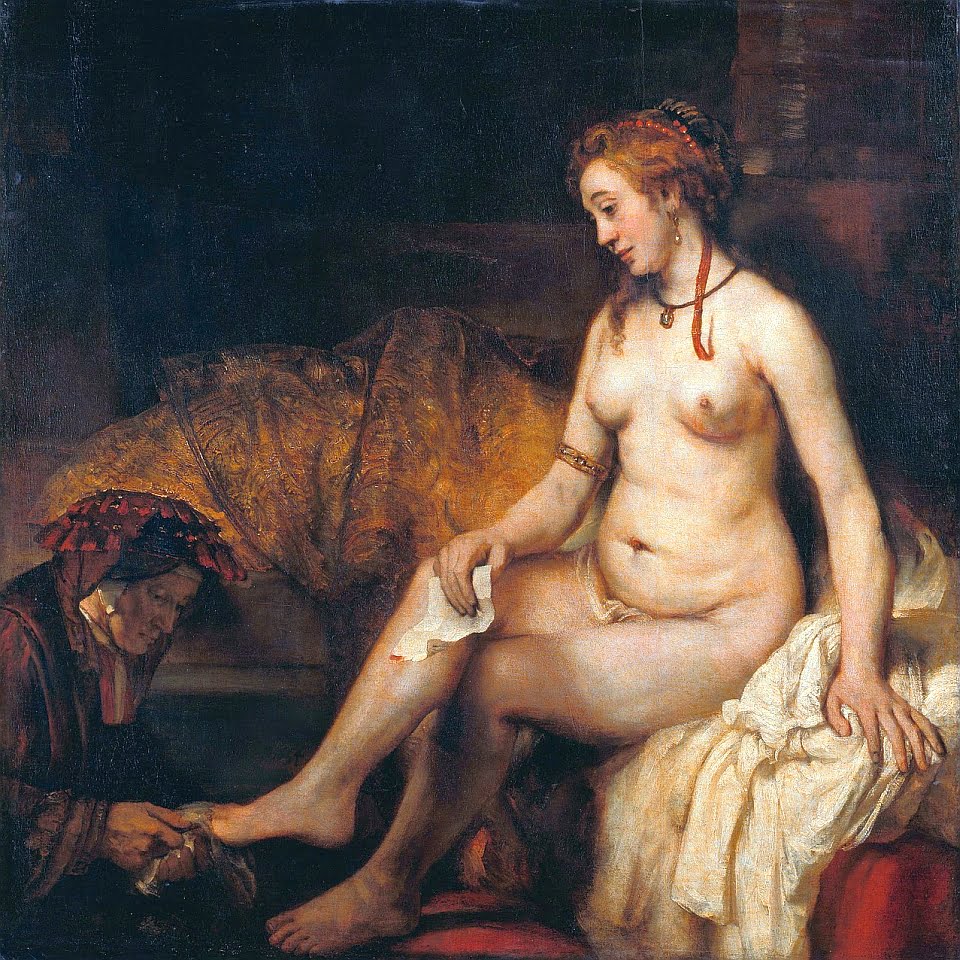
In the first lesson King David, spying from his roof, spots a woman (Bathsheba) whom he would like for himself. David sends servants to “take” her, a word that, in some contexts in the Old Testament, can be used to designate rape. Bathsheba is given no voice in this story, but the details are clear: David has intercourse with her and impregnates her.

When David gets word that Bathsheba has conceived, he tried to fix the problem without acknowledging it. He called Bathsheba’s husband, Uriah, back from war, hoping he would go home and be with his wife. You see DNA paternity tests were not available; everyone would have assumed that the child was Uriah’s.  Good plan right?! Uriah, however, refused to enjoy home comforts while his compatriots were still off at war. Because Uriah would not go home, David devised a plan B: he sent Uriah to the front lines of battle and ordered those around him to draw back so that Uriah would die. David’s solution was to murder the husband.

Next week we are given the rest of the story and it goes like this.

God sends the prophet Nathan to David. Nathan told David a parable about a rich man and a poor man. When faced with the need to feed a guest, the rich man did not take a lamb from his own livestock, but instead stole the only lamb owned by the poor man and served it to the guest. David was incensed by the injustice in this parable. Nathan responded by saying, “You are the man!””

David responds with a very simple phrase: “I have sinned against the Lord.”

Some points to think about as you sit by the fire with a refreshing beverage.

First, the story hinges upon David’s contrition. David and his family experience many consequences of his sin. In all of this, however, God does not remove the divine steadfast love from David, as God had previously removed it from his dad King Saul. The reason for this seems to be David’s contrition. When confronted with his sin, David fesses up.

Second, David’s contrition would have been impossible without the role of a prophetic voice. In ancient Israel, one of the major functions of a prophet was his or her ability to speak truth to power. Nathan receives a word from God and can deliver it to the king in such a way that it sways the king’s actions. David was determined to sweep his sins under the rug, but the prophetic office prevents this. That which was hidden is brought to light; the wrongdoing of those at the top is acknowledged, confessed and ultimately forgiven. There is a way back for the person who has fallen in such spectacular fashion. There must always be a way back, otherwise we are limiting Gods forgiveness and power.

Third Bathsheba has no voice in this story. At no point are any of her words or feelings recorded. There have always been and always will be, those who have no voice in our society and whose hurt remains invisible to us.

Fourth it is left to Nathan to be the prophetic voice where Bathsheba is silenced and this is where you and I come in. It is our vocation to speak out and confront not only our own sin but what might be called the collective sin of our broader community.

So I make it clear that the Church has not always done the right thing and there have been occasions when like King David, she has sought to cover up her wrongs. When all the truth has come out the hurt is multiplied because of the way we have dealt with our failings. On these occasions there are no winners and everyone is less than they ought to be.

Fifth. For most of my ordained life of 35 years the mantra has been that we need more young people in church. It is little wonder that young folk are not trusting of the Church in general and her leaders in particular.

A recent national survey of 6000 people found 41 per cent of Australians don’t trust religious leaders “at all”, a 6 per cent rise since the survey was last conducted in 2019.

Almost half (47 per cent) of 18–24 year-olds don’t trust religious leaders “at all”. That’s a jump of 15 percentage points in just two years.

There is a way back and it will be a long path and the trust that I hope will be restored, but which I don’t think I will see in my lifetime, will be hard won. I make it very clear that the abuse of another is sin. And sin is sin is sin.

There is a way back and the first step is candid admission. The next step is genuine contrition, the next step appropriate reparation and then some safety measures to minimise the risk into the future.

There is a way back and it must begin with all of us.

Mutter Mutter

An offering of light

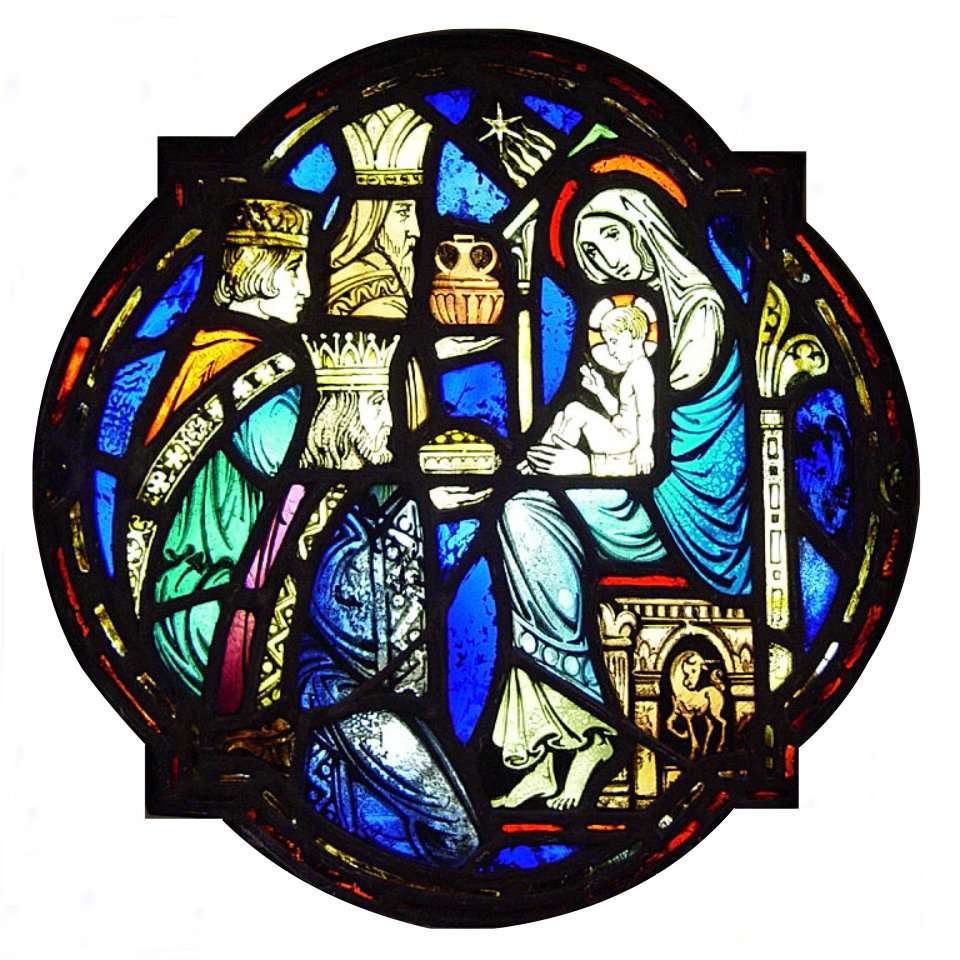
There is a stain glass window which now means much to me. I look at it every morning and evening when I say my prayers. The window tells the story of the visit of some chaps who have been to Cash-converters and snapped up gold, frankincense and myrrh. To be sure their gifts are a little unusual to bring to the baby shower that no-one wants to miss.

At the beginning of the day I wonder what I might try and offer to the people. Do I offer things divine, (frankincense), outstanding triumphant things (Gold) or do I sometimes walk into the midst of sadness (myrrh).

At the end of the day I try to reflect on what the day has offered to me. Sometimes gold, sometimes frankincense, sometimes myrrh.

The plan is to integrate all three into a wholesome little priesty. All three are necessary and pretty much daily fare. At this time of year, early in the morning, the window is just a solemn black sheet of glass. I know what’s there, it’s just that it has no light to illuminate the colours and the picture. I was turning this over  in my mind and I realised that there are some days that are like this black pane of glass. I know what’s there. I know the colours and the patterns and the gifts, but the beauty is hidden from me and the going is a little more sluggish. Does this mean that the beauty is no longer there, that the gifts have somehow mysteriously vanished? Not so. Everything is still there, still authentic and just as potent as it has ever been. It’s just that things are obscured for this little while. Perhaps in these ‘concealed times’ it is our turn to make some light.

Reflection: Sunday July 18

Holy Unction

Today's text…“They drove out many demons and anointed many sick people with oil and healed them”. Here we glimpse the beginning of the sacrament of healing or Holy unction which we still use in the Church today. It is a lovely sacrament because it is given to us by God and it is life affirming. Life on this side of the grave, and on the other. Twice I have had the privilege of using this sacrament for my own personal well being and it was a sublime experience filling me with confidence and joy. So you don’t have to be in palliative care to enjoy this sacrament. Folk have used it for everything from a broken leg, to an ultrasound, to cataract surgery, to depression. It is not something to be feared and we probably don’t talk about it enough. I hope this little homily will help.

We know that Jesus  loved the sick and often during his life healed them. Sickness is not a punishment for personal sins. It is a normal part of our everyday life. And I am really sorry to have to say that our bodies are hard wired to disappoint us. Christ Himself was sinless and yet he bore all the sufferings of his passion and understood human sorrow. Anointing of the sick is a Sacrament of Faith - faith in the Master physician and faith for the one who receives it. It might help if I read you the important prayer of the sacrament.

'Through this holy anointing may the Lord in his love and mercy help you with the Grace of the Holy Spirit. Amen.'

'May the Lord, who frees you from sin, save you and raise you up. Amen.'

So we express the care of Christ and the Church for sick people. Our Lord continues his compassionate work through the Sacrament with his sympathy and healing, just as he did when he was on earth. Christ came to eliminate suffering. He came to give fullness of life, both natural and supernatural. It is true that his main purpose was to give supernatural life, but he intends us to enjoy the fullness of life on this side of the grave as well. When he was on earth he cured the sick and sent his Apostles out to do the same. When we come to enjoy life on the other side of the grave, there will be no more sickness or death. 'Death shall be no more, neither shall there be mourning nor crying nor pain any more, for the former things have passed away' (Rev. 21, 4).

The sacrament helps those who are seriously ill to bear their sickness and gives a new injection of his life so that they may lift up mind and heart to God in spite of pain and weakness. The fifth chapter of St James' letter also describes the sacrament: 'Is any among you sick? Let him call for the elders of the Church, and let them pray over him, anointing him with oil in the name of the Lord; and the prayer of faith will save the sick man, and the Lord will raise him up; and if he has committed sins, he will be forgiven' (James 5, 14-15).It is administered by a priest who, in the name of Christ, prays over the sick person and anoints with oil the forehead.

As in the other sacraments, the sign used indicates the effects. Oil gives strength. The athlete anoints the limbs with it to strengthen them for the contest. In this sacrament, the soul is anointed by the Spirit to enable it to face up bravely to illness.. Oil also has a healing effect. The sacrament is intended primarily to soothe and heal the spirit, but frequently there are physical effects as well. Its primary purpose is not to restore physical health but to give a new share of supernatural life. On the Monday before Easter at a special mass in our diocesan cathedral, called the Mass of the Holy Oils, bishop Gary consecrates the oil to be used in the anointing of the sick, and the prayer he uses on that occasion indicates the purpose of the sacrament: 'O God, please send down from heaven the Holy Spirit into this rich oil, which you so kindly produce from the greenwood for the restoring of mind and body. Through thy blessing, may all who are anointed with this heavenly medicine be protected in mind and body. May all pain of mind and body, all weakness and sickness, be removed.' Do not put off using this sacrament. It is best done when the patient is conscious, able to cooperate with the priest as he prays and administers the sacrament, and with Christ who gives strength through it.

Jesus said, 'I came that they may have life and have it abundantly' (John 10, 10). He longs to give it to all and extends to all his tender invitation:

I commend this sacrament for your use and for your help.