Miss Cindafred

The tale of Miss Cindafred

Miss Cindafred lived in a parish many crow flights away and in a different age when dinosaurs and woolly mammoths ruled the earth.

Cindafred had been widowed young and had three burgeoning children. Her options were limited and she resolutely worked at least two jobs that I knew about. She was also frenetic in her work for the local parish. Once I foolishly made the suggestion that she might actually enjoy life a little bit more if she just slowed down a bit. My ‘wisdom’ was declined and I re-learnt that things are not always as they seem.

All this changed when her father died suddenly and unexpectedly. He had lived interstate and so there was a myriad of things to organise especially around the welfare of her children. But with the long distance to travel and the time away in a different albeit sad dimension, she had to do ‘enforced breathing’. She didn’t have to go to work for a couple of weeks. The children were competently and lovingly looked after by a good friend. And for a precious few weeks, it was as though CindaFred was in ICU on a ventilator. No one could get in to see her and someone else was doing the breathing for her. She didn’t have to do anything much, except let other people look after her.

Now while I was deeply sorry for Cindafred, something good came out of this and she came back to live life at a much more measured pace. This mortality business had rattled her and taught her a few things. In a sense, Cindafred came back as a new woman.

So ends my tale of Miss Cindafred who taught me that it is far better to breathe gently, slowly and in a measured way now than to find yourself in ‘ICU on a ventilator in the future.

The Better Part

Homily July 17.

“The better part”

In the scene from today's Gospel Martha and Mary welcome Jesus to their home, but they seek to welcome him in two different ways. Martha seeks to please the Lord by doing various things for him. The Gospel doesn't specify exactly what she was doing, but I reckon she was probably putting on the lamb roast, peeling some spuds and opening up a good bottle of Hugh Hamilton red wine...

Yet when Martha asks for Jesus' help in persuading her sister Mary to set the table and put the soup on, Martha receives what seems to be a mild rebuke.

I don’t think Jesus was castigating Martha for her service. What he was saying to her, was that the polishing of the silver and the kneading of the bread wasn’t a reason to get worked up. There was something more important, something that Mary, who had chosen the "better part," realised and that Martha didn't.

And what Mary recognised but Martha didn’t, was that Jesus had come to their home not to be fed…, but to feed. 

The welcome Jesus seeks from us is (not our caviar and champagne, cognac and cigars) but rather he seeks out and craves our time, our friendship, our love, our open ears and our open hearts. Like his visit to Martha and Mary, he wants to come and make his home amongst us. He earnestly wants to live amongst us and to live within us. This is what he desires and wants more than anything else. Mary understood this and sat at Jesus' feet listening to him as if nothing in the whole wide world really mattered - because nothing in the rest of the world does matter as much as… HIm.

Some very sketchy thoughts.

First, our hospitality is toward Jesus. Each of us is called to welcome Christ into our homes, our physical homes and the spiritual abode of our hearts and souls. At this Eucharist … today,… Christ knocks on the door of each of our hearts and our homes. He wants to come in and enjoy us.

The question is whether we, like Martha, are too caught up, anxious, and distracted by so many other less important things that we're welcoming into our minds and souls each day, that we no longer have the energy or space to invite him in. It's Christ, however, who ought to be invited in first.

Like Martha, we are called to work hard serving others but we're supposed to do it with the spirit of Mary. That's why all our work is holy. We should aim to have Martha's hands and Mary's contemplative heart so that we won't be distracted by many other things. Both are important, both are vital. This will free us so that we can be focused on Jesus even when we are doing our vacuuming, our typing, our visiting, our praying, our washing the dishes, hanging out the washing, and our family life. Then we will understand that we are getting fed by him in action so that we might feed others; not just by our work, but with the One who is always working within us. That's the vocation of every Christian.

Something else.

One of the most important forms of service we can give to others is to help them to form the priorities that will bring them to lasting happiness, holiness and heaven. Jesus wants to send us as missionaries to show them by our witness and words how to choose the better part and make God the true priority of our life. We live in a century where there are so many modern distractions and anxieties. Each of us is called to work as hard as Martha in setting an eloquent, attractive example like Mary, the example of a life with Jesus at the centre.

Today, at this eucharist we too, like Mary, have listened at Jesus' feet while he has fed us with his word. If we are very adventurous we will ask him to give us the courage to reorder the priorities of our life, and to base our lives on what he has reminded us of today. Jesus is the one thing necessary. Mary chose the better part. We can ask her to pray for us from before Jesus' feet in heaven for the grace to make the same choices today, tomorrow and each day going forward.

Last thing

I wonder if we understand how much we feed others?

And 

When we have been fed by another do we let them know that they have been Christ to us and fed us … Do we let them know what a joy it was and is to sit at their feet and engage with them. And just as Mary and Martha were forever changed by their pastoral visit; do we let our brothers and sisters know that we too, can never be the same again? All the time, every day we are, subtly, slowly, bit by bit changing people's lives just as surely as our lives are being changed.

Fr David’s Folly

Fr. David’s Folly

Over the past 3 three years, I must have backed out of my garage hundreds of times. It's a comfortable fit but there isn’t mega room to spare.

However, the other morning all that went awry as I scraped the winged mirror on the right-hand side thus  ‘liberating’ the outer shell and the next layer inside. Fortuitously the light/indicator still worked and the mirror inside can still be adjusted.

Full marks and high distinction go to the local car people who took compassion on me and already have ordered what is needed. I then had to telephone the diocese as they own the car I relentlessly drive around in. Our local trusty Registra guy Peter, could not have been nicer and more understanding. All the while of course I felt more dreadful and cranky with myself.

“How could I have done such a stupid little thing.” I said ‘Grrrr’ a lot and probably some other words that cannot and should not be repeated here.

Finally, my grumpiness subsided and the mirror looks like a bandaged, mangled thing to remind me of my folly.  But my foolishness is not just about the mirror that is askew. The worst bit of this ‘incident’ is the length of time I chose to hang onto my exasperation. I allowed this to bubble away inside me for several wasted hours. But that energy could have and should have been profitably diverted and used towards something far more profitable and fruitful. Now when I check out the dilapidated mirror I am reminded not just to reverse a little more carefully, but chiefly not to clasp onto things that I cannot change. To berate ourselves passionately and frequently is folly. Even more wasteful than the little dings that find us early in the morning in the garage.

Liminal Time

Homily 10th of July “Our Liminal time”

Fun fact friends. Did you know that the word wait occurs no less than 129 times in the Bible? Yes, that’s right 129 times. As far back as Noah waiting for the dove to return from its reconnaissance trip at the end of the rainy season, right through to Revelation where the angels are given a nifty white robe and told to wait a little longer, our good book is full of people just sitting around waiting.

We wait especially when we are in what our bishop calls a liminal time. One thing has finished and another is yet to begin. A very vivid example is when a priest finishes one parish and is yet to begin another. It’s liminal for the priest, it is liminal for the parish that the priest is leaving and it is liminal for the parish that the priest is going to.

But this liminal waiting thing happens in all sorts of ways to all sorts of people. You and I experience this frequently with the different chapters in our lives.

When we wait for the alarm to go off, when we are waiting for the doctor or another appropriate guru to see us; or simply when we are waiting for mass to start or the bus to come.

Something is finishing and the next thing is not quite yet.

Whenever I read the parable of the good Samaritan I wonder whether The Master knew of such an incident or had heard about such a tragedy. Maybe Our Lord had seen neglect from the people who he expected to be supportive and they had failed him. Maybe he had seen a complete stranger or someone quite unexpected, step up and offer some fabulous pastoral care.

No matter the back story, it’s certainly a pertinent reminder that our Church community should always be first and foremost in caring for those who are less fortunate than ourselves and especially those who come to us from different places. The travellers and those who are vulnerable.

In the parable, Jesus tells us the gentleman who is mugged on his trip from Jerusalem to Jericho, has to wait for the right person to come along and help him. His liminal waiting is the period of time from when the thugs and bandits abandon him on the road, to the time when the Samaritan comes and does some first aid, making sure that he has a comfy room, a pot and a parma at the local.

No doubt it would have been quite an uncomfortable wait for our victim and further, it would have been an excruciating experience when the lawyer and the local parish priest passed by on the other side of the road.

Waiting is not easy, especially when our plans are torn to shreds by outside forces that we did not see coming and we could have had no way of preventing, plotting or seeing the consequences of the unforeseen.

I think about this a lot. Maybe I think about it a little too much but I reckon that we are very much in a liminal time. We are emerging as people, community and church from one thing but the next thing hasn’t quite happened yet. We are still trying to get our head around what has happened, whilst all the time trying to work out our new environment with its tricks, its joys and unforeseeable complexities.

And it is frighteningly easy to be so absorbed in these mind games, that we forget that it’s really OK just to wait in this liminal time. We might be brutalised like the guy on the side of the road. We might be wondering when on earth some help will come our way and how come the folk that we thought would be of some help, brutally ignore us. And isn’t it an extraordinary and lovely miracle that the person that we have always been suspicious of, was the person who cheerfully looked after our every need and the needs that we didn’t even know we had?

What if we turned it around and in our giddy, hurdy-gurdy, must always be frenetic world actually said… Waiting is cool, good and groovy. Liminal times are the place where we learn most. They make us stop and breathe which is always a positive. The liminal space and place might not always be comfortable but it can be fruitful.

Usually, when we hear this parable we might think about which of the three people we are. The priest, the lawyer of the Samaritan. Sounds like the start of a joke. But there is another possibility. What if we are the victim on the side of the road who is just patiently waiting? Is it not possible that we are them and if so how can we best use this time to God’s glory? How might we transform our piercings into proof of His love and our love of others?

K.P.I. in the K.O.G.

When you apply for a job in the secular world there are things called K.P.I.’s.

KPI is the TLA*  for Key Performance Indicator. So if you work at the check out in the Supermarket, a Key Performance Indicator might be how many items were processed through your check out in any given shift.  Fortunately, the Kingdom of God does not work that way. It is with a great sense of relief that I can tell you that the number of people in the pew on a Sunday is not a KPI in the 21st century. Further, there weren’t any in Our Lord’s time either.

In today’s gospel, The Master has recruited 70 people and sent them out ahead of him. There’s no job description and no K.P.I.’s are mentioned either.

But we are given a hint as to what Our Lord expects, and you and I should find this very reassuring.

The Teacher goes on to say "That when you heal know that the kingdom of God has come near to you". Yep, that sounds about right.

But then he also goes on to say that when you are a flop and you are turfed out of the town, know also that the kingdom of God has come near.

So the kingdom of God coming near to you is not dependent on the sort of KPI that you and I might think is desirable and measurable… There is no mention of the number of lepers you should heal, the number of people you need to feed, or the number of haemorrhages stopped. The kingdom of God comes to us simply by being faithful and giving it our very best shot. And it matters not if there are 26 broken toes healed or none, 37 people anointed with holy oil or none. Whether you are welcomed by the community or not. The question is not how many confessions did you hear or how many Facebook likes did you get. The question is much harder. In the kingdom of heaven the KPI is, did we turn up the next day, the next Sunday, and the next.. and next … to try again and again and again. Did we continue to say our prayers and yes maybe even sometimes shake our fist at God.

The kingdom comes near to us just by faithfully having a go and being eternally consistent about it.

Some of the most endearing clergy and the most lovely people are those who did not convert oodles of people and have rip-roaring stewardship programmes and a cast of thousands. Some of the finest people who have patiently taught me most and fired me with inspiration are the chipped and the flawed and the busted. The ones who have been spectacular disappointments to others and most painfully of all to themselves. For in their shattered-ness they are quite magnificent and bless ‘em… they never ever gave up and that is what made them exquisite and amazing and awesome. The sort of people I would like to be when I grow up.

In Our Lord’s words, they rejoice not because they remained unscathed when they stomped on a protected species of wildlife and got away with it. They are at peace and are blessed because they know irrefutably that their names are written in heaven.

“I thank you, Father, Lord of heaven and earth, because you have hidden these things from the wise and the intelligent and have revealed them to infants”

It is not the wise, the witty, the intelligent, the good looking and the glamorous that have KPIs in the KOG. It is the infants, the naive, the innocent, the un-beguiling, the trusting, the faithful, the people just like you and me who struggle and giggle and stumble and yet still turn up at the altar knowing how much we need to be fed.

And yes there are times when it might all seem futile and too hard and we are left bewildered. The times when we don’t feel as though we have the K.P.I.’s, the gifts and the talents to set the world on fire and to fill the church.

But it is precisely to people like this, like us, Human beings with feet of clay and hearts that are shattered, that God sends out to transform and transfigure, slowly bit by bit in ways and times that we will never know.

By any K.P.I. you care to name, St. Theresa of Avila would have to be right up there. So next time you think that you are failing to meet the K.P.I.’s you have set yourself and the task would be far better suited to the talented and the dazzling Jimmy and Jessica who are always articulate and dashing, you might find St. Theresa’s words are helpful.

“Christ has no body on earth but yours; no hands but yours; no feet but yours. Yours are the eyes through which the compassion of Christ looks out to the world. Yours are the feet with which he is to go about doing good. Yours are the hands with which he is to bless others… now”


*> TLA - Three Letter Accronym

Meet Mother Silence

Meet Mother Silence  - your new best friend.

I was trying to negotiate an important phone call the other day. The content of the conversation was life-changing for the person at the other end. Fortunately, the effect was for the better. The things that we were chattering about would make a lot of people smile.

When I put the phone down I felt humbled and responsible. This was not something to be taken lightly and there were a number of convoluted intricacies that needed to be weighed carefully.

My guess is that each of us will have to make and receive such phone calls in our lifetime. Some will end in grins. Some will end in anger and tears.  Some we will have to initiate and some will find us. But the thing that I have found most helpful is to pause frequently and in large quantities. Let the Mother silence do the talking. Mother silence is a very effective communicator. I know it sounds odd, but saying nothing allows the speaker to gather their thoughts and find the best fitting words. Mother silence also allows the listener to process the information, in a timely way and to assimilate it, even if the news is not gorgeous.

It’s OK to allow Mother Silence to have some space in the conversation. In fact, I would argue that it is essential that you give over to her frequently. She has done this sort of thing heaps of times before and she is really good at it! She has "the words" when we have none.

The conversation does not have to be jam-packed with words. The conversation will be far more fruitful if you let your new best friend Mother Silence speak for you. Go on… just take a deep breath, close your mouth and listen to your new best friend.

Pentecost 2

“Name your demons”. A reflection for Pentecost 2.

Today it might be helpful to begin with a little geography lesson.

The sea of Galilee is roughly oval in shape. It is 21 kilometres long and 11 kilometres across. It is a four hour boat trip from top to bottom for the sea of Galilee and the voyage is fraught with danger.

In today’s story Jesus begins right at the top of the sea of Galilee and he travels all the way down to the bottom to the country of Gerasenes.

Its quite a feat and it would have been a whole lot easier for Jesus not to have made this trip at all. Surely there would have been heaps of other people to see, heal, feed and teach.

So the first point I make is that Jesus went out of his way to visit this tormented man. We are reminded that the Master Healer will go to any length, to any place, to seek out and heal those who are tormented.

The Gospels don’t say how Jesus heard about this guy but it is very clear this is why he made the ferry crossing. As soon as he lands there, Jesus is met by this man, and as soon as he has accomplished this exorcism he leaves.

The One through whom all things were made, went into the country of the Gadarenes in order to rescue this one solitary wretched man. The demoniac is not an interruption or a kindly detour. This was always going to be part of Jesus’ itinerary.

Now as Jesus steps ashore the demon shouts "What have you to do with me, Jesus, Son of the Most High God?”

Knowing your opponent's name was regarded as a means of establishing dominance. The demons seek to establish power over Jesus by stating his name. But Jesus turns the tables on on him and asks ‘What is your name?’ Jesus demands their name and the demons submit to him. And we know how the rest of the story goes. The man is exorcised and the local swine herd go for a dip in the ocean.

It’s a splendid piece of pastoral work and you would have thought that everyone would want to get Jesus to stay on for a bit. But not so. They implore him to leave. Why?

Well for one thing the owner of the herd of pigs would not have been impressed. He was probably just fattening up his swine for market next week when… hey presto … next month’s income vanishes thanks to that intruding, uninvited Jesus guy.

Further we are told that the locals were full of fear. Fear of the outsider, fear of someone and something different, fear of relinquishing that which is comfortable and known. And the fears that they could not or would not name.

The ‘Outsider Jesus’ confronts this community just as surely and effectively as the foreigner, the newcomer, the interloper confronts us. We fear disruption and we are challenged when what has always been unshakeable comes crashing down around our ears. The outsider coming from outside of our perspective and our world makes our certainties rumble and quiver. And while this may be disquieting and unsettling it will also do us a whole lot of good.

For the healed man, Jesus being encouraged to get back on the ferry must have been quite sad. His hero and healer was leaving him.

My guess is that there are times when we are like the healed man. It seems that we are the only people who ‘have got it’. The more insidious truth is that there are times when we send Jesus away. Yes there is some lovely gooey yummy stuff but messing with my whole life Lord, that’s just a bridge too far. Am I really prepared to change… everything?

My name is legion… for I am many.

Do we know the names of our personal demons? Can we identify the ones in our community? Can we name them, for in naming them, we confront them and in confronting them, we banish them? And then we say sorry for the damage they have caused?

It is difficult to over emphasise the need for this process. To name our demons and say sorry when we have damaged our relationship with God and others.

We say sorry not to try and placate a grumpy God. The focus should always be on cementing, refreshing and renewing a friendship with the one who we have turned away.

The story of the demoniac is about the promise of God's ability to defeat and re-order the disordered powers that afflict individuals and communities

And if we read carefully, it will also teach us that our loving God has been searching us out, finding us, healing us, embracing us and reconciling himself to us, long before we realised how tormented we really were. Remember the perilous boat trip was 21 kilometres and four hours long.

Right at the end of today’s gospel the people ask The teacher to leave their neighbourhood… And he complies. The healed man begs to get on the boat with Jesus, but Jesus  has a different plan for him. ‘Return to your home, and declare how much God has done for you.’

And if it is good enough for him…

Whinge

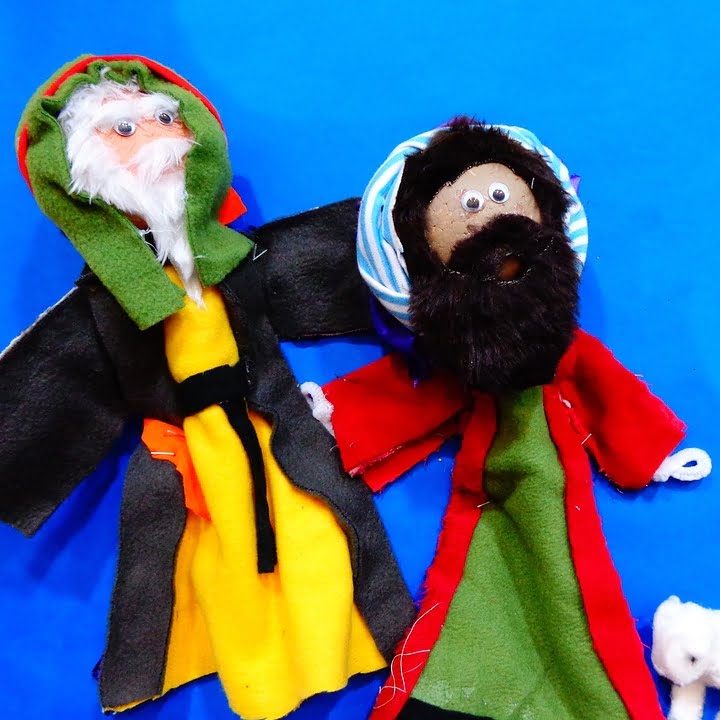
When I have completed my snowman and ark I shall be able to write more words like this.

I was having a good ol 'whinge. Yep, a colleague and I were munching away together and the conversation inevitably turned to the past couple of years.

“There were times” I wailed “When it was just me and the iPad in chapel”. My compatriot patiently listened. “I would set it all up, offer the eucharist to the screen, then pack it all up and go home. I do not understand what happened or indeed if anything happened. What was it all about” I griped? “I mean, what on earth was I doing?”

My friend smiled, sipped his beverage and calmly offered the reply that I needed to hear. “What you were doing was simply being faithful” Odd, I had never thought of it that way. It certainly did not feel like I was doing something that was as noble, august and important as ‘being faithful’. In fact it felt desolate and humiliating.

Frequently it takes someone outside the situation to see it as it truly is. We are so subsumed by our own ‘stuff’ that we fail to see what is truly going on and far from being a solitary figure on the screen, I was in fact worshipping with angels and archangels.

I strongly suspect that this sense of isolation and weirdness was not limited to this wonky old priest. That it might well have been identical to the experience of countless others right around this precious planet of ours.

Sometimes its just a matter of rocking up, being the person you are supposed to be and simply being faithful. That's all. There doesn’t have to be superlative and enlightened answers on our lips. It’s most likely that there will be a list of unanswerable questions instead.

I console myself with my buddies' words. “Sometimes it's just about being faithful.”

The Gift of Frankincense

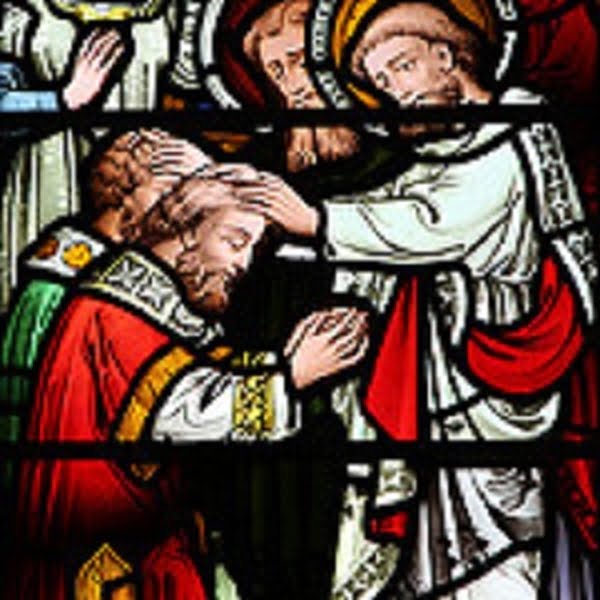
You’ve heard me prattle on about this window before. You know the one where the three guys are offering gold, frankincense and myrrh.

I am acutely aware that sometimes I am like the gentleman that has the gold. There are lovely, shiny, sparkly things that I give. There are other occasions where I find myself in the middle of some murky myrrh. The sadness and disappointments of life.

Then there is the Frankincense. The God stuff which is much harder to discern. It is very difficult to see, know and understand when I bring frankincense into someone’s life. A classic example of this are the homilies that I offer. The ones that I am proud of and put a lot of angst into, are the ones that frequently draw snores, not applause. And the ones that I think are flimsy rubbish are the ones that some folk find most valuable.

And perhaps that is the way it’s supposed to be when we offer or try to offer this God stuff to others. It is not supposed to be quantifiable, or tangible or identifiable. And this ‘slipperiness’ is what makes it all the more desirable and attractive. It’s elusiveness will tease us, taunt us and  tantalise us further along the path than we had ever dreamed of or planned. If we had been given cool, clear directions to go down this track, in this way and arrive at this destination, then we would probably have said a polite but firm ‘No, Thank you’. But by seducing us into a merry dance, we giggle as we go on our way to slay dragons and conquer death itself. Your wispy incense might seem ethereal but it is all the more potent for that and will always be a fragrant offering to Him and to others.

Trinity

“Let’s do some ironing” a reflection for Trinity Sunday

“I still have many things to say to you, but you cannot bear them now.”

On first reading of these words a sense of frustration bubbles up within me.  How come I can’t know the many things God wants to say to me today? I can deal with it. I can take it and by the way what exactly are those ‘things?’

Surely I should know, surely I have a responsibility to know, and dare I say it …I have a right to know… and yet… the Masters words and their meaning are quite  clear. Not yet.

It would be irresponsible and possibly  damaging for me if I were to know those ‘things’.

So we might look back and think about some of the painful things we have learned over the years. If we are honest and had known how adventurous and challenging and yes how painful the journey was going to be, then maybe we would not have signed on at all.

We would have typed a quick letter declining God’s very generous offer of the role of a cross carrying, foot washing, endlessly forgiving servant. We would have packed sun tan lotion and bathers and headed for an apartment on the Gold coast.

But we didn’t type that letter and here we are, sometimes years later, still signed up and showing up. We also realise that if we had given up we would have missed out on some of the most sumptuous and exquisite ministry both given and received. Moments of unlooked for, indescribable beauty and exquisite love. The undeserved moments that found us simply because we were open to the possibility.

“I still have many things to say to you, but you cannot bear them now.”

So I wonder what else God might have in store for us in the future. When we are ready He will whisper these things to us and lead us into situations and encounters that we could never have dreamed of. Things that we cannot bear on the 12th of June 2022, but will be ready for next week, next month or even next year.

So today’s gospel is really about all time.

This is our experience, that we need time to understand what Jesus said, for it is often not a question of theoretical knowledge, but of things of the heart: the meaning of love, of suffering, the presence of God in our life, in others, in the Church.

So the Masters words are liberating and refreshing. It’s OK not to have all the answers given to us on a platter yesterday. It’s OK to go on questioning and asking and listening and praying and waiting. Today’s gospel is not just about the present, its about having confidence and trust and faith into the future.

The world will keep turning as it always has from the beginning of time. The church always finds itself trying to understand and live its faith in the midst of social, cultural, and global circumstances that change rapidly.

The Holy Spirit will keep on leading, challenging, nudging and prodding us. As we totter along through time, all we have to do is be open to the hints that he feeds us even when and especially when,  we might find them unpalatable.

It might have been tempting for John to devalue any new understanding of the Christian message that emerges when Jesus is no longer visibly present.

But no, John places firm confidence in the Spirit as continuing the ongoing presence and revealing of Jesus within the Christian community. For John, the church does not need to fear learning and practicing its faith in Jesus in the midst of a changing world marked by Jesus’ physical absence. The Spirit “will declare to you the things that are to come” In other words, the Spirit makes possible a “deep understanding of what Jesus means for us here and now in the year 2022, without betraying the core truth of Jesus’ original teaching in the year nought.

The trick is to be totally focussed on the present, whilst being open to what will find you in the future. And here’s a story about how to do that.

Imagine yourself doing the ironing. Right now, doing the ironing is the most important thing in the whole wide world. It’s all you are and it’s everything you are doing. You are not hanging out the washing, or typing an email or chattering with Mr. Guffoops about chooks and the footy. Right now, at this very moment, you are doing the ironing. You are not thinking about anything else.

New things do await you. New things will happen; exciting and disappointing escapades will find you. Nothing surer. But at this very second you are completely absorbed in just doing the ironing.The things that God has to say to you will come in His time, not yours.

‘I still have many things to say to you, but you cannot bear them now.’

Perhaps we will be most ready to bear them, when the ironing is pressed, folded and stored tidily away.

Pentecost June 5th

“When we just don’t get it.” A reflection for Pentecost June 5th

Today I want to monkey around with Philip’s challenge.

 Philip said to Jesus, ‘Lord, show us the Father, and we will be satisfied.’

The word ‘us’ is intriguing. I wonder whether the disciples had been gossiping about Jesus and decided that they needed a publicity stunt to convince them that they had voted for the right guy.

Phillip’s statement has all the hallmarks of

“A few of us were talking the other day Bishop Gary. We reckon you ought to do A, B, C, Q and Z.3 and then we will be satisfied.”

Now I could be hideously wrong here, but I suspect that Philip might be the self appointed spokesperson. Further, I think this challenge to our Lord is not a spontaneous conversation, but one that has been bubbling for some time.

Now I think that if I had been the one to have been confronted with this challenge, I might have retorted with something very unhelpful like…

‘And if I don’t show you the Father Philip… What then’?

At best, it’s understandable response, at worst its a very unhelpful one. Calling someone’s bluff whilst ignoring the underlying issue never goes well.

A better question is … ‘What has led Philip and probably the others to this point?’

Now while we’re not explicitly told there is a clue. ‘Show us the father and we will be satisfied. Ergo… Philip and his buddies are not satisfied. And here I think of the people Moses led out of Egypt.

Having escaped slavery and Pharaoh who refused to go to the Fair work commission, they wander about the desert and complain about the lack of water, the lack of food and the lack of meat. They recall the smorgasbord of things that they eat whilst being paid below the minimum wage. Moses goes up to get them no less than 10 commandments and he’s gone far too long and so is replaced with a golden calf. They are not satisfied. They have never been satisfied and frequently God and Moses get pretty jolly grumpy with them.

The good news is that Philip’s challenge is not about being satisfied. It is not about being full and yummy and complete and then walking away. If anything, our encounters with God, the times that we glimpse him out of the corner of our eye, should always leave us wanting more. They should tempt and tantalise us, drawing us further and deeper into the relationship. These brief skirmishes with the divine are not supposed to leave us complete and sated forever and ever.

Something else about Philip’s challenge.

What if.. What if Jesus had said.

‘What a splendid idea Philip. Jeepers, I can’t think why I haven’t done this before’. And Abracadabra, in a puff of magic smoke the Father appears in all His dazzling glory.

And after the first 5 minutes of taking it all in, would they really be satisfied? Like completely and utterly and never ask for anything else again?

From what little I know of human nature, my guess is that with the passing of time they, like us, would want something else. Another sign, another magic trick. And there is a very slippery slope just waiting to dash us all here. Very quickly it becomes ‘we have seen the Father and you haven’t.’ ‘Us’ versus ‘them’. We're better than you because we have enjoyed this beatific vision and you haven’t. Therefore you must be somehow lacking or sinners, or both. And once that division occurs, it is very difficult  to mend.

So Philip doesn’t get it. It’s not about a magic trick.

Jesus understandably responds with a tirade of 3 rhetorical questions.

  1. ‘Have I been with you all this time, Philip, and you still do not know me?
  2. Whoever has seen me has seen the Father. How can you say, “Show us the Father”?
  3. Do you not believe that I am in the Father and the Father is in me?

The Father has been active and present before Philip’s eyes all the time. Jesus and his Father are inseparable and to have seen Jesus at work is to have seen the Father at work.

Now it’s all very easy, glib and trite for us to disparage Philip. We have the benefit of hindsight and we have John’s splendid gospel. But the briefest moment of self reflection will show us that we all have ‘Philip like’ moments. There are times bless us, when we just don’t get it. And we ought not to be too hard on ourselves and others when we just don’t get it.

And we are tempted to say that it was easy for those first 12. They had the real deal right before their eyes, we don’t. So where do we go looking to see Jesus and thus see the Father?

There are moments when The Master reveals himself and it is lightning and rainbows and lovely and peachy. And we ought to delight in and celebrate those moments. But we also see Jesus and the Father in moments of brokenness.

We see him in broken limbs

We see him in broken bread

We see him in broken lives

We see him in broken hearts

Perhaps most of all in the times when we just don’t get it. May we see the Father in our ‘Philip moments’. The moments of our own brokenness, the moments when we just don’t get it.

The Scrap Bucket

Scrap Bucket

The lesson of the scrap bucket.

We have a scrap bucket in the rectory. Well actually, it's a recycled 4 litre ice-cream container. No lid, just the base and it sits hungrily on the kitchen bench. Into it goes my apple core from breakfast, the veggie scrapings and various other unmentionables. It’s a handy device and needs washing out from time to time. It also needs emptying on a frequent basis.

So out I go, ‘scrap bucket’ in one hand and shovel in the other. I find a bit of spare ground in the garden, dig a hole and plunge the contents into the waiting soil. Then simply back fill the hole, put the shovel away in the garage and the scrap bucket back on the bench.

At this time of the year it’s chilly and I don’t relish the time outside. But this is the right thing to do for a couple of reasons.

First, it enriches our garden soil and helps us to grow worms, fantastic veggies and flowers. Secondly it cuts down on landfill.  But ultimately there is something very important that I learn and relearn from this couple of minutes in the blithering cold.

That everything, literally everything, has a meaning and a purpose. Nothing is to be wasted, everything has value. We have learnt this in our multi colour bin lids and the way that we package things. And I realise afresh that even when I have had a rubbishy, scrappy sort of day, I am still treasured and vital in the Masters eyes. And if this is true of the priesty guy who lives at 39 Griffin street, then it is most certainly true of everyone, everywhere, in every street, nation, colour and creed.

Everything and everyone has purpose and value. This is the lesson of our scrap bucket.