Screens

Screens are great… but

I well remember one of my first days at St. Michael's Grammar School, where I had a go at being a school chaplain.

My supervisor/friend/mentor handed me my bright shiny, complimentary laptop and explained.

‘This is how we talk to each other.’

At first, I didn’t quite get it. Surely you actually speak face-to-face when you have a conversation. That’s the way it’s done in a parish. You make a time, knock on the door, enjoy a refreshing beverage and listen to each other. It took me a few weeks to understand what he meant. It was quicker, easier and more efficient to simply tap out a quick email, send it off to the other and get a response. All fine and dandy… up to a point. Business can get done that way, and I strongly suspect that is how it is often done. It works well in a school environment at an administrative level, but something is missing, and it is not the daily grist of priestly parish life.

Those who know about such things tell me that most of the information we impart in conversation is not the spoken words but the way we say them and the subtle or not-so-subtle verbal cues. The crossed arms of grumpiness, the open arms of consolation, the laughter to signal uncontrollable joy. The tears of deep sadness, the silence of companionship. You can’t do gentle, tender, convivial quiet on a screen together. It’s simply not the same, and for all that emojis are fun, they just don’t cut it.


While it is true that I do some things on a screen and it works at one level, I give thanks that often my best encounters are at the kitchen table, where little is spoken, and the screen is absent.

Beatitudes

Homily

About the author Lisa Kelly

Lisa Kelly is an Ignatian Associate living in Omaha, Nebraska. 

She has a Master’s in Public Policy from Harvard and a Master’s in Christian Spirituality, together with a certificate in the Ignatian Tradition.

Lisa is co-director of the nonprofit La Storta and an accompanier for the Discerning Leadership Program. She leads retreats and leadership courses.

She is the author of the book The Spiritual Path.

She has four grown children and a 30+ year marriage filling her heart. Lisa is a grateful cancer and bone marrow transplant survivor, and believes that every day is a gift.

 In her reflection, which I have called  “The In crowd”, notice how she flips the common perspective of the Beatitudes on its head. Instead of wondering whether Jesus sees me as living out the beatitudes, we are challenged to confront the reality of whether we see others as blessed. Perhaps it is when we see those around us as blessed that the bestirring mystery of love finally happens and we find that in turn we become blessed. Looking outwards at others, rather than trying to look at ourselves and see if we are part of the in crowd.

Lisa Kelly writes

For all of my life, as I have heard the Beatitudes read, my first reaction has been: “Which one am I? I am definitely not the poor in spirit. Am I the peacemaker? Am I the one who hungers for righteousness?”

Essentially, I saw the teaching as who I needed to be to be “in” with Jesus. So after 40-plus years of trying to find myself in the Beatitudes, I experienced a bit of a revelation through the Ignatian Prayer Adventure to find that the Beatitudes are less about who I am and more about how I see everyone else. They are about seeing others through the eyes of Christ.

The Beatitudes appear in the Gospel of Matthew and are shared shortly after the call of the disciples. If I put myself in the scene as St. Ignatius instructs, I’m the one with the Hermione Granger hand shooting up in a panic to be called on, “Oh, pick me! Pick me!” even though I have no idea what exactly Jesus was seeking in the call of his disciples. Instead, he walks on up the mountainside, and I am left feeling a bit dismissed.

As the crowds begin to form to hear Jesus preach, I feel oddly competitive and judgmental. I wonder if he sees me as just one of the crowd. Suddenly, as if asking the question were the key to taking me into his head, I find myself no longer one of the crowd, but rather staring at the crowd through Jesus’ eyes. He begins to preach the Beatitudes, but I am now seeing people differently. As he says, “Blessed are the poor in spirit,” I notice a woman who dares not look up, but I now know her story of being ridiculed relentlessly from a young age. As Jesus says, “Blessed are those who mourn,” there is a man standing against a tree with distraught eyes, red and glassy, with tear streaks down his face. Somehow, I know he has lost his child and subsequently his will to live. And as the sermon goes on, each of the “in” crowd shows himself or herself with their stories, ones I had been too self-focused to imagine previously.

It was less than two minutes of prayer and reflection, yet it changed my understanding of what it means to be “blessed.” Each of those around me was blessed in some way—if only I was willing to look for it.

Now, when I hear the Beatitudes, I don’t worry if I fit in with Jesus’ list of the blessed. Instead, I hear how I am called to see others. When I walk down any street, I can hear that same voice in my head, “Blessed is this one and that one, and him, and her…” as if Jesus were pointing out individuals to me. Those whose stories I don’t know are not my competition and are not there for me to judge. If I can begin by seeing each individual with the title of “blessed,” I find myself blessed just to be in the crowd among them.

How to make a disciple.

25/1/26

How To Make a Disciple.

Some of my favourite ‘I don’t have to think about television shows are actually cooking shows. Nigella Lawson, Rick Stein, Adam Liaw, and Canadian bakeoff to name but a few.

The scenery is exotic, the food looks scrumptious, and we are always reassured that it smells enticing and tastes terrific. Recipes are available on the website, and the dishes never fail.

Today’s gospel is a recipe on how to make a disciple. It looks easy; any crazy fisherman could do it, and we are even given a pattern of a recipe.

Cure the sick, proclaim the good news, cast out a few skanky demons and say the mantra ‘Follow me’ often enough and… ta da! Here’s one that was prepared earlier. Well, this seems simple enough.

But what is not immediately apparent is that there is a lot of hard work that goes into making a disciple, and just as we don’t get to see the slicing and dicing, the gathering of the ingredients and the waiting, so there is much that lies hidden from us in the gospel. On a quick, cursory reading of the call of that first motley crew, we are only given the skimpiest of recipes.

So today I want to go behind the scenes with the camera crew, the research editors and the sound techies and offer a few little insights into some of the hard slog, laborious, unglamorous work in making a disciple.

The first ingredient you need, and this might sound really odd, is you start with several large dollops of silence. You simply just place yourself in The Master's presence and listen to what He has to say. Still yourself and learn again, for the umpteenth time, this whole exercise is not about you. It must always first and foremost be, about the one who calls and the one who he is calling.

You might find this silence thing easy to do, but I never have. Yet I know it to be an essential and vital ingredient in our recipe. Silence before your encounter, silence during your encounter and silence after. Just as our master chefs on the screen liberally slosh and splash wine into the pan, so too be generous and uninhibited with the amount of silence you use.

You get better results that way, and you’ll be a better chef for it.

The next step in the recipe is reorientation. The disciples had their sights set on the next great catch of fish, and they had to have their focus shifted from lots of mackerel and tuna to the calling of the vulnerable, the grubby and the undesirable. This is what you will be catching from now on, gentleman. You will be catching people. Flawed, fallible, hard-wired for sin and mortality, human beings.

Reorientation is hard, and it is hard because it is not a simple, straightforward one-off forever and ever action, but a continuous, consistent, conscious turning and focusing away from the past and its ick, to the future and the joy of walking with Him. Looking forward together. All Disciples, no matter how long they’ve been trying to follow the Master, are sorely tempted to look back to the past. Guilt is a great head turner.

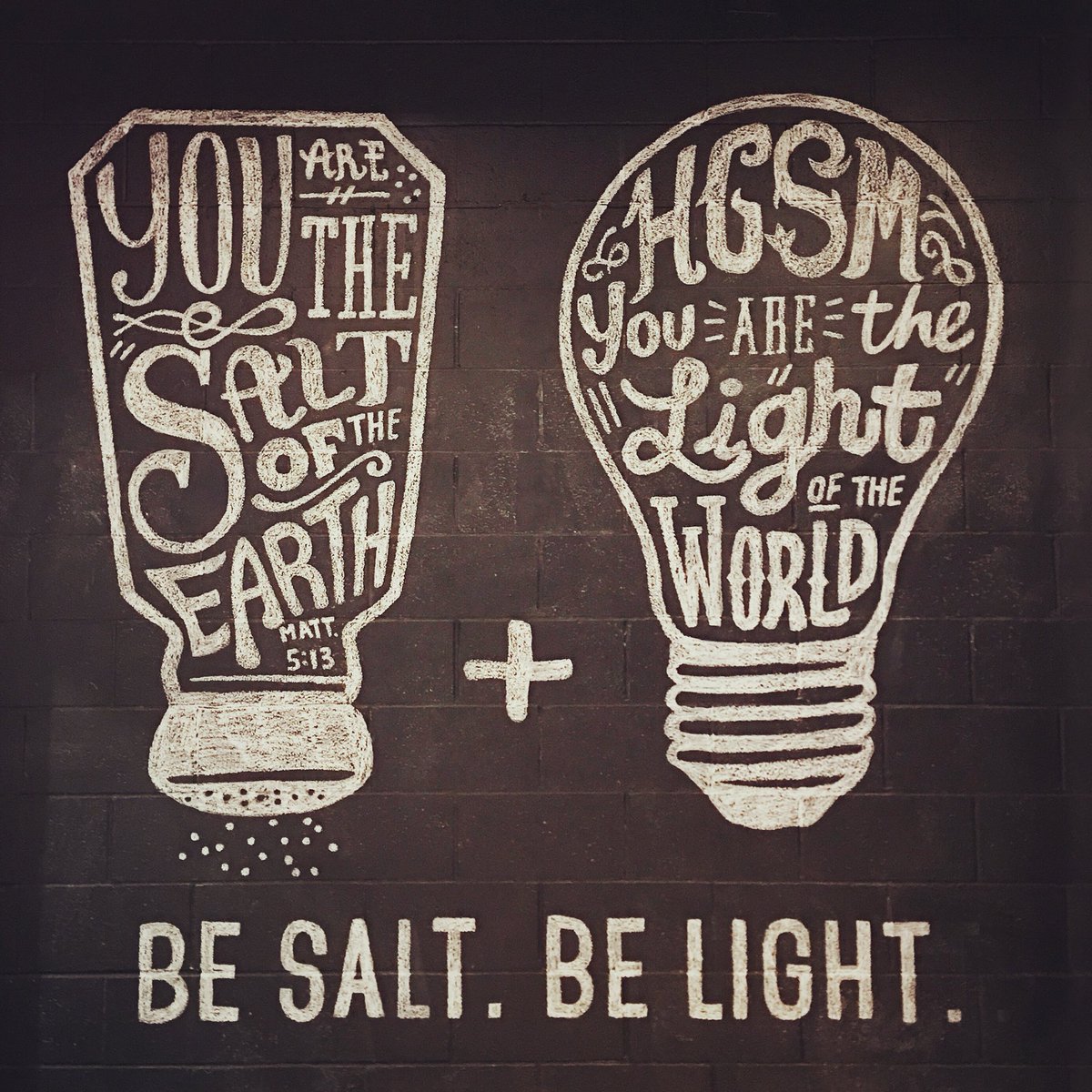
The next ingredient is light. Bright some light, shed some light, BE the light. Many of us, I suspect, have been in a social setting where there has been at least one person in the room who has been glowing. They are not usually the noisy ones, the gregarious ones, or the extroverted. They are the ones who you know you can trust, who have an inner calm and confidence, whose faith and inner strength you just know that you can rely on. These are the fisher people who give off His light, and others are drawn to it. Be this light. Be his light.

What else is in the recipe?

Healing.. this is both easy and difficult. The method is easy. Just sit with the would-be disciple and listen. You might have to sit in silence for a long time, many times, but this willingness to sit alongside and listen, not condemn or offer shonky advice, but to ask questions and wait…. Is far more effective and beneficial than the sling,  antibiotics, or blood test. There’s outward healing with Band-Aids and IV drips, and you rightly go to the right appropriate places for that sort of healing.

For everything else, the really important healing, use the instruments of an attentive ear and a pastoral heart.

It occurred to me as I wrote about all these ingredients, silence, reorientation, light, and healing, that these are not just for newly minted disciples. These are all things that the well-seasoned, much-experienced disciples strive for and continuously aspire to. So perhaps I should simply say this.


That in order to make a disciple,… first… become one yourself.

The Horton Criteria

The Horton Criteria

Some of you will remember fondly the wit and charm of Dr Seuss fondly. He wrote such immortal classics as ‘The Cat in the Hat’, ‘Green Eggs and Ham’ and ‘Horton Hears a Who’.

His phrases have echoed with me down over the years, like ‘I do not like them, Sam I am’ and

‘A person is a person no matter how small.’

We glimpse this simple ‘Horton truth’ especially in children. We know that they are infinitely precious. A real person who gradually reveals more of themselves over time. A living, dancing, jumping, laughing, vulnerable, enjoyable miracle.

But somehow, as the years whizz by and they grow up, we become very adept at attaching labels to them. We have become very inventive at this process, and there seems to be no end to the labels we can affix to people and the way we attach them.

We have a plethora of gender labels, and the labels that tell us how others express themselves most intimately. We have labels describing our origin, our place of worship (if we have one), our current address and what colour tie our favourite politician wears, if, in fact, they wear one at all.

Sadly, I strongly suspect that we are not done with this labelling process, and we will find new designer labels to affix to our brothers and sisters. I am open to being convinced that the whole labelling thing is jolly unhelpful and very unproductive.

At the moment, I find it disappointing and restrictive. By focusing on one label, we are limiting our thinking to one singular aspect of the other. The reality is that people are much more like a kaleidoscope with unending multiples of colours and dimensions.

Couldn’t we just use the ‘Horton criteria’. ‘A person is a person no matter how small?’

Of Introductions

18/1/26

Today's homily is an excerpt from a homily by Alyce McKenzie.

Alyce M. McKenzie is Professor of Homiletics at the Southern Methodist University Perkins School of Theology in Dallas, Texas. She is the author of a number of books including "Preaching Proverbs: Wisdom for the Pulpit" and "Parables for Today,"

Of Introductions

I have a friend, Susan, who says her husband always remembers a face but seldom a name. So when they go to a social event and approach someone whose name he should know but does not remember, they have devised a social strategy that works for them. He places his hand gently in the small of her back and guides her toward the person with these words, "This is my wife, Susan." Anyone with any manners at all is going to respond by giving their own name. Not many people are going to just stare at Susan until it becomes awkwardly clear that her husband has no recollection of their name. I'll bet that any of you reading this would respond by putting out your hand, shaking her hand, and saying, with a gracious smile, "It's nice to meet you, Susan. My name is ___________."

Our text for this morning has John introducing Jesus to some of his (John's) disciples, with the description: "Look, here is the Lamb of God!" This is called a "revelation formula”. John likes to use this technique when recounting people's interactions with Jesus in his gospel. For example In 1:49, Nathanael introduces Jesus to his view of him: "Rabbi, you are the Son of God!" Jesus dying on the cross introduces his mother to the disciple whom he loved and vice versa. "Woman, here is your son. . . . Here is your mother."

In today's gospel, Jesus prompts the disciples to figure out their own true identity, or, more precisely, to be guided toward it by Jesus. It's an odd scenario, really. Not like anything that would happen in ordinary social gatherings when people are introduced to other people. John introduces Jesus to two of his own disciples. It sounds like he may almost have been talking to himself, and they overheard. They followed Jesus. When he turns around and asks, "What are you looking for?" he is asking them to identify themselves. To say something like: "We are two people looking for meaning and purpose in our lives, and we think you may be it." I think the reason they don't say that is because they are not sure who they are or even that they are looking for something. So instead of answering, they counter Jesus' question with another question: "Where are you staying?"

And they stay with him all day. At some time during the day, Andrew, one of the two, goes and gets his brother Simon. He introduces Jesus to his brother from a distance with the description "This is our Messiah, Jesus." In the subsequent face-to-face encounter with Jesus, Jesus gives Simon a new identity: "You are Simon, son of John. You are to be called Cephas" (1:42).

In terms of my friend Susan's anecdote, John the Baptist is introducing us to Jesus, saying, "This is the Lamb of God, Jesus."

This introduction tells us three things about Jesus.

First, He is the lamb who destroys evil.

Second, He is the Suffering Servant willing to give his life for the redemption of his people.

Third, He is the paschal lamb who takes away our sins and leads us from bondage to liberation.

In bread and wine, in spoken word and silence, in stolen homilies, in chortles of laughter and unstoppable sobbing The Master introduces himself to us.

It is now up to us to put out our hand and say who we are and allow him to shape our identity in the year to come.

I suspect Susan's husband is not the only one who utilises the "this is my wife, Susan" social technique to get somebody to reveal his or her identity to them. I admit to having used the "this is my husband Murry" approach on many an occasion. It worked for John the Baptist, as he introduces Jesus: "This is the Lamb of God." It motivated two men wandering around looking for something, unaware they were looking for something, to follow Jesus and allow him to give them an identity as more than wanderers.

This is the one who will shape our identities if we choose to follow him. This is the one who is working against injustice and brutality in our world and in our lives. This is the one who was willing to sacrifice his life that we might have a new life and who calls us to sacrifice selfish aims and comfortable goals. This is the one who opens a path to that new life through choppy seas and roaring waves. Through the grave into eternity itself.

Hoping for an answer, today he looks at us lovingly and says


"Look! I am the Lamb of God." And you are . . . ?


God of our Messiness

God of our Messiness

We are sometimes seduced by the thinking that God is especially present and vigorously active when our life is all cruisy and sweet. Surely we see Him at work in next week's Tattslotto numbers, when a gorgeous person falls in love with us. When the stars align, it must mean that there is a God and He is actively looking after us.

It's a little harder to glimpse Him when things go awry. When there is that sudden and unexpected death, when there is a serious falling out with someone you care about and when you tragically, finally must go to the vet with a pet who cannot be made better.

The God I know is just as present, active and energetic when He is stirring the messy, bubbling cauldron of our lives. He is just as comfy with our weeping and whimpering as he is with our laughter and giggling.

The faith I profess and try to live up to must embrace every gamut and every atom of who we are. Nothing can be separate from or held aloof by God. Rather, he takes our messiness into himself, subsumes it and makes it holy.

We glimpsed this in the muck of the manger at Christmass. We will see it vividly on Good Friday. God is right there when we witness the very worst that a Human being can do to another. I see the God of our messiness frequently at funerals where people tenderly, but magnificently, rise to support and nurture one another in ways that surprise even themselves.

So next time I am up to and in over my neck, in an icky mess, probably of my own making, I will remember that I have a companion in the cesspit of alligators with me. The God of my messiness.

Take The Plunge

11/1/26

Take the Plunge.

Most of you will be aware that it took centuries, literally, for the Church to decide which books of the Bible make it into the formal Bible we have today and which didn’t.

Our Book of Revelation, right at the end of our bible only just made it. There are books like the Maccabees that appear in some Bibles and not in others, and there are other writings that didn’t make it in at all. For example, there is a fabulous piece of literature called the gospel of Thomas. To read this on the surface with a refreshing beverage and a dish of pistachio nuts, you would probably find yourself asking how come Revelation made it in, and The Gospel of Thomas didn’t?

Another candidate that didn’t make it into our bible was called ‘The gospel to the Hebrews’, and the gospel to the Hebrews gives us one answer to age-old thorny questions that lie in the story of the Baptism of Our Lord.

  1. Why did Jesus, the sinless Son of God, receive the "baptism of repentance" meant for sinners?
  2. Why did Jesus wait for thirty years to begin his public ministry?

The strange answer for the first question given by the apocryphal book, The Gospel according to the Hebrews, is that Jesus received the baptism of John just to please his mother and relatives. Anything to stop the whinging… please. And there is an echo of ‘wanting to be obedient to Mum’ in the story of the wedding at Cana.

In John chapter 2, Mother Mary makes it quite clear to her adult son that he should do something about the depletion of wine at the wedding reception. She seems to put her son in an impossible situation, where, in front of the bar tenders, she says, ‘Do whatever he tells you.’

Ultimately, I think (and I am not a great theologian) The Master must always have free choice and to do as He pleases. Think of the story of him absconding in Jerusalem at the passover when he was just a lad. Nothing could be further from the wishes of St. Joseph and Our Lady. Even lying down on a splintery wooden cross and having nails driven through his hands and feet was something he did because he chose to. And I think it is this line of reasoning that is why the Gospel to the Hebrews does not appear in our Bibles today.

A better answer to the question as to why The Perfect Son of God was in the skanky, muddy water of the Jordan was because he wanted to identify with us. Like the manky manger of Bethlehem, God actually wants to be in our sludge with us.  God reveals himself as One who is not just pie in the sky when you die, but as one here and now, with the poo of the cow, and in the crud of the mud of the Jordan.

Thankfully, there are people in our lives, though who do give us a bit of a nudge, who shove us towards that course of action, that uncomfortable conversation, that apology that we know we need to offer and will be good for us and even better for the other who we are called to serve. The gnarly crusty twisted feet we know we must wash because they are really His feet after all.

These ‘nudgers’ as I call them, are those who are a little further down the road, people who see us objectively, who can counsel, advise, walk with us and encourage us.

The really good news is that while these are often the clergy, they don’t necessarily have to be.

Often, our first nudgers are our parents and then someone else takes over.

But what happens when the next generation of nudgers go home, too? I can think of a couple of people in my life who I relied heavily upon, who are now in the nearer presence of God, and I miss them terribly.

I can’t just phone them up or go and have a cuppa, a whinge, a wine and a laugh. And so it hurts.

I have to console myself with the sure and certain knowledge that their prayers are more potent and more loving because they are in His nearer presence.

So when I have a difficult choice to make, not only do I consult my modern-day confidants and prophets, but I ask the prayers of those on the other side of the grave who love me still. I ask for the prayers of Mother Mary and her Son, the same folk who once stood on the banks of the grungy Jordan River.

What are they saying to me?

I can either stay standing on the banks, dithering and procrastinating. These are fine skills that I have honed to an art form over the years.

Or…


I can put on my big boy bathers, draw in a deep breath and take the plunge knowing that He is already in there waiting for me. Even in and especially in the unseeable murky waters of death.


The Thing I Don’t Understand

So Here’s the Thing I Don’t Understand.

I was counting up the many different ways we have of communicating. There are emails, letters, phone calls, Messenger, Facebook, Instagram, Skype, Google meet and FaceTime. There are probably others that the next couple of generations beneath me use frequently and to great effect.

Our sense of connectedness and our understanding of each other should therefore, in this day and age, be at its zenith.

But here’s the thing. In the age where we communicate on the screen, we seem just as distant and isolated as ever. Why is that? The screen can be effective to signal and point to things, and in some cases where the distances are exorbitant, it’s all we’ve got, but ... it does not and cannot ever replace face-to-face conversation in the same room. Those who are clever at these things will tell me that in those cases where we actually really converse with someone under the same roof, we actually reveal more to each other by what we don’t say, as we do with the words that pass from our lips. The screen can seem ‘cold’ and impersonal. We should have woken up to this by now, but it seems that we are well and truly addicted to the convenience and speed of the screen. There does not seem to be any going back or desire to go back.

Part of the way forward, then, is to send pictures, images and those cute little emoji things. A picture really does send a very clear message, especially the photo of a loved one(s).

Or maybe… we could just put a line through the diary, make a time and a place, grab a cuppa and do it the old-fashioned way; face to face with silence, words and a smile.

Holy Family

Holy Family

28/12/25

We just don’t seem to be able to write good history.

Today’s gospel is not a pretty story.

Grumpy old King Herod hears that his political rival has been born in Bethlehem and, rather than face a leadership spill in the party room, decides to slaughter all the Jewish males under 2 years old.

The intensity of the widespread and long-lasting anguish can never be underestimated.

No matter who you are in the story, the henchmen, the fathers, the mothers, the children, the bystanders, those in authority, or those fleeing for their lives … This is not a fun piece of history. It’s not glamorous or sexy or shiny. We are left squirming that this should be part of our heritage and the Bible. The preacher may be tempted to preach instead of the master wanting to welcome, touch and bless little children rather than have babies run through with a sword. Today’s gospel is not merry and bright, but it is vital.  It reminds us that Christmas is not about escaping reality, but about finding God in the heart of all reality, in all its terrors as well as its comforts.

What do we say when we look into the face of such an atrocity, and does it have anything to say to us in our cushy world of Western Victoria in the 21st century?

A few random thoughts.

The innocent have always suffered. There is nothing new here. Go into any paediatric ward of any hospital, go into any ward of the Royal Children’s hospital, and there you will be deluged by a tsunami of grief and fear. Unanswerable questions are draped heavily upon the shoulders of every parent, every child, every doctor, every nurse and every visitor who is brave enough to wander in and take their place amongst the tears, the vomit, the blood and the needles.

And where is God in all of this, and where was he when Herod sent out his goons with their sharpened swords?

Right at the centre. At the very heart of the story is Our Lady, St. Joseph and the Christ-child. The Holy Family are not absent, resting comfortably from afar, tut tutting ‘How appalling,’. They are right there, inseparable from the muck itself.

And in the Royal Children's Hospital? He is there in the dedication, resilience, courage, unswerving dedication and love of everyone who walks through those big shiny glass doors day after night after morning after evening. Where else could He be? Where else would He be? Being the God of infinite love, he is most potent where love and reason seem most appallingly absent.

The very reason that Our Lady and St. Joseph are fleeing so emphatically and urgently is simply because they love their child so very much.

Sometimes we glimpse refugees and distraught families on the screens in our lounge rooms. We have been seeing these images for a long time now, almost to the point where we can be desensitised.

In a bizarre irony, it is often the Holy Land, yet again, where the fabric of humanity unravels, and the littlest of people, who are the strands and wisps of vulnerability, are caught by the gusty winds of greed and fear and tossed on the winds of neglect and futility.

The message of every christmass tide is that the master is not distant from our muck, but right in the middle of it. And each day we have a choice to roll up our sleeves and to share in his redeeming work of love to those who must leave everything they have ever known, loved and cherished, and flee to a place and a people who they hope will make them welcome and cherished.

The work of love is a skanky, mucky, manky, risky work. It goes unnoticed and unheralded for it seeks no recognition or fanfare. It seeks no payment or glamour or wage, save that we know that we are trying to do our best for those who are least.

And there will be times when we fail, times when we become disheartened, times when we will hear a question in our heart. Is it worth it?

Yes… faintly,.. tentatively… yes. For responding to these little ones, we are, of course, responding to Him.

In a few days' time, we will turn over the calendar, open a fresh new diary, and we will have an unblemished opportunity to start afresh in 2026.  Along the way, you and I will have opportunities to welcome the fearful and distraught. To love the ugly and those who seem odd and peculiar to us. We may not ‘get’ their story because we can’t. We might not capture their nuances and culture, but we can receive and welcome them. And we may not know who they are, but boy, we can really show them who we are.


I suspect that you and I are unable to write picturesque history on an international scale, and we certainly can’t change what is past. But locally, in our own community, and in our own lives, we can write some marvellous history in 2026.

300 Words

300 words

The Symphony of Life! 

I first wrote a version of this reflection for a different occasion, and some found it helpful. I hope that you might too.

What is it about music that stirs us so? How does it move us, excite us and make us slightly gooey around the edges?

For one thing, music speaks to the whole smorgasbord of human emotion. Some pieces are sweet, poignant and voluptuous. There is music that makes us want to dance, even if we are dorky and gawky in the shaking of our bodies. There is music that stirs us, is triumphant and makes us feel that we could do almost anything.

This, in part, is what we celebrate about music.

Any ‘muso’ would say that the poignant, tragic bits are not diminished in any way by the gutsy, stirring symphonies. Both have their place, both should be played, listened to and enjoyed. Both are appropriate and right. No one is somehow ‘better’ than the other.

Another thing that may be helpful is that music takes us to another place, another dimension. You will not find this location on Google Maps, Google Earth or Google Anything else for that matter. But it is all the more real, authentic and lovely because of that. The means of transportation to this place is not a vehicle of any description. The music itself is your mode of transportation. The notes are the signposts. At some level ,we all understand this.

As people of death and resurrection, we know how swiftly music can flow from joy to grief, to surprise and wonderment.


Whatever mood, whatever occasion, whatever piece of music, allow the music to stir you, to excite you and to take you into that other dimension where tears of joy and grief are the perfect enhancement of your symphony of life.

Christmass

Christmass

Who’s in the pub? = We are!

This  Advent, we’ve been thinking about some of the hypothetical characters who were at the pub when pregnant Mary and St. Joseph arrived and were unable to find a room. The overarching theme for this Advent has been a question.

‘Who’s in the pub?’

It’s been a bit of a romp, actually, as we have theorised and speculated wildly about some of the folk who may have been there.

We opened up this trough of crocodiles with the character Zacchaeus.

Zacchaeus, who was short of stature, but not short of a bob or two, thanks to his own greed and flouting of the tax system. If there is lucrative and easy cash to be made, then the inn at Bethlehem on the night of the census is exactly where such a shady character would have been. Tax on the wine, tax on the chicken parma and the land tax for the pub.

And yet somehow he knows that this is not all there is. Having accumulated his wealth, much of it illicitly, he never really knows who genuinely, authentically likes him. Is there anyone? No one will ever tell him. He understands that not only is he morally bankrupt, but he has a dearth of friends, and his credit rating of authentic love is negative 26. Fear and business are his diet, not laughter and affection.

He hungers for a way out of this hollow cave of existence.

Then there was Jehu, son of Nimshi. The Census consultant. A whizz with pie charts, graphs and spreadsheets. A census consultant is a wonderful career opportunity that he must excel in, even if it costs him time, energy and burnout. While the profits might be going through the roof, his relationships have dwindled, and his marriage is not only on the rocks but is now mangled in unfixable pieces of driftwood on the beach.

Then there was Rahab, the barmaid and prostitute. A single Mum just trying to find enough money to feed her child and stay alive herself. There are some nights when she feeds her daughter and not herself because, well, there just isn’t enough housekeeping for both of them.

She is muttered about, called names, and the physicality of her relationships sometimes results in bruises and blood.

Deep down, she knows that she is of infinite worth and sees past her client's actions into their heart. She sees the loneliness, the need, the longing for something more than the superficial encounter, for that is her need too.

And of course, no hotel is complete without its local drunk. The person who comes in on a very regular basis, sits at the same spot, and drinks all night, every night.

The one who has taken his medicine to try to un-see the things that he has had to see. The one who, deep inside, longs to have his past stripped from him and to start again with a blank canvas. A white bit of paper on which to write a new story with no mistakes, blotches, smudges, corrections or cross-outs.

Yes, it was a wild old Advent as we allowed our imagination to introduce us to characters that may or may not, probably weren’t at the inn.

But if we look a little more closely at each of these people, and if we look deep into ourselves… There is a bit in all of us that has done some silly things. There are times when we have had to weigh the moral dilemmas carefully because there was no straightforward answer. We’ve all been tempted to the murky side, and we share the same mortal ache and longing that this is not all there is. Little wisps of ‘the other’ allure us and tease us. We long to break free of the tedium and treadmill that we have been on for far too long. And if of our own volition, we can’t break out… then maybe He can break in.

And break in he does, not with next week’s tattslotto numbers, not with a press release or Facebook posting. Not with lightning, earthquakes and rainbows. Not with sophisticated, eloquent, polished people who have all the glib, trite answers that caress our ears and make us feel all gooey inside.

He comes into the mucky straw. He comes in the bewildered, teenage peasant lass, terrified because she is in the first stages of labour and a gnarly-handed old carpenter who is even more frightened and in tears.

He is a God who comes in the unexpected, who surprises us, makes us feel embarrassed and flusters us. We are boggled because he comes and wants to live with us, and he wants us to live with him.

“Jesus, Master Carpenter, when you knock upon the woodenness of our indifference and sloth, give us the will to open the door and greet your arrival with joy. Grant us the strength to open our souls, our lives and our hearts to you. Step across the threshold of our complacency and lodge within us. Weep, dance and laugh with us.  Make us uncomfortable, surprise us, disturb us, disquiet us and challenge us. Replenish us when our cup has run dry and when we are famished, nourish us with the bread of life. And finally, when our earthly temple collapses in death,  bring us to the home you have prepared for us, where your eternal banquet goes on forever and ever, Amen.”

Elah the Drunk

Advent 4 

Who’s in the Pub? 

Elah the Drunk (cf 1 Kings 16:8-10)

I sit quietly in my usual spot at the darkened corner of the inn. I’m comfortable here, and the locals know me simply as Elah, although they also call me the village idiot and the town drunk. I would be the first to own up and say that I am all three. You’d have to be an idiot to be a drunk.

But I have seen too much, and the wine seems to be the only thing that numbs the pain… until the next morning.

But it wasn’t always this way. I vividly remember the verve with which I went to war against the Kenites, the Kenizzites, the Kadmonites,  the Hittites, the Perizzites, the Rephaim,  the Amorites, the Canaanites, the Girgashites, and the Jebusites.” My job was to loot all the corpses. That was it. How hard can it be, and what could possibly go wrong? It’s not as though they can jump up and cut your head off.

Most of them were mutilated and decapitated with their eyes still open, gazing accusingly up at you and their mouths twisted in the agony of their death. Take the swords, the purses and the shields. It’s easy… or is it? For you just can’t forget those sorts of things. I still see every one of them when I close my eyes at night.

Eventually, my tour of duty ended, and when I returned from the battlefield, sleep became elusive, my dreams became more vivid, the fuse on my temper became shorter, and my anger became more intense. After all the thrashing nightmares, Elkanah, my wife, left me to become a temple prostitute.

So, for medication and company, I find myself here at the inn. There was, after all, no one left at home, and it became easier to eat bar meals than to go to the market, buy the produce and try to toss something together by myself, for myself.

My indifference and sloth spiralled downward into a maudlin self-pity. I am complacent about the injustices I hear at the bar. My heart is hardened to my fellow compatriots, who, like me, have traded one kind of savagery for another. The death they inflict is no longer towards the enemy army, but rather a slo,w torturous death upon themselves and those who are closest to them. The wives, the friends, the children, the brothers and sisters. There are no winners except, of course, the Romans who tax the wine I drink and the publican who makes a killing from my misery.

Every so often, I sense that this is not all there is. Other people are leading happier lives, different lives, and just for once I would like not be labelled as old Elah, the town drunk and the village idiot, or is it the town idiot and village drunk? I am more than that … surely… aren’t I? It is not who I am.

What would it take to break free from the wine and the solitude? How do you do that? Who could help me, and what would they be like?

I need to be surprised, disquieted, shocked and shaken. While my wine goblet is never dry, I have never been emptier. Whilst my belly is stuffed full and gorged with lamb, olives and bread, I am famished for a fresh new beginning.

And not just me, but everyone who drinks with me, whinges with me, ignores me and belittles me. Our world is tired, and it is time for something quite radical, quite different, something quite surprising. I know this is what is needed, but I cannot do it by myself. I am allowing this to ruminate in my sozzled mind when all of sa udden there is a loud, urgent knock on the door and there stands a rough-hewn, grubby carpenter with a teenage girl in labour.


“Jesus Master carpenter, when you knock upon the woodenness of our indifference and sloth, give us the will to open the door and greet your arrival with joy. Grant us the strength to open our souls, our lives and our hearts to you. Step across the threshold of our complacency and lodge within us. Weep, dance and laugh with us.  Make us uncomfortable, surprise us, disturb us, disquiet us and challenge us. Replenish us when our cup has run dry and when we are famished, nourish us with the bread of life. And finally, when our earthly temple collapses in death,  bring us to the home you have prepared for us, where your eternal banquet goes on forever and ever, Amen.”