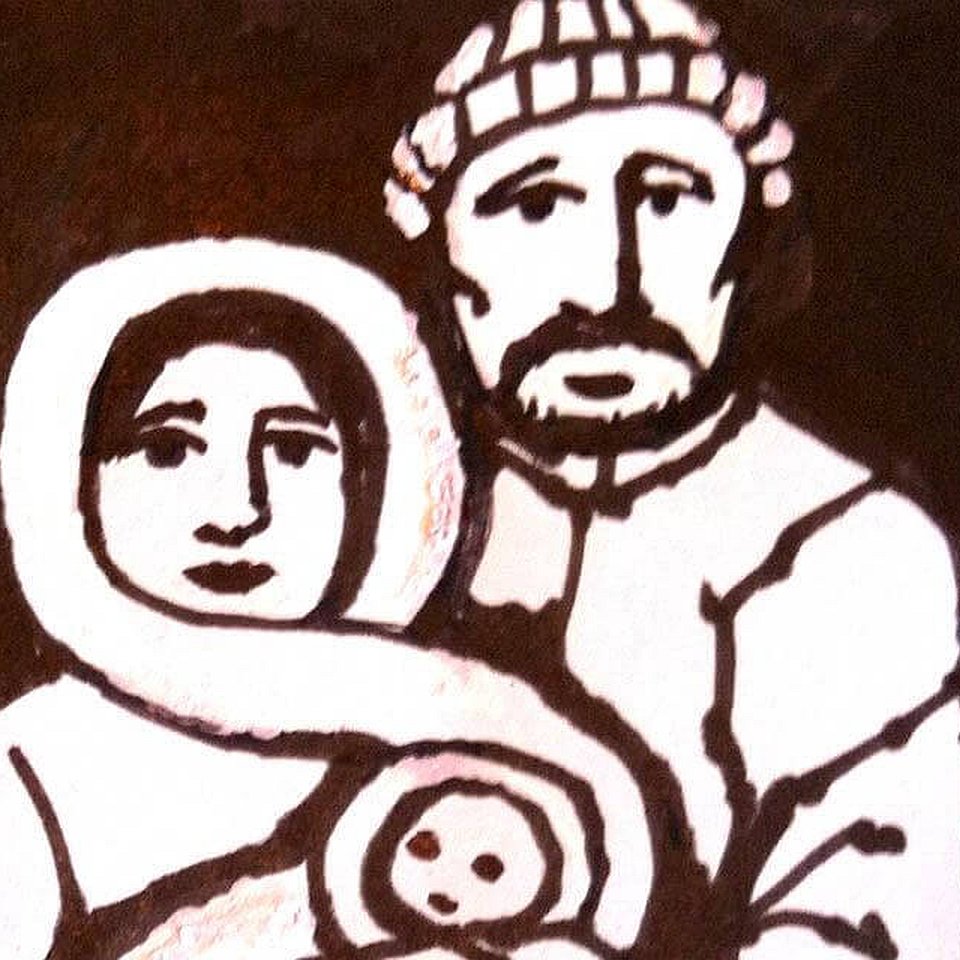
Holy Family
28/12/25
We just don’t seem to be able to write good history.
Today’s gospel is not a pretty story.
Grumpy old King Herod hears that his political rival has been born in Bethlehem and, rather than face a leadership spill in the party room, decides to slaughter all the Jewish males under 2 years old.
The intensity of the widespread and long-lasting anguish can never be underestimated.
No matter who you are in the story, the henchmen, the fathers, the mothers, the children, the bystanders, those in authority, or those fleeing for their lives … This is not a fun piece of history. It’s not glamorous or sexy or shiny. We are left squirming that this should be part of our heritage and the Bible. The preacher may be tempted to preach instead of the master wanting to welcome, touch and bless little children rather than have babies run through with a sword. Today’s gospel is not merry and bright, but it is vital. It reminds us that Christmas is not about escaping reality, but about finding God in the heart of all reality, in all its terrors as well as its comforts.
What do we say when we look into the face of such an atrocity, and does it have anything to say to us in our cushy world of Western Victoria in the 21st century?
A few random thoughts.
The innocent have always suffered. There is nothing new here. Go into any paediatric ward of any hospital, go into any ward of the Royal Children’s hospital, and there you will be deluged by a tsunami of grief and fear. Unanswerable questions are draped heavily upon the shoulders of every parent, every child, every doctor, every nurse and every visitor who is brave enough to wander in and take their place amongst the tears, the vomit, the blood and the needles.
And where is God in all of this, and where was he when Herod sent out his goons with their sharpened swords?
Right at the centre. At the very heart of the story is Our Lady, St. Joseph and the Christ-child. The Holy Family are not absent, resting comfortably from afar, tut tutting ‘How appalling,’. They are right there, inseparable from the muck itself.
And in the Royal Children's Hospital? He is there in the dedication, resilience, courage, unswerving dedication and love of everyone who walks through those big shiny glass doors day after night after morning after evening. Where else could He be? Where else would He be? Being the God of infinite love, he is most potent where love and reason seem most appallingly absent.
The very reason that Our Lady and St. Joseph are fleeing so emphatically and urgently is simply because they love their child so very much.
Sometimes we glimpse refugees and distraught families on the screens in our lounge rooms. We have been seeing these images for a long time now, almost to the point where we can be desensitised.
In a bizarre irony, it is often the Holy Land, yet again, where the fabric of humanity unravels, and the littlest of people, who are the strands and wisps of vulnerability, are caught by the gusty winds of greed and fear and tossed on the winds of neglect and futility.
The message of every christmass tide is that the master is not distant from our muck, but right in the middle of it. And each day we have a choice to roll up our sleeves and to share in his redeeming work of love to those who must leave everything they have ever known, loved and cherished, and flee to a place and a people who they hope will make them welcome and cherished.
The work of love is a skanky, mucky, manky, risky work. It goes unnoticed and unheralded for it seeks no recognition or fanfare. It seeks no payment or glamour or wage, save that we know that we are trying to do our best for those who are least.
And there will be times when we fail, times when we become disheartened, times when we will hear a question in our heart. Is it worth it?
Yes… faintly,.. tentatively… yes. For responding to these little ones, we are, of course, responding to Him.
In a few days' time, we will turn over the calendar, open a fresh new diary, and we will have an unblemished opportunity to start afresh in 2026. Along the way, you and I will have opportunities to welcome the fearful and distraught. To love the ugly and those who seem odd and peculiar to us. We may not ‘get’ their story because we can’t. We might not capture their nuances and culture, but we can receive and welcome them. And we may not know who they are, but boy, we can really show them who we are.
I suspect that you and I are unable to write picturesque history on an international scale, and we certainly can’t change what is past. But locally, in our own community, and in our own lives, we can write some marvellous history in 2026.