31 August 2025
Help, My Cistern is Busted!
In today’s first lesson, Jeremiah sallies forth and gives his listeners quite a tirade. He finishes with these telling lines
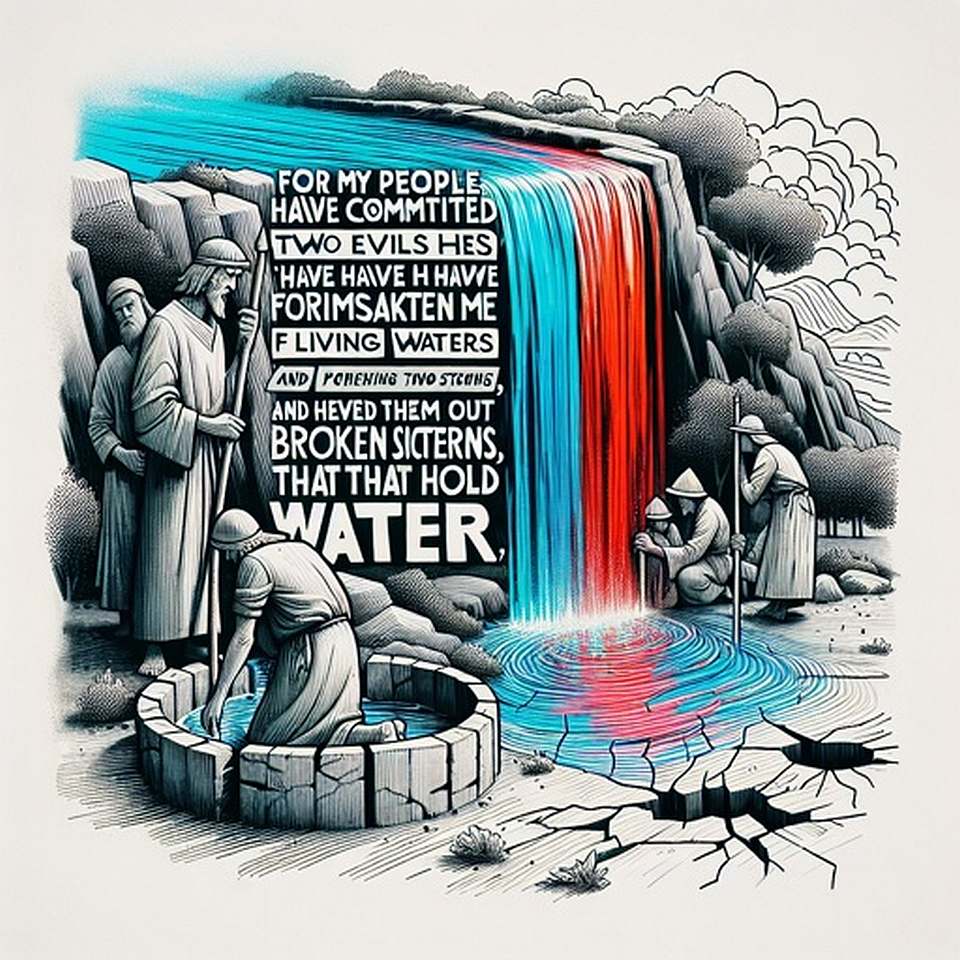
My people have committed two sins:
They have forsaken me,
the spring of living water,
and have dug their own cisterns,
broken cisterns that cannot hold water.
Now, when we think of a cistern in 202,5 we think of the container of water above the loo.
But this is not what Jeremiah was talking about when he gave this lecture to the people of Israel. For Jeremiah and the people of his time, a cistern was an artificial reservoir or tank used for storing water, particularly rainwater. These structures were crucial for survival due to the limited and seasonal rainfall. Cisterns were often dug into the earth or carved from rock, then lined with plaster to prevent leaks. They served as a vital water source, especially during dry seasons.
Cisterns were central to daily life because they provided water for drinking, cooking, and other household needs. In times of siege, a well-stocked cistern could mean the difference between survival and defeat for a city.
So a well-maintained and functioning cistern was essential for the individual and the community. I guess that it would also have been somewhat of a meeting place as people would gather to get the water they needed, much like we might bump into somebody down aisle 7 of the supermarket when we are hunting and gathering today.
Sometimes a cistern was used as a prison, and because Jeremiah’s not-so-quiet little reflection found its mark, some of his listeners decided that it would be ironically appropriate if Jeremiah finished up in a cistern. A cistern that he had claimed was broken. Here’s what happened.
“The officials of the king took Jeremiah and put him into the cistern of Malkijah, the king’s son, which was in the courtyard of the guard. They lowered Jeremiah by ropes into the cistern; it had no water in it, only mud, and Jeremiah sank into the mud.
But Ebed-Melek heard that they had put Jeremiah into the cistern. While the king was sitting in the Benjamin Gate, Ebed-Melek went out of the palace and said to him, “My lord the king, these men have acted wickedly in all they have done to Jeremiah the prophet. They have thrown him into a cistern, where he will starve to death when there is no longer any bread in the city.”
Then the king commanded Ebed-Melek the Cushite, “Take thirty men from here with you and lift Jeremiah the prophet out of the cistern before he dies.”
So Ebed-Melek took the men with him and went to a room under the treasury in the palace. He took some old rags and worn-out clothes from there and let them down with ropes to Jeremiah in the cistern. Ebed-Melek the Cushite said to Jeremiah, “Put these old rags and worn-out clothes under your arms to pad the ropes.” Jeremiah did so, and they pulled him up with the ropes and lifted him out of the cistern.
It’s pretty obvious that Jeremiah’s message had made people petulant, but what on earth did he mean by
My people have committed two sins:
They have forsaken me,
the spring of living water,
and have dug their own cisterns,
broken cisterns that cannot hold water.”
In these little lines, Jeremiah is pointing out that they have abandoned God and gone after other Gods.
A "broken" cistern is one that is cracked or damaged, and therefore cannot hold water. This signifies that these man-made solutions cannot truly satisfy the deepest longings of the human heart. They may offer temporary comfort or pleasure, but they ultimately leave people feeling empty and unfulfilled.
That which is most precious to us and essential for us can seep away from us if our cistern, or our heart, is not right. If we are distracted and forgetful of Him who once described Himself as the living water springing up to eternal life.
The cistern, then, for us is that special place, deep in us, that we come back to to find him and replenish ourselves. It is so easily chipped and damaged by the cares and worries of our lives.
Thousands of years later, Jesus is at Jacob's Well, where he asks the woman for a drink, but in turn also offers her something much more. The living water.
And there are times in our lives when our own cistern has run dry and the living water has evaporated. When there seems to be nothing left to offer those who are closest to us, who need us most and perhaps even to replenish and refresh ourselves. It’s tempting then to shake our fist at God and ask for more water, but perhaps in our deeper and more honest reflection, we might ask ourselves why the cistern is dry. Perhaps water has been seeping out for a while to other places, other priorities, other distractions, and we haven’t realised it. Perhaps we weren’t attentive to the maintenance of that place within us where the living water sparkles.
There are times when we need to take time out to simply attend to the maintenance of our own cistern and make sure it is water-tight, and there are times when we need to simply say
Help, My Cistern is Busted!