Where do I begin?
Of Vincenzo and Elaine
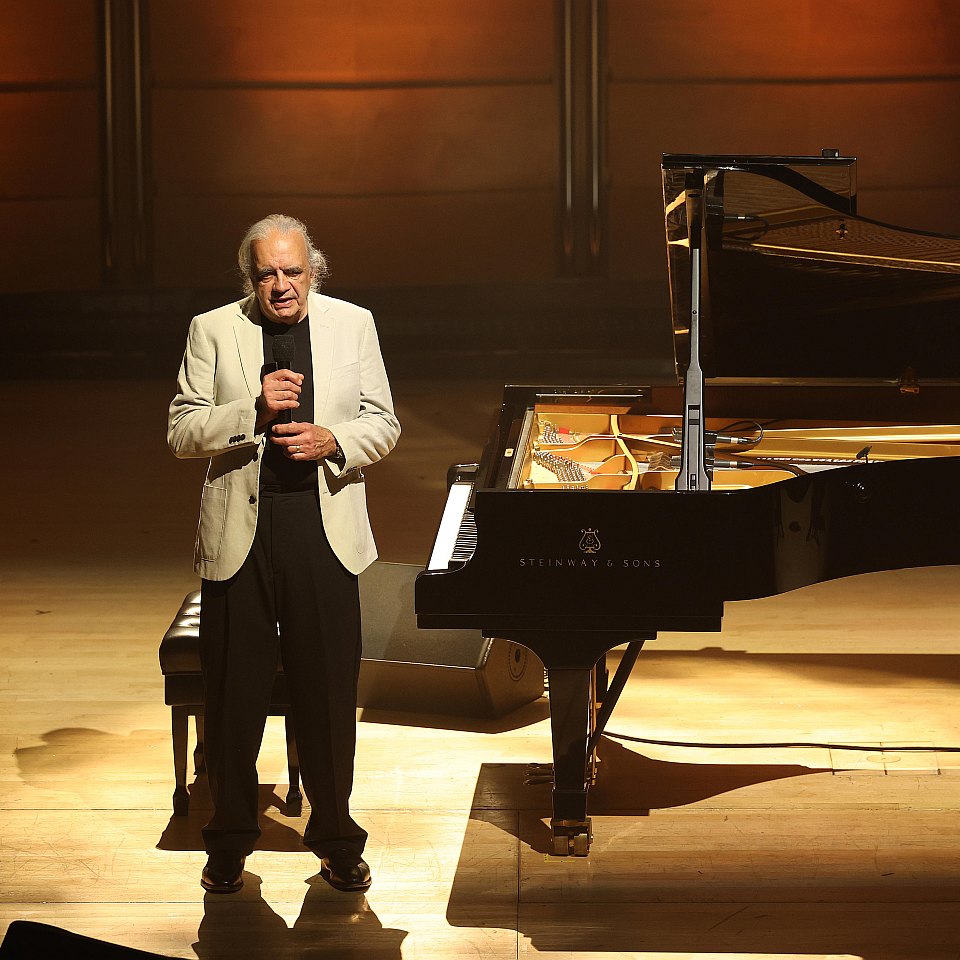
I'd like to tell you a story about a man who was born in Italy. Some of you will have watched him in the series called ‘The Piano’ on the ABC. His name is Vincenzo and he is 73.
Growing up, he played in a band in Italy. One night, when in a restaurant, his father prompted him to go and help a young woman with the menu that was written in English.
She must have appreciated the kindness and probably the looks of this helpful young man, because when the menu was sorted, she offered to buy him a beer.
In 1975, they were married and came to Australia. Music became an integral part of our relationship.
In 2015, Elaine suffered a stroke and Vincenzo became her carer.
He told us that when you have something and someone special that you might lose the essence of the marriage becomes even sweeter. Elaine was one in a hundred million.
So on the TV he plays the theme from Love Story, also known as ‘Where do I begin.’
It was a piece of music that Elaine liked, as they had a love story for 50 years. Between the initial casting for the series and Vincenzo appearing to play on TV, Elaine died, so he dedicates the piece to her.
He plays at the Market City in Sydney’s Chinatown and is therefore surrounded by a community of not only his daughters who have come to watch him play, but also those who fortuitously happened to be there who have come to watch and to listen and to hear not just his playing but also his story about he and Elaine.
And on the TV, when the last note is played and the piano falls silent, there is no silence at all. Rather, there are tears and applause and joy and triumph.
Whilst watching this little snippet, I couldn't help but think of the two disciples on the road to Emmaus. A bit of a jump, but stay with me. Their hearts are heavy with grief, and they tell their story to a complete stranger just as Vincenzo did. The gospel story finishes with them in a community of those who know that the while song has been completed, there is now a different sound to make. One of celebration and triumph. They know just as surely as Vincenzo, also a lonely traveller like Cleopas, that their music, the music of Elaine and Vincenzo, was merely keeping a rest. A period of silence so that what comes next is even more heightened and powerful. The silence, the hiatus between death and resurrection, between silence and applause, is merely an implement to expand our longing and heighten our expectation for what comes next.
You see, Vincenzo and Elaine gave thousands of viewers and listeners the gift of their love to share. Having performed so very publicly and so very well, he has begun to conquer his loneliness, his fear and pain.
The piece Vincenzo played lasted for less than three minutes, but it could have been an eternity as I slipped into that ‘other’ and didn’t ever, ever, want it to finish. Please, please, let his never end. I ached. Did not my heart burn within me as Vincenzo played? And centuries ago, the disciples would sa,y ‘Did not our hearts burn within us …?
Sometimes we have to listen and wait patiently for a long time
The Master on the road waits for Cleopas to simply talk. Jesus initiates and prompts the conversation, and then, it seems simply shuts up and lets the breaking of the bread at the supper table say everything that needs to be said just as Vincenzo’s brokenness and exquisite playing say everything that needs to be said and in a medium that words can never hope to convey.
Death does not speak the last word, play the final note. Love does! And it is a beautiful sound and the note that we thought was the finish, the final one to signal that it is all over and kaputt, was actually the one that, blended with our tears, is the beginning of the symphony of heaven which goes from strength to strength and from silence to exotic thrilling music.
I’m well aware Henri Nouwen put this all far more eloquently so I’ll let him tell it his way and have the last word.
“Having entered into communion with Jesus and created community with those who know that he is alive, we now can go and join the many lonely travellers and help them discover that they too have the gift of love to share. We are no longer afraid of their sadness and pain, but can ask them simply: "What are you talking about as you walk along the road?" And we will hear stories of immense loneliness, fear, rejection, abandonment, and sadness. We must lis- ten, often for a long time, but there are also opportunities to say with words or simple gestures: "Didn't you know that what you are complaining about can also be lived as a way to something new? Maybe it is impossible to change what has happened to you, but you are still free to choose how to live it."