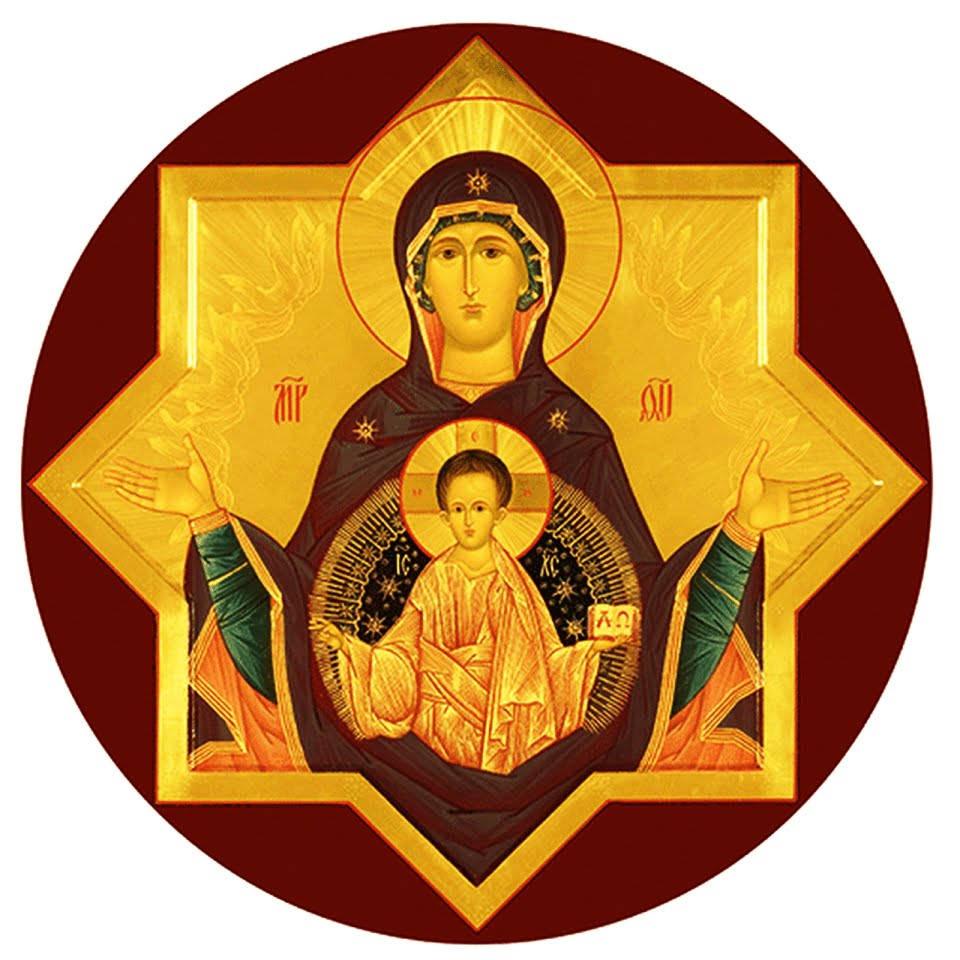
'What's all this about Mary!? A reflection for the 15th of August
Anglicans believe that good theology is
- Christ-centred,
- Bible based,
- Affirmed by ancient catholic tradition and
- Supported by human reason.
The flash churchy phrase for these 4 things is the Lambeth quadrilateral. This is very much the case with our understanding of the Blessed Virgin Mary, and whatever we believe must be consistent with these four principles. Christ centred, bible based, catholic tradition and supported by reason. Sometimes Anglicans believe that Mary is an impediment to our relationship with God. It will help if we take a peek at our foundational liturgical document, the 1662 Book of Common Prayer where we discover there are five Marian feasts.
- Presentation of Christ in the Temple, 2 February
- The Annunciation, 25 March
- Visitation of Our Lady May 31st
- Birth of Mary 8th of September
- Conception of Mary December 8th
In the 1995 A Prayer Book for Australia, the Feast of Mary the Mother of Our Lord was re-established (15 August). This is the Anglican name for the Roman Catholic Feast of the ‘Assumption of Mary’ and the Orthodox Feast of the ‘Falling Asleep of Mary’.
Sadly, differing understandings of the place of Mary have been a cause of division and you would think that after more than 400 years we might have actually sat down with a nice cup of tea and some cherry flavoured Tim tams and sorted out our differences. Here’s a couple of sticky points.
In 1854, Pope Pius IX defined the Dogma of the Immaculate Conception. This is the belief that from the moment of conception, Mary was “preserved immune from all stain of original sin.”
“What a load of poppycock!” Cried the Anglicans. “We reckon that there is no clear Biblical basis for this belief.”
In 1950, Pope Pius XII defined the Dogma of the Assumption. This is the belief that, at the time of death, Mary was “assumed body and soul into heavenly glory”. “Hogwash and humbug!” retorted us Anglicans. “The bible contains all things necessary to salvation: so if it's not in the bible or can’t be proved from the bible, then you don’t have to believe in it in order to be saved.”
Oh dear… Is there a way forward? In 2004 we actually made progress. It seems that the Church of God can be saved by a pot of English breakfast tea and some cherry flavoured Tim tams after all. Not with a glass of single malt and some stilton cheese as some scholars of dubious repute have posited.
Now, remember the part where Mary is sitting quietly in her lounge room knitting Joseph a wooly jumper and the angel Gabrielle comes and calls her ‘full of grace’. Then He offers her the job of a lifetime. The detail and timing is important here. Mary hasn’t actually said “Yes” at this point and yet she already is full of grace. The Anglican Roman Catholic International Commission (ARCIC) issued An Agreed Statement entitled Mary Grace and Hope in Christ. It reads, “Mary is marked out from the beginning as the one chosen, called, and graced by God through the Holy Spirit for the task that lay ahead of her” and that, at the Annunciation, “the word of God delivered by Gabriel addresses her as already ‘graced’”.
In 1977 Michael Ramsey, the one hundredth Archbishop of Canterbury was asked “What do you believe about the assumption of Mary?” He answered simply and profoundly, “If she is not in heaven where then is she?” Mary is important for a couple of reasons.
First, because she is the Mother of the Lord. The oldest title applied to her by the Church is Theotokos, a term that means ‘God bearer’ or ‘Mother of God’. This was nutted out at bishops meeting in Ephesus in 431. Not exactly a recent innovation.
Secondly, she is the example for all followers of Jesus. At the Annunciation, Mary responded to God’s invitation and said her Yes.
Now… if you remember nothing else from this flavoursome homily please remember this bit. Mary’s place in heaven is to be regarded as an anticipation of our destiny. Where she is and who she is with, is where we will be and who we will be with. Christians of every flavour, salted caramel, strawberry nougat, rum and raisin, all rejoice in this. If a pregnant, unwed, teenage peasant lass, from a one hick town can make it through the pearly gates, then goodness gracious me, there is hope for all of us. Like her, you and I are called to give God to the world in both good times and bad, but perhaps especially in woeful times. Just as Jesus' love for His mum was so strong that He wanted her in heaven with him, so too is His love for us is so strong that He wants us there as well. Getting there is a noble and joyful vocation; full of tears, struggles and chortles but we do not do it alone. We do it with her and we do it with Him. They are already cheering us on and waiting for us in splendid anticipation.