A reflection for 8th of August
I want to tell you about Bob, Ted, Carol and Alicia. They were great companions and used to go to lovely dinner parties together. Bob was your straight up and down sort of guy who had a deep and abiding love of history. Ted was always quick and straight to the point. What you see was what you got. He was always looking to move onto the next thing. Having struggled out of a ‘disappointing marriage’ Carol was an advocate for all ladies who found themselves in unfortunate situations and the wider community. That is dressing it up a bit and trying to be polite.
Alicia was your deep thinker, your plodder, the very measured one who thought about things deeply and often much later was able to offer profound insights into what was really going on at the dinner table.
This happy quadrant would often reflect on the dinner party on the morning after. They would ruminate over a cappuccino and wolf down some smashed avocado on toasted sourdough with poached eggs and hollandaise sauce. Alicia always had a herbal tea and the granola muesli.
One particular night the evening was very unusual so they all decided to write about it afterwards. Each one writing separately, offering their own account.
As you would expect they all remembered different things, but the really peculiar thing they all wrote about.
Bob wrote about the interesting herb crust on the roast lamb. He also wrote about the blessing at the end of the meal because it was not the one their host usually said.
Ted wrote about the marinated and stuffed olives. Fr. David has paraphrased his words. “The olives were rather jolly nice.” Ted also wrote about the blessing at the end of the meal because it was not the one their host usually said.
Carol wrote about flowers the ladies were given as they left and what a touching gesture it was.
She also wrote about the blessing at the end of the meal because it was not the one their host usually said.
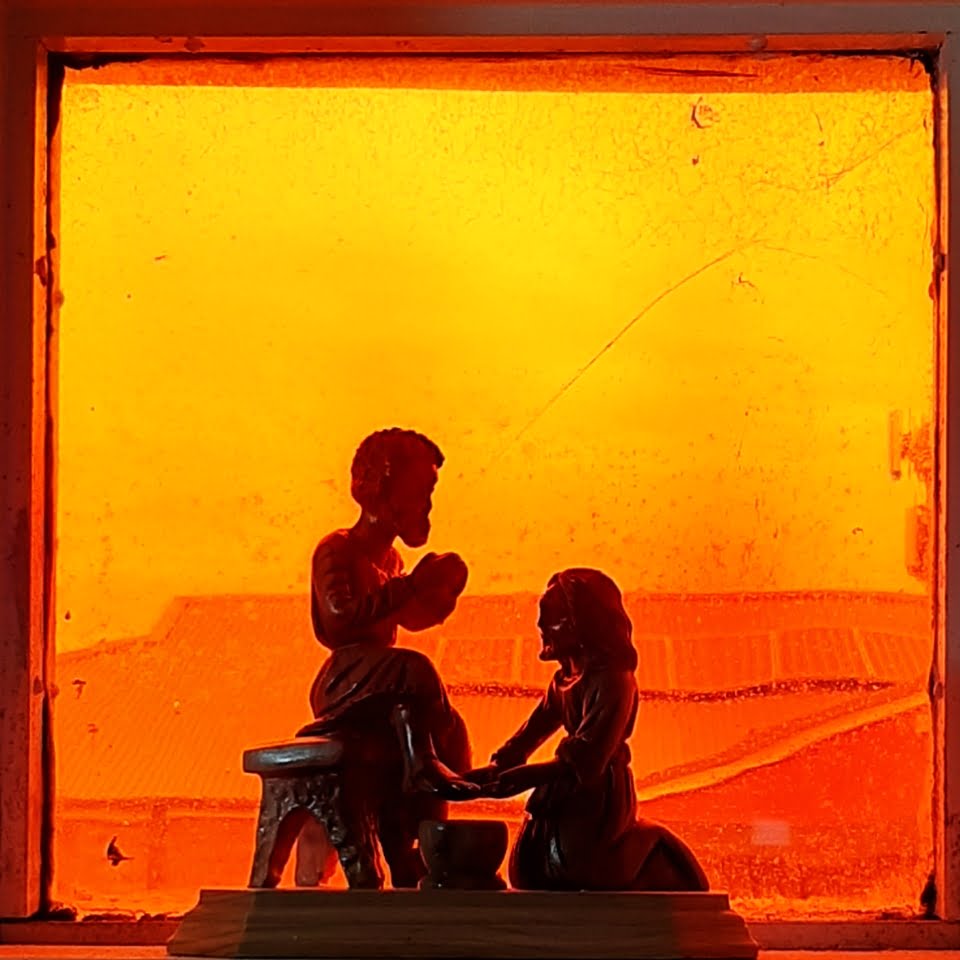
Alicia didn’t write anything for a while, but some time later wrote about the curious thing their host did in washing their feet. She also reflected on that special blessing that had piqued the others' attention.
Deep down. What was their host really trying to tell them? What was really happening? Their host was quite ponderous and measured in what he said and the way he said it. His words were very carefully chosen.
I have played around a bit here and of course what I am really telling you is the story of the upper room, the last supper and the gospel writers perceptions.
Bob is really Matthew whose gospel has a deep and abiding love of history. Just check out the genealogy at the start of his gospel if you're having trouble snoozing.
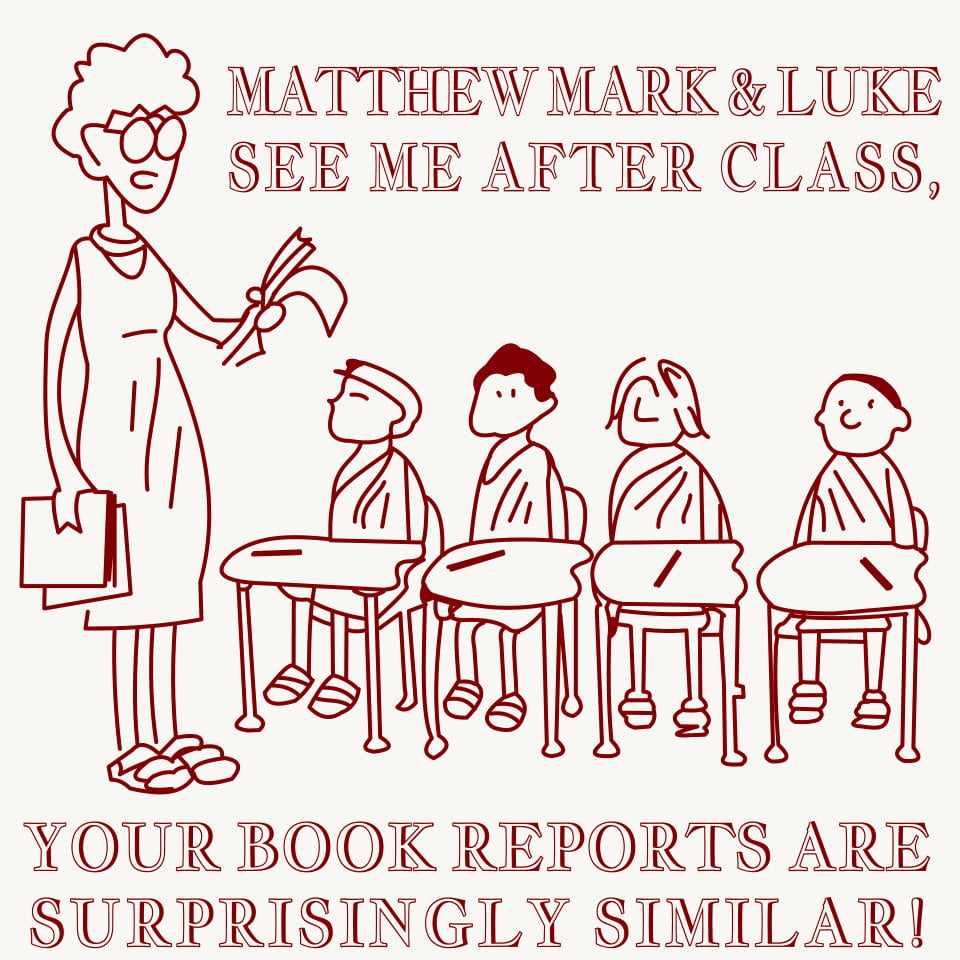
Ted is Mark who’s gospel bounces irrepressibly from one incident to the next. Carol is Luke who has the most references to ladies in his gospel.
Alicia is John whose gospel arrives much later, but has the benefit of distilling the deeper meaning of Our Lords words and actions. John also gives us a glimpse into the churches thinking or theology.
Matthew, Mark and Luke all tell us different things about the last supper and you would expect that. But the thing that they all mention, pretty much identically, is Our Lord's words ‘This is my body.. this is my blood’. This wasn’t part of the hosts usual grace. In fact he had never said it before.
Today's gospel comes from John. John's unique memory of the last supper is the foot washing, but John also offers us the church's teaching.
That something happens when the bread and wine are blessed. This is my body, this is my blood, or in today's words. “This bread is my flesh, which I will give for the life of the world.”
Our Lord always chose his words very carefully. No wonder the blessing at the end of the meal was the thing that Matthew, Mark and Luke all remembered and wanted their readers and listeners to remember. Something happens to the bread and wine on the altar.
And just as a married couple who walk out of a church are different to when they walked in, so too the blessed bread and wine are irreversibly changed.
Of course I don’t understand the metaphysics and food chemistry, but that just adds to the joyous mystery and the desire to go deeper into what is an elusive and splendid sacrament.
John would also point out that Our Lord knew exactly what he was saying. That he knew his body would be broken the next day and his blood spilled. That he would always be with them.
So three cheers for the gospel writers who all bring a unique perspective and different insight into this sacrament. Three cheers for you and me who all come seeing different things in different ways. Three cheers for the host who gives very self to us in simple gifts of bread and wine.