There is a way back.
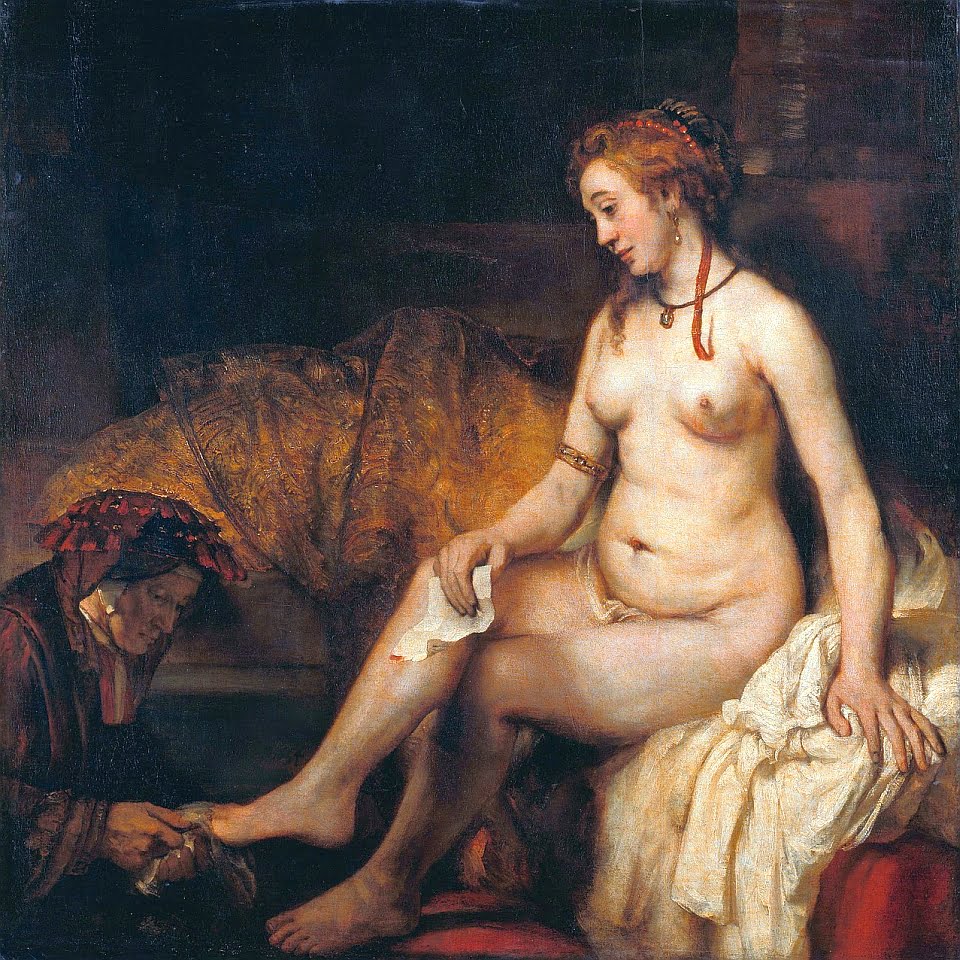
In the first lesson King David, spying from his roof, spots a woman (Bathsheba) whom he would like for himself. David sends servants to “take” her, a word that, in some contexts in the Old Testament, can be used to designate rape. Bathsheba is given no voice in this story, but the details are clear: David has intercourse with her and impregnates her.
When David gets word that Bathsheba has conceived, he tried to fix the problem without acknowledging it. He called Bathsheba’s husband, Uriah, back from war, hoping he would go home and be with his wife. You see DNA paternity tests were not available; everyone would have assumed that the child was Uriah’s. Good plan right?! Uriah, however, refused to enjoy home comforts while his compatriots were still off at war. Because Uriah would not go home, David devised a plan B: he sent Uriah to the front lines of battle and ordered those around him to draw back so that Uriah would die. David’s solution was to murder the husband.
Next week we are given the rest of the story and it goes like this.
God sends the prophet Nathan to David. Nathan told David a parable about a rich man and a poor man. When faced with the need to feed a guest, the rich man did not take a lamb from his own livestock, but instead stole the only lamb owned by the poor man and served it to the guest. David was incensed by the injustice in this parable. Nathan responded by saying, “You are the man!””
David responds with a very simple phrase: “I have sinned against the Lord.”
Some points to think about as you sit by the fire with a refreshing beverage.
First, the story hinges upon David’s contrition. David and his family experience many consequences of his sin. In all of this, however, God does not remove the divine steadfast love from David, as God had previously removed it from his dad King Saul. The reason for this seems to be David’s contrition. When confronted with his sin, David fesses up.
Second, David’s contrition would have been impossible without the role of a prophetic voice. In ancient Israel, one of the major functions of a prophet was his or her ability to speak truth to power. Nathan receives a word from God and can deliver it to the king in such a way that it sways the king’s actions. David was determined to sweep his sins under the rug, but the prophetic office prevents this. That which was hidden is brought to light; the wrongdoing of those at the top is acknowledged, confessed and ultimately forgiven. There is a way back for the person who has fallen in such spectacular fashion. There must always be a way back, otherwise we are limiting Gods forgiveness and power.
Third Bathsheba has no voice in this story. At no point are any of her words or feelings recorded. There have always been and always will be, those who have no voice in our society and whose hurt remains invisible to us.
Fourth it is left to Nathan to be the prophetic voice where Bathsheba is silenced and this is where you and I come in. It is our vocation to speak out and confront not only our own sin but what might be called the collective sin of our broader community.
So I make it clear that the Church has not always done the right thing and there have been occasions when like King David, she has sought to cover up her wrongs. When all the truth has come out the hurt is multiplied because of the way we have dealt with our failings. On these occasions there are no winners and everyone is less than they ought to be.
Fifth. For most of my ordained life of 35 years the mantra has been that we need more young people in church. It is little wonder that young folk are not trusting of the Church in general and her leaders in particular.
A recent national survey of 6000 people found 41 per cent of Australians don’t trust religious leaders “at all”, a 6 per cent rise since the survey was last conducted in 2019.
Almost half (47 per cent) of 18–24 year-olds don’t trust religious leaders “at all”. That’s a jump of 15 percentage points in just two years.
There is a way back and it will be a long path and the trust that I hope will be restored, but which I don’t think I will see in my lifetime, will be hard won. I make it very clear that the abuse of another is sin. And sin is sin is sin.
There is a way back and the first step is candid admission. The next step is genuine contrition, the next step appropriate reparation and then some safety measures to minimise the risk into the future.
There is a way back and it must begin with all of us.